

Lower Back Pain, Discs, Nerves & Non-Invasive Care
Lower back pain may begin after lifting, prolonged sitting, sports activity, or daily posture strain. In some cases, stiffness, sharp sensations, or tightness may stay in the lower back. In others, symptoms may travel into the buttock, thigh, or leg when spinal discs, joints, or nearby nerve pathways are involved.
At Chiropractic Specialty Center in Kuala Lumpur, lower back pain is cared for with non-invasive chiropractic joint mobilization, physiotherapy and guided rehabilitation.
By integrating chiropractic care with Spinercise®, and physiotherapy, and movement-based rehabilitation, individuals can experience:
- Encouraged joint mobility: Supporting spinal decompression and movement coordination.
- Enhanced postural balance: Promoting even weight distribution across the spine at CSC’s physiotherapy gym.
- Facilitated soft tissue support: Supporting muscular relaxation and ligament flexibility.
This guide to lower back pain, and how discs and nerves affect sitting, walking and leg movement, is published by Chiropractic Specialty Center, Bukit Damansara (KL) main center: WhatsApp+60 17 269 1873 Call+603 2093 1000
7 Key Takeaways You Can Use Now
- Lower back symptoms may come from more than one structure
Discs, spinal joints, muscles, ligaments, and nearby nerve pathways may all contribute to lower back pain, stiffness, or symptoms that travel into the buttock or leg. - Prolonged sitting and posture can add load
Long hours of sitting, repeated driving, poor desk setup, and forward-bending posture may increase load on the lower lumbar discs, especially L4-L5 and L5-S1. - Disc bulges and degeneration often develop gradually
Disc changes usually build up over time due to repeated loading, reduced hydration, and ongoing stress rather than from one isolated event. - Leg symptoms may begin in the lower back
Tingling, tightness, heaviness, or pain extending into the thigh or calf may sometimes be linked to lower lumbar disc or nerve-root changes. - Movement and rest help disc fluid exchange
Spinal discs rely on normal loading and unloading during walking, position changes, and rest to maintain fluid exchange and nutrient diffusion. - Combined chiropractic, physiotherapy, and rehabilitation may be useful
Care may include chiropractic joint mobilization, physiotherapy, decompression-based methods, and guided rehabilitation. - Early assessment may help clarify the source
When symptoms persist, recur, or begin to travel into the leg, a proper assessment may help determine whether discs, joints, muscles, or nearby nerves are involved.
On This Page: Lower Back Pain, Disc Changes & Care Explained
How Lower Back Symptoms May Affect Sitting, Walking, and Daily Activity
How lower back pain behaves during the day often says more than its intensity. Sitting tolerance, walking distance, standing time, bending, lifting, sleep position, and work activity each load the lower back differently, and the activities that aggravate or ease the symptoms help point to the structure involved.
Common contributors may include disc bulges, disc degeneration, joint stiffness, muscular tightness, postural overload, or repeated static loading.
By integrating chiropractic techniques, physiotherapy, and movement-based rehabilitation, the focus may include:
- improved joint mobility
- reduced repeated lower back loading
- better movement coordination
- postural re-education
- guided flexibility and core stability strategies
In his recorded talk Back Pain to Leg Pain, Yama Zafer, D.C., explains how sitting, bending and sleep load the spinal discs, and how a damaged disc can irritate the nerves that form the sciatic nerve.
Lower Back Changes During Pregnancy and Webster Chiropractic Care
Lower back symptoms during pregnancy may be linked to pelvic tilt changes, relaxin-related ligament flexibility (round ligament issues), abdominal load shifts, and sacroiliac joint strain. In some cases, symptoms may extend into the buttock or thigh as the pelvis adapts through each stage of pregnancy. Pregnancy chiropractic care using the Webster technique may be considered for pregnancy aches and pains with or without physiotherapy depending on pelvic findings, lower back load, and movement tolerance.
Related Pregnancy Topics
Booking Lower Back Pain Care at CSC
To book a lower back check-up, contact either Kuala Lumpur center:
- Bukit Damansara (KL, main center): Call +603 2093 1000 or WhatsApp +60 17 269 1873 to see the Bukit Damansara / KL center.
- Bandar Sri Damansara (KL): Call +603 6262 5777 or WhatsApp +60 12 455 6939 to see the Bandar Sri Damansara center.
For travel, parking and opening hours, see Bukit Damansara address, hours and phone or Bandar Sri Damansara address, hours and phone. The chiropractic price in Kuala Lumpur and physiotherapy fees in Kuala Lumpur pages list current fees.
Understanding Lower Back and Leg Pain
Lower back pain can develop gradually due to daily postural habits, repetitive movements, or physical strain. In some cases, individuals may experience stiffness, tingling sensations, or movement limitations that extend into the legs. These symptoms often indicate spinal imbalances affecting nerve pathways.
Factors that may contribute to lower back and leg movement concerns include:
- Postural misalignments: Uneven spinal alignment affecting weight distribution.
- Disc-related changes: Structural adaptations within spinal discs impacting flexibility.
- Joint stiffness: Reduced spinal mobility influencing movement efficiency.
- Soft tissue imbalances: Muscular tension or ligament tightness restricting movement.
By addressing early signs of postural changes, individuals can take proactive steps toward maintaining spinal health and flexibility.
How Spinal Function Affects Leg Movement
Some individuals may experience leg pain, tingling sensations, or muscular fatigue without noticeable spinal pain. This can happen when a disc or joint change in the lower back irritates a nerve root.
Potential contributors to leg pain linked to spinal concerns include:
- Spinal disc adaptations: Structural changes in the lower back impacting nerve function.
- Postural misalignments: Uneven spinal alignment influencing muscular coordination.
- Soft tissue tightness: Ligament or muscular adaptations affecting movement patterns.
- Joint stiffness: Limited spinal flexibility restricting leg movement efficiency.
For further details, contact our Bukit Damansara, or Bandar Sri Damansara centers.
Progressive Spinal Decompression for Lower Back Support
Chiropractic Specialty Center uses non-surgical spinal decompression as one option, chosen after an assessment. The decompression table used is the RxDecom®.
The RxDecom® process focuses on:
- Encouraging spinal decompression: Supporting movement coordination and joint mobility.
- Enhancing spinal stability: Promoting even weight distribution across spinal structures.
- Facilitating soft tissue support: Encouraging muscular relaxation and ligament flexibility.
- Encouraging nutrient diffusion: Supporting spinal disc function over time.
Understanding the Causes of Lower Back Pain and Injury
Many individuals experience lower back pain due to daily movements, repetitive strain, or improper posture. Factors such as lifting heavy objects, sudden movements, or prolonged sitting can contribute to muscular imbalances and spinal misalignments. These concerns may lead to stiffness, reduced flexibility, or movement restrictions over time.
Some of the common contributors to lower back pain include:
- Improper lifting techniques: Sudden or excessive strain on the lower back may affect muscular coordination.
- Repetitive physical exertion: Overusing specific muscle groups may contribute to imbalances.
- Soft tissue tightness: Muscular or ligament tightness may influence spinal flexibility.
- Postural misalignments: Uneven weight distribution may place excessive stress on spinal structures.
- Reduced movement variation: Prolonged sitting or standing may contribute to stiffness in spinal joints.
By addressing early movement imbalances, individuals can support long-term spinal mobility and function.
The Impact of Spinal Concerns on Long-Term Movement
Many individuals may experience gradual spinal changes without immediate symptoms.
Factors that may influence spinal movement efficiency include:
- Soft tissue adaptations: Ligament and muscular changes may influence flexibility.
- Spinal joint imbalances: Uneven weight distribution may affect postural stability.
- Structural spinal disc changes: Natural adaptations may contribute to mobility restrictions.
- Occasional movement limitations: Some individuals may experience temporary stiffness before noticing postural changes.
Non-Surgical Spinal Support for Movement Efficiency
At Chiropractic Specialty Center, we integrate structured spinal care programs that incorporate chiropractic techniques, physiotherapy, and movement-based rehabilitation to support postural balance and spinal function. Our centers utilize targeted spinal decompression techniques to encourage joint flexibility and movement coordination.
Our approach focuses on:
- Encouraging postural balance– Supporting even weight distribution across spinal structures.
- Facilitating soft tissue flexibility– Encouraging muscular relaxation and ligament function.
- Enhancing spinal decompression– Supporting movement coordination and mobility efficiency.
- Encouraging core stability– Promoting spinal alignment and movement awareness.
By integrating non-invasive spinal support, individuals can encourage better movement efficiency and spinal flexibility.
For further details, contact our Bukit Damansara, or Bandar Sri Damansara centers and we also provide service near Sri Petaling.
Related Educational Video: Why Forceful Neck Pulls May Be Unsafe
Aggressive neck pulls and high-force traction methods are commonly seen online, but the forces involved may place unexpected stress on discs, joints, ligaments, nerves, and nearby vascular structures. This educational video explains the biomechanics behind these techniques and why a gentle, focused approach may be different.
The chapters and an edited transcript of this video are on the Neck Cracks Are Dangerous video page.
Key Moments in This Video
- 00:00 Why forceful neck pulls may be risky
- 00:14 Y-Strap and Ring Dinger® mechanics
- 01:11 Nerve pathways and vertebral arteries
- 02:51 Bone spurs and uncovertebral joints
- 04:34 The highest-risk maneuver explained
- 05:32 Who may be more vulnerable
- 09:38 Gentle vs aggressive cervical approaches
- 09:59 Final educational takeaways
When Disc Degeneration or Degenerative Disc Changes May Affect the Lower Back
Disc degeneration, degenerative disc disease, and age-related disc changes may gradually affect how the lower back responds during sitting, bending, lifting, and daily activity. Over time, reduced disc hydration and structural changes may increase mechanical load on nearby spinal joints, surrounding soft tissues, and in some cases nearby nerve pathways.
At Chiropractic Specialty Center, care may include non-invasive approaches such as NSD Therapy®, chiropractic joint mobilization, physiotherapy, and guided rehabilitation strategies based on how the discs, joints, and surrounding tissues respond during daily activity.
What Degenerative Disc Disease Means
Degenerative disc disease (DDD) is a term used to describe age-related or stress-related changes within the spinal discs. These changes may include reduced disc hydration, lower disc height, reduced flexibility, and structural wear over time.
Terms such as degenerated disc, disc degeneration, and disc desiccation are often used to describe similar findings, especially on MRI reports.
How Disc Degeneration and Herniation Develop Over Time
Disc bulges, protrusions, and herniation usually develop gradually rather than from one isolated event. This educational video explains how repeated load, poor sitting posture, rising intradiscal pressure, and reduced disc hydration may contribute to degenerative disc changes over time.
Key Moments in This Video
- 00:03 Why disc herniation and prolapse develop over time
- 00:28 Why healthy discs rarely herniate easily
- 00:49 How disc degeneration begins under repeated load
- 01:08 How poor sitting posture increases disc pressure
- 01:28 The role of proteoglycans and disc hydration
- 01:58 How nutrient loss weakens disc structure
- 02:27 Why prolonged load affects disc repair
- 02:55 How annular fibers become vulnerable
- 03:22 Why weak discs are more likely to bulge or tear
- 03:49 How degeneration leads to disc herniation
- 04:08 Final explanation: why a degenerated disc is a weak disc
Which Spinal Discs Are Most Prone To Degenerative Disk Disease?
In the lower back, the L3-L4, L4-L5, and L5-S1, the lowest three motion segments, are the most prone segments to degenerate and wear out. The L4-L5 and L5-S1 are the two most common motion segments in the lower back to bulge or herniate.
The C2-C3, C3-C4, C4-C5, C5-C6, C6-C7, and C7-T1 are most often prone to degenerative disc disease or changes in the cervical spine. The C5-C6 motion segments have the largest spinal disc in the neck, which is the most mobile. The C4-C6 and the C5-C6 is the most common site for degenerative disc disease in the neck.
What Causes Multilevel Disc Degeneration?
Multilevel degenerative disc disease has two or more degenerated or worn-out spinal discs. Stress on the spine from poor posture, injury, inherited factors and lifestyle.
The most common cause of multilevel degenerative disc changes in the cervical spine is the “text” or “tech” neck. Text neck and tech neck are interchangeable terms used to describe a forward head and neck position while using computers, pads, or mobile devices.
Causes Of Degenerative Disc Disease In Patients Under The Age Of 35
Poor posture, extra body weight, lifestyle habits and family history can all add to early disc wear in people under 35. Early disc wear can raise the chance of a slipped disc (a bulging, protruded, prolapsed, herniated or extruded disc). It can also be linked with:
- Sciatic nerve pain
- Facet Hypertrophy
- Hypertrophy of ligamentum flavum
- Radiculitis
- Spondylosis
- Degenerative spondylolisthesis
Wear of the discs, joints and ligaments can add to degenerative spondylolisthesis. Degenerative spondylolisthesis is a forward slip of vertebrae commonly occurring at C5-C6, L4-L5, and L5-S1 motion segments of long-standing degenerative disc disease patients.
Lumbar Degenerative Disc Disease
Lumbar disc degeneration and desiccation are the most common findings on scans of people with lower back pain. Lumbar disc degeneration can occur at any of the five spinal discs of the lower back, but they are the most common in the lower three discs:
Disc degeneration in the lumbar spine can be the sole cause of back pain. Early on, a worn disc can hurt because of inflammation inside it. As the disc wears further, other changes can add to back pain:
- Decreased room for spinal nerves (foraminal stenosis)
- Buckling of ligamentum flavum
- Facet arthritis (worn-out spinal joints)
- Bulging & herniated discs
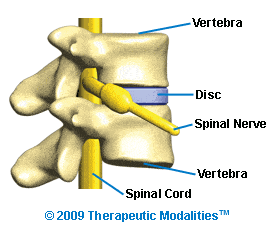
As the spinal disc loses height, the opening at the sides of the spine where the spinal nerves come out (intervertebral foramina) decreases in size, causing nerve impingement and pain. Also, loss of disc height increases stress on the spinal joints of the lower back, causing them to wear out or degenerate. A degenerated or worn-out spinal joint is referred to as facet hypertrophy.
Cervical Degenerative Disc Disease
Degenerated spinal discs of the neck are a known source of neck pain and stiffness. Neck pain can be caused by many factors and structures, including:
- Muscles & ligaments
- Neck joints or cervical facets
- Intervertebral discs
- Dura mater (outer tissue that covers and protects the brain and spinal cord)
Cervical disc degeneration often occurs at C4-C5, C5-C6, and C6-C7. A degenerated cervical disc becomes uncomfortable at the initial stages, like the lower back, due to an increased inflammatory response. The disc itself activates the inflammatory phase of degenerative disc disease in response to disc desiccation or disc dehydration. As the degenerative stages progress, the cervical disc loses height, resulting in nerve impingement and arthritis of facets (synovial joints).
Things To Avoid With Degenerative Disc Disease
Habits that cut down long periods of load on the spine are worth building at any age.
- Avoid prolonged sitting by taking breaks every 30-45 minutes
- Sit upright with proper back support and avoid slouching
- Avoid tech neck and text neck by holding a phone or mobile device at eye level or by limiting the time spent on it
- Get enough sleep; discs take up fluid while lying down at night.
- Avoid repeated heavy bending and twisting, especially while lifting
- Avoid yoga altogether; it must be avoided with degenerative disc disease and every other spinal disc problem
Degenerative Disc Disease Care
Imbibition is a natural phenomenon where the spinal discs obtain the required nutrients through diffusion. As such, the nutrients they need must get diffused inwards. Please watch the video below to understand imbibition better:
Care that is often joined with spinal decompression for worn discs includes:
- High-Intensity Laser Therapy
- Flexion-distraction therapy
- Ultrasound & electrotherapy
- Myofascial and trigger point therapy
- Non-rotatory methods of chiropractic care
- Strengthening and stretching exercises
There is no single fix for degenerative disc disease. Care looks at the disc, the joints, the muscles and daily habits together. At CSC, disc wear is managed through NSD Therapy®, a non-invasive care program for the neck and back that joins decompression, non-rotatory chiropractic, physiotherapy and exercise.
Implications Of Disc Degeneration In Adolescents
Disc wear, poor posture and weak muscles can all play a part in back pain in teenagers. Long hours of sitting and screen use add load to young spines too.
Disc wear may not hurt by itself, but it can lead to disc tears, which may. The primary culprit in bulging, herniated, or protruded disc is disc degeneration. Research has linked disc wear in young people with back pain that keeps coming back. Frequent flare-ups and recurrent back pain were common in those with disc degeneration. Teenagers with back pain that keeps coming back should have a proper check. If needed, an MRI (magnetic resonance imaging) scan is the usual test for looking at discs.
Degenerated Spinal Discs And MRI
Unlike X-rays or CT scans, MRI does not use radiation. It uses strong magnets, so it is not suitable for everyone, such as some people with pacemakers or certain metal implants.
The healthy spinal disc has relatively high fluid levels. Prolonged sitting, poor posture, and traumatic events can deplete these fluid levels. When the fluid levels are low, the spinal disc is classified as a degenerated disc. “Degenerative Disc Disease” or DDD is often reported as “Disc Desiccations” on an MRI report. Disc degeneration is most common in older people but is also seen in young, healthy people.
Spinal Disc Degeneration Can Occur At Any Age
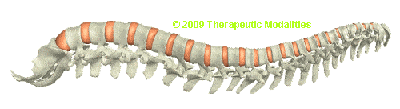
A young adult can have what would appear to be a spinal disc of a senior citizen. And by the same token, the elderly may present with those in their twenties’ spinal discs. Medical research has confirmed that 20% of adolescents have early signs of disc damage.
Disc wear can also lead to other problems. For example, a degenerated disc can lead to a bulging or disc herniation (referred to as the “slip disc” or “slipped disc”).
Why Spinal Discs Degenerate?
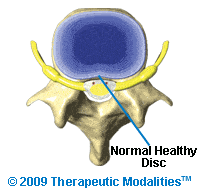
Spinal discs show signs of aging earlier than other tissues in the body. A research review found that the first clear signs of wear in lower back discs appear between ages 11 and 16. About 20% of teenagers have discs with mild signs of wear, and wear increases with age, especially in males, so that around 10% of 50-year-old discs and 60% of 70-year-old discs are severely worn (Urban 2003).
If symptoms persist, an assessment can identify the cause.
Schmorl’s Nodes & Disc Degeneration
Schmorl’s nodes are small dents in a vertebral endplate, where disc material pushes into the bone. The vertebral endplate secures the spinal disc to the vertebrae above & below. Endplates are critical to healthy discs as they are the point through which nutrients enter the spinal discs. Damage to the endplates, as seen with Schmorl’s nodes, may affect how the disc is fed.
Incidentally, 20% of the population has schmorl’s nodes.
How Scoliosis, Prolonged Sitting, and Posture May Affect Disc Health
Spinal disc changes may be seen in children, teenagers, and adults with scoliosis, especially when spinal loading patterns remain uneven over time. A scoliotic curve may place different levels of stress on specific discs, joints, and supporting soft tissues, which may contribute to earlier disc wear in some segments.
Prolonged sitting, repeated poor sitting posture, family history of disc changes, and certain congenital spinal differences may also increase mechanical stress on the discs.
Two important concepts that help explain disc health are imbibition and diurnal change. These describe how discs naturally absorb fluid, exchange nutrients, and respond to loading and unloading throughout the day.
Degenerated Spinal Disc And Back Pain
Even very fit people, such as elite athletes, can have disc wear on MRI. Strong muscles do not make anyone immune to back pain. Research also shows that genes play a large part in disc wear (Urban 2003).
Discs Show Aging Earlier Than Other Tissues
According to disc researchers Jill Urban and Sally Roberts, spinal discs show aging earlier than muscles, ligaments or tendons. They reiterated its clinical importance and association with back pain.
Mild conditions such as muscle tightness, ligamentous laxity, and core muscle weakness are part of initial back problems that lead to disc degeneration changes. In short, tight or weak muscles put undue stress on joints and discs. With increased pressure, spinal discs and even spinal joints start to wear out or degenerate. That is why it helps to get a sore back checked early, when changes are easier to manage.
Understanding The Spine And Spinal Disc Degeneration
The human spinal discs are soft yet sturdy pads that separate the bones of the spine (vertebrae) from one another. These specialized structures act as a ligament by holding the vertebrae of the spine together, a shock absorber, and as a pivotal point allowing motion. The adult intervertebral discs are the largest avascular (no direct blood supply) structures in the human body, consisting of three main components:
- The Vertebral End-Plates
- The Annulus Fibrosus
- The Nucleus Pulposus
The Vertebral End-Plate
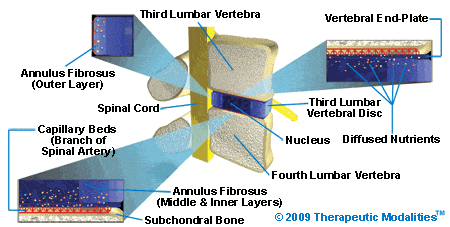
The top and the bottom of each vertebra are capped with a thin (approx. 1 millimeter) cartilaginous pad called the vertebral end-plates. There are vertebral end-plates in every spinal segment, except the first vertebra in the neck (C-1). Despite their name, these vertebral end-plates are not part of the bony vertebrae but interwoven into the disc.
The vertebral end-plates serve as an attachment to the bony vertebrae and as a platform from which the avascular spinal discs get the life-sustaining nutrients. The water, proteoglycans (specialized protein chains), collagen (a cartilage-like substance), and cartilage content of the end-plates mirror a spinal disc. This similarity in biochemical makeup helps the diffusion of nutrients into the hungry avascular disc cells.
Annulus Fibrosus
The Annulus Fibrosus is the outer layer of the disc. Its strong fibers support the disc. The annulus fibrosus has more collagen and less water (about 60%) than the nucleus. Its function is to contain the pressurized nucleus in the center and to attach the disc to the vertebral end-plates and the ring apophysis (harder surface at the periphery of a vertebra).
The Annulus Fibrosus contains about 15-25 concentric sheets of collagen called the Lamella. The lamellae are layered in a way that gives them the strength to hold the pressurized nucleus pulposus. In a healthy spinal disc, the annular fibers connect bones and keep the nucleus in the center of a disc.
But when there are degenerative changes, these specialized structures can tear. Once torn, it can lead to a slipped disc of varying severity.
Nucleus Pulposus
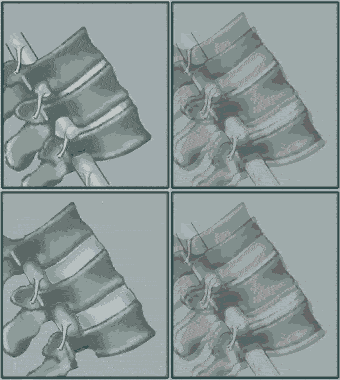
The Nucleus Pulposus is the inner layer of the disc resembling a soft, jelly-like substance. It has high water content, which enables it to sustain downward pressure while standing and sitting. Its function is to bear and carry the body’s weight and act as a “pivot point,” which allows for movements. Unlike the Annulus Fibrosus, the Nucleus Pulposus is water-rich. Nucleus Pulposus is a viscous, soft, pulpy, highly elastic, and highly pressurized inner structure of a spinal disc. The nucleus is proportionally larger in the cervical (neck) and lumbar (lower back) due to their greater mobility degree. The nucleus is the part of the disc that migrates (slips) when the annular ligaments are worn out (degenerated).
The gentle stretching and relaxing of non-degenerated spinal discs foster diffusion through a phenomenon called “imbibition.” Imagine a sponge filled with water. When the sponge is compressed, the water is forced out. By removing the compressive force, water is “sucked” back into the sponge. Imbibition is a process through which the Nucleus Pulposus stays healthy and functional.
The Impact Of Diurnal Change
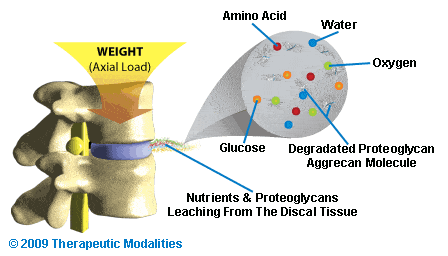
Discs also get nutrients through diffusion enhanced by a phenomenon called “Diurnal Change.” Our bodies can expand and compress over a day. During the recumbency of sleep, the loading decreases on the intervertebral discs, and as such, the spinal disc starts to swell and get bigger.
Because discs swell during sleep, people are a little taller in the morning than at night. The nucleus is rich in proteoglycans, molecules that attract water.
Modern Care Options For Degenerated Spinal Disc In Malaysia
Imbibition is the process through which the nucleus pulposus receives nutrients and fluid through the vertebral end-plate. Because spinal discs do not have a direct blood supply, this nutrient exchange plays an important role in disc hydration and long-term disc function. When this process is reduced over time, discs may gradually lose fluid content and structural resilience.
Research by Jill Urban and Sally Roberts has shown that spinal discs may show age-related changes earlier than muscles and several other soft tissues. If symptoms are linked to spinal disc-related changes such as spondylosis, slipped disc changes, neck symptoms, or sciatica-related leg pain, a structured non-invasive approach may help guide how care is planned.
Understanding the Connection Between Lower Back Pain and Underlying Health Conditions
Lower back pain can sometimes be influenced by underlying health conditions, postural imbalances, or structural adaptations in the spine. While many individuals experience back-related stiffness due to daily activities or movement restrictions, others may notice pain linked to muscular tension, joint changes, or spinal misalignments.
Some health-related factors that may contribute to lower back pain include:
- Muscular adaptations: Soft tissue imbalances affecting posture and movement efficiency.
- Joint function changes: Structural adaptations influencing flexibility and mobility.
- Spinal alignment variations: Uneven weight distribution contributing to postural concerns.
- Soft tissue tightness: Ligament or muscular tension affecting spinal coordination.
By addressing early signs of spinal imbalances, individuals can take proactive steps toward maintaining long-term movement efficiency and flexibility.
The Influence of Chronic Spinal Concerns on Mobility
Many individuals may experience gradual spinal changes over time, leading to movement limitations, postural imbalances, or occasional stiffness. While some individuals may notice temporary restrictions in movement, others may experience progressive structural adaptations affecting overall spinal function.
Factors that may influence spinal mobility over time include:
- Postural misalignments: Uneven weight distribution impacting spinal balance.
- Structural disc changes: Spinal adaptations contributing to movement imbalances.
- Soft tissue modifications: Ligament or muscular adaptations affecting flexibility.
- Limited movement variations: Reduced physical activity influencing postural stability.
By incorporating targeted spinal care programs, individuals may experience better postural efficiency and movement coordination.
The Role of Spinal Decompression in Encouraging Movement Efficiency
At Chiropractic Specialty Center, we incorporate non-surgical spinal decompression techniques designed to support spinal mobility, flexibility, and postural stability. Our centers utilize targeted decompression methods to encourage joint flexibility and movement coordination.
Some potential benefits of spinal decompression techniques include:
- Encouraging postural balance: Supporting even weight distribution across the spine.
- Enhancing spinal joint flexibility: Encouraging movement efficiency and spinal coordination.
- Facilitating soft tissue function: Supporting muscular relaxation and ligament mobility.
- Encouraging long-term spinal health: Supporting movement stability over time.
By integrating structured spinal decompression strategies, individuals may experience better postural efficiency and movement awareness.
Published Research on Lower Back Concerns and Spinal Health

Scientific research has shown that spinal disc concerns, postural imbalances, and movement limitations may result from reduced nutrient flow to spinal structures. The spine relies on a steady supply of oxygen, proteins, water, and essential nutrients to maintain flexibility and function. Over time, limited nutrient diffusion may contribute to spinal disc changes, which could lead to movement restrictions.
Some factors that may influence spinal disc function and postural efficiency include:
- Reduced nutrient flow to spinal discs– Spinal structures require essential nutrients for flexibility.
- Limited movement variation: Sedentary habits may contribute to mobility restrictions.
- Soft tissue imbalances: Ligament and muscular adaptations may affect spinal flexibility.
- Repetitive physical strain: Overuse of specific spinal structures may contribute to postural imbalances.
By addressing spinal mobility and postural awareness, individuals may experience better movement efficiency and long-term spinal function.
Integrated Rehabilitation for Lower Back Stability and Daily Function
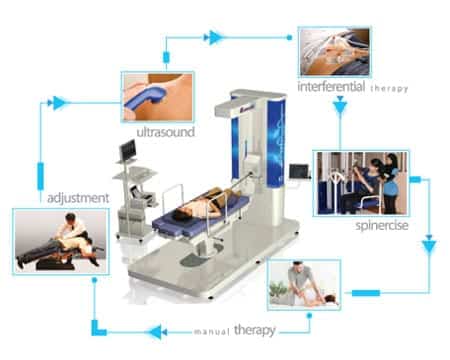
Lower back care should not stop at the point where symptoms begin to settle.
At Chiropractic Specialty Center, rehabilitation may be included as part of a structured back care plan together with joint mobilization by registered chiropractors, physiotherapy, and guided exercise strategies. The focus is to improve how the lower back, hips, core muscles, and surrounding soft tissues work together during daily activity.
Rehabilitation covers three areas:
- Core and spinal stability
Guided exercises may be used to help improve support around the lower back and reduce repeated strain on spinal joints and discs. - Flexibility and functional mobility
Stiff joints, tight fascia, and muscular imbalance may affect how the lower back responds during movement and daily activity. Flexibility and guided mobility strategies may help improve this. - Postural re-education
Sitting habits, standing posture, work setup, and repeated lifting patterns may all affect lower back loading. Practical strategies may be used to help improve day-to-day spinal positioning.
How Daily Habits Affect Lower Back Loading
Daily habits that may increase lower back loading include:
- prolonged sitting without changing position
- repeated bending or lifting
- long hours of driving
- limited walking or stretching breaks
- low day-to-day activity variation
- poor desk setup or sleep posture
Short walking breaks, posture-friendly seating, neutral sleep positioning, and guided flexibility work may help the lower back respond better during work and daily activity.
Disc Health, Hydration, and Workplace Habits for Long-Term Lower Back Support
Important daily habits that may help support disc health include:
- regular walking and position changes
- avoiding prolonged sitting without breaks
- using lumbar-friendly seating support
- keeping the feet flat during desk work
- keeping the monitor near eye level
- reducing repeated forward bending posture
Recap: Understanding Lower Back Pain and Disc Changes
Lower back pain may develop from prolonged sitting, poor posture, repeated bending, lifting strain, disc-related changes, or spinal joint stiffness. In some cases, symptoms may remain in the lower back, while in others they may extend into the buttock, thigh, or leg when nearby nerve pathways are involved.
This page explains how lower back discs, joints, muscles, and surrounding soft tissues respond to daily load, posture habits, and movement patterns. It also covers common disc-related findings such as disc bulges, disc degeneration, disc desiccation, and how levels such as L4-L5 and L5-S1 are often involved.
Topics covered include disc hydration, imbibition, prolonged sitting load, scoliosis-related disc stress, daily habits that may affect lower back loading, and how a non-invasive approach using chiropractic joint mobilization, physiotherapy, and guided rehabilitation may be structured.
Related guides cover lower back pain, sudden and long-standing back pain, and a back pain assessment in Kuala Lumpur.
Common Questions About Lower Back Pain, Disc Changes, and Spine Care in KL & PJ
What commonly causes lower back pain?
Why does lower back pain sometimes travel into the leg?
What is degenerative disc disease?
What causes a disc bulge or slipped disc?
Can prolonged sitting worsen lower back symptoms?
Which lower back discs are most commonly affected?
Can poor posture lead to disc degeneration?
What does disc desiccation mean on an MRI?
What is the difference between a disc bulge and a herniated disc?
Can disc degeneration happen in younger adults?
Can teenagers have disc degeneration?
Can scoliosis affect spinal disc health?
What is imbibition in spinal discs?
Why do symptoms often feel worse after sitting?
Can physiotherapy and chiropractic be used together?
When is an MRI usually considered?
Can hydration affect disc health?
Can long hours of driving worsen lower back strain?
What daily habits may help reduce lower back load?
When should lower back symptoms be assessed?
For planning, the chiropractic prices in Kuala Lumpur and physiotherapy prices in Kuala Lumpur pages set out what each visit costs.
Peer-Reviewed Medical References:
- Coulter ID, Crawford C, Hurwitz EL, et al. Manipulation and mobilization for treating chronic low back pain: a systematic review and meta-analysis. Spine J. 2018;18(5):866-879.
- Paige NM, Miake-Lye IM, Booth MS, et al. Association of spinal manipulative therapy with clinical benefit and harm for acute low back pain: systematic review and meta-analysis. JAMA. 2017;317(14):1451-1460.
- Hayden JA, Ellis J, Ogilvie R, Malmivaara A, van Tulder MW. Exercise therapy for chronic low back pain. Cochrane Database Syst Rev. 2021;9(9):CD009790.
These references describe the non-surgical management of low back pain in general. None of them evaluates a care program at Chiropractic Specialty Center.
The Author of Lower Back Pain: Discs, Nerves and What They Mean
Lower Back Pain: Discs, Nerves and What They Mean was written by Yama Zafer, D.C., who has 30+ years in chiropractic and physiotherapy and founded Chiropractic Specialty Center in Kuala Lumpur in 2006.
Last Updated: Lower Back Pain, Discs, Nerves & Non-Invasive Care
Lower Back Pain, Discs, Nerves & Non-Invasive Care was last reviewed and updated on October 3, 2026.