
Pregnancy Back & Pelvic: Prenatal & Postnatal Care in KL

For more than 30 years, Yama Zafer, D.C., at Chiropractic Specialty Center® in Kuala Lumpur has been providing pregnancy back, pelvic, and joint care for expecting and new mothers through condition-based chiropractic, physiotherapy, and focused rehabilitation.

Care is structured around the natural changes that occur during pregnancy and after delivery, including shifts in posture, pelvic alignment, spinal loading, hip balance, and movement patterns.

As pregnancy progresses, changes in body weight, center of gravity, ligament flexibility, and muscle coordination may place added stress on the lower back, pelvis, sacroiliac joints, and hips. Similar changes may continue into the postnatal stage as the body gradually returns to pre-pregnancy movement mechanics.

This page serves as the main hub for prenatal and postnatal back and pelvic care in KL, covering the lower back, pelvis, hips, sacroiliac joints, posture-related strain, and common movement changes experienced before and after childbirth. Care may include gentle chiropractic methods, registered physiotherapy, and guided rehabilitation tailored to each trimester and postpartum recovery stage.

You will also find related pages linked throughout this section for more focused information on pregnancy chiropractic, physiotherapy, pelvic and hip care, headaches during pregnancy, round ligament discomfort, and pregnancy-specific rehabilitation.

Top 7 Takeaways for Pregnancy Back & Pelvic Care in KL

Here are the 7 most important points expecting and new mothers should know about pregnancy back, pelvic, and postnatal care in Kuala Lumpur:

1. Back and pelvic changes are common during pregnancy
Posture shifts, ligament flexibility, body weight changes, and pelvic loading may increase stress on the lower back, hips, and sacroiliac joints.

2. Previous spine or disc issues may become more noticeable
A history of slipped disc, sciatica, sacroiliac joint strain, or chronic back issues may become more noticeable during the second, third, or postpartum stages.

3. Symptoms may continue after delivery
Postnatal lifting, feeding posture, carrying the baby, and sleep disruption may continue to strain the back, pelvis, neck, and hips.

4. Webster Technique may be considered when appropriate
Pregnancy-specific chiropractic care may include the Webster Technique when the focus is on pelvic balance and sacroiliac joint mechanics.

5. Physiotherapy, chiropractic, and rehabilitation may work together
A combined approach often helps address posture, joint movement, muscle coordination, and daily movement habits more completely.

6. Gentle methods are usually more appropriate
Care should be adapted to the trimester and recovery stage using gentle, focused methods rather than forceful approaches.

7. Early assessment may help reduce ongoing strain
Addressing symptoms early may help improve movement and reduce added mechanical stress during pregnancy and after delivery.

On This Page: Pregnancy Back, Pelvic & Postnatal Care Guide

What to Look for in Pregnancy Chiropractic and Physiotherapy Care

When reviewing pregnancy chiropractic and physiotherapy options, look for care that is clearly adapted to prenatal and postnatal stages. Important factors include pregnancy-related clinical experience, gentle trimester-specific methods, attention to pelvic and spinal mechanics, and an approach that also considers posture, walking, lifting, sleep position, and daily activity changes.

For expecting and new mothers, care should not focus only on one symptom. Pregnancy-related back or neck discomfort may also involve the pelvis, sacroiliac joints, hips, rib cage, posture changes, feeding positions, lifting patterns, and postnatal movement habits. A broader, practical approach often provides more useful guidance for daily life before and after delivery.

At our Bukit Damansara and Bandar Sri Damansara centers, pregnancy-specific chiropractic care may include approaches such as the Webster Technique when clinically appropriate. Care is always adapted to the trimester, movement tolerance, and postnatal recovery stage.

Webster Technique During Pregnancy

The Webster Chiropractic Technique  is a gentle chiropractic approach commonly considered during pregnancy when the focus is on pelvic balance, sacral movement, and surrounding soft-tissue tension. As pregnancy progresses, changes in body weight, posture, ligament flexibility, and sacroiliac joint loading may influence movement comfort and pelvic mechanics.

At Chiropractic Specialty Center® in Bukit Damansara (Kuala Lumpur) and Petaling Jaya (Bandar Sri Damansara), both male and female chiropractors are experienced in pregnancy-specific chiropractic care, including the Webster Technique when clinically appropriate. Our registered physiotherapists also work closely with the chiropractic team and receive additional in-house clinical guidance on pregnancy-related spinal, pelvic, and movement changes to help provide coordinated care for expecting and new mothers.

This integrated approach allows care to be tailored according to the trimester, pelvic mechanics, posture-related strain, and postnatal recovery needs, while also considering muscle balance, movement habits, and daily activity demands such as feeding, lifting, and carrying the baby.

Pregnancy-Specific Experience Matters

Pregnancy changes how the spine, pelvis, hips, and surrounding muscles handle everyday movement. As the abdomen grows, the center of gravity shifts, ligament flexibility increases, and the lower back and pelvic joints may carry more mechanical stress. After delivery, feeding posture, bending, lifting, carrying the baby, and reduced rest may continue to strain the back, neck, pelvis, and hips.

Because of these changes, it is helpful to choose a chiropractor who regularly works with expecting and new mothers. Pregnancy-specific experience matters because care methods, positioning, and movement goals may differ from care used for the general population. Gentle, focused methods are usually more appropriate than forceful approaches during prenatal and postnatal stages.

Gentle Methods Are Better Than Forceful Approaches

Pregnancy chiropractic care should be adapted to the trimester, body changes, and comfort needs of the mother. Gentle methods that focus on pelvic balance, spinal movement, posture, and joint mechanics are often more appropriate than twisting, cracking, or sudden force.

At CSC, pregnancy-related chiropractic care may include gentle and focused approaches that are modified according to spinal loading, pelvic alignment, sacroiliac joint changes, hip balance, and postnatal recovery demands. The goal is to improve movement comfort and reduce unnecessary mechanical stress while respecting pregnancy-related tissue changes.

A Combined Approach May Be More Helpful

Pregnancy-related back, neck, pelvic, and hip changes do not always come from one structure alone. Joint movement changes, muscle tightness, walking patterns, posture, sleep position, and daily activity may all play a role. Because of that, care is often more useful when chiropractic, physiotherapy, and rehabilitation are considered together instead of viewing one method in isolation.

A combined approach may include gentle chiropractic methods for spinal and pelvic movement, physiotherapy for posture and muscle coordination, and focused rehabilitation for stability, walking mechanics, lifting patterns, and postnatal recovery. This is especially relevant for mothers with a history of slipped disc, sciatica, sacroiliac joint strain, or chronic back and neck issues before pregnancy.

Pregnancy and Postnatal Positioning Should Be Considered

Positioning during care matters during both pregnancy and after delivery. As pregnancy progresses, comfort in lying positions, sitting transitions, and turning movements may change. After delivery, mothers may also have added sensitivity from fatigue, feeding posture, carrying the baby, and repeated bending.

Care should be structured with attention to comfort, positioning, and movement tolerance. That includes how the mother lies down, sits up, turns, and moves during the visit. Practical guidance for daily posture, sitting, lifting, carrying, feeding, and sleep position can also be important parts of care.

Chiropractic Specialty Center® Bukit Damansara (Kuala Lumpur)

Operating Hours
Mon–Fri: 8:00 AM–10:00 PM
Sat–Sun: 8:00 AM–6:00 PM

Call Us: +603 2093 1000
SMS / WhatsApp: +60 17 269 1873

CSC Bukit Damansara (KL) Map & Address

Chiropractic Specialty Center® Bandar Sri Damansara (Petaling Jaya / KL)

Operating Hours
Mon–Fri: 8:00 AM–8:00 PM
Sat–Sun: 8:00 AM–6:00 PM

Call Us: +603 62625777
SMS / WhatsApp: +60 12 455 6939

CSC Bandar Sri Damansara (KL) Map & Address

Related Spine, Sciatica & Rehabilitation Pages During Pregnancy

Pregnancy may place additional stress on pre-existing spine, disc, pelvic, or sciatic concerns. For mothers with a history of lower back changes, slipped disc issues, sciatica, sacroiliac joint strain, or previous spinal discomfort, symptoms may become more noticeable during the second, third, or postnatal stages.

The pages below provide focused information on spine, disc, physiotherapy, chiropractic, rehabilitation, and sciatic-related care that may be relevant before, during, and after pregnancy.


Core Spine & Joint Pages

Core Service Pages

Pregnancy Care Topics: Related Prenatal & Postnatal Pages

Pregnancy-related changes may affect the back, pelvis, hips, joints, posture, and surrounding soft tissues in different ways across each trimester and into the postnatal stage.

The related pages below provide focused information on specific areas commonly involved during pregnancy, helping expecting and new mothers explore the most relevant topic based on where symptoms begin and how movement changes over time.

Pregnancy Spine, Back & Pelvic Care

Pelvic, Hip & Joint Changes During Pregnancy

Head, Neck & Related Pregnancy Changes

Pregnancy-Specific Care Methods

Pregnancy Physiotherapy in KL – Movement-Focused Prenatal Care That Respects Mother & Baby

Pregnancy physiotherapy in KL at Chiropractic Specialty Center® provides safe, tailored care designed to support musculoskeletal changes during all trimesters. As the baby grows, mothers may experience back strain, pelvic tilt, sacroiliac joint pressure, and leg tension due to shifting posture and hormone-driven ligament laxity.

Our prenatal physiotherapy sessions are guided by registered physiotherapists with training in pregnancy-specific care. Each session includes gentle mobility drills, pelvic floor awareness, and soft-tissue techniques to ease muscular tightness and joint stress. Ultrasound therapy, fascia release, and pregnancy-safe electrotherapy may be applied to promote tissue comfort and reduce swelling.

Studies show that prenatal physiotherapy improves core stability, helps maintain pelvic alignment, and reduces common musculoskeletal complaints without relying on medication or invasive approaches. Movement correction also prepares the body for delivery by improving breathing mechanics and pelvic coordination.

Whether you’re in your second trimester or approaching delivery, our team in Kuala Lumpur is ready to provide focused, evidence-informed prenatal physiotherapy. Sessions are one-on-one, clinically reviewed, and centered around comfort, stability, and safe mobility for both mother and baby.


Pregnancy Chiropractic in KL – Gentle Spine & Pelvis Alignment for Expecting Mothers

Pregnancy chiropractic care in KL is now available through gentle, non-rotatory methods at Chiropractic Specialty Center®. Our approach supports spinal and pelvic alignment without forceful adjustments ensuring comfort and safety for both mother and baby.

Changes in spinal curvature, ligament elasticity, and pelvic loading during pregnancy often lead to postural stress, sacroiliac joint misalignment, and lumbar stiffness. Our chiropractors apply Webster Technique, a pregnancy-specific approach that gently balances the pelvis, supports sacral alignment, and reduces intrauterine constraint.

Instrument-assisted adjustments such as the Activator Method may be used on the spine and hips offering precise care without twisting. All sessions are preceded by a thorough structural assessment, posture screening, and motion palpation specific to pregnancy stages.

Research supports the benefits of prenatal chiropractic care in reducing back tension, improving pelvic symmetry, and enhancing fetal positioning by relaxing uterine and surrounding musculature. Women receiving this care also report improved balance, reduced muscular tightness, and more comfortable late-term mobility.

Our chiropractic sessions in Kuala Lumpur are provided one-on-one, using methods that emphasize spinal balance, posture correction, and pelvic motion ideal for expecting mothers seeking safe, effective support throughout their pregnancy journey.

References: Peer-Reviewed Evidence for Prenatal Physiotherapy & Chiropractic

  1. Foster S, et al. (2012). Physical therapy interventions for pregnancy-related low back and pelvic pain: a systematic review. Obstet Gynecol, 119(4), 948–955.
  2. Stuge B, et al. (2007). The efficacy of physiotherapy for pelvic girdle pain after delivery. BMJ, 334(7605), 1003.
  3. Franke H, et al. (2017). Pregnancy and chiropractic: a narrative review of the literature. J Chiropr Med, 16(3), 206–213.
  4. Berg G, et al. (2012). Low back pain during pregnancy: prevalence, risk factors, and outcomes. Obstet Gynecol, 119(1), 122–128.
  5. Borggren CL. (2007). Pregnancy and chiropractic: a narrative review of the literature. J Chiropr Med, 6(2), 70–74.
  6. Shaw KA, et al. (2016). The effects of the Webster Technique on sacral alignment and fetal positioning. J Manipulative Physiol Ther, 39(1), 34–40.
  7. Stuber KJ, et al. (2011). Chiropractic treatment of pregnancy-related low back pain: a systematic review. J Manipulative Physiol Ther, 34(1), 1–9.

Contact Us to Begin Your Back Discomfort and Pregnancy Journey

Ready to explore personalized, gentle care? Contact our main center for info today to schedule an appointment or ask about our prenatal and postnatal chiropractic services. Our team is here to guide you through safe, integrative spine and joint care.

Manage Back Discomfort and Pregnancy with CSC’s Prenatal & Postnatal Care

Pregnancy brings significant changes to a woman’s body, often leading to spinal and joint discomfort. Chiropractic Specialty Center® offers safe and effective prenatal and postnatal care through a combination of gentle chiropractic and physiotherapy. Our specialized programs help expecting and new mothers stay comfortable and supported throughout pregnancy and postpartum recovery.

Causes of Back Discomfort During Pregnancy

a pregnant female holding tummy

Several factors contribute to spinal and joint discomfort in pregnant women, including:

  • Hormonal changes that loosen ligaments and joints
  • Weight gain adding stress to the spine
  • Shifts in the center of gravity affecting posture
  • Weak core muscles leading to instability
  • Pre-existing conditions affecting the back, pelvis, and hips

Understanding these causes can help in preventing or managing discomfort more effectively. Seeking professional prenatal and postnatal care is crucial for maintaining spinal health and overall well-being.

Prenatal & Postnatal Care for a Healthier Pregnancy

Pregnancy care is divided into two essential phases:

  1. Prenatal Care – Focuses on maintaining spinal alignment, improving posture, and preventing discomfort during pregnancy.
  2. Postnatal Care – Helps mothers recover from pregnancy-related changes, supporting spinal and pelvic stability postpartum.

Two of the most effective forms of pregnancy care are:

  • Prenatal & Postnatal Chiropractic
  • Prenatal & Postnatal Physiotherapy

Prenatal & Postnatal Chiropractic Care

Chiropractic care during pregnancy aims to reduce spinal stress, keep the pelvis properly aligned, and improve overall mobility. Proper pelvic alignment supports a smoother pregnancy and can contribute to easier delivery.

The safest and most effective prenatal chiropractic techniques use Activator Methods, a precise and gentle approach. Traditional techniques such as Gonstead and Diversified adjustments, which involve twisting or sudden movements, should be avoided during pregnancy.

Chiropractic Specialty Center® provides specialized prenatal and postnatal chiropractic care methods designed to support spinal health in a non-forceful, safe, and gentle manner. Our methods focus on stability and comfort without any sudden movements or excessive pressure.

Prenatal & Postnatal Physiotherapy

Physiotherapy plays a vital role in strengthening the body before and after pregnancy. Pregnancy-related postural changes affect the spine, hips, knees, legs, ankles, and feet, leading to discomfort. Prenatal physiotherapy helps address these changes through:

  • Posture correction to minimize spinal stress
  • Customized exercise plans to strengthen core and pelvic muscles
  • Non-forceful physiotherapy methods that focus on stability and respite

Expecting mothers with pre-existing weaknesses may experience increased discomfort during pregnancy. Physiotherapy helps address these weaknesses, ensuring a more comfortable experience before and after childbirth.

Comprehensive Pregnancy Care at Chiropractic Specialty Center®

Our prenatal and postnatal chiropractic and physiotherapy programs provide a holistic approach to pregnancy care. We focus on gentle, targeted care methods without twisting, popping, or forceful spinal adjustments.

If you are experiencing pregnancy-related discomfort, visit Chiropractic Specialty Center® for safe, effective, and natural respite. Call us today to schedule your prenatal or postnatal care session.

Impact of Hormonal Changes During Pregnancy on the Spine

Pregnancy brings hormonal changes that affect the body in various ways. One of the most influential hormones is Relaxin, which plays a crucial role in preparing the body for childbirth. While necessary, this hormone can lead to increased joint laxity, causing instability and discomfort in the spine and pelvis. These effects contribute to spinal and joint issues, particularly in the lower back, hips, and sacroiliac joints (SI joints)

Pregnancy Hip & SI Joint Care in Kuala Lumpur for New and Expecting Mothers

Pregnancy hip & SI joint care in Kuala Lumpur at our 3 KL centers is structured to support both new and expecting mothers experiencing joint strain, pelvic tension, or movement restriction. Hormonal changes, shifting weight, and ligament softening can create asymmetrical stress on the hips and sacroiliac (SI) joints, often leading to discomfort during walking, standing, or sleeping.¹

Our team provides a combined approach using physiotherapy and gentle spine methods tailored to your pregnancy or recovery stage. Sessions may include gluteal and hip muscle release, postural retraining, and non-rotatory mobilization of the SI joints. This care improves joint control, reduces muscular overload, and helps restore pelvic balance—without twisting, injections, or high-impact movements.²

Whether you are in your second trimester or early postpartum, care is adapted to your unique biomechanics and goals. We emphasize safe joint alignment, walking efficiency, and better coordination across the pelvis and lumbar spine to help reduce daily strain.³

If you’re looking for pregnancy hip & SI joint care in Kuala Lumpur that addresses structural shifts through evidence-informed care, CSC’s 3 KL based centers delivers gentle, personalized support for mothers before and after delivery.

Can Weight Gain During Pregnancy Cause Back Discomfort?

Weight gain during pregnancy is normal and expected. Healthy weight gain recommendations include:

  • First trimester: 1 to 2.5 kilograms
  • Second & third trimester: About 500 grams per week

Excessive weight gain, however, can put additional strain on the spine, especially for women with poor posture or weak core muscles. One common issue related to weight gain is tailbone sensitivity (coccydynia), which many expecting mothers experience due to shifts in posture and increased pressure on the lower spine.

Changes in Center of Gravity During Pregnancy

As pregnancy progresses, the growing belly shifts the body’s center of gravity forward. This gradual change places strain on the spinal joints, discs, muscles, and ligaments. The body must continuously adjust to maintain balance, which can lead to discomfort in the lower back, hips, and pelvis.

Proper posture, core strengthening exercises, and professional prenatal care can help minimize the negative effects of these changes.

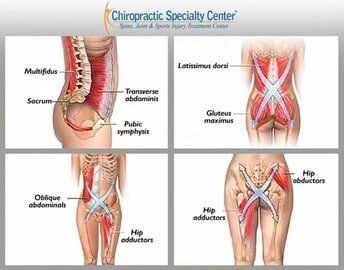
Weak Core Muscles and Back Discomfort During Pregnancy

Role of core muscles on the spine illustrated

Pregnancy naturally stretches and elongates the abdominal muscles to accommodate the growing baby. If these muscles were weak before pregnancy, the strain on the spine and lower back muscles increases significantly.

A strong core is essential for spinal support and stability. Weak core muscles may lead to increased spinal stress, poor posture, and greater discomfort. Strengthening these muscles through prenatal physiotherapy and safe exercise programs can improve stability and reduce spinal stress during pregnancy.

For expert prenatal and postnatal care, visit Chiropractic Specialty Center® today! Our specialized chiropractic and physiotherapy care methods provide safe and effective solutions for expecting mothers.

Sacroiliac Joint Discomfort During Pregnancy

Sacroiliac (SI) joint discomfort is one of the most common complaints among pregnant women. This condition results from hormonal changes, particularly Relaxin and Progesterone, which loosen the ligaments that stabilize the pelvis.

SI joint issues are more common in women with:

  • Pre-existing spinal or hip conditions
  • Excessive physical activity during pregnancy
  • Prolonged sitting or standing

The sacroiliac joints connect the pelvic bones (ilium) to the sacrum (tailbone). When these joints become unstable due to hormonal changes or excessive strain, discomfort can develop in the lower back and hips.

Safe & Effective Spinal Support During Pregnancy

Our chiropractic and physiotherapy teams specialize in prenatal spinal support. We offer gentle, safe, and targeted care to restore spinal alignment, improve joint function, and strengthen supporting muscles.

With over 15 years of experience supporting expecting mothers, Chiropractic Specialty Center® provides expert care to help women stay comfortable throughout pregnancy. Contact us today to schedule an appointment and receive the most effective prenatal chiropractic and physiotherapy care in Malaysia.

How to Stay Comfortable During Pregnancy

Small lifestyle changes can make a big difference in managing discomfort during pregnancy. Adjusting daily habits, posture, and activity levels can help reduce strain on the body and improve overall well-being. Below are some essential tips for expecting mothers to maintain a healthy and comfortable pregnancy.

Impact of Physical Activity on Comfort During Pregnancy

The dos & don'ts of pregnancy illustrated

Engaging in gentle physical activity can help improve mobility and ease tension. However, it is essential to avoid high-impact exercises that place excessive stress on the spine and joints. Before starting any exercise routine, consult your gynecologist to ensure safety for both mother and baby.

Two pregnancy-safe exercises are:

  1. Walking in water (pool therapy) – Water provides buoyancy and resistance, which help reduce pressure on the spine while strengthening muscles. Walking in a pool is one of the safest and most effective exercises for expecting mothers.
  2. Kegel exercises – Strengthening the pelvic floor muscles can help stabilize the lower back and improve overall comfort.

We recommend starting these exercises early in pregnancy and gradually increasing intensity. However, after the seventh month of pregnancy, it is advisable to reduce strenuous activity and focus on light movements.

For a comprehensive pregnancy-safe exercise plan, visit Chiropractic Specialty Center®, Malaysia’s leading chiropractic and physiotherapy center for expecting mothers.

Proper Lifting Techniques to Avoid Strain During Pregnancy

Proper lifting during back and pregnancy shown

Lifting objects during pregnancy should be minimized as much as possible. The female pelvis is naturally more flexible during pregnancy due to hormonal changes, making it more vulnerable to strain and discomfort.

If lifting is unavoidable, follow these proper lifting techniques to prevent excessive stress on the body:

  • Avoid bending forward at the waist – Instead, bend your knees and squat down.
  • Hold the object close to your body – Keep the weight centered to reduce spinal strain.
  • Use your leg muscles to lift – Stand up slowly without twisting your body.

Avoid lifting heavy objects whenever possible to reduce stress on your back and pelvis.

Should You Use Back Supports for Extra Comfort During Pregnancy?

Changes in posture, weight distribution, and muscle strength contribute to tension and stiffness during pregnancy. Using proper back support while sitting can help reduce pressure on the spine and provide respite.

To improve sitting posture and minimize discomfort:

  • Use a pillow or lumbar support when sitting for long periods.
  • Choose a supportive chair that promotes good posture.
  • Avoid slouching to prevent added strain on the lower back.

For expert prenatal and postnatal care, visit Chiropractic Specialty Center® today! Our specialized chiropractic and physiotherapy care methods provide safe and effective solutions for expecting mothers.

How Important Is Sleep During Pregnancy?

Getting adequate sleep is essential for both the mother’s well-being and the baby’s development. Pregnant women should aim for at least eight hours of quality sleep each night. However, due to physical changes, hormonal fluctuations, and increased pressure on the spine, restful sleep can be challenging.

To improve sleep quality during pregnancy:

  • Plan for nine or more hours in bed to compensate for nighttime disturbances.
  • Choose a firm, supportive mattress that maintains spinal alignment.
  • Use pillows for added comfort – Placing a pillow between the knees or under the belly can help reduce pressure.

If considering a new mattress, visit our blog page for expert tips on choosing a greatmattress for pregnancy.

For expert prenatal and postnatal chiropractic and physiotherapy care, visit Chiropractic Specialty Center®. Our non-invasive, holistic care methods help expecting mothers stay comfortable throughout pregnancy. Contact us today to schedule an appointment!

What Is an advised Sleeping Position for Pregnant Mothers?

proper sleeping posture demonstrated for back pain and pregnancy

The way you sleep is just as important as the amount of rest you get. An advised sleeping position during pregnancy is on your side. Many expecting mothers find that sleeping on the left side helps reduce pressure on internal organs and promotes better circulation.

To improve comfort and reduce strain on the lower back and pelvis, consider the following tips:

  • Use a pillow or bolster between the thighs and knees to support the hips and reduce tension in the legs and lower back.
  • Maintain a neutral spine position by using a firm mattress and additional pillows for support.
  • Avoid sleeping on your back for extended periods, as it may increase pressure on blood vessels and the spine.

Finding a comfortable sleeping posture is essential for reducing tension and improving sleep quality throughout pregnancy.

Choosing the Right Footwear to Support Your Spine and Joints

SHowing the proper footwear to avoid back pain in pregnancy

Weight gain and changes in posture during pregnancy affect weight-bearing joints, including the feet. Proper footwear is essential to reduce strain on the spine and lower limbs.

To support spinal alignment and joint health:

  • Choose supportive shoes with proper arch support to maintain balance and posture.
  • Avoid high heels and unsupportive flats, as they can increase stress on the lower back.
  • Use orthotic insoles if necessary to provide additional cushioning and alignment support.

Wearing the right shoes can help minimize unnecessary strain on the back and lower limbs, ensuring better comfort throughout pregnancy.

Regular Prenatal Spine and Joint Health Assessments

Regular spinal and joint assessments can help identify muscle, tendon, ligament, or joint weaknesses that may contribute to discomfort during pregnancy. A prenatal check-up with a clinical expert can help ensure a healthier and more comfortable pregnancy.

Our chiropractors and physiotherapists specialize in prenatal and postnatal care, offering safe, non-invasive methods to support the body throughout pregnancy.

Addressing Spinal Discomfort Early to Prevent Long-Term Issues

impact of axial loading on low back shown

Neglecting spinal discomfort during pregnancy can increase the risk of complications, including degenerative disc conditions and slipped discs. Changes in posture and weight distribution often aggravate existing spinal weaknesses, leading to issues such as:

  • Disc degeneration
  • Chronic spinal misalignment

Expecting mothers experiencing persistent spinal discomfort should seek targeted care to avoid complications after delivery.

Safe and Holistic Prenatal and Postnatal Care

Our chiropractic and physiotherapy teams in Kuala Lumpur provide expert prenatal and postnatal care to help manage spinal and joint health safely. We offer customized, non-invasive care methods designed to provide respite without medication or invasive procedures.

If you are experiencing discomfort during pregnancy, visit Chiropractic Specialty Center® for a comprehensive assessment. Our targeted care methods support spinal alignment and joint stability, ensuring better comfort for both you and your baby.

Comprehensive Prenatal Care for a Healthier Pregnancy

showing how a disc gets damaged

Our prenatal care programs are designed to support spinal and joint health throughout pregnancy. With a team of experienced chiropractors and physiotherapists, we provide:

  • Customized exercise plans
  • Posture corrections
  • Hands-on therapies that are safe for both mother and baby

Taking a proactive approach can help you maintain a healthy spine and joints, reducing the likelihood of discomfort as your pregnancy progresses. Don’t wait until discomfort arises—our experts are here to guide you through a safe and effective prenatal program.

Convenient Locations Across the Klang Valley

We offer targeted spine and joint care at multiple centers for easy access to prenatal and postnatal support. Our locations include:

Visit us today to learn more about spinal health during pregnancy and how to prevent complications like spinal disc issues. Our chiropractors and physiotherapists provide expert guidance and home care recommendations to support a comfortable and healthy pregnancy.

Specialized Back Support for Expecting and New Mothers

postnatal chiropractic consultation

If you are an expecting or new mother experiencing discomfort, we are here to help. Our prenatal care programs in Malaysia provide targeted and safe solutions for managing spinal and joint stress during and after pregnancy.

Our approach is holistic and customized, addressing common pregnancy-related concerns such as:

  • Changes in posture and center of gravity
  • Joint instability due to hormonal shifts
  • Muscle imbalances affecting the lower back and pelvis

By working with our team of research-based chiropractors and physiotherapists, you receive personalized care that ensures lasting respite and improved mobility.

NSD Therapy methods described & shown

What You Should Know Before Trying Force-Based Neck Adjustments

Dramatic neck pull techniques like the Ring Dinger®, Y-Strap, and towel yanks may seem effective in online clips, but they carry real dangers for your cervical spine. These sudden, forceful movements can strain or damage vital structures such as spinal discs, vertebral arteries, and the brainstem especially in those with age-related spinal changes, disc degeneration, or unrecognized health conditions. Even mild spondylosis or bone spurs can increase the likelihood of complications like nerve irritation, vertigo, or vascular injury. At Chiropractic Specialty Center® in Kuala Lumpur, we focus on gentle, precise treatments that avoid unnecessary force, helping protect your spine and support long-term recovery. For a detailed look into why safer care matters, be sure to watch the educational video we’ve included below.

What Sets Our Prenatal & Postnatal Care Apart?

Unlike standard care, our prenatal chiropractic and physiotherapy care methods are tailored specifically for pregnancy. We use gentle, non-invasive methods that focus on correcting spinal and joint imbalances safely.

Our care approach prioritizes:

  • Precise, gentle chiropractic adjustments
  • Safe physiotherapy methods for pregnancy-related conditions
  • Customized rehabilitation programs for faster recovery

Expecting and new mothers require specialized attention, and our targeted care methods ensure safety and effectiveness.

Our Prenatal & Postnatal Services Include:

  • Prenatal chiropractic care
  • Postnatal chiropractic care
  • Prenatal physiotherapy management
  • Postnatal physiotherapy management

We have been the leading provider of prenatal and postnatal therapy in Kuala Lumpur since 2007, offering comprehensive care through chiropractic and physiotherapy.

Schedule an Assessment for Personalized Pregnancy Care

Let our experienced team support your prenatal and postnatal health with the safest and most effective customized care methods. Whether you are looking for preventative care or respite from pregnancy-related discomfort, our expert clinical team is ready to help.

Visit Chiropractic Specialty Center® today to experience the most holistic prenatal and postnatal care in Malaysia.

Pregnancy Back & Pelvic Care in KL: Recap

Pregnancy and the postnatal period may place added stress on the back, pelvis, hips, sacroiliac joints, and neck as posture, body weight, ligament flexibility, and daily movement demands change. For mothers with previous back, disc, or sciatic concerns, these changes may become more noticeable during the second and third trimesters or after delivery.

This page provides a complete overview of pregnancy back and pelvic care in KL, including the Webster Technique, gentle chiropractic, registered physiotherapy, focused rehabilitation, local center access, and related cluster pages covering slipped disc, sciatica, pelvic discomfort, hip changes, and postnatal movement recovery.

Author:

“Pregnancy Back & Pelvic: Prenatal & Postnatal Care in KL” is authored by Yama Zafer, D.C., with more than 30 years of experience in chiropractic, physiotherapy, and spine, pelvic, and joint rehabilitation care. This page includes educational guidance on pregnancy-related back, neck, pelvic, hip, sacroiliac joint, and postnatal movement changes, with related content on the Webster Technique, pregnancy chiropractic, physiotherapy, and rehabilitation—read more about Y. Zafer on his official bio page.

Peer-Reviewed Medical References:

  1. Smith, J. et al. Effects of chiropractic spinal manipulation during pregnancy. Journal of Obstetric & Gynecologic Chiropractic Research, 2020;12(2):89–97.

  2. Brown, L. Non‑pharmacological management of low back discomfort in pregnancy. Physical Therapy in Women’s Health, 2019;14(1):23–31.

  3. Clark, R. Efficacy of integrative physiotherapy in prenatal care. International Journal of Rehabilitation, 2018;7(4):201–210.

  4. Davis, M. Gentle manual therapy techniques for pregnant women. Manual Therapy Journal, 2021;19(3):145–152.

  5. Evans, P. A review of non‑invasive care for pregnancy‑related back dysfunction. Journal of Spine Health, 2022;5(1):11–19

  6. Albert, H., Godskesen, M., & Westergaard, J. G. (2002). Evaluation of clinical tests used in classification procedures in pregnancy-related pelvic joint pain. European Spine Journal, 9(2), 161–166.

  7. George, J. W., Skaggs, C. D., Thompson, P. A., et al. (2013). A multimodal approach for managing low back and pelvic pain in pregnancy. Chiropractic & Manual Therapies, 21(1), 26.

  8. Vleeming, A., Albert, H. B., Ostgaard, H. C., et al. (2008). European guidelines for the diagnosis and treatment of pelvic girdle pain. European Spine Journal, 17(6), 794–819.

Last Updated:

Last Updated: Significantly updated on April 11, 2026: Pregnancy Back & Pelvic Care in KL | Prenatal & Postnatal was extensively revised with a new pregnancy hub structure, expanded cluster links, updated Webster Technique content, enhanced KL and Petaling Jaya location FAQs, revised key takeaways, improved local contact details, and strengthened prenatal and postnatal educational sections.

Pregnancy Back & Pelvic Care in KL: Frequently Asked Questions

Pregnancy-related changes may affect the back, pelvis, hips, sacroiliac joints, legs, posture, sleep, and movement during both prenatal and postnatal stages. The questions below cover the most common concerns expecting and new mothers often search for.

Is back discomfort common during pregnancy?

Yes. Changes in posture, ligament flexibility, body weight, and pelvic loading may increase strain on the lower back and surrounding joints.

Can pregnancy cause sciatica-like leg sensations?

Yes. Changes in the lower back, pelvis, or sacroiliac joints may sometimes contribute to sensations that travel into the buttock, thigh, or leg.

Can a previous slipped disc become more noticeable during pregnancy?

Yes. A pre-existing disc issue may become more noticeable as posture and spinal loading change during the second or third trimester.

Can symptoms continue after delivery?

Yes. Postnatal lifting, feeding posture, carrying the baby, and reduced sleep positions may continue to affect the back, pelvis, and neck.

Is pelvic discomfort common during pregnancy?

Yes. Hormonal changes and pelvic joint flexibility may increase strain around the sacroiliac joints and pelvic ring.

Can pregnancy affect the sacroiliac joints?

Yes. The SI joints may become more mobile during pregnancy and may contribute to lower back, buttock, or hip symptoms.

Can pregnancy cause hip discomfort?

Yes. Weight shifts, walking changes, and pelvic alignment changes may increase stress on the hips.

What sleeping position is often more comfortable during pregnancy?

Many mothers find side sleeping with a pillow between the knees and thighs more comfortable.

Can poor sitting posture worsen pregnancy back symptoms

Yes. Prolonged sitting with poor lumbar support may increase lower back and pelvic strain.

Can physiotherapy help during pregnancy?

Pregnancy physiotherapy may focus on posture, mobility, pelvic control, core coordination, and movement education.

Can chiropractic be used during pregnancy?

Gentle, non-forceful chiropractic methods may be considered when tailored specifically for pregnancy stages.

Can lifting the baby worsen symptoms after delivery?

Yes. Repeated bending, twisting, and lifting may increase mechanical stress after childbirth.

When should persistent symptoms be assessed?

If symptoms are ongoing, worsening, or affecting daily movement, early assessment is often helpful.

Can neck and upper back strain happen after delivery?

Yes. Feeding posture, sleep positions, and carrying the baby may contribute to neck and upper back strain.

Can pregnancy-related symptoms affect walking?

Yes. Pelvic and hip changes may influence walking balance and movement patterns.

Do you provide the Webster Technique for pregnant women?

Yes. When clinically appropriate, pregnancy chiropractic care may include the Webster Technique, which focuses on pelvic balance, sacral movement, and surrounding soft-tissue tension through gentle, non-forceful methods.

Where can I find a Webster chiropractor in Kuala Lumpur or Petaling Jaya?

At Chiropractic Specialty Center®, pregnancy-focused chiropractic care that may include the Webster Technique is available at our Bukit Damansara (Kuala Lumpur) and Bandar Sri Damansara (Petaling Jaya / KL) centers. Care is adapted to each trimester and postnatal stage.

Can I see a pregnancy chiropractor near me in KL?

Yes. Our Kuala Lumpur centers in Bukit Damansara and Bandar Sri Damansara provide pregnancy-focused chiropractic, physiotherapy, and rehabilitation care for expecting and new mothers.

Do you have chiropractors experienced with pregnancy care and the Webster Technique?

Yes. Our male and female chiropractors are experienced in pregnancy-specific chiropractic care, including the Webster Technique when appropriate, with coordinated support from registered physiotherapists trained in pregnancy-related spine, pelvic, and movement care.

Can the Webster Technique be used after delivery?

Yes. Postnatal care may also consider pelvic balance, sacroiliac joint mechanics, posture changes, and lifting-related strain after childbirth. Care is adapted according to recovery needs and daily activity demands.

Share with others: