Slip Disc: Non-Surgical Options That Work

A slip disc describes a spinal disc that has bulged, protruded, or herniated enough to influence nearby nerves or spinal movement. These changes may affect the neck or lower back and can lead to stiffness, limited movement, numbness, tingling, or weakness in the arms or legs.

At Chiropractic Specialty Center® in Kuala Lumpur, non-surgical care for slip-disc problems may include gentle chiropractic methods, physiotherapy, spinal decompression, and structured rehabilitation designed to improve spinal movement and reduce mechanical stress on the affected disc.

For a broader explanation of causes, symptoms, and care methods, see our main guide on Slip Disc Care in Kuala Lumpur.

Because slip-disc problems may develop from postural strain, degeneration, repetitive loading, or injury, proper assessment is important before starting care. This page explains how slip-disc changes develop, what symptoms they may cause, and how non-invasive options may help improve function and daily movement.

At Chiropractic Specialty Center®, we emphasize early intervention and personalized care to address slipped discs and related symptoms. Our clinical team conducts thorough evaluations, including medical history, physical examinations, and imaging if necessary, to develop an productive care plan. With a holistic approach, we aim to restore mobility, reduce discomfort, and prevent further spinal issues.


WhatsApp Chiropractic Specialty Center® In KL

5 Key Facts You Should Know About Slip Disc

  1. A “Slip Disc” Refers to Structural Changes in a Spinal Disc: The term commonly describes disc bulging, protrusion, or herniation that may affect nearby nerves and spinal movement.

  2. Symptoms May Travel Away From the Spine: Because spinal nerves extend into the arms and legs, disc-related problems may cause tingling, numbness, weakness, or radiating sensations beyond the neck or lower back.

  3. Disc Changes Often Develop Gradually: Posture, repetitive loading, degeneration, and daily movement habits can influence how spinal discs respond to mechanical stress over time.

  4. Non-Surgical Care Is Often Considered First: Approaches such as chiropractic care, physiotherapy, decompression methods, and rehabilitation exercises are commonly explored before surgical options.

  5. Early Assessment Helps Identify the Underlying Cause: Evaluating spinal movement, joint mechanics, posture, and muscular balance can help determine whether a spinal disc is involved and guide appropriate care.

Related Spine and Nerve Conditions Linked to Slip Disc

Spinal disc changes can influence nearby joints, muscles, and nerves. Because the spine functions as a connected system, conditions affecting the neck, upper back, lower back, and sciatic nerve may sometimes share overlapping symptoms or mechanical causes. The pages below explain these related concerns in greater detail and provide additional educational information.

  • Chiropractic Care in Kuala Lumpur: Learn how chiropractic care and physiotherapy are used together to address spine and joint concerns affecting movement, posture, and nerve function.
  • Neck Pain: Understand common causes of neck pain, including posture changes, joint irritation, and spinal disc involvement that may influence neck movement and nerve function.
  • Neck Stiffness or Discomfort: Neck stiffness may develop when muscles, joints, or spinal discs become irritated. This guide explains possible contributing factors and non-invasive care options.
  • Cervical Spondylosis Care: Cervical spondylosis refers to age-related changes affecting the joints and discs in the neck. Learn how these structural changes may influence spinal movement and nerve sensitivity.
  • Back Pain: Back pain may arise from spinal discs, joints, muscles, or ligaments. This page explains common causes affecting the spine and how spinal mechanics influence everyday movement.
  • Upper Back Pain: Upper back discomfort can develop from posture changes, muscular tension, or spinal joint irritation. Learn how acute and chronic upper back or those impacting thoracic spine mechanics influence movement and daily function.
  • Lower Back Pain: Lower back pain is frequently associated with spinal discs, facet joints, and muscular strain. This guide explains how lumbar spine mechanics influence mobility and nerve function.
  • Sciatica: Sciatica describes symptoms that travel along the sciatic nerve, often affecting the buttock and leg. This guide explains how spinal discs, joints, and nerves may contribute to sciatic symptoms.

Understand the Real Meaning of a “Slipped Disc”

The term “slipped disc” can sound alarming, but it’s often misunderstood. At our Free Spinal Disc Health Talk in Kuala Lumpur, you’ll learn what this phrase truly describes and how daily posture and balanced movement protect disc health for the long term.

What Is A Slipped Disc?

“Slipped-Disc” is a commonly used term to describe a damaged spinal disc that bulges, herniates, or slips through its usual confines, potentially compressing spinal nerves and the spinal cord. Slipped discs are a leading cause of discomfort in individuals under 50. This condition can affect the neck, upper back, mid-back, or lower back.

Over 90% of all slipped discs occur in the lower back. The most common segment for this issue is the L4-L5, followed by the L5-S1 and C5-C6. The L4-L5 spinal segment is located in the lower back at the beltline, with L5-S1 directly beneath it. The C5-C6 segment, situated at the junction between the neck and upper back, is also a frequent site for slipped discs.

For a spinal disc to slip, bulge, or herniate, there must be some pre-existing damage. Research indicates that discs will not slip without prior degenerative changes.

Spinal discs are firm and elastic, designed to endure throughout a person’s lifetime. They connect spinal bones, providing mobility and shock absorption. The human body contains 23 spinal discs:

      • Six intervertebral discs in the neck (cervical spine)
      • Twelve intervertebral discs in the upper and mid-back (thoracic spine)
      • Five intervertebral discs in the lower back (lumbar spine)

WhatsApp Chiropractic Specialty Center® In KL

Slipped Disc Symptoms

A slipped disc may lead to discomfort that ranges from mild to severe, and in some cases, there may be no symptoms until the condition worsens. The severity, frequency, and likelihood of symptoms vary depending on individual factors and tolerance levels.
Here is a list of common symptoms associated with a slipped disc in the neck:

      • Neck discomfort or stiffness
      • Upper back discomfort, numbness, tingling, or burning sensations
      • Shooting sensations down the arms or legs
      • Numbness, tingling, or burning sensations in the chest, shoulders, arms, hands, or fingers
      • Weakness in the shoulders, arms, hands, or fingers
      • Discomfort in the neck, upper back, or arms when coughing or sneezing
      • Discomfort in the upper back when tilting the head and neck back or when looking up

Here are the common symptoms associated with a slipped disc in the back:

      • Lower back discomfort or discomfort in the buttocks
      • Discomfort in the legs or thighs
      • Difficulty standing upright after sitting
      • Discomfort in the lower back, buttocks, thighs, or legs when coughing or sneezing
      • Weakness in the legs and feet
      • Numbness, tingling, or burning sensations in the buttocks, thighs, legs, feet, or toes
      • Groin discomfort
      • Bladder and bowel issues, including challenges with sexual function

WhatsApp Chiropractic Specialty Center® In KL

How Is a Slipped Disc Managed Without Surgery?

A slipped disc is usually managed through structured, non-surgical approaches that focus on improving spinal movement and reducing pressure on the affected disc and nearby nerves. Because spinal discs work together with joints, muscles, and ligaments, care often involves a combination of methods designed to restore safer movement and spinal stability.

At Chiropractic Specialty Center® in Kuala Lumpur, management strategies may include gentle chiropractic methods, physiotherapy, spinal decompression techniques, and targeted rehabilitation exercises. These approaches aim to improve spinal mechanics, reduce stress on injured discs, and help individuals return to everyday activities with greater ease.

One structured program used in our centers is NSD Therapy®, which integrates chiropractic care, physiotherapy, decompression-based methods, and guided rehabilitation. By addressing spinal movement, muscular balance, and posture, these coordinated methods focus on improving how the spine functions while minimizing unnecessary strain on damaged discs.

When applied appropriately and combined with posture guidance and movement-based rehabilitation, non-surgical strategies may help many individuals manage slipped-disc conditions and improve their ability to move comfortably during daily activities.

Are There Different Types of Slipped Discs?

As mentioned, “slipped disc” is a common term often used to describe a variety of spinal disc issues. Here are the seven medical terms related to the everyday term “slipped disc”:

  1. Disc bulge (bulging disc)
  2. Prolapsed Disc (Disc prolapse)
  3. Disc protrusion (protruded disc)
  4. Disc rupture(ruptured spinal disc)
  5. Herniation (herniated disc or spinal disc hernia)
  6. Disc extrusion (extruded disc)
  7. Fragmentation(fragmented disc)

How Spinal Discs Work and Why They Degenerate

Spinal discs sit between the bones of the spine and act as natural shock absorbers. These discs allow the spine to bend, twist, and carry everyday loads from walking, sitting, lifting, and movement. Each disc has a strong outer ring called the annulus fibrosus and a softer center known as the nucleus pulposus. Together, these structures help distribute pressure and maintain stability throughout the spine. 

Over time, spinal discs may gradually lose hydration and flexibility. This process is called Degenerative Disc Disease (DDD). Degeneration can develop from aging, repeated mechanical stress, poor posture, injury, or genetic factors. Because discs rely on movement for nutrition, long periods of sitting and reduced activity may also influence disc health.

When the outer fibers weaken, the disc may bulge, protrude, or herniate. These structural changes are commonly described as a slip disc. When a disc begins to affect nearby nerves, symptoms may travel from the spine into the arms, buttocks, or legs.

Disc changes can develop slowly or progress more quickly depending on spinal mechanics, activity levels, and overall health. Early assessment helps determine whether symptoms are related to a spinal disc and which non-invasive options may help restore safer movement and spinal function.

Slipped Disc Symptoms Vs. Common Neck & Back Issues

The symptoms of a slipped disc in the initial stages are often similar to muscle discomfort or tension. Over time, this may radiate or spread down to the arms or legs. Slipped disc symptoms can become increasingly severe and debilitating.

However, some individuals with a slipped disc report typical neck or back discomfort that worsens with stress or increased activity. It is important not to dismiss regular neck and back discomfort, as these may be early indicators of a spinal disc issue.

Addressing minor neck and back issues early is the preferred way to prevent a slipped disc. If you experience frequent discomfort in your neck, upper, or lower back, it is crucial to have it thoroughly assessed to avoid developing a slipped disc in the future.

Why Neck & Back Issues Sometimes Return

Many people notice that neck or back issues improve for a while, only to return weeks or months later. This pattern is common and often happens when the underlying mechanical factors affecting the spine are not fully identified.

In the short educational video below, Yama Zafer, D.C., explains a simple three-step framework that helps people understand why spine and joint problems may recur. Using clear analogies and real-world examples, the video shows how posture, joints, muscles, ligaments, and nerves work together—and why incomplete assessment or short-term approaches may lead to repeated cycles of discomfort.

Watch the explanation below to better understand why neck and back problems sometimes return and what factors are often overlooked.

How To Prevent a Slipped Disc?

An ounce of prevention is better than a pound of cure, and slipped discs are entirely preventable. Here are some practical steps to prevent a slipped disc:

  1. Avoid Prolonged Sitting: Take a break every 45 minutes to walk around for 3-5 minutes. Prolonged sitting causes the spinal discs to stretch and progressively move outward, which can lead to slipped discs due to axial loading, forcing the disc beyond its normal boundaries.
  2. Pay Attention to a Stiff Back or Neck: Mild aches and discomfort can be the precursors to more severe issues. Getting early care for minor aches, stiffness, or discomfort can prevent them from developing into a slipped disc.
  3. Avoid Aggressive Activities: Overexertion during workouts is a common cause of slipped discs. Exercises like deadlifts and leg presses place significant stress on the spinal discs. Start your workout routine gradually and work up to free weights. Avoid rushing into heavy lifting, especially if you have a family history of spine-related issues.

Slip Disc in the Lower Back

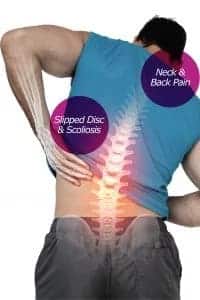
illustration of man with back pain due to slip disc

Low back discomfort has become a widespread issue, often referred to as a “pandemic.” It is the leading cause of disability in individuals under 45, affecting approximately 80% of the population. Despite its prevalence, many people still overlook the importance of spinal health, leading to long-term discomfort and dysfunction.

The spine consists of 24 presacral vertebrae, assisted by the sacrum and ending with the coccyx (tailbone). Spinal discs, which are gel-like structures located between the spinal bones, absorb shock and stress placed on the spine.

Muscles and ligaments provide help, and tendons, which attach muscles to bones, help stabilize the spine and enable movement. Given the complexity of the spine, any injury to these tissues can cause significant discomfort, especially if left untreated.

Slip Disc, Scoliosis & Spondylolisthesis

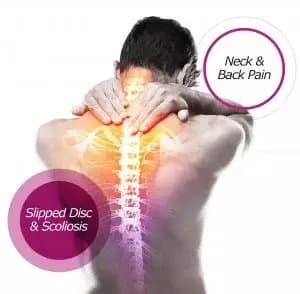
man with slip disc in neck & back shown

Structural issues such as scoliosis and spondylolisthesis are often contributors to significant back discomfort. Scoliosis, or abnormal lateral curvature of the spine, leads to muscle imbalances and altered posture.

While scoliosis itself is usually not discomforting, it can lead to severe imbalances if left untreated, putting individuals at a higher risk of developing spinal disc issues. In cases where bulging or herniated discs accompany scoliosis, care must address both the scoliosis and the slipped discs. This combination of conditions can make management more challenging and may not be entirely reversible.

Spondylolisthesis involves the anterior slippage of one vertebra over the vertebra below it, resulting in lower back discomfort and instability. If left untreated, the degree of slippage may progress, and neurological symptoms may develop. Structural issues like these are always more difficult to manage, emphasizing the need for proper care.

Traumatic spondylolisthesis often occurs due to falls or motor vehicle accidents. Patients with spondylolisthesis and scoliosis frequently experience intense discomfort, which can worsen with age.

If you continue experiencing discomfort after an injury, contact one of our centers. Our clinical teams will thoroughly evaluate and diagnose the root cause of your discomfort, as identifying the source of the condition is crucial to the recovery process. Let our team help you return to an active, healthy lifestyle.

Spinal Disc Herniations, Prolapse & Spinal Fractures

Spinal fractures can result from traumatic injuries or conditions such as osteoporosis. Compression fractures often occur due to degenerative changes, particularly in older individuals. Both traumatic events and degenerative changes can damage the spinal discs, with patients sometimes developing slipped discs weeks or months after the fracture.

Compression fractures in the vertebral body are common, especially among older, osteoporotic patients. A fracture in the spine can cause significant discomfort even with minimal pressure. Whether you are young or old, fractures can occur as a result of trauma.

Dealing with vertebral fractures is always more complex than fractures in other bones. Patients with spinal fractures may face long-term discomfort if not treated appropriately. A fractured spinal segment almost always leads to a slipped disc at or near the injured area. If you have experienced a fracture, it is essential to have your spine assessed by our clinical team of chiropractors and physiotherapists.

The Severity of Issues in Protruded, Extruded, and Fragmented Spinal Discs

The severity of discomfort in cases of protruded spinal discs can vary. Some individuals may experience mild discomfort, while others with significant spinal conditions may not feel any discomfort at all.

It’s important to note that not all spinal conditions manifest the same way; some might cause significant issues while others go unnoticed. Protruded discs, prolapsed discs, herniated discs, extruded discs, and fragmented discs can all result in varying degrees of discomfort, and it’s crucial not to overlook even mild discomfort.

Living with persistent discomfort, even at a mild level, can exacerbate the underlying condition. As the issue progresses, it becomes more challenging to manage, which is why early intervention is essential.

It’s a misconception to assume that discomfort will “go away on its own.” Discomfort is a signal that something is wrong with the body. Your spine is one of your most important structures taking care of it now can prevent further complications. If you’re experiencing recurrent neck or back discomfort, it’s important to seek care at our centers as soon as possible.

Spinal Disc Damage or Issues in the Neck

man with neck, back & slip disc pain

Neck discomfort affects 50-70% of people at some point in their lives. Neck issues often arise from poor posture, trauma, degenerative changes, or slipped discs.

Fortunately, research indicates that most cases of neck discomfort are mechanical in nature, meaning they are caused by issues with the muscles, bones, ligaments, discs, or joints in the neck.

In today’s world, neck discomfort is particularly common among individuals who work in office environments. The excessive time spent sitting at desks, using laptops, and engaging with mobile devices can lead to muscle tension and poor posture, which significantly contribute to neck discomfort. Modern lifestyles and technology have played a large role in the rising frequency of neck issues.

A slipped disc is one of the most prevalent and concerning causes of neck discomfort. What was once considered a rare condition is now common, even among teenagers. Poor posture, inadequate ergonomics, and sedentary lifestyles have led to an increase in neck discomfort and the frequency of slipped discs.

Leading Causes of a Slipped Disc

The primary cause of spinal disc degeneration or damage is premature wear and tear, which affects the muscles, ligaments, and joints in the neck. The cervical spine, which consists of seven vertebrae, bears the weight of the head roughly 4-6 kg. The neck is also highly flexible, allowing for a wide range of motion in various directions. The muscles, ligaments, joints, and discs work together to enable smooth movement and help.

However, any injury or malfunction in these areas can result in discomfort, and if left unaddressed, it may lead to more severe consequences such as restricted movement or other significant issues. Flexibility combined with the weight-bearing load of the neck makes the cervical spine particularly vulnerable to injury.

Ignoring neck discomfort can have long-term consequences. While discomfort relaxation methods may temporarily alleviate symptoms, they don’t address the root cause. The discomfort will often return once regular activities are resumed, especially if the problem is related to a slipped disc. A thorough evaluation and targeted care are crucial to properly address the issue and prevent it from worsening.

Bed Rest, Medication & Spinal Disc Issues

Commonly prescribed care for slipped discs include medication and bed rest. Unfortunately, these approaches often contribute to the worsening of spinal disc issues.

Recent research highlights that prolonged bed rest is not a productive solution; instead, staying active and engaging in exercise are better strategies to address neck discomfort.

Resting for extended periods weakens the spinal and core muscles, making recovery more difficult. Therefore, the recommended course of action is to seek targeted care that addresses the root cause of the problem, available at our centers.

Causes of Neck Discomfort and Slipped Discs

Research shows that the most common cause of slipped discs is mechanical dysfunction, including damage to the physical structures of the spine. These dysfunctions can arise from aging, ligament sprains, muscle strains, spinal disc damage, hypertrophy of the ligamentum flavum, facet joint arthritis, or spinal bone spurs (facet hypertrophy).

If left untreated, these conditions can worsen and lead to neurological symptoms, which can be more distressing and disabling. Timely care is crucial, as the longer the issue persists, the more challenging it becomes to address.

Yama Zafer, D.C. - Slip Disc: Your Non-Invasive Spine Care Options

“Slip Disc: Non-Surgical Options That Work” is written by Yama Zafer, D.C., with an educational background in physiotherapy and chiropractic, graduated from Cleveland Chiropractic University in Kansas City and has spent nearly three decades in physiotherapy and chiropractic read more about Y. Zafer on his official bio page.

Peer-Reviewed Medical Citations (Formatted for Professional Reference)

  • Deyo RA, Mirza SK. “Clinical practice. Herniated lumbar intervertebral disk.” N Engl J Med. 2006;354(3):311-320.
  • Chou R, et al. “Nonpharmacologic therapies for acute and chronic low back pain.” Ann Intern Med. 2017;166(7):493-505.
  • Weinstein JN, et al. “Surgical vs nonoperative care for lumbar disk herniation.” JAMA. 2006;296(20):2441-2450.
  • van Middelkoop M, et al. “Exercise therapy for chronic low-back pain.” BMJ. 2010;340:c64.
  • Foster NE, et al. “Prevention and care of low back pain: evidence, challenges, and promising directions.” Lancet. 2018;391(10137):2368-2378.
  • Delitto A, et al. “Low back pain clinical practice guidelines.” J Orthop Sports Phys Ther. 2012;42(4):A1-A57.

Page Update Statement

Page last updated on Thursday, March 13, 2026: Slip Disc: Non-Surgical Options That Work.