


ACL Injury: Symptoms, Assessment and Rehabilitation
ACL injury treatment depends on whether the anterior cruciate ligament is partially or completely torn, how unstable the knee is, what other structures are injured, and what the person needs the knee to do. Not every ACL tear is managed the same way, and surgery is not automatically the first step.
Whether the knee gives way in daily life, rather than the scan, drives the decision. A stable knee can frequently be managed without surgery; a knee that buckles on turning places the meniscus and cartilage at risk with every episode. Demands matter too, since pivoting sports ask far more of the ligament than straight-line activity. Either path begins the same way: restoring full extension, settling the swelling, and reactivating the quadriceps, which shuts down rapidly after injury.
For more information about an ACL injury, contact the Bukit Damansara (KL) main center: WhatsApp+60 17 269 1873 Call+603 2093 1000
ACL injury: what decides the treatment path
- Instability matters most. A knee that gives way under load behaves differently from a torn ligament that stays quiet.
- Other damage changes things. A meniscus tear, a cartilage lesion or a second injured ligament shifts the picture considerably.
- Rehabilitation is required. It is needed either way, and it is what determines the result whether or not you have surgery.
- Your demands count. Pivoting sport asks more of an ACL than walking, cycling or swimming does.
- Timing is a variable. Regaining full movement and settling the swelling before any surgery is standard practice.
The knee ligaments, and how each injury presents
Four ligaments stabilize the knee in different directions, and the mechanism of injury usually tells you which one took the load.
| Ligament | What it controls | Typical mechanism | Common first sign |
|---|---|---|---|
| ACL (anterior cruciate) | Shin sliding forward; rotation | Pivot or landing with the foot planted | An audible pop, rapid swelling within hours |
| PCL (posterior cruciate) | Shin sliding backward | A direct blow to the front of the bent knee | Vaguer ache; swelling develops more slowly |
| MCL (medial collateral) | Force opening the knee inward | Impact to the outside of the knee | Tenderness along the inner joint line |
| LCL (lateral collateral) | Force opening the knee outward | Impact to the inside of the knee | Tenderness on the outer side; sometimes nerve symptoms |
Swelling that appears within a couple of hours points to bleeding inside the joint and should be assessed promptly.
ACL Injury Assessment at Two KL Centers
If your knee gave way, swelled quickly after a twist, or no longer feels reliable on turning, an assessment can clarify the injury and whether a rehabilitation-first plan is reasonable or an orthopedic opinion is needed. For an ACL injury, the first visit tests every knee ligament and the meniscus, and examines the hips, ankles and lower back too. Bring the X-ray or MRI images themselves, on CD or film, as well as the reports. You can reach either center through the Bukit Damansara contact page and the Bandar Sri Damansara contact page, or call directly:
- Bukit Damansara (KL, main center): Call +603 2093 1000 or WhatsApp +60 17 269 1873 to see the Bukit Damansara / KL center.
- Bandar Sri Damansara (KL): Call +603 6262 5777 or WhatsApp +60 12 455 6939 to see the Bandar Sri Damansara center.
7 Key Things to Know About ACL Injury
- The ACL is one of the knee’s main stabilizing ligaments.
It helps control forward movement of the shin bone and supports rotational stability during walking, running, pivoting, jumping, and sports-related movement. - Sudden popping, swelling, or knee giving way are common early signs.
Many people first notice instability, weakness, swelling, or reduced confidence when turning, landing, or using stairs. - ACL injuries often involve more than one structure.
The meniscus, cartilage surfaces, collateral ligaments, and surrounding muscles may also be affected and should be considered during assessment. - Early rehabilitation focuses on stability and movement control.
Initial goals commonly include swelling management, restoring range of motion, improving walking confidence, and protecting the knee during turning and pivoting. - Strength balance across the hip, thigh, and knee is essential.
Quadriceps, hamstrings, hip stabilizers, and balance systems all play an important role in protecting the ACL during recovery. - Surgery decisions depend on instability and tear severity.
Partial tears or lower levels of instability may often begin with structured non-surgical rehabilitation, while more significant tears may require orthopedic review. - Lower-body mechanics strongly influence ACL recovery.
The video below explains how movement patterns through the hip, pelvis
ACL Care Guide: Knee Instability, Recovery & Return-to-Movement in KL
Video: How Knee Instability, ACL Stress & Lower-Body Mechanics Affect Recovery
An ACL injury is rarely only about the ligament itself. Knee stability is influenced by how force moves through the hip, pelvis, ankle, foot, and surrounding muscles during walking, pivoting, landing, and return to sports. The video below explains how lower-body mechanics, muscle balance, and weight transfer may influence ACL stress and recovery progression.
The chapters and an edited transcript of this video are on the Knee Pain Causes and Exercises video page.
An 18-minute educational video explaining knee instability, ACL stress, muscle balance, and guided rehabilitation principles presented by Yama Zafer, D.C.
Video Timeline: Key Recovery & Stability Moments
- 00:00 Why ACL injuries happen during sports and daily movement
- 00:40 How the knee functions as a weight-transfer and stability joint
- 01:52 ACL, meniscus, and cartilage load during movement
- 03:05 How alignment and pivoting stress the knee
- 04:47 Instability, stiffness, and giving-way warning signs
- 05:40 When X-ray or MRI may be discussed for ligament injuries
- 06:45 Conservative ACL rehabilitation and stability-focused care
- 07:55 Controlled warm-up and early mobility drills
- 08:58 Tubing and movement-control exercises
- 10:12 Wall squat mechanics and knee tracking
- 11:49 Inner and outer thigh stabilization work
- 14:09 Gym-based ACL strengthening principles
- 15:40 Quadriceps and hamstring balance training
- 16:51 Return-to-function exercise guidance
Therapy and Rehabilitation Modalities Commonly Used in ACL Recovery
Because ACL injuries often involve nearby structures such as the meniscus, collateral ligaments, cartilage surfaces, and surrounding muscles, rehabilitation may include several therapy approaches depending on the tissues involved.
A structured program may include:
- High-intensity laser therapy
sometimes used for pain and swelling around the knee; evidence specific to ACL injury is limited - Therapeutic ultrasound
may be used for more superficial structures such as collateral ligaments, tendon attachments, and soft tissue irritation around the knee - Interferential electrotherapy
may be included as part of swelling management, movement re-education, and early rehabilitation phases - Trigger point and soft tissue work
commonly focused on the quadriceps, hamstrings, calf muscles, iliotibial band, and hip stabilizers - Shockwave therapy
may be considered in selected cases involving tendon-related or chronic soft tissue changes around the knee - Spinercise® and guided rehabilitation exercise
used to improve controlled movement, muscle balance, knee tracking, and return-to-function progression
The rehabilitation pathway that fits you depends on the structures involved, degree of instability, and stage of recovery.
Manual Therapy in ACL Rehabilitation
After an ACL injury, the knee often loses full straightening, the quadriceps is inhibited and the way the joint moves during walking and turning changes. Gentle joint mobilization and soft-tissue work, including low-force instrument-assisted methods such as the Activator approach, may be used to help restore movement and reduce guarding so that exercise can progress.
Manual therapy does not reconnect or repair a torn ligament, and the research supporting it after ACL injury is limited. It is used as a support for the exercise program, which is where the evidence for recovery lies. Because the hip, ankle and foot also influence how the knee is loaded, assessment usually includes the whole lower limb.
For an ACL injury, I use the Activator Method: the Activator instrument gives a light, precise impulse without any twisting of the knee. Manual methods that twist the knee can make a ligament injury worse. I also advise against cracking or pulling an injured knee, because a ligament that is already torn cannot take that force.
How ACL Injuries Happen
Most ACL tears happen without contact, when the foot is planted and the knee twists or collapses inward during a sudden stop, change of direction or landing. They are common in football, rugby, basketball, netball, badminton and other pivoting sports, and women have a higher rate of ACL injury than men in the same sports.
The same forces often injure other structures at the same time, including the meniscus, the medial collateral ligament and the joint cartilage. That is why the assessment and the rehabilitation plan cover the whole knee rather than the ACL alone.
What Current Research Says About Knee Steroid Injections
Steroid injections, also called corticosteroid injections, are sometimes discussed to help reduce short-term swelling and pain inside the knee joint. However, more recent radiology and orthopedic literature suggests that these injections should be considered carefully, particularly when there is existing cartilage wear, ligament injury, or long-term joint instability.
Published reviews in radiology literature have raised concerns that repeated or poorly timed intra-articular steroid injections may be associated with accelerated cartilage wear, progression of osteoarthritic changes, weakening of nearby soft tissues, and in some cases increased structural stress within the joint.
Potential concerns that are discussed in current literature may include:
- faster progression of cartilage wear
- weakening of tendons and ligaments
- increased risk of tissue thinning
- temporary blood sugar elevation
- skin or soft tissue thinning near the injection site
- considerations around timing before surgery
For ACL-related knee injuries, the most important priority is often to first understand the degree of ligament damage, knee instability, and whether the meniscus, cartilage surfaces, or collateral ligaments are also involved.
Because every knee injury is different, decisions regarding injections, rehabilitation, or surgical referral are typically best made after a proper assessment and imaging review when needed.
In many cases, especially for partial ACL tears or lower levels of instability, early care may focus on swelling control, rehabilitation, muscle strengthening, balance work, and restoring confidence during walking and pivoting before more invasive options are discussed.
My own position is clear: I do not recommend steroid injections into a knee with an ACL injury. I find them invasive and painful, and they do nothing to mend a torn ligament. They can also damage the soft tissue and cartilage the knee relies on. If focused conservative care has not been enough, my advice is to skip the steroids and see a surgeon.
Symptoms of an ACL Injury
- A pop felt or heard at the moment of injury.
- Rapid swelling, usually within a few hours, caused by bleeding inside the joint.
- Pain, often deep in the knee, and difficulty continuing the activity.
- Loss of full straightening or bending.
- A feeling that the knee gives way or shifts when turning, pivoting or on stairs, especially once the swelling settles.
Some people can walk soon after the injury, so the ability to walk does not rule out a tear. An examination using tests such as the Lachman test, supported by MRI when needed, confirms the diagnosis and shows other injured structures.
Grades 1, 2 and 3: From Stretch to Complete Tear
A grade 1 ACL injury stretches the ligament without tearing it. A grade 2 injury is a partial tear. A grade 3 injury is a complete tear, and the knee is usually loose when tested. The grade, the other structures injured and how unstable the knee feels in daily life together decide the plan.
In my view, MRI is the gold standard scan for an ACL injury and for a PCL injury. A report can leave out milder injuries next to the torn ACL. So I review the images themselves for the meniscus, the collateral ligaments and the PCL.
How ACL Rehabilitation May Be Structured Without Surgery or Injections
An ACL injury often affects more than one part of the knee. In many cases, the meniscus, cartilage surfaces, collateral ligaments, and surrounding muscles may also influence how the knee feels and moves. For that reason, recovery tends to go better when the program covers overall knee stability, movement control and a staged return to load, rather than the ligament alone.
A structured non-surgical program may include chiropractic, physiotherapy, guided rehabilitation, soft tissue work, and movement-specific exercise programs designed to improve knee stability and support safer movement patterns.
Early goals commonly include reducing swelling, improving confidence during walking, restoring controlled range of motion, and improving how the knee handles turning, stair use, and daily activity.
As the knee becomes more stable, rehabilitation may progress toward strengthening the quadriceps, hamstrings, hip stabilizers, and balance systems that help protect the ACL during walking, pivoting, and return to sports-related movement.
The most important factors are early assessment, accurate diagnosis, and a rehabilitation plan that matches the severity of the ligament injury and any nearby structures involved.
Why ACL Injuries Often Occur With Meniscus and Cartilage Changes
ACL injuries rarely happen in isolation. In many cases, the same twisting, pivoting, or valgus-loading forces that strain the ACL may also affect the meniscus, cartilage surfaces, and nearby ligaments.
In more acute pivot-type injuries, the lateral meniscus may be involved early because of rotational shear and compression within the outer compartment of the knee. Over time, when the knee remains unstable after an ACL injury, the medial meniscus often takes on an added stabilizing role, especially in helping resist forward movement of the tibia. This is one reason medial meniscus tears may become more common in longer-standing ACL deficiency.
When the ACL is injured, abnormal knee movement may increase pressure across the femoral condyles and tibial plateau. In some cases, this may contribute to cartilage stress, chondral wear, bone marrow edema, or subchondral irritation, particularly when instability persists.
This relationship is important because care often needs to address the ACL, meniscus, cartilage surfaces, and overall knee mechanics together rather than as separate problems.
MCL, PCL and Other Knee Ligament Injuries Without Surgery
Knee ligament injury treatment in KL at CSC follows the same order of care as for an ACL injury. Here is how the other ligaments in the table above are usually treated:
- MCL tear: the most often injured knee ligament. Most MCL tears are treated without surgery, with protection, a brace for a few weeks and rehabilitation.
- PCL tear: often from landing on a bent knee, or a knee striking a car’s dashboard. Many mild and moderate PCL tears are cared for without surgery.
- LCL and the outer back corner of the knee: these injuries more often need a surgeon’s opinion early. That matters most when the knee is loose to the side.
What to Do After a Knee Injury
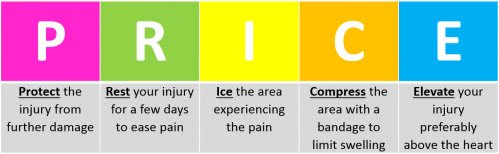
In the first days, protect the knee, use ice and compression for swelling, elevate the leg, and use crutches if walking is painful or the knee feels unstable. Gentle movement to keep the knee straightening and bending is usually encouraged as pain allows, rather than keeping it completely still.
ACL Injury Self-Care: The First 72 Hours
After an ACL injury, my advice is to follow PRICE for at least 72 hours: protection, rest, ice, compression and elevation. The sooner it starts, the better. Stop playing at once, and do not twist, hop or jump to test the knee.
For ice, put a thin towel under the ice and set a phone timer for 10 to 15 minutes. Repeat two or three times daily, with two hours or more between sessions. Use an elastic bandage that feels snug rather than tight, and raise the leg on pillows above the heart while lying down.
Avoid sport and pivoting until the knee has been assessed. A brace can help some people with instability in the early phase or during return to activity; ask before buying one, because the right type depends on the injury. If the examination suggests an ACL tear or other significant damage, MRI and an orthopedic opinion can be arranged through a referral.
In my experience, a brace for an ACL injury should not be needed for more than a few weeks. There is no need for an expensive one. The right brace depends on the injury, so it is chosen at the first visit. Over the months, it is the thigh and hip muscles that hold the knee steady.
Do You Need Surgery for an ACL Injury or Tear?
Whether surgery is discussed for an ACL injury depends on several factors, and the decision is not based on the ligament alone.
Important considerations may include:
- the severity of the tear (partial or full-thickness)
- the degree of knee instability
- whether the meniscus or other ligaments are also involved
- the person’s age, activity level, occupation, and sports goals
- how the knee responds to early rehabilitation
In some cases, especially with partial tears or lower levels of instability, a structured non-surgical rehabilitation program may be explored first. This often focuses on swelling control, range of motion, muscle strengthening, balance, and improving how the knee handles turning, stairs, and daily movement.
For more significant tears, repeated instability, or return-to-sport requirements, an orthopedic review may be discussed to determine whether surgery is appropriate. To see how knee control, alignment, thigh strength, and movement mechanics are explained together, watch Knee Pain Causes and Exercises Explained.
The most important step is an early assessment with accurate diagnosis, often supported by MRI when needed, so the degree of ligament injury and any nearby meniscus or cartilage involvement can be properly evaluated.
In a randomized trial of young, active adults with acute ACL tears, a structured rehabilitation program with the option of later reconstruction gave results at two years similar to early reconstruction plus rehabilitation, and more than half of the rehabilitation-first group did not need an operation during that time (Frobell et al., 2010). Surgery remains the better choice for some people, particularly those with ongoing giving way or high pivoting demands.
In my experience, surgery for an ACL injury is generally needed only for a full-thickness tear, and a partial tear responds well to non-invasive care. Even with a full tear, the decision depends on age, lifestyle, work and the sport the person wants to return to. It also depends on how unstable the knee stays after a proper course of focused conservative care. If an operation is essential, I refer the person to a surgeon, and rehabilitation at CSC can continue after it.
Focused conservative care, as I use the term, is planned from what the examination and the imaging find. It targets the causes those findings document, looks at the whole leg, and must do no harm. That sets it apart from routine treatment, much of which is useless. I see surgery as an option only once such care has been properly given and has not worked.
ACL Tear Treatment Without Surgery: What the KANON Trial Found
The KANON trial in Sweden, cited above, took 121 young, active adults, average age 26, with a fresh ACL tear. One group of 62 had structured rehabilitation with an early ACL reconstruction. The other 59 had the same rehabilitation, with the option of a reconstruction later if it was needed. The trial tested structured rehabilitation; it did not test chiropractic care or the Activator Method.
At five years there was still no significant difference between the groups on a combined knee score. The score takes in knee pain, symptoms, sport and recreation, and knee-related quality of life. Of the 59 who began with rehabilitation, 29 had never had an ACL reconstruction (Frobell and colleagues, 2013). The authors suggested that rehabilitation can be considered a primary treatment for an acute ACL tear in young, active adults.
Many people who read about ACL injuries also want to know about a sudden knee injury. Also, our back pain guide brings our lower back, pelvis and leg topics together in one place.
Related Knee Injury, Stability & Recovery Guides
An ACL injury rarely affects only one structure inside the knee. Depending on how the injury happened, nearby ligaments, meniscus, cartilage surfaces, and movement mechanics may also need attention during recovery. The pages below can help you explore related knee conditions, instability patterns, and rehabilitation pathways that commonly overlap with ACL injuries.
- Meniscus Tear Care in KL: Gentle Non-Surgical Options
for locking, catching, swelling, and tear patterns that often occur with ACL injuries - PCL Injury Care & Gentle Knee Rehabilitation
for posterior knee instability and dashboard-type or multi-ligament injuries - Knee Care in KL & PJ at CSC
for a broader guide to knee swelling, instability, cartilage wear, and movement-related symptoms - Runner’s Knee & Front Knee Symptoms
for kneecap-related symptoms and sports overuse issues - Knee Arthritis & Degenerative Knee Changes
for long-term cartilage wear and stiffness - Knee Rehabilitation & Exercise Guide
for strengthening, balance, and movement retraining after ligament injuries
How the Surgery Decision Is Actually Made
An ACL tear does not automatically mean an operation, and it does not automatically mean avoiding one. The decision turns on a handful of specific things, and any clinician should be able to walk you through them.
- Does the knee give way? Not whether it feels loose on a test, but whether it buckles during ordinary activity. Functional instability is the strongest argument for reconstruction.
- What do you need the knee to do? A sport built on pivoting, cutting and landing puts demands on the ACL that walking and cycling do not.
- What else was injured? A repairable meniscal tear, a significant collateral ligament injury or cartilage damage changes the calculation, sometimes decisively.
- How does the knee respond to a proper rehabilitation program? A quadriceps that recovers and a knee that stops giving way tells you something a scan cannot.
- Your age and the state of the joint. These influence both what a reconstruction can achieve and what conservative care can hold.
Our position is consistent: a structured rehabilitation program first, unless the findings argue against it, and an orthopedic opinion the moment the knee is telling us it needs one. We are not the right people to make that call alone, and we do not pretend otherwise.
What a Non-Surgical ACL Program Involves
This is where most programs fall short, so it is worth being specific.
- Phase one, settle and regain extension. Full straightening comes first. A knee that will not straighten develops problems that outlast the ligament injury.
- Phase two, quadriceps and hamstring strength. Quadriceps inhibition after an ACL injury is the single most predictable problem, and rebuilding it is slow, measurable work.
- Phase three, control under load. Single-leg balance, landing mechanics, deceleration and change of direction, built up deliberately.
- Phase four, return to the actual activity. Progressed by what the leg can do compared with the other side, not by the calendar.
- Expect months. Anyone offering you a knee back in weeks is describing symptoms, not capacity.
In my experience, exercise started too soon after an ACL injury adds pain and swelling, and it can damage both the cartilage and the meniscus. That is why each phase waits for the knee. Most exercises are done at home, so visits are kept for what home exercise cannot do: alignment, physiotherapy and testing.
When a Knee Needs Prompt Medical Assessment
- The knee is locked and will not straighten, which can mean a displaced meniscal fragment.
- You could not bear weight at the time of injury or cannot now.
- The knee swelled within an hour of the injury, which points to bleeding in the joint.
- Obvious deformity, or numbness and coldness below the knee.
- A hot, red, swollen knee with fever, which needs same-day medical assessment.
ACL Injury FAQ: Instability, Recovery, MRI & Surgery Questions in KL
This section answers the most common questions people have about ACL injuries, including sudden knee popping, swelling, instability, imaging, rehabilitation, and when surgery may be discussed. The goal is to help readers better understand how ACL injuries affect knee movement and what non-surgical care pathways may be explored.
Before booking, the chiropractic price list in Kuala Lumpur and physiotherapy fees in Kuala Lumpur pages show each fee and the package options.
What does an ACL injury usually feel like?
Can you walk with a torn ACL?
Do all ACL tears need surgery?
When is an MRI usually needed for an ACL injury?
MRI is usually considered when the history and examination suggest a significant ligament tear, when the knee keeps giving way, when there are signs that the meniscus, cartilage or nearby ligaments may also be involved, or when surgery is being considered. MRI helps confirm the degree of ligament injury and identify associated knee damage.
How long does ACL rehabilitation usually take?
Why does the knee feel unstable after an ACL injury?
Can an ACL injury happen together with a meniscus tear?
References
- Frobell RB, Roos EM, Roos HP, Ranstam J, Lohmander LS. A randomized trial of treatment for acute anterior cruciate ligament tears. N Engl J Med. 2010;363(4):331-342.
- Frobell RB, Roos HP, Roos EM, et al. Treatment for acute anterior cruciate ligament tear: five year outcome of randomised trial. BMJ. 2013;346:f232.
- Culvenor AG, Girdwood MA, Juhl CB, et al. Rehabilitation after anterior cruciate ligament and meniscal injuries: a best-evidence synthesis of systematic reviews for the OPTIKNEE consensus. Br J Sports Med. 2022;56(24):1445-1453.
- Bronstein RD, Schaffer JC. Physical examination of knee ligament injuries. J Am Acad Orthop Surg. 2017;25(4):280-287.
- Zeb J, Chaudary MI, Zeb M, et al. Diagnostic accuracy of non-invasive tests versus arthroscopy in anterior cruciate ligament (ACL) injuries. Cureus. 2024;16(5):e60925.
These references describe ACL injury, its examination and rehabilitation in general. None of them evaluates care at Chiropractic Specialty Center.
The Author of ACL Injury: Symptoms, Assessment and Rehab in KL
ACL Injury: Symptoms, Assessment and Rehab in KL was written by Yama Zafer, D.C., who has 30+ years in chiropractic and physiotherapy and founded Chiropractic Specialty Center in Kuala Lumpur in 2006.
Last Updated: ACL Injury: Symptoms, Assessment and Rehabilitation
ACL Injury: Symptoms, Assessment and Rehabilitation was last reviewed and updated on October 23, 2026.