

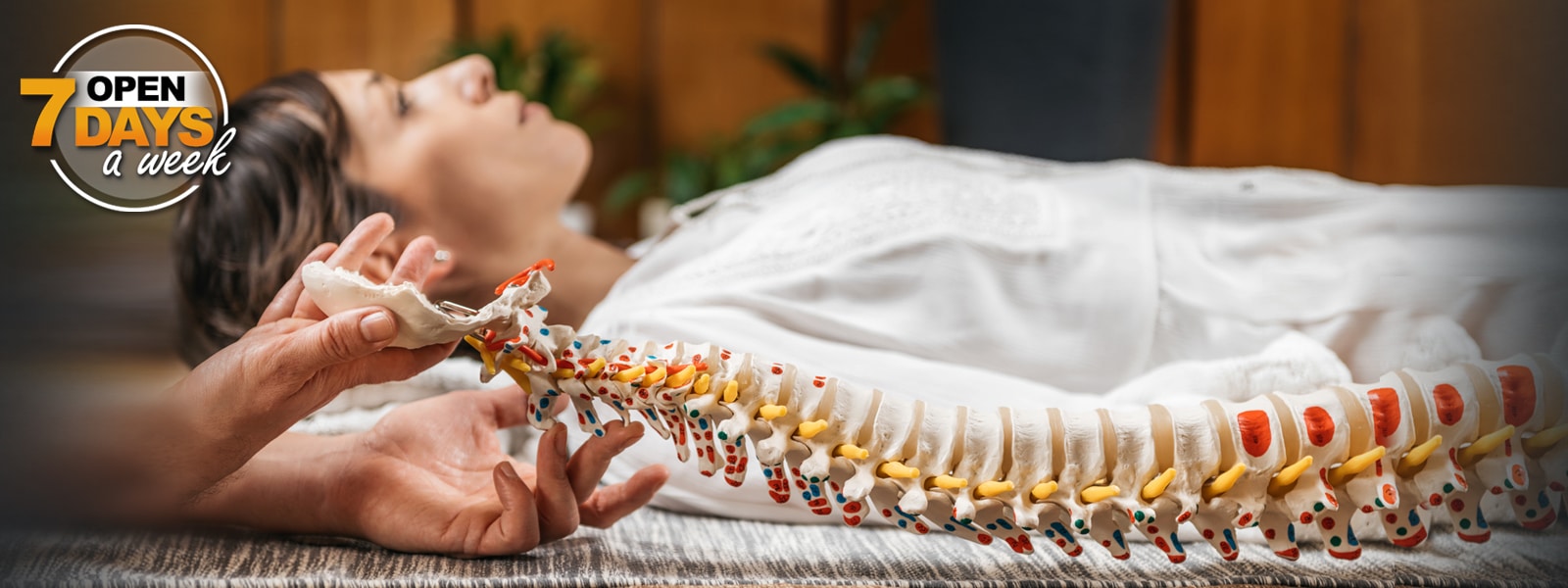
Chiropractor in Bandar Sri Damansara with Physiotherapy
A chiropractor in Bandar Sri Damansara at Chiropractic Specialty Center (CSC) works with registered physiotherapists in one center on Jalan Damar, Kuala Lumpur. Chiropractic care in Bandar Sri Damansara at CSC is used for back and neck pain, slipped disc, sciatica, pinched nerves, and shoulder and knee problems. It is offered to adults of all ages, to women during pregnancy and to children, and the assessment decides whether it suits each person. The first visit checks the history, the movements that bring on the symptoms and, where needed, the nerves. Care then uses gentle, non-twisting chiropractic methods, with registered physiotherapy when the findings call for both.
Contact CSC Bandar Sri Damansara: WhatsApp +60 12 455 6939 | Call +603 6262 5777
The center is on Jalan Damar SD 15/1, across from Central Spine Sri Damansara Community Park. It is close to Kepong, Desa ParkCity, Bandar Menjalara, Kota Damansara, Sungai Buloh and Selayang. It is one of the two Kuala Lumpur centers of Chiropractic Specialty Center, founded in 2006, and the main center is in Bukit Damansara. The sections below cover the address and hours, the first visit, conditions, methods, children's care, referral and common questions.
Chiropractor in Bandar Sri Damansara: Address, Hours and Key Facts
Address8-G, Jalan Damar SD 15/1, Bandar Sri Damansara, 52200 Kuala Lumpur, Wilayah Persekutuan Kuala Lumpur
LandmarkAcross from Central Spine Sri Damansara Community Park, in the same shoplot row as the Mazda dealership
Phone+603 6262 5777
WhatsApp or SMS+60 12 455 6939
Opening hoursMonday to Friday: 8:00 AM to 8:00 PM
Saturday and Sunday: 8:00 AM to 6:00 PM
Public holiday hours may differ, so please check before you travel.

| Center detail | Information |
|---|---|
Center | Chiropractic Specialty Center Bandar Sri Damansara |
Practitioners | Registered chiropractic practitioners and registered physiotherapists |
Established | Chiropractic Specialty Center was established in 2006 |
Company | Operated by Chiropractic Specialty Center Sdn. Bhd. (Company No. 757008-A) |
Getting here | On Jalan Damar SD 15/1, across from Central Spine Sri Damansara Community Park and in the same shoplot row as the Mazda dealership. A short drive from the Sri Damansara MRT stations on the Putrajaya Line, and minutes from Kepong and Selayang, with on-street parking in the shoplot area. |
Center page | |
Fees | Published on the chiropractic fees and physiotherapy fees pages, and the same at every CSC center |
Main KL center | The Bukit Damansara / KL center at Plaza Damansara is the main center of CSC |
Reviews and directions | The center's Google Maps listing shows reviews and gives directions |
Watch: Chiropractic and Physiotherapy Care at CSC
A short introduction to how gentle, non-rotatory chiropractic and registered physiotherapy are combined at Chiropractic Specialty Center, and how spine, disc, nerve, and joint concerns are assessed before any care begins. Watch on YouTube.
Chiropractic and Physiotherapy, Coordinated Under One Roof
Chiropractic and physiotherapy are distinct professional services. At CSC Bandar Sri Damansara they may be provided separately, or coordinated when your assessment shows both are relevant.
Chiropractic care focuses on spinal and joint motion and mechanical function within the practitioner's scope. Registered physiotherapy focuses on muscles, mobility, strength, and rehabilitation.
A coordinated plan may combine lower-force chiropractic methods, hands-on physiotherapy, guided exercise, and posture and activity guidance, based on your individual assessment rather than a fixed package. You may request physiotherapy only, chiropractic only, or a coordinated plan. Read more about our chiropractic combined with physiotherapy approach.
What Happens at Your First Visit
Your first visit is a consultation and structured assessment; any adjustment or care package is decided from its findings. It usually includes:
- History and goals: when the problem began, what changes it, what you have already tried, and which daily activities matter most to you.
- Physical assessment: posture and movement review, joint motion, and muscle testing, with reflexes, sensation, and balance checked where relevant.
- Imaging review: any MRI, X-ray, or CT is interpreted alongside your symptoms and examination, not on its own.
- Explanation and options: findings, limits, suitable options, and fees explained in plain language before you commit; current chiropractic fees and physiotherapy fees are published in advance.
- Referral when needed: if a medical, injection, or surgical pathway is more appropriate, we say so and arrange or recommend referral.
Please bring: your identification, any recent imaging and reports, a list of medications, details of previous care, and comfortable clothing that allows the relevant area to be assessed.
Conditions We Care For at CSC Bandar Sri Damansara
Our center provides non-surgical, non-rotatory care for a wide range of spine, disc, nerve, and joint concerns. Each condition below links to its dedicated page, where you will find the full detail.
Back Pain and Lower Back Pain
Can a chiropractor in Bandar Sri Damansara help back pain? A chiropractor can assess back pain and plan non-invasive care for it, and at CSC that care comes first, ahead of any referral for injections or surgery. We assess whether the pain comes from a disc, joint, muscle, or posture, then care for it gently.
Back pain is a symptom, not a single diagnosis. It may relate to muscle strain, spinal joint irritation, disc changes, prolonged sitting or lifting, posture, sacroiliac stress, or nerve involvement.
At our Jalan Damar center we often see commuters and desk workers from Kepong, Desa ParkCity, and Selayang with lower-back pain, mid- and upper-back pain, and back pain that radiates into the leg. Care may combine gentle spinal methods, registered physiotherapy, graded exercise, and activity guidance.
Assessment, self-management, exercise and timely referral carry more weight in this plan than any single procedure. See our back pain treatment and upper-back pain pages.
Neck Pain, Neck Stiffness, and Upper-Back Symptoms
Can a chiropractor help neck pain and stiffness? Yes, a chiropractor can assess neck pain from desk and screen posture, cervical disc changes, or spondylosis, and care for it with gentle, non-rotatory methods, physiotherapy and posture retraining. Suitability is decided by your assessment, and forceful neck twisting is avoided.
Neck pain may come with stiffness, reduced turning, headaches, or symptoms extending into the shoulder, arm, or hand. Long screen hours and poor ergonomics are common triggers among residents and office workers around Bandar Sri Damansara and Sungai Buloh.
Care uses gentle, non-rotatory methods and physiotherapy, chosen after assessment. CSC does not use aggressive neck-pulling procedures such as the Y-Strap or Ring Dinger.
See neck care, cervical spondylosis, neck stiffness care, neck and upper-back problems, and whiplash.
Slipped Disc, Bulging, Herniated, Protruded, Prolapsed, and Extruded Disc
What is a slipped disc, and how is it managed without surgery? "Slipped disc" is an everyday term for a disc bulge, protrusion, prolapse, herniation, or extrusion, which may press on nearby nerves. Care uses gentle, non-rotatory methods and physiotherapy, without aggressive twisting, and imaging is read with your symptoms.
"Slip disc" is a common search phrase, not one exact radiology term. Depending on the report it may describe a bulge, protrusion, prolapse, herniation, extrusion, or a separated fragment.
The recognized lumbar disc nomenclature (Fardon and colleagues, 2014) distinguishes a broad bulge from a localized herniation, and classifies protrusion and extrusion as patterns of herniation, with an extrusion extending farther beyond its base. These labels describe anatomy, but your symptoms and neurological checks guide care. With any of these disc problems, yoga must be avoided, because so many of its poses bend or twist the spine.
Serving patients across this part of northern Kuala Lumpur and Selangor, we care for the full spectrum with non-rotatory methods and, where suitable, gentle spinal decompression rather than forceful twisting: disc bulge, disc protrusion, prolapsed disc, herniated disc, extruded disc, and degenerative disc disease.
For an overview, see non-surgical slipped-disc care and our general spinal disc information.
Sciatica, Sciatic Nerve Pain, Pinched Nerve, and Nerve Impingement
Can a chiropractor in Bandar Sri Damansara help sciatica? Sciatica is pain, numbness, or tingling that travels from the lower back into the buttock and leg when the sciatic nerve is irritated, often by a disc or joint. Non-invasive care starts by finding the cause, and it avoids forceful twisting.
Not every leg pain is sciatica, and not every MRI disc finding is responsible for the symptoms. MRI scans of people with no back pain often show the same disc changes: a review of 33 studies covering 3,110 people without symptoms found disc degeneration in 37% of 20-year-olds and 96% of 80-year-olds (Brinjikji and colleagues, 2015). "Pinched nerve," "nerve impingement," and "nerve compression" all describe a nerve that is irritated or has less space, from disc strain, narrowing, enlarged facet joints, ligament thickening, or muscle tension. An irritated nerve can cause numbness, tingling, weakness, or burning.
Care assesses the involved pathway, strength, reflexes, sensation, and walking. We then use gentle, non-rotatory methods and physiotherapy, avoiding twisting where a disc is involved.
Leg weakness that keeps getting worse should not be ignored. It calls for a careful assessment by a competent provider, and conservative care can continue only while the weakness itself is improving.
Whether a disc, a joint or a tight muscle is irritating the nerve, if you have sciatica or pain traveling down a leg, get urgent medical attention, a thorough assessment at a hospital emergency department straight away, within hours, if you develop new or worsening numbness around your genitals, between your genitals and anus, or around your anus. New difficulty passing urine, or any loss of bladder or bowel control, needs the same urgent assessment. These symptoms can have different causes. Some may call for an invasive procedure, but an assessment helps determine the appropriate care and does not mean you necessarily need surgery.
See sciatica care, sciatic nerve pain, and pinched nerve care. Signs that call for medical review are listed together in the "When CSC Refers" section below.
Facet Hypertrophy, Ligamentum Flavum Hypertrophy, and Stenosis Findings
What do facet hypertrophy and ligamentum flavum hypertrophy mean? Facet hypertrophy is enlargement of the small joints at the back of the spine, and ligamentum flavum hypertrophy is thickening of a spinal ligament. Both are common with age and can narrow the space around the nerves; they are read together with your symptoms.
MRI reports often describe facet joint hypertrophy and ligamentum flavum hypertrophy, which can reduce space when combined with disc-height loss or osteophytes.
These are structural descriptions, not a diagnosis of your symptoms. Their relevance depends on the degree of narrowing, the matching nerve signs, and your walking and standing tolerance. Where the findings suggest significant stenosis or progressive change, referral is discussed.
Shoulder Pain, Frozen Shoulder, and Adhesive Capsulitis
Can non-invasive care help frozen shoulder and shoulder pain? Frozen shoulder (adhesive capsulitis) is progressive shoulder stiffness and pain from tightening of the joint capsule. Care combines low-force techniques with physiotherapy and structured rehabilitation to support range and comfort, without injections or surgery.
Shoulder pain may arise from the shoulder joint, rotator cuff, surrounding muscles, the shoulder blade, or the neck. Frozen shoulder typically involves progressive pain and loss of movement.
Care is commonly physiotherapy-led: graded movement, joint mobilization, muscle work, and rehabilitation, with chiropractic methods for relevant joints where appropriate.
See shoulder care and frozen shoulder.
Knee Pain: Meniscus, ACL, and Osteoarthritis
Does CSC Bandar Sri Damansara provide non-surgical knee care? Non-surgical care can support knee pain, meniscus, ligament, and osteoarthritis concerns through physiotherapy, exercise, and gentle joint care. Chiropractic focuses on joint mechanics; physiotherapy addresses soft tissue and rehabilitation. What suits you is decided by assessment.
Knee pain can involve the meniscus, ligaments, cartilage, the patellofemoral joint, muscles, tendons, or osteoarthritis-related changes. A meniscus is a cartilage cushion, while the ACL is a stabilizing ligament; they are different injuries. Meniscus-related concerns may cause joint-line pain, swelling, catching, locking, or difficulty straightening the knee, and the assessment considers the injury mechanism, swelling, stability, motion, and walking.
Registered physiotherapy may be used for motion, strength, balance, and staged rehabilitation before or after a surgical opinion.
For knee osteoarthritis, a 2015 Cochrane review pooled 44 trials with 3,537 people and found that land-based exercise eased pain by about 12 points on a 100-point scale right after a program, a moderate effect that was smaller but still present two to six months later (Fransen and colleagues, 2015). At CSC, care for knee osteoarthritis and degenerative changes usually centers on registered physiotherapy, graded exercise, strength, movement control, and load management, with chiropractic methods considered for relevant joint mechanics where appropriate; the aim is comfort and function. See knee care, meniscus concerns, ACL-related concerns, and knee osteoarthritis.
Hip, Elbow, Foot, and Jaw Pain
We also care for hip pain and stiffness, elbow pain including golfer's and tennis elbow, foot and heel pain, and jaw (TMJ) pain, each assessed for joint mechanics and load and cared for with gentle methods and physiotherapy.
The Gentle, Non-Rotatory Methods We Use
Methods are selected after assessment and may change as your tolerance and function change. Care avoids forceful, high-speed twisting of the neck and lower back.
Depending on your assessment, a chiropractic adjustment may use the low-force Activator® instrument, Cox® Flexion-Distraction, or drop-table techniques. Where a disc or nerve is involved, gentle spinal decompression may be added to the plan.
Registered physiotherapy contributes hands-on therapy and modalities such as high-intensity laser, shockwave therapy, and therapeutic ultrasound, together with guided exercise and rehabilitation. Spinal decompression and similar equipment are used only when suitable after assessment. Both Kuala Lumpur centers have the full range of CSC's treatment equipment and apply the principles of NSD Therapy®.
Care is kept within what the patient can comfortably tolerate, and the patient tells the clinician at once if anything hurts. In the words of Yama Zafer, D.C.: “No pain, more gain.”
Children's Posture, Sport and Spine Care in Bandar Sri Damansara
At the Bandar Sri Damansara center, chiropractors and physiotherapists plan care for children and teenagers together, with exercise as a central part of the plan. The concerns assessed include a stiff neck after long hours of study or gaming, back pain during sport, uneven shoulders that may point to a scoliosis curve, and a neck that keeps cracking.
Care for younger children uses slow, low-force methods, soft-tissue work, posture habits and age-suited exercises, while teenagers' plans move closer to adult care and can include strength work and a gradual return to sport.
The guide to chiropractic care for children explains how each age is cared for, and the guide to neck manipulation in children summarizes the research and guidance. The guide to neck cracking in children explains the cracking habit, and the checklist of questions to ask before chiropractic care for a child puts the important questions in order.
Video: Is Chiropractic Safe? 13 Questions About MRI, Cracking and Physio
In this educational video, Yama Zafer, D.C., answers common questions people ask before choosing chiropractic or physiotherapy: chiropractic safety, the cracking sound, technique selection, spinal disc considerations, knee mechanics, comfort during care, MRI and X-ray use, and how chiropractic and physiotherapy may work together.
Key Moments: Chiropractic Safety, MRI, Cracking and Physio
- 00:00 Overview: chiropractic safety, cracking, imaging, and common questions
- 00:33 Is chiropractic considered safe?
- 01:35 Standard methods, and gentler methods that do not twist the spine
- 02:44 Why safety depends on the chiropractor and the technique
- 03:02 Why care should be performed by registered chiropractors
- 04:01 What the cracking sound may mean during an adjustment
- 04:22 Techniques that produce the sound, and the Activator for worn joints
- 05:28 Do chiropractors only focus on the spine?
- 06:06 Chiropractic approaches for knee mechanics
- 07:27 Comfort levels during chiropractic sessions
- 08:28 How soon people may notice movement or comfort changes
- 09:48 What to consider when changes are not noticeable
- 11:16 When X-rays or MRIs may be recommended
- 11:50 Are full-spine X-rays always needed?
- 12:46 MRI versus X-ray for soft-tissue information
- 13:42 General considerations for sciatic-type presentations
- 14:56 Chiropractic or physiotherapy?
- 15:35 What holistic care means in this context
- 16:55 Closing
For the chapter list and the transcript, open the Is Chiropractic Safe video page.
Why We Don't Use Aggressive Neck or Back Pull Methods (Ring Dinger® / Y-Strap)
Some centers promote aggressive spinal traction such as the Ring Dinger® or Y-Strap, which apply sudden, forceful pulling to the neck or lower back. These are often seen on social media.
They may not be appropriate for everyone, particularly for people with spinal disc damage, cervical spondylosis, uncovertebral joint degeneration, or vascular risks. At CSC we do not use high-force traction; our care is built on gentle, clinically guided methods chosen after assessment.
Watch the video on YouTube, and read more on the risks of aggressive neck-pull methods.
Key Moments: Aggressive Neck Pulling and Cracking
- 00:00 Why forceful neck pulls may be risky
- 00:14 Y-Strap and Ring Dinger-style pulling mechanics
- 00:38 Cervical joints, spinal discs, and neck ligaments
- 01:11 Nerve pathways and vertebral artery considerations
- 01:45 How spondylosis may affect response to force
- 02:14 When aggressive pulling becomes a concern
- 02:51 Uncovertebral joints, bone spurs, and neck stiffness
- 03:38 Vertebral artery compression considerations
- 04:06 The “salon stroke” connection explained
- 04:34 Why side-neck yanking is especially concerning
- 04:50 Why years of experience do not remove risk
- 05:32 Who may be more sensitive to aggressive neck force
- 06:16 Brainstem, spinal cord, and dura tension effects
- 08:12 Understanding neural traction from sudden pulling
- 09:19 How spinal discs may respond to sudden force
- 09:38 Gentle cervical care versus aggressive methods
- 09:59 Final educational takeaways
The chapters and an edited transcript of this video are on the Neck Cracks Are Dangerous video page.
When CSC Refers for Medical, Imaging, Injection, or Surgical Review
Some findings are better suited to medical care, or another pathway, than a routine appointment:
| If you notice… | Examples |
|---|---|
Numbness around the genitals or anus, or bladder or bowel changes | New or worsening numbness around the genitals or anus with back or leg pain, new difficulty passing urine, or loss of bladder or bowel control. These need a thorough assessment at a hospital emergency department straight away, within hours. |
Possible stroke, heart, or breathing emergency | Stroke-like symptoms, sudden severe dizziness with neurological change, chest pain, or breathing difficulty |
Serious injury | Severe trauma, suspected fracture, major joint deformity, inability to bear weight, or a truly locked knee |
Systemic illness | Fever, unexplained illness, infection concern, or a cancer history with new severe symptoms |
Progressive nerve problems | Progressive neurological loss, significant spinal stenosis, or an unstable injury |
Pregnancy concerns | Any pregnancy-related warning signs |
These are examples. In an emergency, contact Malaysia's emergency services.
Why People Choose CSC Bandar Sri Damansara
- Part of an established group: Chiropractic Specialty Center was established in 2006 and operates several centers across the Klang Valley.
- Registered practitioners: chiropractic by registered chiropractic practitioners, and physiotherapy by registered physiotherapists.
- Assessment first: imaging, symptoms, examination, function, and goals are considered together.
- Coordinated under one roof: chiropractic, physiotherapy, and rehabilitation together when appropriate.
- Gentle method selection: lower-force and non-rotatory care, with no aggressive neck-pulling.
- Clear scope and referral: we explain when a medical, injection, or surgical pathway is more appropriate.
Read more about us, meet the team, and read about Yama Zafer, D.C.
Areas We Serve From Bandar Sri Damansara
Our center on Jalan Damar SD 15/1 is convenient for people living or working across this part of northern Kuala Lumpur and Selangor.
We welcome patients from Bandar Sri Damansara, Sri Damansara, Kepong, Selayang, Bandar Menjalara, Desa ParkCity, Sungai Buloh, and Segambut. Travel time varies with traffic, so check current directions before you set out. The areas served by both Kuala Lumpur centers are listed together on one page.
If another location is easier for you, the main center of CSC is the Bukit Damansara / KL center at Plaza Damansara, and the address and hours of every center are on the contact page.
Share Your Experience
Every patient of either Kuala Lumpur center is welcome to leave an honest Google review, and nothing is offered in return for a review. Reviews of the Bandar Sri Damansara center are written on its Google Maps listing, which also gives directions.
Explore Spine Levels, MRI Findings and Related Care
Each spine level, MRI finding, and related topic has its own detailed page.
Cervical Spine, Level by Level
- Neck Chiropractor KL: Assessment and Low-Force Care
- Upper Cervical Chiropractor: What C0-C3 Covers
- Occiput and Atlas (C0-C1): What This Joint Does
- Understanding C1-C2 Segment Dysfunction
- Understanding C2-C3 Segment Dysfunction
- C4-C5: What Symptoms at This Neck Level Mean
- C5-C6 Disc Changes and Non-Invasive Neck Care
- C6-C7: What Symptoms at This Neck Level Mean
- C7-T1 Spine: Joint, Disc & Nerve Care in Kuala Lumpur
Lumbar Spine Levels and MRI Findings
- L1-L2 Disc Problems: Symptoms, MRI Findings and Care
- L2-L3 Spine Care in Kuala Lumpur
- L3-L4 Spine Care in Kuala Lumpur
- L4-L5 Back Issues: Slip Disc, Sciatica, Stenosis & Nerve Symptoms
- L5-S1 Disc Problems: Symptoms, MRI Findings and Care
- Facet Hypertrophy and Non-Invasive Care
- Ligamentum Flavum Hypertrophy: MRI Findings and Narrowing
Chiropractor in Bandar Sri Damansara: Frequently Asked Questions
These answers cover visiting and booking at CSC Bandar Sri Damansara, fees, safety, slipped discs, pregnancy, older adults, imaging, and when medical care comes first.
Where is CSC Bandar Sri Damansara, and what are its opening hours?
How do I book a first visit, and do I need a referral?
How much does chiropractic or physiotherapy cost, and does insurance cover it?
How many sessions will I need, and how long does recovery take?
Should I see a chiropractor or a physiotherapist, and are CSC’s practitioners registered?
Is chiropractic safe, and does an adjustment hurt?
What does "slipped disc" mean, and can it heal without surgery?
Is chiropractic suitable during pregnancy or for older adults?
Do I need an MRI or X-ray before my visit?
When is medical care more appropriate than a routine visit?
Educational and Scope Notice
This page provides general information about services available at CSC Bandar Sri Damansara; it cannot assess an individual reader's situation or replace a diagnosis or medical advice. Recommendations depend on individual assessment, professional scope, informed consent, and referral where appropriate.
References and Evidence Context
These peer-reviewed sources support the statements that cite them on this page, and condition-specific references appear on each linked page.
- Brinjikji W, Luetmer PH, Comstock B, et al. Systematic literature review of imaging features of spinal degeneration in asymptomatic populations. AJNR Am J Neuroradiol. 2015;36(4):811-816.
- Chiu CC, Chuang TY, Chang KH, Wu CH, Lin PW, Hsu WY. The probability of spontaneous regression of lumbar herniated disc: a systematic review. Clin Rehabil. 2015;29(2):184-195.
- Fardon DF, Williams AL, Dohring EJ, et al. Lumbar disc nomenclature: version 2.0. Spine J. 2014;14(11):2525-2545.
- Fransen M, McConnell S, Harmer AR, Van der Esch M, Simic M, Bennell KL. Exercise for osteoarthritis of the knee. Cochrane Database Syst Rev. 2015;1(1):CD004376.
These references describe the conditions and their care in general. None of them evaluates care at Chiropractic Specialty Center.
The Author of Chiropractor in Bandar Sri Damansara and Physiotherapy
Chiropractor in Bandar Sri Damansara and Physiotherapy was written by Yama Zafer, D.C., who has 30+ years in chiropractic and physiotherapy and founded Chiropractic Specialty Center in Kuala Lumpur in 2006.
Last Updated: Chiropractor in Bandar Sri Damansara with Physiotherapy
Chiropractor in Bandar Sri Damansara with Physiotherapy was last reviewed and updated on October 5, 2026.