


Back Care in KL, PJ & Selangor
Back care in KL, PJ & Selangor should begin with understanding how the spine, discs, joints, muscles, posture, and nerve pathways work together during daily activity. Back stiffness, lower back discomfort, reduced flexibility, and symptoms that travel into the buttock, thigh, calf, or foot may come from different sources, so assessment matters before a care plan is selected.
At Chiropractic Specialty Center®, back care is planned through an integrated chiropractic, registered physiotherapy, and rehabilitation approach. Assessment may include posture review, spinal movement checks, muscle response, functional movement testing, and neurological screening when leg symptoms are present.
People searching for back pain treatment in KL often want to understand whether their symptoms are related to posture, muscle strain, disc-related spinal changes, sciatica-type patterns, or daily movement habits. This page explains how non-surgical back care may be structured in Kuala Lumpur, Petaling Jaya, and Selangor using assessment-based chiropractic, physiotherapy, guided exercise, posture education, and selected spinal decompression methods when appropriate.
For readers near Bukit Damansara, Bandar Sri Damansara, Petaling Jaya, Bangsar, TTDI, Mont Kiara, Kepong, Desa ParkCity, Shah Alam, Setia Alam, Kota Kemuning, and Bangi, this guide explains how back care is approached across CSC locations.
Key Points About Back Care in KL, PJ & Selangor
- Back care should look at the spine, discs, joints, muscles, posture, and nerve pathways as one connected system.
- Symptoms that travel into the buttock, thigh, calf, or foot may sometimes begin from the lower back.
- Muscle-related back strain and disc-related leg symptoms often behave differently.
- Prolonged sitting, repeated bending, poor desk posture, long driving, and lifting strain may increase stress on the lower back.
- Assessment may include posture, spinal range of motion, muscle response, walking pattern, and neurological signs when leg symptoms are present.
- Non-surgical back care may include chiropractic joint mobilization, registered physiotherapy, guided rehabilitation, posture education, and selected decompression-based methods when appropriate.
- MRI may be considered when symptoms persist, worsen, extend below the knee, or include neurological changes.
- Urgent medical review is needed for new leg weakness, numbness around the groin or saddle region, bladder or bowel changes, fever, trauma, or rapidly worsening symptoms.
- For Back Care in KL, PJ & Selangor, the care plan should match assessment findings rather than follow one standard routine.
On This Page: Back Care, Disc Changes, and Sciatica Explained
Back Care Assessment in KL, PJ & Selangor
Back stiffness, lower back discomfort, leg symptoms, and disc-related concerns should be reviewed according to how they affect sitting, walking, bending, sleep, work, and daily activity. Some symptoms remain local to the lower back, while others travel into the buttock, thigh, calf, or foot along nerve-related patterns.
CSC provides assessment-led back care at locations serving Kuala Lumpur, Petaling Jaya, and Selangor. The Bukit Damansara and Bandar Sri Damansara centers are especially relevant for readers searching for back care, chiropractic, physiotherapy, sciatica-related symptoms, and disc-related spine concerns in KL.
Assessment may include posture review, spinal motion checks, muscle response, functional movement testing, and neurological screening when symptoms extend into the leg. Imaging such as MRI may be reviewed when findings suggest disc-related nerve involvement or when symptoms are not following a simple mechanical pattern.
For readers comparing back pain treatment in KL, this page explains how assessment-based back care may be coordinated through chiropractic, registered physiotherapy, guided rehabilitation, posture education, and selected decompression-based methods when appropriate.
Global Guidelines and Non-Surgical Back Care
The World Health Organization low back pain guideline chronic primary low back pain highlights the role of non-surgical care delivered in primary and community care settings. WHO recommendations include education, self-care strategies, exercise programs, selected physical therapies such as spinal manipulative therapy and massage, and coordinated approaches that consider daily function and individual needs.
This direction fits the broader idea that back care should not rely on one method alone. Back-related symptoms may involve posture, movement habits, muscle coordination, joint stiffness, disc-related spinal changes, and nerve-related signs. A coordinated approach allows care to be planned according to assessment findings.
At CSC, back care may include chiropractic joint mobilization, registered physiotherapy, guided rehabilitation, posture education, ergonomic guidance, and selected spinal decompression-based methods when appropriate. The goal is to guide movement, load control, and daily function in a structured, non-surgical way.
Back Discomfort & Gentle Spine Care in Kuala Lumpur
Back discomfort often begins with minor stiffness, limited spinal motion, or posture changes. At Chiropractic Specialty Center®, we use a gentle, non-surgical approach combining chiropractic, physiotherapy & rehabilitation to encourage better movement and spinal balance—without injections or surgery.
Our methods may include spinal decompression, flexion-distraction, shockwave therapy, laser therapy & targeted muscle activation. Each is selected to improve joint alignment, posture & coordination. Addressing movement changes early may help prevent more complex spinal challenges over time.
At Chiropractic Specialty Center®, we see individuals with stiffness, restricted motion, or postural imbalances from prolonged sitting, repetitive strain, or physical work. Care plans are tailored to restore mobility, improve muscle balance & support long-term spinal health.
Spinal Misalignments and Gentle Correction Methods
Spinal misalignments can impact posture, muscle balance & joint function. At CSC, gentle methods such as the Activator® protocol are paired with targeted physiotherapy to improve mobility without forceful twisting.
- Haas M, et al. Spinal manipulation for chronic low back pain. Spine J. 2014;14(7):1106–1116. doi:10.1016/j.spinee.2013.07.468.
Disc-Related Changes – Gentle Back Care Options
Spinal disc bulges, protrusions or herniations can limit mobility and alter posture. We use non-rotatory, disc-specific methods combined with physiotherapy to protect the disc while improving spinal function.
- Choi J, et al. Non-surgical spinal decompression for lumbar disc herniation. Pain Physician. 2016;19(6):E1009–E1016.
Sciatic Nerve Concerns Back Care Strategies
Sciatic nerve compression can arise from disc issues or muscular causes. Our care blends precise diagnosis with targeted, non-surgical methods to reduce nerve stress and maintain mobility.
- Stafford MA, et al. Sciatica review: history, epidemiology, pathogenesis. Br J Anaesth. 2007;99(4):461–473. doi:10.1093/bja/aem238.
Age-Related Spinal Changes Movement-Based Care
Natural spinal changes with age can reduce flexibility and stability. Our programs include posture retraining, gentle mobilization & targeted exercise to help maintain function.
- Hicks GE, et al. Trunk muscle composition and functional capacity. J Gerontol A Biol Sci Med Sci. 2005;60(11):1420–1424. doi:10.1093/gerona/60.11.1420.
Postural Back Issues Corrective Care Approaches
Poor posture can cause uneven spinal loading and muscular imbalance. We use corrective exercises & ergonomic guidance to improve alignment and reduce mechanical strain.
- Villanueva MG, et al. Postural exercise effectiveness in sedentary workers. Eur Spine J. 2015;24(5):962–970. doi:10.1007/s00586-014-3758-0.
Common Causes of Back Stiffness and Lower Back Symptoms
Back stiffness and lower back symptoms often develop gradually. Common contributing factors include prolonged sitting, repeated bending, poor workstation setup, long driving, lifting strain, reduced movement, pregnancy-related postural changes, and age-related disc or joint findings.
Spinal discs, joints, muscles, ligaments (ligamentum flavum thickening), and nerve pathways all respond to daily load. When the lower back is held in one position for long periods, or repeatedly loaded through bending and lifting, the spine may become more sensitive to certain movements.
Common contributing patterns may include:
- Prolonged sitting or low screen height
- Repeated bending, lifting, or twisting
- Reduced movement during the day
- Poor sleep position or unsupported rest posture
- Disc degeneration, disc bulge, or other disc-related findings
- Joint stiffness in the lower back or pelvis
- Muscle imbalance around the lower back, hips, or core
- Pregnancy or postpartum changes affecting the pelvis and spine
- Symptoms that travel into the leg, suggesting possible nerve involvement
For Back Care in KL, PJ & Selangor, the purpose of assessment is to identify which factors are most relevant before chiropractic, physiotherapy, rehabilitation, or posture guidance is selected.
Back Discomfort During Pregnancy and After Delivery
Pregnancy and the postnatal period can change how the spine, pelvis, hips, and surrounding muscles handle load. As the abdomen grows, the lower back and pelvis may adapt to changes in weight distribution, posture, ligament flexibility, and daily movement demands.
Some people notice lower back stiffness, pelvic discomfort, hip tightness, or difficulty with standing, sitting, sleeping, or carrying the baby after delivery. Feeding posture, reduced sleep, lifting, and repeated bending may also increase strain on the lower back and upper back.
When pregnancy-related or postnatal back concerns are assessed, the spine, pelvis, hips, posture, and muscle control should be reviewed together. Care may include pregnancy-focused chiropractic methods, registered physiotherapy, gentle movement Webster guidance, posture education, and selected exercise strategies when appropriate.
Suggested internal links if published:
When Back or Leg Symptoms Need Assessment
Back stiffness that settles quickly after rest or activity change is different from stiffness that keeps returning, lasts for several days, or affects sitting, bending, walking, sleep, or daily work. When leg symptoms appear at the same time, assessment becomes more important.
Low back-related leg symptoms may come from more than one source. Research on low back-related leg pain describes possible patterns including musculoskeletal referral, peripheral nerve sensitization, denervation, and central sensitization. This is why leg symptoms should not automatically be labeled as sciatica or slipped disc without assessment.
Further assessment is more important when symptoms include pins and needles, numbness, weakness, altered reflexes, burning sensations, electric sensations, shooting symptoms, or symptoms that extend below the knee. Expert consensus work also identifies these features as useful indicators when a neuropathic component may be present in low back-related leg pain.
A structured review can help separate muscle strain, disc-related nerve irritation, referred symptoms from spinal joints, and mixed patterns. This helps guide whether chiropractic, registered physiotherapy, rehabilitation, imaging review, or medical referral is the more appropriate next step.
When Back or Leg Symptoms May Need More Urgent Assessment
Most back stiffness and lower back symptoms can be reviewed in a routine setting. However, some symptoms need urgent medical evaluation because they may suggest significant nerve involvement, infection, trauma-related injury, or another medical concern.
Urgent medical review is important when symptoms include:
- New or worsening leg weakness
- Difficulty lifting the foot while walking
- Numbness around the groin, inner thighs, or saddle region
- Changes in bladder or bowel control
- Symptoms after a fall, accident, or trauma
- Fever, chills, unexplained weight loss, or night sweats with back symptoms
- Rapidly worsening leg symptoms
- Severe symptoms that continue to worsen despite rest and activity changes
MRI may be considered when clinical findings suggest disc-related nerve involvement, progressive neurological findings, or when imaging may change the next step in care. Imaging is most useful when matched with symptoms, physical findings, and neurological signs.
How to Tell if Leg Symptoms May Be Linked to the Lower Back
Leg symptoms do not always begin in the leg. In some cases, the source may be in the lower back, especially when spinal discs, joints, or nearby nerve tissues are involved.
Symptoms are more suspicious for lower back nerve involvement when they travel into the buttock, thigh, calf, or foot and feel burning, shooting, electric, numb, heavy, or tingling. Neurological signs such as altered reflexes, reduced sensation, or reduced muscle strength may also suggest that the lower back and nerve pathways are involved.
At the same time, not every leg symptom means slipped disc or sciatica. Some symptoms may come from muscle referral, hip-related movement patterns, spinal joint irritation, or overlapping causes. A proper assessment should look at the lower back, hips, walking pattern, posture, neurological findings, and symptom behavior together.
If you are searching back pain treatment in KL because symptoms are traveling into the leg, this distinction is important. The correct care pathway depends on whether the pattern appears muscular, joint-related, disc-related, nerve-related, or mixed.
Back Pain to Leg Symptoms Video: Slipped Disc and Sciatica Explained
Back symptoms that travel into the buttock, thigh, calf, or foot may sometimes involve spinal disc changes or nearby nerve pathways. This educational video explains how lower back disc changes may relate to sciatica-type symptoms and why leg symptoms should be assessed carefully.
Key Moments From This Video
- 00:00: Common causes of back discomfort and leg symptoms
- 02:43: Cervical, thoracic, and lumbar spine explained
- 06:22: How spinal discs work
- 18:30: Healthy disc versus degenerated disc on imaging
- 20:50: How spinal discs rehydrate over time
- 28:49: Disc bulge, protrusion, prolapse, and herniation
- 34:53: Disc changes without back symptoms
- 38:00: Why sitting may increase lower back disc pressure
- 45:12: How posture changes spinal loading
- 57:13: Movements to avoid with disc irritation
- 1:12:46: How disc changes may contribute to sciatica symptoms
- 1:33:12: Non-surgical care pathways and when surgery may be discussed
- 1:42:40: Rotational stress and lower back strain during sport
This video is most useful for readers trying to understand whether leg symptoms may be linked to lower back disc changes rather than a muscle-only issue.
Muscle Strain vs Disc-Related Back and Leg Symptoms
Muscle-related back strain is often felt locally in the lower back. It may feel tight, sore, tender, or more noticeable after lifting, overuse, awkward posture, or repeated movement.
Disc-related symptoms may behave differently. When a disc affects nearby nerve tissue, symptoms may travel into the buttock, thigh, calf, or foot instead of staying only in the lower back. These symptoms may feel burning, shooting, electric, tingling, numb, heavy, or weak.
The difference is not always simple. Some people have muscle guarding and disc-related irritation at the same time. Others may have leg symptoms referred from joints or soft tissues without clear nerve involvement.
Assessment helps clarify whether the pattern is mainly muscular, joint-related, disc-related, nerve-related, or mixed. This matters because the most suitable care plan depends on the source of the symptoms, the direction of movement that affects them, and whether neurological signs are present.
How Spinal Discs Affect Mobility
Spinal discs act as natural cushions between the bones of the spine, allowing for flexibility and movement. Over time, factors such as postural imbalances, repetitive movements, or disc-related changes may affect spinal mobility.
Each region of the spine contains discs that contribute to movement:
- Neck region (cervical spine)– Supports head movement and posture.
- Upper and mid-back (thoracic spine)– Provides structural support for the rib cage.
- Lower back (lumbar spine)– Enables flexibility and weight distribution.
By ensuring early detection of spinal changes, individuals can support long-term spinal mobility and posture.
Lower Back Disc Levels and Leg Symptoms
Different lower back symptoms may sometimes relate to specific lumbar levels. The lumbar spine includes several disc and joint segments, and each level sits close to nerve pathways that may influence the lower back, buttock, thigh, calf, foot, or toes.
For readers reviewing MRI findings, focused pages on L1-L2 spine care, L2-L3 disc bulge care, L3-L4 spine care, L4-L5 disc care, and L5-S1 disc issues can help explain how each spinal level may relate to sitting tolerance, bending, walking, posture, and leg-related symptoms.
Spinal Decompression and Technology-Assisted Back Care
Spinal decompression-based methods may be considered when assessment findings suggest that disc-related loading patterns, sitting tolerance, or lower back stiffness need closer review. These methods should be used as part of a broader care plan, not as a stand-alone solution.
Technology-assisted back care may also include ultrasound, electrotherapy, high-intensity laser, or shockwave methods when appropriate. The method selected should depend on the person’s findings, spinal level involved, symptoms, tolerance, and rehabilitation goals.
At CSC, these methods may be combined with chiropractic joint mobilization, registered physiotherapy, guided exercise, posture education, and movement-based rehabilitation when assessment findings support that approach.
Flexion-Distraction Techniques for Spinal Support in Kuala Lumpur
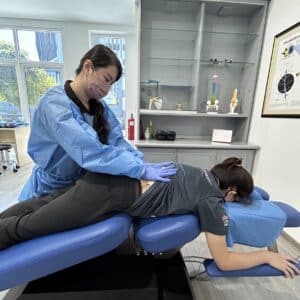
Flexion-distraction techniques, also known as Cox Technic, are specialized methods designed to support spinal mobility and joint function. These techniques focus on encouraging gentle spinal movement to support flexibility and improve posture. Many individuals experiencing spinal joint stiffness, disc-related concerns, or postural misalignments may benefit from structured spinal support.
During flexion-distraction techniques, individuals lie comfortably on a specialized table designed to encourage gentle spinal movement. A trained provider applies controlled adjustments that create a rhythmic stretching motion, supporting spinal flexibility.
Some of the potential benefits of flexion-distraction techniques include:
- Encouraging spinal decompression– Supporting mobility by reducing mechanical restrictions.
- Enhancing joint flexibility– Encouraging movement efficiency and posture.
- Reducing postural strain– Supporting muscular relaxation and ligament mobility.
By integrating structured spinal movement techniques, individuals may experience better postural support and mobility.
Encouraging Early Spinal Care for Long-Term Mobility
Many individuals may experience gradual spinal changes over time, leading to reduced flexibility and movement restrictions. While minor movement limitations may not be noticeable at first, addressing early signs of spinal imbalances can help support long-term movement and posture.
Factors that may influence spinal disc health include:
- Postural adaptations– Uneven weight distribution may impact spinal function.
- Repetitive physical strain– Engaging in repetitive movements may affect mobility.
- Structural disc changes– Over time, spinal flexibility may naturally adapt.
By supporting spinal movement through structured care programs, individuals may experience better posture and joint flexibility.
Understanding Spinal Disc Changes and Their Effects on Movement
Spinal discs play a crucial role in absorbing movement pressure and supporting posture. Over time, lifestyle habits, repetitive movements, or prolonged sitting may contribute to structural adaptations within the discs. In some cases, individuals may experience movement restrictions before noticing changes in spinal function.
Some individuals may experience:
- Stiffness in the back or lower extremities– Gradual movement changes may affect posture.
- Reduced flexibility in the upper or lower body– Limited spinal mobility may impact movement efficiency.
- Sensations of tingling or discomfort in the limbs– Changes in spinal balance may affect muscular coordination.
By ensuring early detection of movement restrictions, individuals can support spinal flexibility and mobility.
For further details, contact our main center at +603 2093 1000.
Can Leg Discomfort Be Linked to Spinal Changes, Even Without Back Symptoms?
Many individuals experience leg discomfort, tingling, or reduced mobility without noticeable back issues. While there may be no direct spinal discomfort, underlying spinal imbalances may still influence nerve function. The spine serves as the central support structure, and nerve pathways originating from the spine extend into the legs. When spinal mobility is affected, individuals may experience sensations in the lower extremities.
Some factors that may contribute to leg discomfort associated with spinal concerns include:
- Disc-related changes– Structural adaptations within spinal discs may impact movement.
- Postural imbalances– Uneven spinal alignment may influence muscular coordination.
- Joint stiffness– Reduced spinal flexibility may affect mobility efficiency.
- Soft tissue tension– Ligament or muscular tightness may contribute to movement restrictions.
By addressing spinal function and posture, individuals may encourage better mobility and coordination over time.
For further details, contact our main center at +603 2093 1000
Identifying Spinal Changes That May Influence Movement
Many individuals may not experience direct spinal discomfort even when underlying changes occur. Some individuals with spinal adaptations or postural imbalances may notice movement restrictions before experiencing noticeable spinal concerns.
Some structural changes that may influence leg movement and coordination include:
- Disc-related concerns– Slipped discs may contribute to movement imbalances.
- Joint stiffness– Limited flexibility in spinal joints may impact posture.
- Postural misalignments– Uneven spinal positioning may influence movement coordination.
- Soft tissue tightness– Ligament or muscular adaptations may affect flexibility.
Addressing early signs of movement imbalances can help support long-term posture and mobility.
Non-Surgical Spinal Decompression for Structured Spinal Support
At Chiropractic Specialty Center®, we utilize structured spinal decompression techniques to support spinal mobility and soft tissue function. Our centers integrate RxDecom® technology, a non-surgical method designed to support postural alignment and movement balance.
The RxDecom® process focuses on:
- Encouraging spinal decompression– Supporting joint flexibility and movement coordination.
- Facilitating postural stability– Encouraging better spinal balance.
- Enhancing soft tissue function– Supporting muscular relaxation and ligament mobility.
- Encouraging nutrient diffusion– Supporting spinal disc health over time.
By integrating structured spinal decompression techniques, individuals may support long-term movement efficiency and spinal stability.
For further details, contact our Main center at +603 2093 1000 1200 or reach out via SMS / WhatsApp: +60 17 269 1873
Non-Surgical Support for Spinal Disc Concerns in Kuala Lumpur
Many individuals experiencing spinal disc changes, postural imbalances, or movement restrictions may benefit from non-surgical spinal support. At Chiropractic Specialty Center®, we integrate structured spinal care programs to support posture, flexibility, and movement efficiency using non-invasive methods.
By utilizing targeted spinal decompression techniques, individuals may experience improved movement, postural stability, and flexibility over time. Our centers integrate RxDecom® technology as part of a structured approach to supporting spinal mobility.
Encouraging Early Spinal Support for Long-Term Mobility
Many individuals may experience gradual spinal changes over time, leading to movement restrictions and reduced postural efficiency. By addressing early movement imbalances, individuals can encourage better flexibility and posture through structured care programs.
Our team integrates chiropractic techniques, physiotherapy, and movement-based rehabilitation to provide a structured, non-surgical approach to spinal mobility. Some of the areas we focus on include:
- Encouraging spinal decompression– Supporting spinal flexibility through targeted movement methods.
- Facilitating postural balance– Encouraging even weight distribution across the spine.
- Enhancing joint flexibility– Supporting mobility and movement efficiency.
By incorporating structured spinal decompression techniques, individuals can encourage long-term spinal well-being.
Non-Surgical Spinal Decompression for Targeted Spinal Support
At Chiropractic Specialty Center®, we integrate non-invasive spinal decompression techniques to support spinal mobility and soft tissue function. Our centers utilize RxDecom® technology, a structured decompression method designed to support postural alignment and movement balance.
The RxDecom® process focuses on:
- Encouraging postural alignment– Supporting joint flexibility and movement coordination.
- Enhancing spinal stability– Encouraging better postural balance.
- Facilitating soft tissue support– Supporting muscular relaxation and ligament mobility.
- Encouraging nutrient diffusion– Supporting spinal disc health over time.
By integrating structured spinal decompression techniques, individuals may support long-term movement efficiency and spinal stability through non-surgical methods.
Author
“Back Care in KL, PJ & Selangor” is written by Yama Zafer, D.C., who has U.S. training in chiropractic and physiotherapy and nearly three decades of experience in non-surgical spine, joint, and movement-focused care in Malaysia; read more about Y. Zafer on his official bio page.
Peer-Reviewed Medical References
- World Health Organization. WHO Guideline for Non-Surgical Management of Chronic Primary Low Back Pain in Adults in Primary and Community Care Settings. Geneva: World Health Organization; 2023.
- George SZ, Fritz JM, Silfies SP, et al. Interventions for the Management of Acute and Chronic Low Back Pain: Revision 2021. Journal of Orthopaedic & Sports Physical Therapy. 2021;51(11):CPG1-CPG60.
- Delitto A, George SZ, Van Dillen LR, Whitman JM, Sowa G, Shekelle P, Denninger TR, Godges JJ. Low Back Pain: Clinical Practice Guidelines Linked to the International Classification of Functioning, Disability, and Health. Journal of Orthopaedic & Sports Physical Therapy. 2012;42(4):A1-A57.
- Schäfer A, Hall T, Briffa K. Classification of Low Back-Related Leg Pain: A Proposed Patho-Mechanism-Based Approach. Manual Therapy. 2009;14(2):222-230.
- Mistry J, Falla D, Noblet T, Heneghan NR, Rushton A. Clinical Indicators to Identify Neuropathic Pain in Low Back-Related Leg Pain: A Modified Delphi Study. BMC Musculoskeletal Disorders. 2020;21:670.
- Qaseem A, Wilt TJ, McLean RM, Forciea MA, Clinical Guidelines Committee of the American College of Physicians. Noninvasive Treatments for Acute, Subacute, and Chronic Low Back Pain: A Clinical Practice Guideline From the American College of Physicians. Annals of Internal Medicine. 2017;166(7):514-530.
- Hayden JA, Ellis J, Ogilvie R, Malmivaara A, van Tulder MW. Exercise Therapy for Chronic Low Back Pain. Cochrane Database of Systematic Reviews. 2021;(9):CD009790.
- Coulter ID, Crawford C, Hurwitz EL, Vernon H, Khorsan R, Suttorp Booth M, Herman PM. Manipulation and Mobilization for Treating Chronic Low Back Pain: A Systematic Review and Meta-Analysis. The Spine Journal. 2018;18(5):866-879.
- Chou R, Qaseem A, Owens DK, Shekelle P. Diagnostic Imaging for Low Back Pain: Advice for High-Value Health Care From the American College of Physicians. Annals of Internal Medicine. 2011;154(3):181-189.
Last Updated:
Last updated May 7, 2026: “Back Care in KL, PJ & Selangor” was reviewed for clarity, local relevance, non-surgical back care education, leg symptom guidance, and chiropractic with physiotherapy care structure.
Back Care in KL, PJ & Selangor: A Quick Recap
Back stiffness, lower back discomfort, and symptoms that extend into the leg may come from several different sources, including muscular strain, joint stiffness, disc-related spinal changes, or irritation of nearby nerve pathways. Because these patterns may overlap, one of the most important early steps is identifying whether symptoms remain local to the lower back or travel into the buttock, thigh, calf, or foot.
Disc-related symptoms, muscle-related strain, and posture-related spinal stress often behave differently and may need different forms of assessment and care planning. An integrated approach that considers chiropractic joint mobilization, clinical physiotherapy, guided rehabilitation, posture correction, and when appropriate non-surgical spinal decompression may help clarify the source of symptoms and guide the next steps.
For individuals in KL, PJ, and Selangor, early assessment may help improve sitting tolerance, walking comfort, posture, and day-to-day spinal function before ongoing symptoms begin to affect longer-term mobility.
For more detailed information on disc-related spinal changes and sciatic nerve symptoms, the related topic sections below provide focused pages that explore these patterns in greater detail.
Related Spinal Disc and Slip Disc Topics
Back symptoms may sometimes relate to spinal disc changes that affect movement, sitting tolerance, posture, or nearby nerve pathways. If symptoms involve repeated flare-ups, lower back stiffness, bending difficulty, or symptoms that extend into the leg, related disc pages may help explain the specific disc stage mentioned on an imaging report.
Relevant internal pages may include degenerative disc disease, disc bulge, disc prolapse, disc protrusion, herniated disc, extruded disc, ruptured disc,and fragmented or sequestered disc changes.
Related Sciatica and Pinched Nerve Topics
Symptoms that travel into the buttock, thigh, calf, or foot may sometimes involve irritation of the sciatic nerve or nearby nerve roots in the lower back. These symptoms may feel sharp, burning, electric, tingling, heavy, numb, or weak depending on the structures involved.
Relevant internal pages may include CSC’s integrated sciatica care programs in KL.
Explore related pages on sciatica, pinched nerve care, nerve discomfort, leg-related symptoms, sciatic nerve function, and sciatica linked to spondylolisthesis.
Share with others: