

Sacroiliac Joint Care in KL: Non-Invasive Care for SI Joint
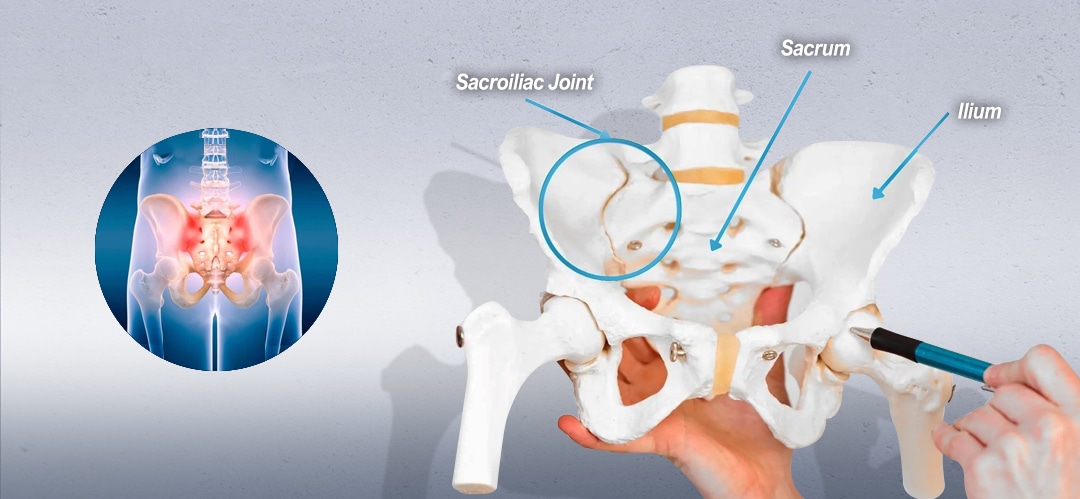
The sacroiliac joint connects the sacrum at the base of the spine to the pelvis on each side, and its job is load transfer rather than movement: it shifts the weight of the trunk into the legs and moves only a few millimeters. Pain from it sits low and to one side, over an area most people can cover with a palm.
It is provoked by movements that load one leg at a time, which is what separates it from ordinary low back pain: stairs, getting out of a car, rolling over in bed, standing on one leg to dress. Pregnancy and the months after birth are common settings, because the surrounding ligaments loosen. Keeping the knees together through those movements often reduces symptoms within days, and trunk and hip strength is what keeps it settled.
This guide to sacroiliac joint pain, how the SI joint works and how the pain is assessed, is published by Chiropractic Specialty Center, Bukit Damansara (KL) main center: WhatsApp+60 17 269 1873 Call+603 2093 1000
Key Takeaways
- SI joint pain is usually felt low in the back and to one side, often spreading into the buttock or upper thigh.
- Single-leg loading, such as stairs, getting out of a car or standing on one leg, typically provokes it.
- Pregnancy and the postpartum period are common settings because the pelvic ligaments loosen.
- It can resemble a slipped disc, sciatica or hip pain, so the lower back and hip are examined as well.
- Care combines low-force chiropractic methods with exercise for the trunk, gluteal muscles and pelvic control.
How the SI Joint Works
The sacroiliac joints sit where the sacrum meets the iliac bones of the pelvis. They are strong, tightly bound joints that move only slightly, and their main role is transferring load between the trunk and the legs (Vleeming et al., 2012). Pain can arise when the joint or its ligaments are irritated, when the muscles that control the pelvis are not working well together, or during pregnancy when the ligaments loosen (Hungerford et al., 2003).
Arranging an SI Joint Assessment at CSC
To arrange an assessment, see the Bukit Damansara contact page and the Bandar Sri Damansara contact page, or call either center directly:
- Bukit Damansara (KL, main center): Call +603 2093 1000 or WhatsApp +60 17 269 1873 to see the Bukit Damansara / KL center.
- Bandar Sri Damansara (KL): Call +603 6262 5777 or WhatsApp +60 12 455 6939 to see the Bandar Sri Damansara center.
Symptoms and Common Triggers
- A deep ache or sharper pain at the back of the pelvis, usually on one side.
- Pain spreading into the buttock or upper thigh.
- Pain with stairs, getting in or out of a car or chair, rolling over in bed, or standing on one leg.
- A feeling of the pelvis being unstable, particularly during or after pregnancy.
Common contributors include pregnancy and the postpartum period, falls onto the buttock, sports that load one leg repeatedly, and long periods of sitting or standing in one position.
Video: Could Lower Back and Leg Symptoms Be From the SI Joint, Sciatica, or a Slipped Disc?
Lower back symptoms that travel into the buttocks, thigh, or leg may sometimes be linked to the SI joint, but in other cases, the source may come from lumbar discs or sciatic nerve pathways. This educational video helps explain how these structures differ and why careful assessment matters.
The chapters of this talk, each with a short summary, are on the Back Pain to Leg Pain video page.
Key Moments in this Video
- 18:30 Healthy vs changed spinal disc appearance
- 28:49 Disc bulge, protrusion, and herniation stages
- 38:00 Sitting and spinal disc pressure
- 1:12:46 How sciatica symptoms begin
- 1:33:12 Disc care and non- surgical options
Because SI joint pain may sometimes feel similar to disc-related leg symptoms, the sections below further explain how pelvic, lower back, and nerve-related findings may overlap.
How SI Joint Pain Is Assessed
No single test confirms SI joint pain. The assessment combines the history, where the pain is felt, and a cluster of pain-provocation tests; when several of these tests reproduce the familiar pain, the SI joint becomes a more likely source (Laslett, 2008). The lower back, the hip joint and the nerves are examined as well, because each can cause pain in the same area. Imaging is used when the findings suggest another problem, such as inflammatory arthritis, a fracture or a disc problem with nerve involvement.
Chiropractic Care for the SI Joint
Chiropractic care for the SI joint at CSC uses low-force methods chosen according to age, bone health and the examination findings, such as flexion-distraction, the Activator Method, Thompson drop and SOT (Sacro Occipital Technique) blocks. High-force twisting maneuvers are avoided. Where the joint is irritable or loose, care focuses on settling symptoms and building muscular control rather than on repeated adjustment.
Physiotherapy and Exercise
Exercise is the part of the plan that keeps the SI joint settled. Physiotherapy at CSC focuses on:
- Gluteal and hip strength, progressed from simple to single-leg exercises.
- Trunk and pelvic floor control, including the deep abdominal muscles.
- Changes to daily movements, such as keeping the knees together when turning in bed or getting out of a car.
- Walking and stair practice as symptoms allow.
Other Methods
Soft-tissue techniques, and methods such as shockwave therapy, laser therapy, ultrasound or electrotherapy, may be considered for short-term pain relief in the surrounding muscles. The evidence for these methods is limited, so they are used only alongside exercise and manual care, not on their own.
Pregnancy, Postpartum and the SI Joint
SI joint and pelvic girdle pain are common during and after pregnancy, as the hormone relaxin loosens the pelvic ligaments and posture changes. During pregnancy, CSC uses gentle, low-force methods, including the Webster technique where appropriate, alongside exercise for the pelvic floor and trunk. After birth, the assessment also looks at abdominal wall separation (diastasis recti) and pelvic control.
When to Seek Prompt Assessment
If sacroiliac joint or buttock pain occurs with back or leg pain, also notice any new numbness around your genitals, between your genitals and anus, or around your anus. New or worsening numbness in these specific areas needs urgent medical attention, with a thorough assessment by a competent clinician the same day. New difficulty passing urine, or any loss of bladder or bowel control, needs the same urgent assessment. Several causes are possible, and being assessed helps identify the right care. Some may call for an invasive procedure, but assessment does not automatically mean surgery. Progressive leg weakness should not be ignored; it should be assessed promptly by a competent provider, and conservative care may still be a reasonable route depending on what that assessment finds. Fever with back or pelvic pain, pain after a significant fall, or night pain with unexplained weight loss also needs prompt medical review. During pregnancy, any bleeding, fluid loss, contractions or reduced baby movements should go to obstetric care first.
Our Two Kuala Lumpur Centers
Assessment and care are available at both of our Kuala Lumpur centers. The main one is described on the page for the Bukit Damansara center in Kuala Lumpur.
A second center serves the northwest of the city. You can read about the Bandar Sri Damansara center in northwest Kuala Lumpur.
For travel, parking and opening hours, see how to reach the Bukit Damansara center or Bandar Sri Damansara location and opening hours.
Frequently Asked Questions About SI Joint Care
Where is SI joint pain usually felt?
Low in the back and to one side, over the back of the pelvis, often spreading into the buttock and sometimes the upper thigh. Most people can cover the area with a palm.
Can SI joint pain feel like sciatica?
Yes. It can spread into the buttock and thigh, so it is sometimes mistaken for sciatica. Pain that travels below the knee with numbness, tingling or weakness points more toward a nerve root from the lower back, which is why both areas are examined.
How is SI joint pain different from a slipped disc?
SI joint pain is usually felt at the back of the pelvis and is provoked by loading one leg at a time. Disc-related pain more often starts in the lower back, changes with bending and sitting, and may involve nerve symptoms further down the leg. The two can overlap, so the assessment checks both.
Can SI joint pain continue after childbirth?
Yes. Pelvic girdle pain can continue after birth, particularly when trunk, gluteal and pelvic floor control have not fully returned. In a randomized trial, a program of specific stabilizing exercises after pregnancy reduced pain and disability, with benefits still present at two years (Stuge et al., 2004).
How long does improvement take?
It varies with how long the problem has been present and what is driving it. Changes to how you move, such as keeping the knees together when turning in bed or getting out of a car, can reduce symptoms within days; building trunk and hip strength takes several weeks. Progress is reviewed against specific activities rather than assumed.
Peer-Reviewed References
- Vleeming A, Schuenke MD, Masi AT, et al. The sacroiliac joint: an overview of its anatomy, function and potential clinical implications. J Anat. 2012;221(6):537-567.
- Laslett M. Evidence-based diagnosis and treatment of the painful sacroiliac joint. J Man Manip Ther. 2008;16(3):142-152.
- Forst SL, Wheeler MT, Fortin JD, Vilensky JA. The sacroiliac joint: anatomy, physiology and clinical significance. Pain Physician. 2006;9(1):61-67.
- Stuge B, Veierød MB, Laerum E, Vøllestad N. The efficacy of a treatment program focusing on specific stabilizing exercises for pelvic girdle pain after pregnancy: a two-year follow-up of a randomized clinical trial. Spine. 2004;29(10):E197-E203.
- Hungerford B, Gilleard W, Hodges P. Evidence of altered lumbopelvic muscle recruitment in the presence of sacroiliac joint pain. Spine. 2003;28(14):1593-1600.
These sources describe the sacroiliac joint in general; none of them evaluates care at Chiropractic Specialty Center.
The Author of Sacroiliac Joint Care in KL - Gentle, Non-Invasive Methods
Sacroiliac Joint Care in KL - Gentle, Non-Invasive Methods was written by Yama Zafer, D.C., who has 30+ years in chiropractic and physiotherapy and founded Chiropractic Specialty Center in Kuala Lumpur in 2006.
Last Updated: Sacroiliac Joint Care in KL: Non-Invasive Care for SI Joint
Sacroiliac Joint Care in KL: Non-Invasive Care for SI Joint was last reviewed and updated on September 30, 2026.