


Upper Back Care in Kuala Lumpur & PJ: Causes & Signs
At times, symptoms may also be linked to the lower neck, shoulder blade muscles, rib joints, or thoracic spinal joints.
If upper back pain is affecting your posture, work, sleep, or daily activity, consider arranging an assessment with Chiropractic Specialty Center in Kuala Lumpur or if you are in nearby PJ areas.
A detailed evaluation can help determine whether the source is related to the thoracic joints, surrounding muscles, rib attachments, or symptoms referring from the neck, followed by gentle chiropractic joint mobilization, physiotherapy, and guided rehabilitation when appropriate.
7 Key Points About Upper Back Care in KL & PJ
- Upper back pain is commonly felt between the shoulder blades, around the thoracic spine, or near the rib joints.
- Symptoms in the shoulder blade area may sometimes be referred from the lower neck, especially the C5–C6 and C6–C7segments.
- Common triggers include prolonged desk work, posture-related strain, driving, lifting, and repeated phone use.
- Thoracic spinal joints, rib attachments, trapezius, and rhomboid muscles are frequent contributors.
- A detailed assessment helps determine whether the source is local to the upper back or referred from the cervical spine.
- Non-surgical care may include chiropractic joint mobilization, physiotherapy, soft tissue work, and guided rehabilitation.
- Early assessment in Kuala Lumpur and nearby PJ may help guide more specific upper back care planning.
Contact Us Today for Upper Back Care
If you experience upper back pain or stiffness, Chiropractic Specialty Center provides non-invasive care combining chiropractic, physiotherapy, and rehabilitation to support spine health gently and safely. Early care may improve function and comfort. Contact us via our contact page to learn more.
pregnancy postpartum care
Common Signs & Causes of Upper Back Pain
Upper back pain is often noticed as symptoms around the shoulder blades, upper thoracic spine, or where the ribs meet the back. Common signs and causes may include:
- stiffness or tightness between the shoulder blades
- pain that builds up after desk work, driving, or prolonged sitting
- soreness after lifting, exercise, or sleeping in one position\
- symptoms linked to lower neck stiffness or shoulder blade muscle strain
- irritation of the thoracic spinal joints or rib joints
- pain that spreads from the neck into the upper back
- disc-related changes in the lower neck that refer symptoms into the shoulder blade area
- posture-related strain from prolonged screen use or phone use
Upper Back Concerns
While lower back issues are often discussed more frequently, pain in the neck and upper back is also common, particularly around the shoulder blades and upper thoracic spine. There are numerous causes of upper back pain, with the most common ones being shoulder-related issues, lower neck complications, spinal disc concerns (such as those cared for with our non-invasive slipped disc methods), arthritis, osteoporosis, spondylosis, degenerative joint issues, muscle spasms, misalignments in the rib area, sprains/strains, fractures, and even malignancies.
The Function of the Thoracic Spine
The upper back, or thoracic spine, is the longest segment of the spine. It begins at the base of the neck and extends down to the abdomen, making it the most complex spinal structure. The thoracic spine connects the cervical spine (neck) above and the lumbar spine (lower back) below.
The thoracic spine consists of 12 vertebrae stacked upon each other. Its primary role is to maintain and protect internal organs such as the heart, lungs, and liver. Additionally, it provides essential care for the neck. While the cervical (neck) and lumbar (lower back) regions of the spine are primarily responsible for mobility, the thoracic spine is designed for stability and protection. The two most important roles it plays are:
- Protects Internal Organs by Anchoring the Ribcage: The ribcage is attached to the thoracic spine, providing bony protection for vital organs like the lungs, heart, and liver.
- Protects the Spinal Cord: The spinal cord, which is a continuation of the brain, is protected by the vertebrae that form the bony canal. This critical bundle of nerve fibers controls all bodily functions and runs through this canal.
About Your Back
Upper back pain can stem from soft tissues, bones, and joints in the upper back, shoulders, or neck. Your back is a complex structure consisting of bones, joints, muscles, tendons, nerves, and ligaments. Your spine is made up of 24 separate vertebrae stacked on top of each other, with the final two segments combining to form the tailbone, which is made up of the sacrum and coccyx.
Between each vertebra are flexible but sturdy pads called spinal discs or vertebral discs, which help maintain the stability, strength, and mobility of the spine. These discs are securely attached to each vertebra by a structure known as the vertebral end-plate. The spinal disc is avascular, meaning it lacks blood vessels.
The space in the center of each vertebra creates the spinal canal. The spinal cord, a rope-like structure, emerges from the brain and passes through the spinal canal. It serves as a pathway for nerve signals between the brain and organs, muscles, tendons, ligaments, joints, spinal discs, arteries, and veins.
The spinal cord extends to the upper regions of the lower back before continuing downward as the Cauda Equina, named after its resemblance to a horse’s tail. Upper back pain occurs when the spinal nerves, spinal cord, muscles, ligaments, or joints of the spine or ribcage become affected. Misalignments, known as subluxations, can cause pain and are often a contributing factor. In the next section, we will explore the causes and symptoms of these conditions.
Why the Upper Back Is Prone to Strain and Structural Changes
Repeated desk work, prolonged sitting, lifting, sports activity, carrying bags, and posture-related strain can place ongoing stress on these tissues. Over time, this may contribute to muscle tightness, joint stiffness, ligament strain, or changes involving the surrounding spinal discs and joints, particularly when the area is not given enough recovery time.
Upper back injuries are relatively common due to the complexity of the anatomical structures within the associated spinal segments. Soft tissues, including muscles, tendons, ligaments, and spinal discs, are particularly vulnerable to injury. Various factors can contribute to upper back pain, including muscle tears, damaged ligaments, nerve impingement, facet joint arthritis, vertebral fractures, and slipped discs (protruded, herniated, or prolapsed spinal discs).
Spinal Joints & Upper Back Pain
Facet joints, also known as spinal joints or zygapophyseal joints, are a common source of pain in the upper back.
Research published in Pain Physician by Dr. Manchikanti, Dr. Singh, Dr. Pampati, Dr. Beyer, and Dr. Damron highlighted facet joints in the thoracic spine as a prevalent source of pain.
Their study, titled “Evaluation of the Prevalence of Facet Joint Pain in Chronic Thoracic Pain,” found that up to 48% of individuals experience pain in the upper and mid-back regions. The authors emphasized the need for more focus on the upper back portion of the spine.
Facet joint pain often results from facet hypertrophy (arthritis or bone spurs) or the thickening of the ligamentum flavum. While spine surgery is frequently recommended, conservative methods are often the preferred approach. Spine surgery has a high failure rate, and experts recommend exhausting non-invasive methods before considering surgery.
Facet joint issues in the upper back often lead to pain when muscle and ligament weakness is present. This weakness can result in spinal joint misalignment. Clinical chiropractors refer to this misalignment as subluxation.
A separate study published in BMC Musculoskeletal Disorders also identified upper back joints as a common source of pain, with 42% of individuals reporting issues in this region.
Why Is the Pain Between My Shoulder Blades?
Pain between the shoulder blades is often linked to muscle strain, posture-related stress, and stiffness in the thoracic spinal joints. Prolonged desk work, driving, phone use, lifting, and sleeping in one position can place repeated stress on the trapezius, rhomboid, and upper thoracic muscles, which may lead to tightness and soreness in the area between the shoulder blades.
In some cases, the source may not begin in the upper back itself. Clinical studies and reference texts show that lower cervical segment changes (bulges, protrusions, prolapses & extrusions), particularly around the C5–C6 and C6–C7 levels, may refer symptoms into the peri-scapular region or the area between the shoulder blades, especially when associated with nerve root irritation, lower neck stiffness, arm symptoms, or tingling.
Because this symptom pattern may arise from the upper thoracic spine, rib joints, shoulder blade muscles, or lower cervical segments, a detailed assessment helps determine whether the source is local to the upper back or referred from the neck. For readers who wish to understand the neck-related causes in more detail, this section may naturally link to the C5-C6, C6-C7, and C7-T1 pages.
Reference: Margetis K, Dowling TJ. Cervical Degenerative Disc Disease. StatPearls Publishing; updated August 2, 2025
Slipped Disc & Upper Back Pain
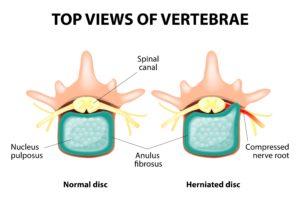
The joints of the upper back are not always the sole cause of pain. Neck issues, such as a slipped disc at the C5-C6 level, can often refer pain to the upper back.
Although slipped discs are rare in the upper back, they are a more common cause of pain in the neck, and this pain frequently extends to the upper back, especially around the shoulder blade area.
Therefore, upper back pain is a typical symptom for those experiencing a slipped disc in the neck. It is crucial to have your neck thoroughly assessed by clinicians with a deep understanding of spinal health, especially when dealing with slipped discs.
Another factor to consider is the rib cage. Misalignments of the ribs or the joints between the ribs and sternum can also contribute to pain. However, it is important to note that the rib cage plays a vital role in protecting and housing essential organs such as the heart, lungs, diaphragm, liver, stomach, and spleen. With the significant mechanical load placed on the spine, the functioning of these organs can also be impacted.
Non-Surgical Care for Upper Back Pain
Upper back pain may begin from the thoracic joints, surrounding muscles, rib attachments, or symptoms referring from the lower neck. Because several structures can contribute to symptoms in this region, care is best guided by a detailed assessment rather than assumptions based on the location alone.
Non-surgical upper back care is typically structured around identifying whether the source is joint-related, muscle-related, posture-related, or referred from the cervical spine. Depending on what is found, care may include gentle chiropractic joint mobilization, physiotherapy, soft tissue work, guided rehabilitation, and postural correction strategies to reduce repeated stress on the upper thoracic and shoulder blade region.
For individuals in Kuala Lumpur and nearby PJ, an early assessment may help determine whether symptoms are linked to the thoracic spine, lower neck segments, rib joints, or surrounding soft tissues, allowing care to be matched more specifically to the findings.
Care must be taken when getting neck and upper back care to ensure that the type of care is not through aggressive methods. Learn more about the impact of aggressive neck care by watching this video.
Why Upper Back Tightness May Increase During Pregnancy
As pregnancy progresses, changes in breast weight, rib positioning, and sitting posture may increase strain through the upper back and shoulder blade region. Many individuals notice tightness between the shoulder blades or upper thoracic stiffness during desk work and sleep. Discover how our pregnancy chiropractic and physiotherapy has to offer.
Future links
The Hidden Risks of Viral Neck Adjustment Trends Video
Online videos showcasing the Ring Dinger®, Y-Strap, and towel-based neck pulls may appear convincing, but these forceful methods can be hazardous to your spinal health. Sudden, high-velocity traction can impact critical structures in the neck, including the vertebral arteries, discs, and brainstem posing significant risks for individuals with disc degeneration, bone spurs, or vascular sensitivity. Even mild wear-and-tear in the cervical spine can increase susceptibility to complications such as vertigo, nerve irritation, or vascular damage.
Yama Zafer, D.C. - Upper Back Care: Causes, Signs & Non-Invasive Options
“Upper Back Care: Gentle Non-Invasive Methods” is written by Yama Zafer, D.C., with educational background in physiotherapy and chiropractic from Cleveland University–Kansas City, USA, has over three decades of experience in physiotherapy and chiropractic; read more about Yama Zafer D.C. on his official bio page.
Peer-Reviewed Medical Reference Citations
- Mayer JM, et al. Thoracic spine and chest wall pain: diagnosis and management. Phys Med Rehabil Clin N Am. 2013;24(1):1-14.
- O’Sullivan PB, et al. Diagnosis and classification of chronic low back pain disorders: maladaptive movement and motor control impairments. Man Ther. 2012;17(4):317-23.
- Strunce JB, et al. The upper thoracic spine: a pain referral area often overlooked. J Manipulative Physiol Ther. 2009;32(2):97-105.
- Cook C, et al. Effectiveness of chiropractic and physiotherapy care for upper back pain: a systematic review. J Manipulative Physiol Ther. 2011;34(7):486-95.
- Childs JD, et al. Interventions for upper back pain and thoracic dysfunction. Phys Ther. 2004;84(9):813-28.
- Fernández-de-Las-Peñas C, et al. Upper thoracic spine pain: pathophysiology and clinical management. Curr Pain Headache Rep. 2014;18(8):437.
- Cleland JA, et al. Effectiveness of manual therapy and exercise for thoracic spine pain: a systematic review. J Orthop Sports Phys Ther. 2008;38(7):367-87.
Last Updated
Last updated April 28, 2026: This page on Upper Back Care in Kuala Lumpur & PJ: Causes & Signs has been significantly reviewed, expanded, and rewritten to improve clinical clarity, local relevance, search visibility, and reader usability.
Upper Back Care: Quick Recap
Upper back pain may begin from the thoracic joints, rib attachments, shoulder blade muscles, or symptoms referring from the lower neck. Because several structures can contribute to symptoms in this region, a detailed assessment helps determine whether the source is local to the upper back or related to the cervical spine. For individuals in Kuala Lumpur and nearby PJ, early assessment may help guide more specific non-surgical care options.
Upper Back FAQ: Common Questions About Shoulder Blade & Thoracic Symptoms
Upper back pain can come from several areas, including the shoulder blade muscles, thoracic joints, rib attachments, or symptoms referring from the lower neck. The questions below cover the most common concerns people ask about pain between the shoulder blades, thoracic stiffness, and neck-related upper back symptoms.
Why do I feel pain between my shoulder blades?
Can a neck issue cause upper back pain?
What muscles commonly cause pain in the upper back?
Can poor posture cause upper back stiffness?
When should upper back pain be assessed?
Can rib joints cause upper back symptoms?
Can a slipped disc in the neck cause symptoms in the upper back?
How is non-surgical upper back care usually structured?
Share with others: