NSD Therapy®: Components, Suitability and the Care Framework
This Clear Guide to NSD Therapy® Components and Suitability explains the Care Framework created by Yama Zafer, D.C., and distinguishes evidence for individual services from evidence for the branded framework as a whole.
Information on this page is general and cannot determine whether NSD Therapy® or any individual component is suitable for a particular person.
What NSD Therapy® Is
NSD Therapy® is a branded spine-care framework rather than one procedure, one device, or one fixed sequence. It may coordinate chiropractic services, physiotherapy, guided rehabilitation, movement education, and selected equipment-based options when those elements are appropriate after assessment.
The framework is intended to organize separate professional services around a shared plan. Each component keeps its own purpose, evidence base, limitations, and professional scope. A person may receive one component, several coordinated components, or a referral to another healthcare professional. The NSD Therapy® name does not make every component necessary for every person.
Designed and Invented by Yama Zafer, D.C.
NSD Therapy® was designed and invented by Yama Zafer, D.C. Related inventive work is documented in published international patent application WO2010120165A1, where he is named as the inventor. The publication records inventive activity connected with spine-care apparatus and methods; it does not, by itself, establish that the complete NSD Therapy® framework is suitable for every person or predict a clinical outcome.
The framework has continued to develop through Yama Zafer, D.C.’s work in chiropractic, patient education, equipment design, and coordinated rehabilitation planning. His documented professional background, Malaysian registration, innovation record, and editorial role are available on his official MyChiro profile.
How the Care Framework Is Organized
The framework begins with the person rather than with a device. Relevant history, current symptoms, daily demands, movement tolerance, previous care, and available imaging are considered before any component is discussed. The purpose is to identify reasonable options, limitations, referral needs, and the order in which services may be considered.
NSD Therapy® does not require chiropractic, physiotherapy, rehabilitation, or spinal decompression to be used together in every case. The plan may change as findings, tolerance, goals, or referral information change. Consent, expected responsibilities, fees, and practical limitations should be explained before a service begins.
Professional Roles Within NSD Therapy®
Chiropractic services are provided by registered chiropractic practitioners. Physiotherapy services are provided by registered physiotherapists. Guided rehabilitation and exercise are delivered within the professional role of the person providing them. When services are coordinated, each practitioner remains responsible for decisions within that practitioner’s scope.
NSD Therapy® should not be described as one profession replacing another. The framework is a way to organize distinct services when coordination is appropriate. Medical, surgical, pharmaceutical, dental, obstetric, and emergency decisions remain outside the framework and may require referral.
Components That May Be Considered
Possible component | How it may fit within the framework |
Chiropractic services | Assessment-informed manual or instrument-assisted methods, movement guidance, and advice within chiropractic scope. |
Physiotherapy | Movement assessment, exercise, education, manual methods, and selected modalities within physiotherapy scope. |
Guided rehabilitation | Activity tolerance, movement control, capacity, and self-management. |
Movement education | Practical guidance related to daily activity, posture, pacing, and return to usual tasks. |
Equipment-based spinal decompression | A selected option when relevant, available, and appropriate; it is not automatic. |
Imaging review | Considered when existing scans are relevant; imaging alone does not identify the source of every symptom. |
Evidence Applies to Each Component
The available guidance reviewed for this page supports person-centered assessment, education, exercise, selected manual approaches, and coordinated care for many lower-back concerns. Evidence for mechanical traction or decompression varies by population, method, dosage, and outcome, and it should not be generalized into a guarantee for NSD Therapy® as a complete branded framework.
The World Health Organization 2023 guideline emphasizes integrated, person-centered care. NICE guideline NG59 emphasizes alternative diagnoses, self-management, activity, and imaging only when results are likely to change management. The 2021 JOSPT clinical practice guideline supports matching nonpharmacologic options to the individual presentation. A 2023 systematic review of mechanical tractionreported low-certainty findings and no clear short-term difference between traction types.
What NSD Therapy® May Mean — and What It Does Not Mean
What it may mean | What it does not automatically mean |
A framework may coordinate several services | Every person needs every component |
A component may have a reasonable purpose after assessment | The brand name proves that component will work |
Imaging may add useful context | A scan finding explains every symptom |
A plan may change as findings or goals change | A fixed visit count predicts an outcome |
Referral may be part of responsible care | NSD Therapy® replaces medical or surgical assessment |
A patent publication records inventive work | A patent publication proves clinical effectiveness |
Suitability Depends on Individual Assessment
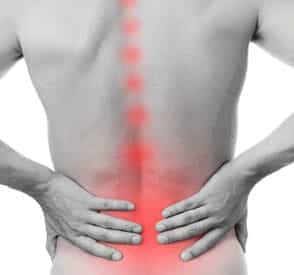
Suitability may depend on age, health history, current neurological findings, bone health, recent trauma, previous procedures, implanted hardware, pregnancy, vascular concerns, medication use, and the specific service being considered. These factors do not automatically exclude every part of the framework, but they may change, postpone, or rule out particular components.
New or progressive weakness, saddle-area numbness, changes in bladder or bowel control, major trauma, fever with spinal symptoms, unexplained weight loss, or suspected fracture, infection, or cancer require prompt medical assessment. Online information cannot determine whether NSD Therapy® is appropriate for an individual reader.
Imaging, Clinical Correlation, and Referral
An MRI or X-ray report can describe anatomy, but the report does not establish the cause of every symptom. Imaging should be considered with the person’s history, examination, neurological findings, and functional changes. Read the MyChiro MRI examination guide and the spinal-disc structure guide for background information.
A CSC practitioner may recommend medical, surgical, radiology, obstetric, dental, or emergency assessment when the presentation falls outside the available professional scope, when warning signs are present, or when another opinion is needed before a component can be considered.
Official NSD Therapy® Resources
The official NSD Therapy® website provides broader program information. Readers may also review the official NSD Therapy® indications guide and NSD Therapy® contraindications guide. Those resources are educational and do not determine suitability for an individual.
For a practical explanation of how the framework is organized during an appointment at CSC, read the NSD Therapy® assessment and first-visit guide. Related MyChiro guides explain disc bulges and sciatica-related symptom patterns.
Frequently Asked Questions
Is NSD Therapy® one procedure?
Does everyone receive spinal decompression?
Does NSD Therapy® have one evidence base as a complete program?
Is an MRI required?
Can NSD Therapy® replace medical or surgical assessment?
Who created NSD Therapy®?
References
- World Health Organization. 2023 primary-care guideline for chronic lower-back concerns. Official publication
- National Institute for Health and Care Excellence. NG59, updated 2020. Official recommendations
- George SZ, Fritz JM, Silfies SP, et al. J Orthop Sports Phys Ther. 2021;51(11):CPG1-CPG60. DOI 10.2519/jospt.2021.0304. PubMed record
- Vanti C, Saccardo K, Panizzolo A, et al. Acta Orthop Traumatol Turc. 2023;57(1):3-16. DOI 10.5152/j.aott.2023.21323. Full-text record
- Published international patent application WO2010120165A1, inventor Yama Zafer. Patent record
Contact Chiropractic Specialty Center®
Chiropractic Specialty Center® Bukit Damansara – KL is the main office and headquarters. For general enquiries, call +603 2093 1000 or use WhatsApp +60 17 269 1873. Review the Chiropractic Specialty Center – KL in Bukit Damansara, the Bukit Damansara headquarters contact page, the Chiropractic Specialty Center Bandar Sri Damansara page, and the Bandar Sri Damansara contact page. A broader overview is available on the CSC Services page.
Readers who have actually visited a center may share an honest Google review for Bukit Damansara or an honest Google review for Bandar Sri Damansara. No particular rating is requested.
Author Information
“NSD Therapy®: Clear Guide to Components and Suitability” was written and reviewed by Yama Zafer, D.C., a registered chiropractic practitioner in Malaysia and the founder and director of Chiropractic Specialty Center®, and readers may review his professional background, registration information, experience, and editorial profile on the official same-domain biography page.
Last Updated
This page was last updated on July 28, 2026, after a substantive review of factual accuracy, clarity, references, internal links, comments, and current information on: “NSD Therapy®: Components, Suitability and the Care Framework.”
Share with others: