


Chiropractic or Physiotherapy for Neck and Back: Which Comes First?
Chiropractic or physiotherapy is a choice that matters less than it appears, because the two overlap a great deal. Chiropractic emphasizes joint movement and how spinal segments share load; physiotherapy emphasizes strength, control and graded loading. Most spine and joint problems need both, and the useful question is not chiropractic or physiotherapy, but which of them a particular problem needs first.
As a general rule, where movement is the main limitation, restoring joint motion comes first; where movement is reasonable but the area tires or gives way, loading comes first. Starting with the wrong one costs weeks. The examination decides that order, and the reasoning behind it should be explained to you rather than assumed. New patients can usually be seen the same day at either Kuala Lumpur center, but call or send a WhatsApp message first.
This page, Chiropractic or Physiotherapy: 7 Clear Ways to Choose, is published by Chiropractic Specialty Center, Bukit Damansara (KL) main center: WhatsApp +60 17 269 1873 Call +603 2093 1000
Chiropractic or Physiotherapy: 7 Ways to Decide
- Is the joint stuck? A segment that will not move, or locks in one position, points to chiropractic first.
- Does it give way or tire? An area that moves well but cannot hold up under load points to physiotherapy first.
- Is a nerve involved? Pain, tingling or weakness down an arm or leg needs a nerve examination before chiropractic or physiotherapy is chosen.
- How long has it been there? A new problem and one that has come and gone for years are planned differently.
- What makes it worse? Sitting, bending, lifting or turning the head each tell the examiner something.
- Does it change with movement at all? Pain that never changes with position may not be mechanical, and needs a different look.
- What does your day ask of the area? A desk worker, a parent lifting a child and a weekend runner need different loading.
None of these questions is answered by a label on a door. They are answered by an examination, which is why the choice of chiropractic or physiotherapy is made after it, not before.
What Chiropractic Does
Chiropractic is care for the joints of the spine and limbs, and the nerves and muscles around them, without drugs or surgery. The chiropractor examines each segment of the spine, finds the ones that are stiff or irritated, and works on those, one at a time. The main tool is the adjustment, a controlled movement applied to a joint that is not moving as it should.
At CSC, chiropractic uses non-rotatory methods, so there is no twisting of the neck and no sudden jerk. Common tools are the Activator, a small hand-held instrument; sustained-pressure adjusting; a drop table; and flexion-distraction, a slow bending motion on a special table. How each method is chosen is explained on the chiropractic treatment page.
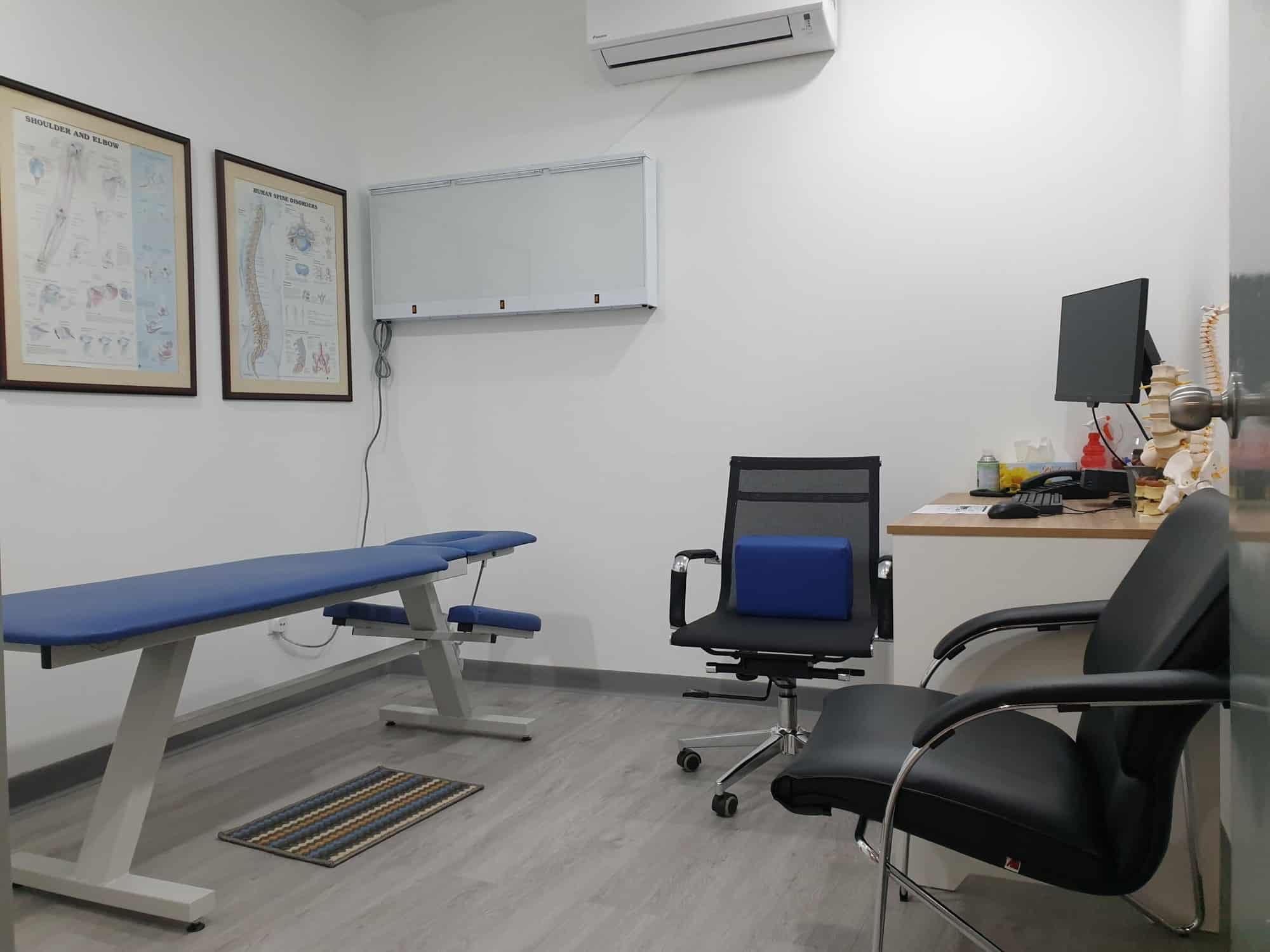
What Physiotherapy Does
Physiotherapy looks at muscles, soft tissue and the way a person moves, sits and lifts. Care includes hands-on soft-tissue work, stretching and exercise, with posture and movement training. Equipment is used only when the examination calls for it. The physiotherapist also sets a short home routine and checks it at each visit, because loading only works when it is repeated. Whether the start is chiropractic or physiotherapy, the home routine is what carries the work between visits.
Where chiropractic restores motion, physiotherapy builds the capacity to keep it. Strength, endurance and control are what let a spine or a shoulder cope with the day without flaring again. That is the part a plan built on chiropractic or physiotherapy alone tends to leave unfinished.
Which Is Better, Chiropractic or Physiotherapy?
At Chiropractic Specialty Center, the choice does not have to be made, because chiropractic and physiotherapy are combined in one plan. The center has worked this way since it opened in 2006, with chiropractors and physiotherapists assessing and caring for the same person side by side.
That combined approach is used for spine and joint problems such as a slipped disc, a frozen shoulder, scoliosis, TMJ (jaw) pain, and knee and hip problems. Each plan starts from the examination, which decides whether joint movement or loading comes first. How the two disciplines work in one session is set out in chiropractic therapy combined with physiotherapy.
Working this way lets one plan cover the joint, the muscle and the movement, instead of splitting care between providers who may never speak to each other. When a patient asks me whether chiropractic or physiotherapy is better, my answer is that the better plan is the one that uses each in the order the findings call for.
Chiropractic or Physiotherapy: What the Evidence Shows
The honest position is that the overlap between the two professions is larger than either likes to admit, and that for most spinal complaints the research does not crown a winner between chiropractic or physiotherapy. What it does show is where each has its footing.
Spinal manipulative therapy, the chiropractic mainstay, produced improvements in pain and function for chronic low back pain of a size similar to other recommended treatments, in a review of randomized trials. For acute low back pain, pooled trial data tied spinal manipulation to modest improvements in pain and function. For neck pain, a Cochrane review found that manipulation and mobilization produced similar results to each other.
Exercise therapy, the physiotherapy mainstay, probably reduces pain and improves function in chronic low back pain compared with no treatment or usual care, according to a Cochrane review. For chronic neck pain, another Cochrane review found moderate-quality evidence for strength training of the neck, shoulder and upper back, while low-quality evidence suggested stretching alone may not change pain or function.
Read together, those point to a practical answer rather than a rivalry. Hands-on care gets a painful region moving. Loading keeps it that way. A plan with only the first tends to need repeating; a plan with only the second is often too uncomfortable to start. That is the whole argument for using both, and it is a modest argument rather than a dramatic one.
Chiropractic or Physiotherapy for a Disc Problem
Disc problems are where the question of chiropractic or physiotherapy comes up most. A bulging or herniated disc in the neck or lower back can irritate a nerve and send pain, tingling or numbness into an arm or a leg. The joints above and below the disc stiffen, and the muscles around it guard and weaken.
The video below shows how a spinal disc is damaged in stages, from a healthy disc to a herniation that reaches the nerve, which is one reason a disc problem usually needs both joint care and loading:
The chapters and an edited transcript of this video are on the Why Spinal Discs Get Damaged video page.
For a disc, the chiropractic side uses low-force, non-rotatory methods and, where the examination calls for it, spinal decompression to take pressure off the disc. The physiotherapy side calms the guarded muscles and then rebuilds the support around the disc, step by step. More on disc care is on the slipped disc treatment in Kuala Lumpur page.
If the problem is a bulge or herniation, NSD Therapy® combines spinal decompression, chiropractic and physiotherapy into one integrated program. The NSD Therapy® page explains how the method is applied at CSC.

Chiropractic or Physiotherapy for Neck Pain
Neck pain often starts with stiff joints in the upper back and neck, made worse by long hours at a screen. Where turning the head is blocked or painful, gentle chiropractic comes first to restore that movement. Where the neck moves well but aches by late afternoon, strengthening of the neck, shoulder blades and upper back usually comes first.
Most people with neck pain need some of each. The neck is also the area where the method matters most, which is why CSC does not use fast twisting moves on the neck. Headaches that begin in the neck, and pain or tingling into the arm, are examined with nerve tests before chiropractic or physiotherapy is started.
Chiropractic or Physiotherapy for Low Back Pain and Sciatica
Low back pain is the most common reason people ask about chiropractic or physiotherapy. A stiff, locked lower back after bending or lifting usually responds first to joint work. A back that is fine in the morning but aches after a day of sitting or standing usually needs loading first, so the muscles can hold the spine without tiring.
Sciatica, pain that travels from the back into the buttock and leg, needs a careful nerve examination. The muscles and fascia of the buttock and leg often tense and spasm when the nerve is irritated, so the plan works on the spine and on those muscles together. The page on the chiropractor for back pain and sciatica explains how these methods are combined without invasive measures.
Do not ignore progressive weakness; seek care from a competent provider, conservative or surgical. Conservative care can continue only while the weakness itself is improving. Loss of bowel or bladder control needs urgent medical care.
When Neither Is the Right Answer
Choosing between chiropractic or physiotherapy is the wrong question when the problem is not mechanical, for example pain that does not change at all with movement or position, or pain with fever or unexplained weight loss. The first assessment checks for that before either method is chosen.
CSC is equipped to assess, and where an intervention is needed that CSC is not equipped for, a referral to an appropriate healthcare provider is made. The same applies when chiropractic or physiotherapy has been tried elsewhere without change. Imaging is ordered only after the examination, when the findings call for it, never as a routine first step.
Why Your Care Plan Matters
At CSC, chiropractors and physiotherapists work closely to build each plan, combining hands-on care with targeted spine rehabilitation. But a plan only works when it is followed. Skipping sessions, delaying care, or changing the plan on your own reduces what it can do. Our role is to assess, plan and deliver gentle, non-invasive care; your role is to stay engaged, because recovery is a two-way effort.
For any care to help, the problem first has to be accurately diagnosed, then properly planned, then carried out with as few flaws as possible, and finally topped with changes to posture, habits and daily activities. Recovery comes from increasing what helps the problem and decreasing what harms it, at the same time. That applies whether the plan leans toward chiropractic or physiotherapy.
It depends on the severity of the problem, how long it has been there, your general health and how closely the advice is followed. If there is no improvement by about the fifth session the plan is reassessed; if there is none by the tenth, we discuss whether to continue.

What Happens at Your First Visit
- History: when the problem started, what makes it better or worse, and your general health.
- Examination: posture, spinal curves, joint movement, muscle strength and symmetry, and nerve tests.
- Scans: any existing X-ray or MRI is read; new imaging is ordered only if the findings call for it.
- Explanation: what the findings mean, whether chiropractic or physiotherapy comes first, and why.
- Plan: how many sessions, what each includes, and what you do at home between them.
In that short video I explain how chiropractic, physiotherapy and rehabilitation are coordinated at our centers, starting with a thorough assessment.
What You Do Between Visits
- Walk on level ground, short and often; walking depressurizes the joints.
- Break up sitting: with acute pain, move for 30 seconds to a minute every 15 to 20 minutes.
- Use cold, not heat, on a disc or an inflamed area, cloth-wrapped, for 10 to 15 minutes at a time.
- Do the home exercises as they were shown, and bring questions to the next visit.
I see a patient for 30 minutes or two hours. What about the other 22 hours? Whether a plan leans toward chiropractic or physiotherapy, it works best when the hours between visits support it.
To ask whether chiropractic or physiotherapy should come first for a neck, back or joint problem, contact either Kuala Lumpur center. The main center is in Bukit Damansara; readers in the northwest of the city are often nearer to the Bandar Sri Damansara center. Directions and hours are on the Bukit Damansara contact page and the Bandar Sri Damansara contact page:
- Bukit Damansara (KL, main center): Call +603 2093 1000 or WhatsApp +60 17 269 1873 to see the Bukit Damansara / KL center
- Bandar Sri Damansara (KL): Call +603 6262 5777 or WhatsApp +60 12 455 6939 to see the Bandar Sri Damansara center
Fees are the same at every CSC center: RM100 for the examination and RM150 for an adjustment, or from RM110 when the visit also includes physiotherapy, as listed on the chiropractic price in Kuala Lumpur page, with physiotherapy fees listed separately. More on chiropractic in Kuala Lumpur is on the main center page.
Chiropractic or Physiotherapy: Frequently Asked Questions
Should I see a chiropractor or a physiotherapist first?
For most neck and back problems, the examination decides. Where a joint is stuck, chiropractic usually comes first; where the area moves but tires or gives way, physiotherapy usually comes first.
Is chiropractic or physiotherapy better for a slipped disc?
A disc problem usually needs both: low-force, non-rotatory joint care and, where needed, decompression, followed by physiotherapy to rebuild the support around the disc.
Can I have chiropractic and physiotherapy in the same visit?
Yes. At CSC both are offered under one roof, and a session can include joint work and exercise together.
Are chiropractors and physiotherapists the same profession?
No. They are separate professions with separate training. Chiropractic works mainly on how joints move; physiotherapy works mainly on muscles, strength and movement.
How many sessions will I need?
That is set after the examination. If there is no improvement by about the fifth session, the plan is reassessed.
Related Reading
- Chiropractic combined with physiotherapy: when one plan uses both.
- Chiropractic therapy combined with physiotherapy: what a combined visit involves.
- Treatments used at CSC: the methods and equipment used in chiropractic or physiotherapy care.
- Physiotherapist in Kuala Lumpur: what physiotherapy at CSC involves.
Peer-Reviewed References
- Rubinstein SM, de Zoete A, van Middelkoop M, et al. Benefits and harms of spinal manipulative therapy for the treatment of chronic low back pain: systematic review and meta-analysis of randomised controlled trials. BMJ. 2019;364:l689.
- Paige NM, Miake-Lye IM, Booth MS, et al. Association of spinal manipulative therapy with clinical benefit and harm for acute low back pain: systematic review and meta-analysis. JAMA. 2017;317(14):1451-1460.
- Coulter ID, Crawford C, Hurwitz EL, et al. Manipulation and mobilization for treating chronic low back pain: a systematic review and meta-analysis. Spine J. 2018;18(5):866-879.
- Hayden JA, Ellis J, Ogilvie R, et al. Exercise therapy for chronic low back pain. Cochrane Database Syst Rev. 2021;9(9):CD009790.
- Gross A, Langevin P, Burnie SJ, et al. Manipulation and mobilisation for neck pain contrasted against an inactive control or another active treatment. Cochrane Database Syst Rev. 2015;(9):CD004249.
- Gross A, Kay TM, Paquin JP, et al. Exercises for mechanical neck disorders. Cochrane Database Syst Rev. 2015;1:CD004250.
- Bronfort G, Haas M, Evans R, et al. Effectiveness of manual therapies: the UK evidence report. Chiropr Osteopat. 2010;18:3.
- Hartvigsen J, Hancock MJ, Kongsted A, et al. What low back pain is and why we need to pay attention. Lancet. 2018;391(10137):2356-2367.
These references describe spinal manipulation, mobilization, exercise therapy and low back and neck pain in general. None of them evaluates care at Chiropractic Specialty Center.
The Author of Chiropractic or Physiotherapy: 7 Clear Ways to Choose
Chiropractic or Physiotherapy: 7 Clear Ways to Choose was written by Yama Zafer, D.C., Chiropractor in Kuala Lumpur Since 1996, who founded Chiropractic Specialty Center in Kuala Lumpur in 2006.
Last Updated: Chiropractic or Physiotherapy for Neck and Back: Which Comes First?
Chiropractic or Physiotherapy for Neck and Back: Which Comes First? was last reviewed and updated on October 28, 2026.
I m a physician and want to join in chiropractic adjustment courses
No, there are no courses in chiropractic adjustment offered here, and there is a point worth making about that category of course generally.
Chiropractic is a separate primary qualification with its own multi-year training, not a technique that transfers through a short course. Spinal manipulation carries real risk when applied without the diagnostic training that surrounds it, and the competence that matters is not the technique itself but knowing when not to use it: recognizing cervical instability, inflammatory arthritis affecting the upper neck, myelopathy, fracture risk in low bone density, and the vascular considerations relevant to the neck. Weekend courses teach the maneuver and rarely teach that.
For a physician interested in manual approaches, there are recognized routes. Musculoskeletal and manual medicine training exists as formal post-graduate education through universities and professional societies in most countries, and it is structured around assessment and case selection rather than technique alone. Those qualifications are recognized, verifiable, and defensible, which short private courses generally are not.
If your interest is in improving outcomes for musculoskeletal presentations in your own practice, the highest-yield skill is not manipulation at all. It is examination and triage: identifying which presentations need imaging, which need referral, and which need graded loading rather than passive treatment.