

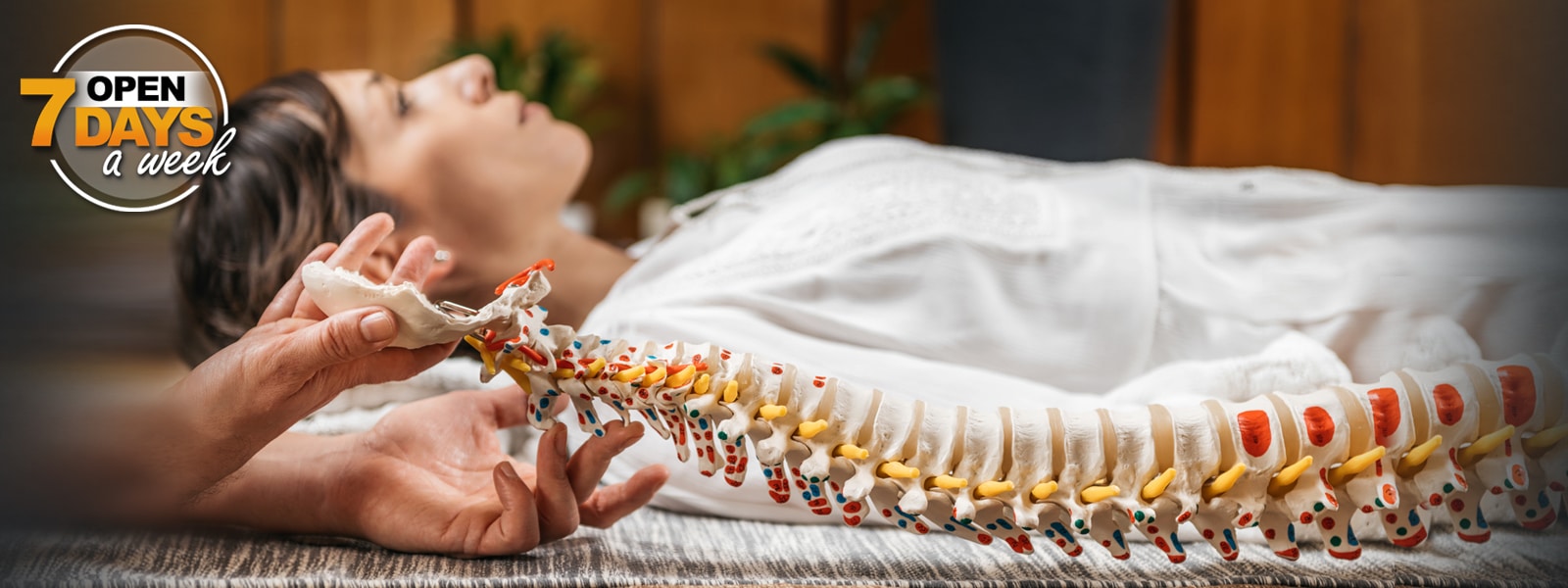
Chiropractor in Bandar Sri Damansara with Physiotherapy
By Yama Zafer, D.C.
A chiropractor in Bandar Sri Damansara at Chiropractic Specialty Center (CSC) works with registered physiotherapists in one center on Jalan Damar, Kuala Lumpur. Chiropractic care in Bandar Sri Damansara at CSC is used for back and neck pain, slipped disc, sciatica, pinched nerves, and shoulder and knee problems. It is offered to adults of all ages, to women during pregnancy and to children, and the assessment decides whether it suits each person. The first visit checks the history, the movements that bring on the symptoms and, where needed, the nerves. Care then uses gentle, non-twisting chiropractic methods, with registered physiotherapy when the findings call for both.
Contact CSC Bandar Sri Damansara: WhatsApp +60 12 455 6939 | Call +603 6262 5777
The center is on Jalan Damar SD 15/1, across from Central Spine Sri Damansara Community Park, and is open seven days a week. It is close to Kepong, Desa ParkCity, Bandar Menjalara, Kota Damansara, Sungai Buloh and Selayang. It is one of the two Kuala Lumpur centers of Chiropractic Specialty Center, founded in 2006, and the main center is in Bukit Damansara. The sections below cover the address and hours, the first visit, conditions, methods, children's care, referral, fees and common questions.
Chiropractor in Bandar Sri Damansara: Address, Hours and Key Facts
Address8-G, Jalan Damar SD 15/1, Bandar Sri Damansara, 52200 Kuala Lumpur, Wilayah Persekutuan Kuala Lumpur
LandmarkAcross from Central Spine Sri Damansara Community Park, in the same shoplot row as the Mazda dealership
Phone+603 6262 5777
WhatsApp or SMS+60 12 455 6939
Opening hoursMonday to Friday: 8:00 AM to 8:00 PM
Saturday and Sunday: 8:00 AM to 6:00 PM
Public holiday hours may differ, so please check before you travel.

| Center detail | Information |
|---|---|
Center | Chiropractic Specialty Center Bandar Sri Damansara |
Practitioners | Registered chiropractic practitioners and registered physiotherapists |
Established | Chiropractic Specialty Center was established in 2006 |
Company | Operated by Chiropractic Specialty Center Sdn. Bhd. (Company No. 757008-A) |
Getting here | On-street parking is available along the shoplot row, and the Google Maps and Waze links above give directions by car. By train, the MRT Putrajaya Line has three Sri Damansara stations: Sri Damansara Barat, Sri Damansara Sentral and Sri Damansara Timur. Check the route from the one nearest you before you travel. |
Center page | |
Fees | Published on the chiropractic fees and physiotherapy fees pages, and the same at every CSC center |
Main KL center | The Bukit Damansara / KL center at Plaza Damansara is the main center of CSC |
Reviews and directions | The center's Google Maps listing shows reviews and gives directions |
Physiotherapy and Chiropractic in Bandar Sri Damansara: Together or Separately
At CSC Bandar Sri Damansara, physiotherapy and chiropractic can be provided together in one plan or separately. They are distinct professions with separate registration. Chiropractic care looks at the motion and function of the spine and other joints, while registered physiotherapy works on muscles, mobility, strength and rehabilitation.
My advice is not to choose between them but to choose both. Holistic care means comprehensive care, and care cannot be comprehensive when it takes a single approach. That is why I founded CSC in 2006 as one center where chiropractors and physiotherapists work in tandem.
A coordinated plan may combine low-force chiropractic methods, hands-on physiotherapy, guided exercise, and advice on posture and daily activity. It is built from your own assessment, not from a fixed set of treatments, and you can still ask for physiotherapy only or chiropractic only. Read more about chiropractic combined with physiotherapy.
Your First Visit to a Chiropractor in Bandar Sri Damansara
Your first visit is a consultation and structured assessment; any adjustment or plan of care is decided from its findings. It usually includes:
- History and goals: when the problem began, what changes it, what you have already tried, and which daily activities matter most to you.
- Physical assessment: posture and movement review, joint motion, and muscle testing, with reflexes, sensation, and balance checked where relevant. Tell the clinician about any discomfort during the examination, however slight it seems.
- Imaging review: any MRI, X-ray, or CT is interpreted alongside your symptoms and examination, not on its own.
- Explanation and options: findings, limits, suitable options, and fees explained in plain language before you commit; current chiropractic fees and physiotherapy fees are published in advance.
- Referral when needed: if a medical, injection, or surgical pathway is more appropriate, we say so and arrange or recommend referral.
Please bring: your identification, a list of medications, and all past medical records, including the scans themselves on a CD or film, not only their reports. Wear comfortable clothing that allows the relevant area to be assessed.
Before the visit, I ask every new patient to sit down and write the story of the problem. Note when it began, how it has progressed and what has been tried for it, whether at home, from online videos or with other practitioners. Note the questions you want answered as well, because they are easy to forget once you are in the room. The more I know, the better I understand the problem.
Conditions We Care For at CSC Bandar Sri Damansara
Our center provides non-surgical, non-rotatory care for a wide range of spine, disc, nerve, and joint concerns. Each condition below links to its dedicated page, where you will find the full detail.
Back Pain: Lower, Middle and Upper
What can a chiropractor in Bandar Sri Damansara do for back pain? A chiropractor can assess back pain and plan non-invasive care for it. At CSC, that care comes first, ahead of any referral for injections or surgery. We assess whether the pain comes from a disc, joint, muscle, or posture, then care for it gently.
Back pain is a symptom, not a single diagnosis. It may relate to muscle strain, spinal joint irritation, disc changes, prolonged sitting or lifting, posture, sacroiliac stress, or nerve involvement. In my view there is no such thing as a normal back pain, so pain that comes and goes still deserves attention.
At our Jalan Damar center, we often see commuters and desk workers from Kepong, Desa ParkCity, and Selayang. Their concerns include lower-back pain, mid- and upper-back pain, and back pain that radiates into the leg. Care may combine gentle spinal methods, registered physiotherapy, graded exercise, and activity guidance.
The most important part of any plan is not the treatment but the change in daily habits. The right time to make that change is while the back still hurts. With acute back pain, I advise standing up from the chair every 15 minutes. People without back problems should still take a break every 30 to 45 minutes. See our back pain treatment and upper-back pain pages.
Neck Pain, Stiffness and Upper-Back Symptoms
What can a chiropractor do for neck pain and stiffness? A chiropractor can assess neck pain from desk and screen posture, cervical disc changes, or spondylosis. Care then uses gentle, non-rotatory methods, physiotherapy and posture retraining, chosen after your assessment.
Neck pain may come with stiffness, reduced turning, headaches, or symptoms extending into the shoulder, arm, or hand. Long screen hours and poor ergonomics are common triggers among residents and office workers around Bandar Sri Damansara and Sungai Buloh. In my experience, neck problems often start in the muscles; left long enough, they affect the joints and then the discs. Because a joint, nerve or disc problem in the neck can feel like a muscle problem, the assessment checks each of them.
Forceful neck twisting is avoided, and CSC does not use aggressive neck-pulling procedures such as the Y-Strap or Ring Dinger.
See neck care, cervical spondylosis, neck stiffness care, neck and upper-back problems, and whiplash.
Slipped Disc: Bulge, Protrusion, Prolapse, Herniation and Extrusion
What is a slipped disc, and how is it managed without surgery? "Slipped disc" is the everyday name for every stage of disc damage. Care uses gentle, non-rotatory methods and physiotherapy, without aggressive twisting, and imaging is read with your symptoms.
In the order I teach, the stages are a bulge, a protrusion, a prolapse, a herniation (the same as a rupture), an extrusion and, last and most dangerous, a fragmented disc. A true bulge means the disc’s fibers have swollen beyond their usual size without pressing on the spinal cord or nerves.
In a protrusion, the center of the disc pushes outward while its outer fibers still contain it. By the prolapse stage, only a few of those fibers are holding it back. When it breaks through them, the disc has herniated, and its center can now touch the spinal cord or nerves. An extruded disc, with the center pushed out to the edge of the disc, calls for prompt assessment, which does not automatically mean surgery. In a fragmented disc, a piece breaks away and floats free in the spinal canal.
Scan reports sometimes call a later stage a bulge, so the examination and the images count for more than the word on the report. In my experience a damaged disc can worsen quickly or over years. With any of these disc problems, yoga must be avoided, because so many of its poses bend or twist the spine.
We care for the full range of disc problems with non-rotatory methods and, where suitable, gentle spinal decompression rather than forceful twisting. Each has its own page: disc bulge, disc protrusion, prolapsed disc, herniated disc, extruded disc, and degenerative disc disease.
For an overview, see non-surgical slipped-disc care and our general spinal disc information.
Sciatica, Pinched Nerve and Leg Pain
How does a chiropractor in Bandar Sri Damansara approach sciatica? Non-invasive care starts by finding the cause of the nerve irritation, and it avoids forceful twisting. Sciatica is pain, numbness, or tingling that travels from the lower back into the buttock and leg. To me, sciatica is not a diagnosis but a description: it means the sciatic nerve is inflamed. The problem lies in the nerve rather than in a muscle. I have not seen a single case of sciatica without some disc involvement, although the degree varies from mild to moderate.
Not every leg pain is sciatica, and a disc finding on an MRI does not by itself explain the symptoms. The most common symptom of a damaged disc is no symptom at all. In a study of 98 people without back pain, 52% had a disc bulge at one or more levels of the lower back (Jensen and colleagues, 1994).
"Pinched nerve," "nerve impingement," and "nerve compression" all describe a nerve that is irritated or has less space. The cause may be a damaged disc, narrowing of the spaces the nerves pass through, enlarged facet joints, or a thickened ligament. An irritated nerve can cause numbness, tingling, weakness, or burning. The muscles and fascia that share its nerve supply then tighten and develop trigger points. I check those as well, because caring for only one part is not enough.
Care assesses the involved pathway, strength, reflexes, sensation, and walking. We then use gentle, non-rotatory methods and physiotherapy, avoiding twisting where a disc is involved.
Leg weakness that keeps getting worse should not be ignored. It calls for a careful assessment by a competent provider, and conservative care can continue only while the weakness itself is improving.
Whatever is irritating the nerve, if you have sciatica or pain traveling down a leg, get urgent medical attention, a thorough assessment at a hospital emergency department straight away, within hours, if you develop new or worsening numbness around your genitals, between your genitals and anus, or around your anus. New difficulty passing urine, or any loss of bladder or bowel control, needs the same urgent assessment. These symptoms can have different causes. Some may call for an invasive procedure, but an assessment helps determine the appropriate care and does not mean you necessarily need surgery.
See sciatica care, sciatic nerve pain, and pinched nerve care. Signs that call for medical review are listed together in the referral section below.
Facet and Ligamentum Flavum Hypertrophy: Spinal Stenosis Findings
What do facet hypertrophy and ligamentum flavum hypertrophy mean? Facet hypertrophy is enlargement of the small joints at the back of the spine. Ligamentum flavum hypertrophy is thickening of the elastic ligament inside the spinal canal. Either can narrow the space around the nerves, so both are read together with your symptoms.
As a disc loses height, the facet joints carry more load and the ligamentum flavum can buckle inward. Like most wear-related changes, these usually follow an injury, sudden or repeated, or repeated harmful strain. In my experience, facet hypertrophy, ligamentum flavum hypertrophy and disc bulges, herniations or extrusions are common conditions that at times occur together, in parallel with one another.
MRI reports often describe facet joint hypertrophy and ligamentum flavum hypertrophy, which can reduce space when combined with disc-height loss or osteophytes.
These are structural descriptions, not a diagnosis of your symptoms. Their relevance depends on the degree of narrowing, the matching nerve signs, and your walking and standing tolerance. Where the findings suggest significant stenosis or progressive change, referral is discussed.
Frozen Shoulder, Adhesive Capsulitis and Rotator Cuff Pain
How are frozen shoulder and shoulder pain cared for without injections or surgery? Care combines low-force techniques with physiotherapy and structured rehabilitation. Frozen shoulder (adhesive capsulitis) is progressive shoulder stiffness and pain from tightening of the joint capsule.
Shoulder pain may arise from the shoulder joint, rotator cuff, surrounding muscles, the shoulder blade, or the neck.
Care is commonly physiotherapy-led: graded movement, joint mobilization, muscle work, and rehabilitation, with chiropractic methods for relevant joints where appropriate.
See shoulder care and frozen shoulder.
Knee Pain: Meniscus, ACL, and Osteoarthritis
Does CSC Bandar Sri Damansara provide non-surgical knee care? Yes. The center provides non-surgical care for knee pain and for meniscus, ligament, and osteoarthritis concerns, through physiotherapy, exercise, and gentle joint care. Chiropractic focuses on joint mechanics; physiotherapy addresses soft tissue and rehabilitation. What suits you is decided by assessment.
Knee pain can involve the meniscus, ligaments, cartilage, the patellofemoral joint, muscles, tendons, or osteoarthritis-related changes. A meniscus is a cartilage cushion, while the ACL is a stabilizing ligament; they are different injuries. In my experience a misaligned knee puts extra stress on the meniscus. That is why the assessment looks at the knee’s alignment as well as its tissues. Meniscus-related concerns may cause joint-line pain, swelling, catching, locking, or difficulty straightening the knee. The assessment considers the injury mechanism, swelling, stability, motion, and walking.
Registered physiotherapy may be used for motion, strength, balance, and staged rehabilitation before or after a surgical opinion.
At CSC, care for knee osteoarthritis and degenerative changes usually centers on registered physiotherapy, graded exercise, strength, movement control, and load management. Chiropractic methods are considered for relevant joint mechanics where appropriate, and the aim is comfort and function. See knee care, meniscus concerns, ACL-related concerns, and knee osteoarthritis.
Hip, Elbow, Foot, and Jaw Pain
We also care for hip pain and stiffness, elbow pain including golfer's and tennis elbow, foot and heel pain, and jaw (TMJ) pain. Each is assessed for joint mechanics and load, and cared for with gentle methods and physiotherapy.
Gentle, Non-Rotatory Methods Used at CSC Bandar Sri Damansara
Methods are selected after assessment and may change as your tolerance and function change. Care avoids forceful, high-speed twisting of the neck and lower back.
Depending on your assessment, a chiropractic adjustment may be a non-rotatory manipulation using the low-force Activator® instrument, Cox® Flexion-Distraction, or drop-table techniques. Where a disc or nerve is involved, gentle spinal decompression may be added to the plan.
Cracking and twisting should never be done on a spine with a damaged disc, however experienced the chiropractor. Rotary manipulation is not something I favor. I use it only when I am 100% sure there is no disc damage, because it is better to be safe than sorry.
Registered physiotherapy contributes hands-on therapy and modalities such as high-intensity laser, shockwave therapy, and therapeutic ultrasound, together with guided exercise and rehabilitation. Spinal decompression and similar equipment are used only when suitable after assessment. Both Kuala Lumpur centers have the full range of CSC's treatment equipment and apply the principles of NSD Therapy®, the spine method I developed.
Care is kept within what you can comfortably tolerate, and you tell the clinician at once if anything hurts. As my motto has always put it: “No pain, more gain.”
Children's Posture, Sport and Spine Care in Bandar Sri Damansara
At the Bandar Sri Damansara center, chiropractors and physiotherapists plan care for children and teenagers together, with exercise as a central part of the plan. The concerns assessed include a stiff neck after long hours of study or gaming, and back pain during sport. They also include uneven shoulders that may point to a scoliosis curve, and a neck that keeps cracking.
Care for very young children uses non-force methods, soft-tissue work, posture habits and age-suited exercises. Teenagers' plans move closer to adult care and can include low-force methods, strength work and a gradual return to sport. A parent or guardian can stay with the child throughout every visit.
The guide to chiropractic care for children explains how each age is cared for. The guide to neck manipulation in children summarizes the research and guidance. The guide to neck cracking in children explains the cracking habit. The checklist of questions to ask before chiropractic care for a child puts the important questions in order.
Watch: Neck & Back Self-Help Tips for Posture, Sleep and Movement
In this video I show self-help measures for sitting posture, sleep positions, standing and walking posture, shoulder blade exercises and core breathing. I also explain why exercise waits until the body is ready, and why each exercise should be checked with your healthcare provider first. Watch on YouTube.
Video: Is Chiropractic Safe? 13 Questions About MRI, Cracking and Physio
In this educational video I answer the questions people often ask before choosing chiropractic or physiotherapy. They cover chiropractic safety, the cracking sound, technique selection, spinal discs, knee mechanics, comfort during care, and the use of MRI and X-rays. I also explain why I advise choosing both, chiropractic and physiotherapy together, rather than one or the other.
Key Moments: Chiropractic Safety, MRI, Cracking and Physio
- 00:00 Overview: chiropractic safety, cracking, imaging, and common questions
- 00:33 Is chiropractic safe?
- 01:35 Standard methods, and gentler methods that do not twist the spine
- 02:44 Why safety depends on the chiropractor and the technique
- 03:02 Why care should be performed by registered chiropractors
- 04:01 What the cracking sound is during an adjustment
- 04:22 Techniques that produce the sound, and the Activator for worn joints
- 05:28 Do chiropractors only focus on the spine?
- 06:06 Chiropractic approaches for knee mechanics
- 07:27 Comfort during care, and why discomfort means too much force
- 08:28 Progress, and the review by the fifth session
- 09:48 No change by the tenth session: continue or stop?
- 11:16 Why not every patient needs imaging
- 11:50 Full-spine X-rays: for scoliosis only
- 12:46 MRI versus X-ray: no radiation, and the soft tissues seen
- 13:42 General considerations for sciatic-type presentations
- 14:56 Chiropractic or physiotherapy? Choose both
- 15:35 Holistic care means comprehensive care
- 16:55 Closing
For the chapter list and the transcript, open the Is Chiropractic Safe video page.
Ring Dinger® and Y-Strap Pulls: Why They Are Dangerous
Aggressive spinal traction devices such as the Ring Dinger® or Y-Strap apply sudden, forceful pulling to the neck or lower back. Videos of them are common on social media.
These pulls are dangerous, in my view, because the neck has small joints, soft discs and the vertebral artery running beside its bones. A sudden pull can turn a mild disc bulge into a severe herniation, tear a degenerated disc, or injure the artery, which can lead to a stroke. Such pulls are not justifiable at any age.
The risk is greatest with disc bulges or herniations, cervical spondylosis or bone spurs, neck instability or high blood pressure. Women taking birth control pills face a higher risk as well. If anyone offers to pull your neck this way, ask them to stop. CSC does not use high-force traction; care is built on gentle methods chosen after assessment.
Watch the video on YouTube, and read more on the risks of aggressive neck-pull methods.
Key Moments: Aggressive Neck Pulling and Cracking
- 00:00 Why forceful neck pulls are dangerous
- 00:14 Y-Strap and Ring Dinger-style pulling mechanics
- 00:38 Cervical joints, spinal discs, and neck ligaments
- 01:11 Nerve pathways and vertebral artery considerations
- 01:45 Neck stiffness and spondylosis
- 02:14 How aggressive pulling harms the joints and the artery
- 02:51 Uncovertebral joints, bone spurs, and neck stiffness
- 03:38 Bone spurs and the vertebral artery
- 04:06 The “salon stroke” connection explained
- 04:34 Yanking the sides of the neck: a no-no
- 04:50 Why years of experience do not remove risk
- 05:32 Not justifiable at any age, and who is most at risk
- 06:16 Brainstem, spinal cord, and dura tension effects
- 08:12 Sudden pulling, nerve traction and stroke
- 09:19 How sudden force can worsen a bulge or tear a disc
- 09:38 Gentle cervical care versus aggressive methods
- 09:59 Final educational takeaways
The chapters and an edited transcript of this video are on the Neck Cracks Are Dangerous video page.
When CSC Bandar Sri Damansara Refers for Medical, Imaging, or Surgical Review
Some findings are better suited to medical care, or another pathway, than a routine appointment:
| If you notice… | Examples |
|---|---|
Numbness around the genitals or anus, or bladder or bowel changes | New or worsening numbness around the genitals or anus with back or leg pain, new difficulty passing urine, or loss of bladder or bowel control. These need a thorough assessment at a hospital emergency department straight away, within hours. |
Possible stroke, heart, or breathing emergency | Stroke-like symptoms, sudden severe dizziness with neurological change, chest pain, or breathing difficulty |
Serious injury | Severe trauma, suspected fracture, major joint deformity, inability to bear weight, or a truly locked knee |
Systemic illness | Fever, unexplained illness, infection concern, or a cancer history with new severe symptoms |
Progressive nerve problems | Progressive neurological loss, significant spinal stenosis, or an unstable injury |
Pregnancy concerns | Any pregnancy-related warning signs |
These are examples. In an emergency, contact Malaysia's emergency services.
How Care Is Organized at CSC Bandar Sri Damansara
- Part of a wider group: Chiropractic Specialty Center was founded in 2006 and has centers across the Klang Valley, two of them in Kuala Lumpur.
- Registered practitioners: chiropractic by registered chiropractic practitioners, and physiotherapy by registered physiotherapists.
- Assessment first: imaging, symptoms, examination, function, and goals are considered together.
- Coordinated under one roof: chiropractic, physiotherapy, and rehabilitation together when appropriate.
- Gentle method selection: lower-force and non-rotatory care, with no aggressive neck-pulling.
- Clear scope and referral: we explain when a medical, injection, or surgical pathway is more appropriate.
Read more about us, meet the team, and read about Yama Zafer, D.C.
Areas We Serve From Bandar Sri Damansara
Our center on Jalan Damar SD 15/1 is convenient for people living or working across this part of northern Kuala Lumpur and Selangor.
We welcome patients from Bandar Sri Damansara, Sri Damansara, Kepong, Selayang, Bandar Menjalara, Desa ParkCity, Kota Damansara, Sungai Buloh, and Segambut. Travel time varies with traffic, so check current directions before you set out. The areas served by both Kuala Lumpur centers are listed together on one page.
If another location is easier for you, the main center of CSC is the Bukit Damansara / KL center at Plaza Damansara. The address and hours of every center are on the contact page.
How Much Do Chiropractic and Physiotherapy Cost in Bandar Sri Damansara?
Fees at CSC Bandar Sri Damansara are the same as at every CSC center (CSC quotation dated June 25, 2026):
- Examination at the first visit: RM100
- Chiropractic adjustment: RM150, or RM110 when physiotherapy is part of the same visit
- Examination and adjustment on the same day: RM250
- Physiotherapy in the same visit as chiropractic: RM27 to RM150 per unit, depending on the service
- Physiotherapy without chiropractic in the same visit: RM57 to RM180 per standard unit, depending on the service
The total depends on what the assessment finds, the methods used and how many visits the plan needs. Items such as flexion-distraction, or a reading and report of MRI or X-ray findings, are charged separately. The full fees are on the chiropractic fees and physiotherapy fees pages. The fee for a plan is explained and agreed before care begins.
Google Reviews of CSC Bandar Sri Damansara
Every patient of either Kuala Lumpur center is welcome to leave an honest Google review, and nothing is offered in return for a review. Reviews of the Bandar Sri Damansara center are written on its Google Maps listing, which also gives directions.
Explore Spine Levels, MRI Findings and Related Care
Each spine level, MRI finding, and related topic has its own detailed page.
Cervical Spine, One Level at a Time
- Neck Chiropractor KL: Assessment and Low-Force Care
- Upper Cervical Chiropractor: C0-C3 Chiropractic in KL
- Occiput and Atlas (C0-C1): What This Joint Does
- Understanding C1-C2 Segment Dysfunction
- Understanding C2-C3 Segment Dysfunction
- C4-C5: What Symptoms at This Neck Level Mean
- C5-C6 Disc Changes and Non-Invasive Neck Care
- C6-C7: What Symptoms at This Neck Level Mean
- C7-T1 Spine: Joint, Disc & Nerve Care in Kuala Lumpur
Lumbar Spine Levels and MRI Findings
- L1-L2 Disc Problems: Symptoms, MRI Findings and Care
- L2-L3 Disc Bulge & Herniation: Signs, Symptoms and Treatment
- L3-L4 Spine Care in Kuala Lumpur
- L4-L5 Herniated or Slipped Disc: Symptoms, Causes and Care
- L5-S1 Herniated Disc: Symptoms, Treatment and Recovery Time
- Facet Hypertrophy and Non-Invasive Care
- Ligamentum Flavum Hypertrophy: Thickening, Causes & Care Options
Chiropractor in Bandar Sri Damansara: Frequently Asked Questions
These answers cover how long the first visit takes, booking, insurance, the number of sessions, registration, safety, slipped discs, pregnancy and older adults, imaging, and exercise before you are assessed.
How long does the first visit take, and can someone come with me?
How do I book my first visit, and is a referral needed?
Does insurance cover chiropractic or physiotherapy at CSC Bandar Sri Damansara?
How many sessions will I need, and when is progress reviewed?
Are CSC’s chiropractors and physiotherapists registered?
Is chiropractic safe, and does an adjustment hurt?
Can a slipped disc be cured without surgery?
Is chiropractic suitable during pregnancy or for older adults?
Do I need an MRI or X-ray before visiting a chiropractor in Bandar Sri Damansara?
Should I exercise or stretch before my first visit?
Educational and Scope Notice
This page provides general information about services available at CSC Bandar Sri Damansara; it cannot assess an individual reader's situation or replace a diagnosis or medical advice. Recommendations depend on individual assessment, professional scope, informed consent, and referral where appropriate.
References and Evidence Context
This peer-reviewed source supports the statement that cites it on this page, and condition-specific references appear on each linked page.
- Jensen MC, Brant-Zawadzki MN, Obuchowski N, Modic MT, Malkasian D, Ross JS. Magnetic resonance imaging of the lumbar spine in people without back pain. N Engl J Med. 1994;331(2):69-73.
This reference describes the condition in general and does not evaluate care at Chiropractic Specialty Center.
The Author of Chiropractor in Bandar Sri Damansara: Chiropractic & Physio
Chiropractor in Bandar Sri Damansara: Chiropractic & Physio was written by Yama Zafer, D.C., who has 30+ years in chiropractic and physiotherapy and founded Chiropractic Specialty Center in Kuala Lumpur in 2006.
Last Updated: Chiropractor in Bandar Sri Damansara with Physiotherapy
Chiropractor in Bandar Sri Damansara with Physiotherapy was last reviewed and updated on October 10, 2026.