


Cervical Spondylosis: Non-Invasive Care in KL
Cervical spondylosis refers to age-related or use-related changes in the neck joints, spinal discs, ligaments, and nearby nerve pathways. These changes may be seen on X-rays or MRI and are often linked with neck stiffness, reduced movement, shoulder blade symptoms, arm tingling, numbness, or changes in hand strength.
The cervical spine does not work as one isolated structure. The discs, facet joints, uncovertebral joints, muscles, ligaments, and nerve openings all work together during daily movement. When several of these structures are involved, symptoms may come from more than one area at the same spinal level.
At Chiropractic Specialty Center® in Kuala Lumpur, cervical spondylosis care is planned through assessment-based chiropractic, registered physiotherapy, guided exercise, posture review, and movement-focused rehabilitation. Care avoids forceful neck pulling, sudden traction, and aggressive twisting methods, especially when disc degeneration, nerve-related signs, or age-related joint findings are present.
This page explains how cervical spondylosis may develop, what symptoms may suggest nerve involvement, how imaging can help, and how non-invasive care may be planned for Cervical Spondylosis: Non-Invasive Care in KL.
Key Points About Cervical Spondylosis in KL
- Cervical spondylosis refers to age-related or use-related changes in the neck joints, spinal discs, ligaments, and nearby nerve pathways.
- Common imaging findings may include disc dehydration, reduced disc height, bone spurs, facet joint changes, uncovertebral joint changes, ligament thickening, or narrowing around nearby nerve roots.
- Symptoms may include neck stiffness, reduced turning, shoulder blade discomfort, headaches linked with neck movement, tingling, numbness, weakness, or altered hand control.
- Cervical spondylosis and cervical disc changes may appear together on the same X-ray or MRI, especially at levels such as C4-C5, C5-C6, and C6-C7.
- Assessment should include history, posture, neck range of motion, upper-back movement, shoulder function, neurological screening, and imaging review when needed.
- MRI may be considered when symptoms suggest disc involvement, nerve root irritation, spinal canal narrowing, or spinal cord involvement.
- Forceful neck cracks, sudden traction, Y-Strap pulls, towel pulls, and aggressive end-range rotation may not be suitable when spondylosis, disc degeneration, nerve-related symptoms, or vascular risk factors are present.
- Non-invasive care may include gentle chiropractic joint mobilization, registered physiotherapy, myofascial release, guided exercise, posture review, ergonomic advice, and movement-based rehabilitation.
- Worsening hand weakness, balance changes, walking difficulty or hand clumsiness are worth getting assessed by a competent provider rather than ignored, and a loss of bladder or bowel control is the one situation that calls for prompt medical assessment.
For Cervical Spondylosis: Non-Invasive Care in KL, care should be based on assessment findings rather than one standard neck method for every person.
Need an Assessment for Cervical Spondylosis in Kuala Lumpur?
People often seek assessment for cervical spondylosis when neck stiffness, reduced movement, shoulder blade symptoms, arm tingling, numbness, or hand weakness begins to affect daily activity. These symptoms may be linked with joint changes, spinal disc degeneration, narrowed nerve openings, or muscle and posture patterns around the neck and upper back.
At Chiropractic Specialty Center®, assessment is available for people living or working near Bukit Damansara, Bandar Sri Damansara, Bangsar, Damansara Heights, TTDI, Mont Kiara, Sri Hartamas, Kepong, Desa ParkCity, Sungai Buloh, and nearby Kuala Lumpur and PJ areas.
An assessment may include posture review, neck range of motion, joint movement checks, upper-back and shoulder movement, muscle response, and neurological screening when arm or hand symptoms are present. X-rays or MRI may be reviewed when deeper structural findings need to be understood.
For Cervical Spondylosis: Non-Invasive Care in KL, the goal of assessment is to understand which structures are involved before planning chiropractic, physiotherapy, exercise, or movement-based care.
For neck stiffness, arm tingling, or cervical spondylosis-related concerns, you may reach our Kuala Lumpur centers at Bukit Damansara and Bandar Sri Damansara for further assessment and care planning.
On This Page: Cervical Spondylosis Symptoms, Assessment & Care
How Cervical Spondylosis Should Be Assessed Before Care Is Planned
A careful assessment is the first step in understanding whether cervical spondylosis is mainly related to joint changes, disc degeneration, nerve involvement, muscle imbalance, posture, or a combination of these factors. Because several structures may be involved at the same spinal level, care should begin with a detailed review rather than assuming the cause from symptoms alone.
Assessment may include a discussion of current symptoms, past injuries, daily posture, screen use, sleep position, work demands, and movements that increase or reduce stiffness. Physical evaluation may include neck range of motion, joint movement checks, upper-back and shoulder movement, muscle response, and neurological screening when arm or hand symptoms are present.
When symptoms suggest deeper structural involvement, X-rays or MRI may be reviewed. Imaging can help identify disc height changes, bone spurs, facet joint changes, uncovertebral joint changes, ligament thickening, narrowed nerve openings, spinal canal narrowing, or spinal cord involvement.
Assessment of cervical spondylosis should connect symptoms, movement findings, imaging results, and daily function before a care plan is selected.
What Cervical Spondylosis Means on X-Ray or MRI
Cervical spondylosis is the term used when age-related structural changes are seen in the neck on X-rays or magnetic resonance imaging (MRI). These changes may involve the spinal discs, facet joints, nearby ligaments, or small bone spurs that can develop over time.
Cervical spondylosis is a term used when structural changes are seen in the neck joints, spinal discs, ligaments, or nearby bone structures. These findings may appear on X-rays or magnetic resonance imaging, depending on what needs to be reviewed.
An X-ray may show changes such as reduced disc height, altered neck curve, bone spurs, or joint changes. MRI gives more detail about spinal discs, nerve roots, spinal canal space, ligament thickening, and whether the spinal cord or nerve pathways are involved.
The most useful part of an imaging report is often the exact spinal level mentioned. Common levels include C4-C5, C5-C6, or C6-C7. A report may also describe disc dehydration, disc bulge, disc protrusion, foraminal narrowing, canal narrowing, or facet joint changes.
Imaging findings should not be read alone. Some people have visible structural changes without major daily difficulty, while others may have symptoms that match a specific nerve pathway. This is why imaging should be interpreted together with history, movement testing, posture, neurological signs, and daily function.
How Cervical Spondylosis Care May Be Planned
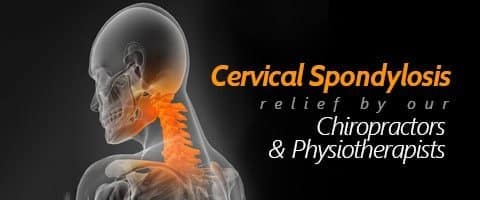
Care for cervical spondylosis should be planned around the structures involved. Some cases are mainly related to joint stiffness and posture. Others may involve spinal disc degeneration, reduced disc height, narrowed nerve openings, muscle imbalance, or symptoms extending into the shoulder, arm, hand, or fingers.
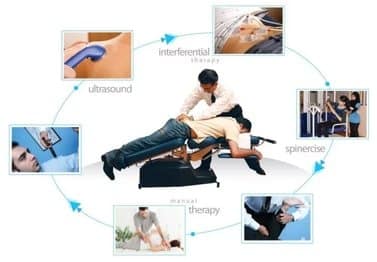
At Chiropractic Specialty Center®, care may include gentle chiropractic joint mobilization, registered physiotherapy, manual muscle work, myofascial release, guided exercise, posture review, and ergonomic advice. When assessment findings suggest deeper or longer-standing involvement, selected machine-assisted methods may also be considered as part of a broader care plan.
The care plan avoids forceful neck pulling, sudden traction, and aggressive end-range twisting. These methods may not be suitable when cervical spondylosis is present with disc degeneration, bone spurs, nerve-related symptoms, vascular risk factors, or a history of trauma.
A structured plan may focus on improving neck motion, upper-back movement, shoulder blade control, muscle coordination, and daily posture habits. The aim is to reduce repeated strain and help the neck function better during work, driving, sleep, and normal activity.
Cervical Spondylosis: Non-Invasive Care in KL, care should be matched to assessment findings, not based on cracking sounds or the same method for every neck.
Video: Forceful Neck Cracks and Cervical Spondylosis
Forceful neck cracks, sudden traction, Y-Strap pulls, towel pulls, and aggressive rotational movements may place added stress on the cervical joints, spinal discs, ligaments, and nearby nerve pathways. These forces may be more concerning when cervical spondylosis, disc degeneration, bone spurs, or nerve-related symptoms are already present.
A video section on this page should focus only on forceful neck cracking, traction forces, vascular considerations, uncovertebral joints, spinal discs, and why gentle, focused care may be more appropriate for certain neck findings.
Key Moments in This Video
- 00:00: Why forceful neck pulls may be risky
- 00:20: Y-Strap and Ring Dinger® mechanics
- 00:38: Cervical joints, discs, and ligaments
- 01:17: Nerve pathways and vertebral arteries
- 01:51: How spondylosis affects force response
- 02:20: When aggressive pulls may increase strain
- 03:35: Uncovertebral joints and bone spurs
- 04:03: Vertebral artery considerations
- 04:24: Neck positioning and vascular response
- 04:40: Movements that place higher stress
- 05:16: Why experience alone does not change force impact
- 06:09: Who may be more sensitive to force
- 08:34: Understanding traction forces
- 09:11: How discs respond to sudden load
- 09:59: Gentle approaches versus higher-force methods
- 10:18: Final educational takeaways
Understanding force direction, tissue sensitivity, and structural findings is important when cervical spondylosis is present. A neck with disc degeneration, bone spurs, or nerve-related signs should be assessed before any forceful neck movement is considered.
Non-Invasive Care Options for Cervical Spondylosis in KL
Non-invasive care for cervical spondylosis may include several methods, depending on assessment findings. The goal is to guide movement, reduce repeated strain, improve coordination, and help the neck and upper back work better during daily activity.
Care may include gentle chiropractic joint mobilization for restricted cervical joints, registered physiotherapy for muscle control and posture, manual muscle work for the neck and upper back, guided exercise for shoulder blade control, and ergonomic advice for desk work, sleep posture, and screen use.
When disc-related findings are present, care should be planned carefully around the direction of movement, spinal level involved, nerve-related signs, and tolerance to load. Forceful traction, sudden pulling, and aggressive rotation may not be suitable for every person.
Selected machine-assisted methods may be considered when assessment findings suggest deeper or longer-standing involvement. These methods should be used as part of a structured care plan, not as a stand-alone solution.
The most important step is matching the care plan to the person’s symptoms, imaging findings, movement pattern, and daily activity needs.
Cervical Spondylosis and Arm Tingling, Numbness, or Weakness
Cervical spondylosis may sometimes affect the nerve roots that leave the neck and travel into the shoulder, arm, hand, and fingers (upper extremities). When this happens, symptoms may not stay limited to neck stiffness or reduced neck movement.
Some people notice tingling, numbness, reduced grip strength, heaviness in the arm, or symptoms that travel into the thumb, index finger, middle finger, ring finger, or little finger. The pattern may depend on which cervical nerve level is involved.
These symptoms may occur when disc changes, bone spurs, thickened ligaments, or joint enlargement reduce the available space around nearby nerve pathways.
Because nerve-related symptoms may overlap with disc bulges, protrusions, or herniations, assessment often includes both the cervical joints and the spinal discs rather than looking at one structure alone.
Cervical spondylosis symptoms that extend into the arm or hand should be assessed carefully before care is planned.
Can Cervical Spondylosis Cause Headaches or Dizziness?
Cervical spondylosis may sometimes be associated with headaches that begin near the base of the neck and travel toward the back of the head, temple, or behind the eyes. These patterns may be more noticeable after prolonged desk work, poor sleeping posture, or long periods of looking down.
Some people also report lightheadedness or a sense of imbalance when the upper neck is stiff or sensitive. However, dizziness can come from many causes, including inner ear conditions, blood pressure changes, neurological concerns, medication effects, or other medical issues.
Because of this, headaches and dizziness should not be assumed to come from cervical spondylosis alone. They should be reviewed together with neck movement, posture, neurological findings, symptom history, and medical evaluation when needed.
Headaches or dizziness linked with neck stiffness should be assessed carefully, especially when symptoms are new, worsening, or unusual.
Cervical Spondylosis vs Cervical Spondylitis
Cervical spondylosis and cervical spondylitis sound similar, but they are different conditions.
Cervical spondylosis refers to age-related or use-related changes in the neck joints, spinal discs, ligaments, and surrounding bone structures. It is commonly linked with stiffness, reduced movement, disc degeneration, bone spurs, or narrowing around nearby nerve pathways.
Cervical spondylitis refers to inflammation affecting the cervical spine. In some cases, inflammatory spinal conditions may be linked with autoimmune or rheumatologic disorders. These cases may involve broader inflammatory signs, morning stiffness, swelling, or symptoms that affect more than one joint area.
The difference matters because care planning depends on the cause. Spondylosis is usually assessed through movement findings, posture, neurological signs, X-rays, or MRI. Spondylitis may require medical evaluation, blood tests, imaging, and specialist input when inflammatory disease is suspected.
A person with neck stiffness, arm tingling, numbness, weakness, or long-standing symptoms should not rely on the name alone. The correct next step is a proper assessment to understand whether the symptoms are linked with joint wear, disc findings, nerve irritation, inflammation, or a combination of factors.
MRI for Cervical Spondylosis and Nerve Symptoms
MRI may be considered when cervical spondylosis is linked with symptoms suggesting disc involvement, nerve root irritation, spinal canal narrowing, or spinal cord involvement. MRI gives more detail than X-ray for soft tissues, spinal discs, nerve pathways, and the spinal canal.
An MRI report may mention disc dehydration, disc bulge, disc protrusion, herniation, facet joint changes, ligament thickening, foraminal narrowing, or spinal canal stenosis. These findings help explain whether symptoms may be related to the joints, discs, nerve roots, or spinal cord.
MRI is especially useful when symptoms include arm tingling, numbness, weakness, reduced grip strength, hand clumsiness, balance changes, or symptoms that do not match simple posture-related stiffness.
X-rays may still be useful for reviewing spinal alignment, joint changes, disc height, and bone spurs. The choice of imaging depends on the symptoms, examination findings, and whether nerve or spinal cord involvement needs closer review.
While X-rays can reveal general structural changes, MRI imaging offers a comprehensive view of the spine, identifying key factors such as:
- Facet joint changes (joint enlargement)
- Thickening of the ligamentum flavum (ligament-related changes)
- Disc adaptations, including changes in hydration
- Bulging, protruded, or herniated discs
MRI is considered the preferred method for evaluating cervical spondylosis, as it provides detailed insights into spinal structures and nerve pathways, helping determine the severity and extent of the condition.
Mild, Moderate, and More Significant Cervical Spondylosis Findings
The severity of cervical spondylosis varies, and determining the degree of progression is essential in selecting the appropriate approach to care:
- Mild Cervical Spondylosis – Early spinal changes with minimal effects on movement.
- Moderate Cervical Spondylosis – More modern structural changes, influencing joint and soft tissue function
- Severe Cervical Spondylosis – Significant spinal changes, including disc bulging, bony spurs, or nerve compression, which may contribute to numbness, tingling, or restricted mobility in the arms.
Regardless of the severity, a comprehensive, non-surgical approach can help manage spinal function, help mobility, and prevent further progression.
Cervical Radiculopathy and Cervical Spondylosis
Cervical radiculopathy refers to symptoms that occur when a nerve root in the neck becomes irritated or compressed. Cervical spondylosis may contribute to this pattern when bone spurs, disc degeneration, disc bulges, ligament changes, or narrowed nerve openings affect nearby nerve pathways.
Symptoms may travel from the neck into the shoulder, shoulder blade, arm, hand, or fingers. Some people notice tingling, numbness, reduced grip strength, heaviness, or changes in arm control. The location of symptoms may depend on which cervical nerve level is involved.
Assessment should include neck movement, upper-limb neurological testing, muscle strength, reflexes, sensation, posture, and imaging review when needed. Disc changes and spondylotic joint changes may occur together, so both should be considered.
Non-invasive physiotherapy and chiropractic care may be considered when assessment findings suggest that movement, posture, joint stiffness, muscle control, or daily loading patterns are contributing factors. Symptoms that worsen quickly or involve progressive weakness should be medically evaluated.
Neck Stiffness, Tingling, and Cervical Spondylosis
Neck stiffness, tingling, and reduced movement may occur when cervical spondylosis affects the neck joints, spinal discs, muscles, ligaments, or nearby nerve pathways. These symptoms may appear gradually and may change depending on posture, sleep position, screen use, or daily activity.
Tingling or altered sensation into the shoulder, arm, hand, or fingers may suggest nerve root involvement. This can occur when narrowed nerve openings, disc changes, bone spurs, or ligament thickening affect nearby nerve pathways.
A clear assessment helps determine whether symptoms are mainly related to joint stiffness, muscle imbalance, disc degeneration, nerve irritation, or a combination of findings.
Conditions commonly associated with cervical spondylosis may include:
How Cervical Spondylosis Affects Neck Joints, Discs, and Nerves
Daily posture and movement habits can influence how cervical spondylosis symptoms feel during work, rest, and activity. Prolonged screen use, forward head posture, low laptop height, driving posture, rounded shoulders, and poor pillow position may increase repeated load on the neck.
When the head sits forward of the shoulders, the lower neck and upper back often carry more stress. Over time, this may increase stiffness around the cervical joints, upper-back muscles, and shoulder blade region.
Long periods without movement may also make stiffness more noticeable. Movement variation is often more practical than trying to hold one perfect posture throughout the day.
Helpful changes may include raising screens closer to eye level, keeping the head aligned over the shoulders, adjusting pillow height, taking short movement breaks, and avoiding prolonged looking down at phones or tablets.
Daily habits should be reviewed when cervical spondylosis is present because repeated posture and movement patterns may influence how the neck feels and functions.
Video: Upper Back Muscles and Cervical Spondylosis Symptoms
Neck stiffness and cervical spondylosis symptoms do not always come from the neck joints or spinal discs alone. The upper back, shoulder blades, trapezius, rhomboids, and surrounding muscles can influence how the neck moves and how posture is maintained during daily activity.
This video explains how muscle tightness, trigger points, shoulder blade control, and posture may contribute to neck stiffness or symptoms around the upper back. It should be used only for the rhomboid, trapezius, trigger point, W-T-L exercise, and isometric neck routine video.
Key Takeaways From This Video
- 00:00: Muscle tightness or disc-related neck stiffness?
- 01:14: Trapezius and rhomboid anatomy
- 04:10: Trigger point identification
- 10:45: W-T-L shoulder blade sequence
- 13:46: Isometric neck strengthening
If the neck and shoulder blade region feels persistently tight, the surrounding muscle balance, joint movement, and cervical spine findings should be assessed together.
Gentle Chiropractic Methods for Cervical Spondylosis in KL
Gentle chiropractic methods may be considered when cervical spondylosis is linked with joint restriction, reduced neck movement, posture strain, or upper-back stiffness. The method selected should depend on assessment findings, imaging when relevant, and how the neck responds during movement.
At CSC, neck pain treatment and care avoids aggressive twisting, sudden pulling, and forceful end-range rotation. These approaches may not be suitable when cervical spondylosis is present with disc degeneration, bone spurs, nerve-related symptoms, spinal canal narrowing, or vascular risk factors.
Chiropractic methods may include gentle joint mobilization, instrument-assisted approaches, drop-table methods, or flexion-distraction when appropriate. The goal is not to create a cracking sound. The focus is on how the cervical joints move and how surrounding muscles coordinate during daily activity.
Chiropractic and Physiotherapy for Cervical Spondylosis in KL
Chiropractic and physiotherapy care for cervical spondylosis should be based on assessment findings. The cervical spine is sensitive to force direction, disc condition, joint changes, nerve involvement, and posture habits, so the same approach should not be used for every person.
Gentle chiropractic methods may be considered when joint restriction or reduced cervical movement is present. Physiotherapy may focus on neck and upper-back muscle control, shoulder blade coordination, posture, mobility, and guided exercise.
Manual physiotherapy, myofascial release, trigger point work, ergonomic advice, and structured home exercises may also be included when muscle imbalance or daily habits contribute to stiffness.
Care avoids forceful neck pulling, sudden traction, and aggressive twisting. These methods may not be suitable when cervical spondylosis is present with disc degeneration, nerve-related symptoms, bone spurs, or spinal canal narrowing.
Chiropractic and physiotherapy should work together to guide movement, posture control, and daily function.
Common Factors Linked With Cervical Spondylosis
Cervical spondylosis is commonly linked with age-related or use-related changes in the neck. These changes may involve the spinal discs, facet joints, uncovertebral joints, ligaments, muscles, and nearby nerve pathways.
Common contributing factors may include prolonged screen use, forward head posture, repetitive work positions, reduced movement, previous neck injury, long driving hours, poor sleep position, and general age-related structural adaptation.
These factors may not affect every person the same way. Some people develop stiffness without arm symptoms, while others experience tingling, numbness, or weakness when nearby nerve pathways are involved.
Assessment helps identify which factors are most relevant and whether the main issue is joint stiffness, disc degeneration, posture strain, nerve irritation, or a combination of findings.
Neck Stiffness and Mobility Changes With Cervical Spondylosis
As cervical spondylosis develops, some people notice reduced ability to turn, bend, or hold the neck comfortably during daily activity. Stiffness may be more noticeable after sleep, desk work, driving, or long periods of looking down.
Structural findings such as disc degeneration, bone spurs, facet joint changes, or narrowed nerve openings may influence how the neck moves. Muscle tension around the shoulders and upper back may also contribute to reduced motion.
A loss of normal movement does not always come from one structure. The cervical joints, spinal discs, muscles, upper back, shoulder blades, and posture habits often work together.
Recurring neck stiffness should be assessed, especially when symptoms extend into the shoulder, arm, hand, or fingers.
When to Get Cervical Spondylosis Symptoms Checked
Cervical spondylosis symptoms should be checked when neck stiffness keeps returning, movement becomes more limited, or symptoms begin extending into the shoulder, arm, hand, or fingers.
Assessment is especially important when symptoms include tingling, numbness, reduced grip strength, arm heaviness, hand clumsiness, balance changes, or symptoms that continue despite posture and activity changes.
Symptoms that follow a fall, car accident, sudden neck pull, or forceful neck movement should also be reviewed carefully. Sudden force may affect the joints, discs, ligaments, muscles, and nearby nerve pathways.
A structured assessment can help clarify whether symptoms are related to joint changes, disc degeneration, narrowed nerve openings, muscle imbalance, posture, or nerve involvement.
When Cervical Spondylosis Should Be Assessed
Most cervical spondylosis-related symptoms are assessed in a routine setting. However, some symptoms are worth getting assessed by a competent provider, because they may point to spinal cord or nerve involvement.
Worsening arm or hand weakness, difficulty walking, balance changes, hand clumsiness or reduced coordination are worth getting assessed rather than ignored, and a loss of bladder or bowel control is the one situation that calls for prompt medical assessment. Short of that, conservative care is often a reasonable route for as long as it produces results.
These signs should not be managed with self-cracking, forceful stretching, sudden traction, or aggressive neck movements. The priority is medical evaluation to understand whether the spinal cord, nerve roots, or spinal canal are involved.
Related Cervical Disc and Degenerative Spine Topics
Cervical spondylosis may appear together with age-related disc changes in the neck. Imaging reports may mention disc degeneration, disc bulge, disc protrusion, disc herniation, disc extrusion, fragmented disc material, or narrowing around nearby nerve pathways.
These related topics can help readers understand the specific words used in an X-ray or MRI report. A person with cervical spondylosis may also need to understand whether disc changes are contributing to stiffness, shoulder blade symptoms, arm tingling, numbness, or changes in hand strength.
Helpful related topics may include degenerative disc disease, cervical disc bulge, cervical disc protrusion, cervical disc herniation, extruded disc, ruptured disc, fragmented disc, cervical radiculopathy, and spinal canal narrowing.
For broader age-related disc wear and reduced disc hydration, visit our degenerative disc disease page.
If your scan mentions a disc bulge, disc protrusion, or disc prolapse, the related pages explain how early and moderate disc changes may affect the neck and nearby nerves.
For more advanced disc changes, our pages on herniated disc, extruded disc, and fragmented disc explain how disc material may extend beyond the outer disc layer and, in some cases, affect the spinal canal or nerve roots.
If the report mentions disc rupture or disc material that has separated further, the ruptured disc and fragmented / sequestered disc pages provide more focused educational information.
How Disc Changes May Overlap With Cervical Spondylosis
Cervical spondylosis often affects the joints, ligaments, and discs together rather than one structure alone. This is why MRI findings may sometimes include both spondylotic joint changes and disc-related findings such as bulges, protrusions, or herniations at the same level.
Common Questions About Cervical Spondylosis
Cervical spondylosis often raises questions about symptoms, magnetic resonance imaging findings, arm tingling, headaches, and when symptoms may need urgent evaluation. The questions below cover the most common concerns people search for before seeking further assessment.
Can cervical spondylosis cause tingling in the fingers?
Can cervical spondylosis cause headaches?
Is MRI necessary for cervical spondylosis?
Can cervical spondylosis affect younger adults?
Can cervical spondylosis cause shoulder blade symptoms?
Can cervical spondylosis and disc bulge appear together?
What is the difference between cervical spondylosis and cervical radiculopathy?
Can posture make cervical spondylosis symptoms more noticeable?
When is cervical spondylosis urgent?
Author Info
“Cervical Spondylosis: Non-Invasive Care in KL” is written by Yama Zafer, D.C., who has U.S. training in chiropractic and physiotherapy and 30+ years of experience in non-surgical spine, joint, and movement-focused care in Malaysia; read more about Yama Zafer, D.C. on his official bio page.
Peer-Reviewed References
- Binder AI. Cervical spondylosis and neck pain. BMJ. 2007;334(7592):527-531.
- Matsumoto M, Fujimura Y, Suzuki N, et al. MRI of cervical intervertebral discs in asymptomatic subjects. Journal of Bone and Joint Surgery. British Volume. 1998;80(1):19-24.
- Fejer R, Kyvik KO, Hartvigsen J. The prevalence of neck pain in the world population: a systematic critical review of the literature. European Spine Journal. 2006;15(6):834-848.
- Gross A, Kay TM, Paquin JP, et al. Exercises for mechanical neck disorders. Cochrane Database of Systematic Reviews. 2015;(1):CD004250.
- Childs JD, Cleland JA, Elliott JM, et al. Neck pain: clinical practice guidelines linked to the International Classification of Functioning, Disability, and Health from the Orthopaedic Section of the American Physical Therapy Association. Journal of Orthopaedic & Sports Physical Therapy. 2008;38(9):A1-A34.
- Blanpied PR, Gross AR, Elliott JM, Devaney LL, Clewley D, Walton DM, Sparks C, Robertson EK. Neck Pain: Revision 2017: Clinical Practice Guidelines Linked to the International Classification of Functioning, Disability and Health From the Orthopaedic Section of the American Physical Therapy Association. Journal of Orthopaedic & Sports Physical Therapy. 2017;47(7):A1-A83.
- Thoomes EJ, Scholten-Peeters W, Koes B, Falla D, Verhagen AP. The Effectiveness of Conservative Treatment for Patients With Cervical Radiculopathy: A Systematic Review. Clinical Journal of Pain. 2013;29(12):1073-1086.
Last Updated
Last updated May 7, 2026: Cervical Spondylosis: Safe Non-Invasive Care.
Page Summary: Cervical Spondylosis Care in Kuala Lumpur
Cervical spondylosis refers to age-related or use-related changes in the neck joints, spinal discs, ligaments, and nearby nerve pathways. These findings may appear on X-ray or MRI and may involve disc dehydration, reduced disc height, bone spurs, facet joint changes, uncovertebral joint changes, ligament thickening, foraminal narrowing, or spinal canal narrowing.
Symptoms may stay local to the neck or extend into nearby areas. Some people notice neck stiffness, reduced motion, shoulder blade symptoms, headaches linked with neck movement, tingling, numbness, arm heaviness, or changes in hand strength. When nerve pathways are involved, symptoms may travel into the arm, hand, or fingers.
A proper assessment is important because cervical spondylosis often involves more than one structure. The spinal discs, facet joints, uncovertebral joints, ligaments, muscles, upper back, posture, and nerve pathways may all contribute to how symptoms develop. Assessment may include history, posture review, neck range of motion, joint movement checks, upper-back and shoulder movement, neurological screening, and imaging review when needed.
Non-invasive care may include gentle chiropractic joint mobilization, registered physiotherapy, myofascial release, guided exercise, posture review, ergonomic advice, and movement-based rehabilitation. Care should avoid forceful neck pulling, sudden traction, and aggressive twisting when disc degeneration, bone spurs, nerve-related symptoms, or spinal canal narrowing are present.
At Chiropractic Specialty Center® in Kuala Lumpur, care is planned around assessment findings, imaging when relevant, daily activity needs, and how the neck, upper back, shoulders, muscles, joints, and nerves work together. The goal is to guide movement, posture control, and function through structured Cervical Spondylosis: Non-Invasive Care in KL.