

Spinal Decompression Therapy in Malaysia
Spinal decompression therapy in Malaysia is a non-surgical, machine-assisted way of gently stretching one part of the spine to ease pressure on a disc or joint. At Chiropractic Specialty Center (CSC) in Kuala Lumpur, it is used only after a check, and only as one part of a plan that also includes chiropractic, physiotherapy and exercise.
It is not surgery and not an injection, and it is not a promise that a disc will be repaired or reversed. A Cochrane review found that traction, alone or added to other care, made little or no difference to most low back pain (Wegner 2013), so at CSC decompression is never the whole plan.
For more information about spinal decompression therapy in Kuala Lumpur, contact the Bukit Damansara (KL) main center: WhatsApp+60 17 269 1873 Call+603 2093 1000
Key Points to Know
- At CSC, it is joined with non-rotatory chiropractic, physiotherapy and core and posture exercise.
- In a small trial of 30 people with a herniated disc, decompression and ordinary traction both eased pain and disability, with no clear difference between them (Choi 2015).
- Herniated discs often shrink on their own over time (Chiu 2015), so the plan works on load and movement while that happens.
- Some people should not have decompression, such as those with an unstable spine or loss of bladder and bowel control.
What Spinal Decompression Is
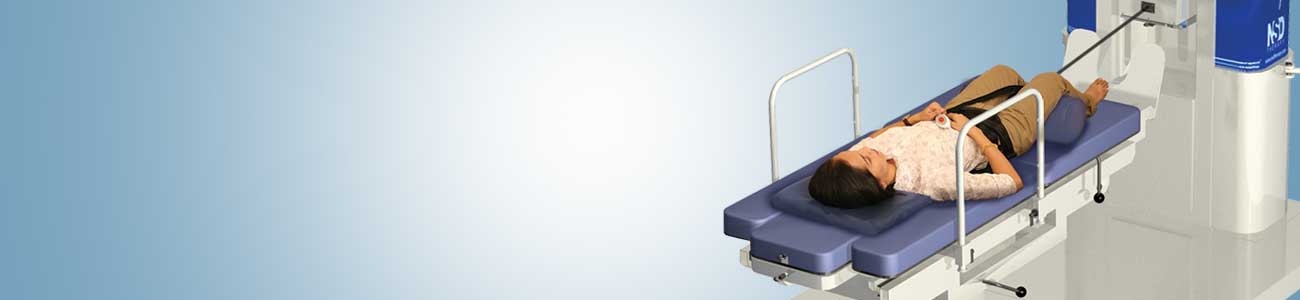
Spinal decompression uses a computer-controlled table to apply slow, measured pulling to one part of the spine. The aim is to ease pressure on a sore disc or joint that has been overloaded or worn. At CSC, the main decompression machine is the RxDecom®. Flexion-distraction, hands-on therapy by a registered physiotherapist, exercise, and tools such as laser, ultrasound, electrotherapy or shockwave therapy may be used instead of decompression or alongside it.
People often ask about decompression because of neck or back pain, a disc bulge, a herniated disc, or pain that travels into an arm or leg. To learn how discs work, start with spinal discs. For a specific level, see C4-C5 or C5-C6 for the neck, and L3-L4, L4-L5 or L5-S1 for the lower back. Symptoms are covered on the neck care page and the lower back page.
Who It May Suit
Whether decompression suits someone depends on their history, the check, nerve findings and how symptoms change with movement. A disc bulge or herniation on a scan is not, by itself, a reason to start decompression. Many disc changes settle with time and simpler care, such as movement, advice on load and exercise.
Booking a Decompression Assessment at CSC
To ask whether spinal decompression suits your problem, contact either Kuala Lumpur center:
- Bukit Damansara (KL, main center): Call +603 2093 1000 or WhatsApp +60 17 269 1873 to see the Bukit Damansara / KL center.
- Bandar Sri Damansara (KL): Call +603 6262 5777 or WhatsApp +60 12 455 6939 to see the Bandar Sri Damansara center.
For travel, parking and opening hours, see Bukit Damansara address, hours and phone or Bandar Sri Damansara address, hours and phone. The chiropractic price in Kuala Lumpur and physiotherapy fees in Kuala Lumpur pages list current fees.
What Happens at the First Visit
The first visit is a full check. A CSC clinician, usually a chiropractor, goes over your history, watches how you move, does a nerve check if pain travels, and looks at any scans you bring. X-rays or MRI are not needed before the first visit. They are suggested only when they are likely to change the plan. Then you talk about whether decompression, another non-surgical option, a scan or a medical referral is the right next step.
Is Decompression Alone Enough?
No. Decompression can help in some cases, but it should never be the whole plan. A Cochrane review found that traction, on its own or added to other care, made little or no difference to pain or function in low back pain (Wegner 2013). Guidelines put exercise and other active care first (Qaseem 2017).
That is why, at CSC, decompression sits inside NSD Therapy®, which joins decompression with non-rotatory chiropractic, focused physiotherapy and exercise. Read more about chiropractic, clinical physiotherapy, the full list of services, About CSC, and the NSD Therapy® assessment guide.
Soreness, Risks and Who Should Not Have It
Decompression should feel comfortable. If pain goes up during a session, tell the therapist right away. The session should stop, and a re-check may be needed. If pain goes up hours later, let the center know before the next session. Pain that keeps flaring after sessions is a sign that the plan needs to change, and it can mean the spine is not stable enough for decompression.
People with serious nerve problems, loss of bladder or bowel control, or an unstable slipped vertebra (unstable spondylolisthesis) are usually advised not to have decompression. Anyone with questions about their own risks should talk them through in person before starting.
This short CSC video explains why spinal discs get damaged.
You may also want to read about slipped discs, slipped disc care at CSC and gentle slipped disc care. The back pain guide brings lower back, pelvis and leg topics together.
Common Questions on Spinal Decompression Therapy
Is spinal decompression the same as NSD Therapy®?
No. Decompression may be one part of it. NSD Therapy® is CSC’s wider plan that also includes chiropractic, physiotherapy and exercise.
Does everyone with a disc bulge need decompression?
No. Many people get better with movement, advice on load and other non-surgical care. Start with the disc bulge page.
Can decompression reverse a slipped disc?
CSC does not claim that. Many herniations shrink over time on their own (Chiu 2015), but that is not the same as a machine reversing a disc. See herniated disc.
Do I need an MRI first?
Not always. A scan you already have may be enough. A new scan helps when it is likely to change the plan. Details are on the MRI page.
Which center should I contact?
Start with the center that is easiest to reach: Bukit Damansara or Bandar Sri Damansara. Check that decompression is available there before you travel.
Peer-Reviewed References
- Choi J, Lee S, Hwangbo G. Influences of spinal decompression therapy and general traction therapy on the pain, disability, and straight leg raising of patients with intervertebral disc herniation. J Phys Ther Sci. 2015;27(2):481-483.
- Wegner I, Widyahening IS, van Tulder MW, et al. Traction for low-back pain with or without sciatica. Cochrane Database Syst Rev. 2013;(8):CD003010.
- Chiu CC, Chuang TY, Chang KH, et al. The probability of spontaneous regression of lumbar herniated disc: a systematic review. Clin Rehabil. 2015;29(2):184-195.
- Qaseem A, Wilt TJ, McLean RM, et al. Noninvasive treatments for acute, subacute, and chronic low back pain: a clinical practice guideline from the American College of Physicians. Ann Intern Med. 2017;166(7):514-530.
These references describe spinal traction, decompression and disc research in general. None of them tests a care program at Chiropractic Specialty Center.
The Author of Spinal Decompression Therapy in Malaysia Explained
Spinal Decompression Therapy in Malaysia Explained was written by Yama Zafer, D.C., who has 30+ years in chiropractic and physiotherapy and founded Chiropractic Specialty Center in Kuala Lumpur in 2006.
Last Updated: Spinal Decompression Therapy in Malaysia
Spinal Decompression Therapy in Malaysia was last reviewed and updated on September 10, 2026.
Terrible pain from L4/5 fusion in March 2015. Affecting pelvis and hips. Very painful while sitting, walking, and standing.
Pain that has continued since a 2015 L4-L5 fusion and now involves the pelvis and hips, present in sitting, standing, and walking alike, has several possible sources. They are managed differently, so the first task is separating them rather than treating them as one problem.
The sacroiliac joint is the most commonly overlooked. Fusing a lumbar segment removes its movement, and that movement is redistributed to what is next in the chain, which includes the sacroiliac joints below. The pattern is a one-sided ache below the belt line in the buttock, often referring into the groin or the back of the thigh, characteristically worse when rising from a chair and when standing on that leg. It does not show on the imaging usually ordered after a fusion, which is one reason it survives years of investigation.
Adjacent segment change is the second. The levels immediately above and below a fusion take increased load over time. This tends to produce pain on bending backward and, where a nerve is involved, leg symptoms in a pattern different from the one that led to the original surgery.
Two further possibilities belong to your surgeon rather than to therapy. If the fusion did not fully unite, pain typically persists unchanged or worsens well past the first year, and flexion and extension X-rays or a CT scan are what answer that question. Hardware can also be a source of local pain in its own right. Neither is something to work around with treatment, and both are reasonable to ask about directly.
There is also a straightforward mechanical contributor that is often correctable. After a lumbar fusion the hips have to supply the bending that the fused segment no longer provides. If hip mobility is limited, load returns to the pelvis and the joints around it, which fits pain spreading into the hips as yours has. Restoring hip range, strengthening the gluteal muscles, and building sitting tolerance in graded steps address that directly.
A fused segment itself is not manipulated. Appropriate care is directed at the sacroiliac joints, the hips, and the mobile segments above the fusion.
The practical next step is current imaging with a specific question attached, rather than a repeat of the general scan. Ask for fusion status and the condition of the adjacent levels, and ask for the sacroiliac joints to be examined clinically, since imaging alone will not settle that one.
If your symptoms steadily get worse, or the care you are receiving is not helping, please arrange a medical review; loss of bladder or bowel control is the one sign that needs same-day hospital care.
Adding a practical point to the earlier reply, because two years of unexplained post-fusion pain usually means the next appointment needs better information going into it, not another scan.
You can narrow the field yourself over a week with three simple observations.
First, test the sacroiliac joint by position. Sit on a firm chair with equal weight on both sides for ten minutes, then stand up. If the sharpest pain arrives in the first few steps after rising and then eases, and if it sits to one side below the belt line, the sacroiliac joint is a strong candidate. A further clue: crossing the painful leg over the other while seated will often reproduce it.
Second, test the segments above the fusion by direction. Stand and lean gently backward, then forward. Pain clearly worse on leaning back, particularly with standing and walking, points toward the joints at the adjacent levels. Pain worse on leaning forward and while sitting points more to the disc levels themselves.
Third, test the hips. Lie on your back and pull one knee toward the opposite shoulder, then let the leg fall outward with the ankle resting on the other knee. Pain felt in the front of the groin, or a marked difference between sides, indicates the hip is part of the picture, which is common after a lumbar fusion because the hips take over the bending the fused segment no longer does.
Write down which of the three reproduced your pain, how long it took to settle, and how far your walking distance and sitting tolerance are on a normal day. That single page changes an appointment more than a repeat scan does, because it identifies which structure to examine rather than which images to review.
One more thing worth knowing. Pain present for this long also produces its own effects, independent of the original cause: the muscles supporting the pelvis weaken from guarding, and the nervous system becomes more responsive to load. Both are treatable, and both are reasons that treating only the structure sometimes disappoints. Graded, progressive loading is what addresses them, and it has to be built up rather than started at full effort.