Video archives Of Our Blog Posts
Welcome to our video archives posts and pages. These posts and pages are brought to you by Malaysia’s top chiropractors and physiotherapists. Chiropractic Specialty Center® is an awarding winning physiotherapy and chiropractic center. Our methods and treatment that you will see in these videos or read in our posts are to help your recovery. Our breakthrough spine and joint therapy devices and advanced methodologies can help you reclaim your life from pain. Contact us today for more information on our services and treatments. We are here to help answer any queries you have. Please feel free to share CSC’s video archives of the spine & joint conditions treated by our clinical teams with friends and family.
Knee therapy is the conservative ground between accepting a knee problem and having something done to it, and for many knee conditions that ground is where most of the improvement happens. Cartilage wear, ligament strain, meniscal change and kneecap tracking problems commonly respond to graded loading before any invasive option becomes necessary.
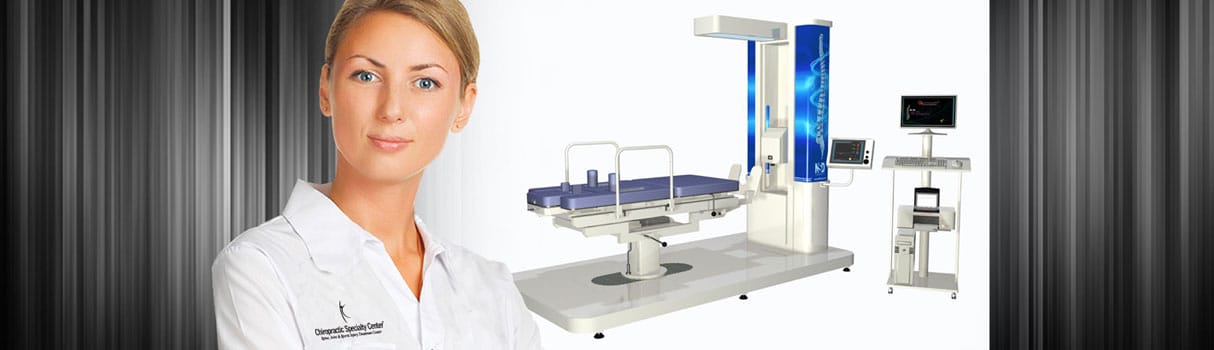
RxDecom Spinal Decompression: How the Device Works RxDecom spinal decompression uses a motorized system to apply controlled traction to selected parts of the spine. The aim is to alter mechanical loading across the disc and surrounding structures without sudden force or rotational manipulation. Like other decompression methods, it is not suitable for every neck or lower-back problem, so the examination and any relevant imaging should come before the device is selected. A session is performed while the person is supported on the table, with force and positioning adjusted according to…
Neck and back pain arises from a small number of sources, each with a recognizable behavior under load. Disc-related symptoms are worse sitting and bending forward and frequently travel into an arm or a leg. Joint-related symptoms are worse leaning back and easier sitting. Muscular symptoms build with use and settle with a change of position.
Subluxation is a term used differently by two professions, which may be the source of most of the confusion around it. In medicine it denotes a partial dislocation of a joint, visible on imaging. In chiropractic it has traditionally described a spinal segment that is not moving in the way its neighbors do.
Slipped disc care follows a fairly consistent order: settle the irritation, restore the movement the segment has lost, rebuild the strength around it, then return to full loading. Most people improve over weeks to a few months, and the majority do so without surgery, including many cases in which a nerve root is involved.
Slip-disk is an everyday spelling of slipped disc, and like the original term it describes something that does not happen: nothing slips out. The disc stays anchored between the vertebrae. Its outer wall weakens and bulges, and in more advanced cases the inner material pushes through that wall.
A slipped disc does not slip. The disc remains attached to the vertebrae above and below it. What changes is the tough outer wall, built from layered fibers, which weakens over years and allows the softer inner material to push outward, and sometimes through. Many improve over time.