

Popliteal Cyst Assessment at Two KL Centers
The first visit for a Baker’s cyst examines the knee joint, the cyst itself, the meniscus and the ligaments. It also looks at how the hip, ankle and foot load the knee when standing and walking. Bring the scan images themselves, not only the reports. Either Kuala Lumpur center can arrange it:
- Bukit Damansara (KL, main center): Call +603 2093 1000 or WhatsApp +60 17 269 1873 to see the Bukit Damansara / KL center.
- Bandar Sri Damansara (KL): Call +603 6262 5777 or WhatsApp +60 12 455 6939 to see the Bandar Sri Damansara center.
The CSC contact page gives directions and opening hours for both centers.
What Causes a Baker’s Cyst?
A Baker’s cyst forms when extra fluid from an irritated knee joint collects in a small sac behind the knee. A healthy knee makes a little joint fluid to keep its surfaces gliding, and an irritated joint lining makes more. The name comes from William Morrant Baker, a London surgeon who described the cyst in 1877.
A Baker’s cyst is also known as a popliteal cyst or knee cyst. This condition refers to swelling in the synovial lining of the semimembranosus bursa, located behind the knee. Although a Baker’s cyst is not technically a true cyst, it remains connected to the knee joint’s synovial sac.
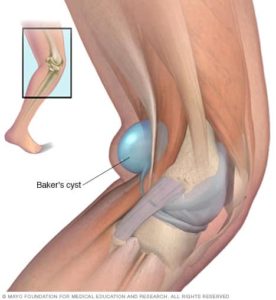
A Popliteal Cyst (Baker’s Cyst) often arises alongside other knee joint issues, such as cartilage tears, ACL or PCL injuries, meniscal damage, and arthritis. While these cysts can form without pre-existing knee conditions, they are more likely to occur after trauma, such as sports injuries.
The most common sources of the extra fluid are:
- a meniscus tear, especially at the back of the inner meniscus;
- knee osteoarthritis, the wear of the joint’s cartilage;
- rheumatoid arthritis, gout or another inflammatory joint condition.
In my experience, overuse and a knee loaded unevenly day after day add to that irritation. When the thighbone, shinbone and kneecap sit slightly out of line, the joint takes uneven stress with every step. So I check their alignment in every knee with a Baker’s cyst.
Synovial Fluid, Bursae and Their Role in a Baker’s Cyst
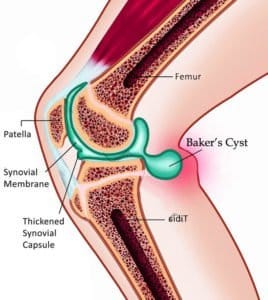
Joints are encased in synovial membranes filled with synovial fluids. These fluids serve to lubricate and protect the joint, absorbing shock and reducing friction during movement. For example, synovial fluids protect the knee during activities like running.
Synovial fluids contain vital components such as hyaluronic acid, lubricin, proteinases, and collagenases, which are essential for joint lubrication and tissue repair. Repetitive stress or injury, especially in degenerated or arthritic knees, can lead to inflammation in the synovial membrane. This includes the semimembranosus bursa, resulting in a Baker’s cyst.
In the hollow at the back of the knee, the popliteal fossa, sits a sac called a bursa. It lies between the inner head of the calf muscle (the gastrocnemius) and a hamstring tendon (the semimembranosus). In many adults it connects to the joint through a small opening that lets fluid in more easily than out (Herman and Marzo, 2014). As fluid gathers, the sac swells.
Each joint in the body contains bursae: small sacs of fluid that cushion and reduce friction between moving parts. The semimembranosus bursa is a communicating bursa, meaning it regularly receives synovial fluids from the nearby joint through the synovial sac.
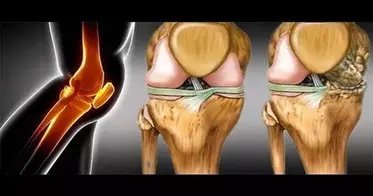
Conditions like arthritis, meniscal tears, or joint degeneration can cause excessive production of synovial fluids. This can lead to the overfilling of the semimembranosus bursa, contributing to the development of Baker’s Cyst.
Knee Synovitis: When the Joint Lining Makes Too Much Fluid
Synovitis is inflammation of the synovium, the thin lining that makes the knee’s fluid. An inflamed lining makes more fluid than the knee needs, which is what fills a Baker’s cyst.
Knee synovitis treatment in Kuala Lumpur at CSC follows the same plan as for the cyst. It starts by finding what is irritating the lining. Then come cold therapy and physiotherapy, a check and adjustment of the knee’s alignment, and a gradual return to loading. Where an inflammatory condition such as rheumatoid arthritis or gout may be the cause, a medical opinion and blood tests come first.
Common Symptoms and Warning Signs
While a Baker’s cyst is generally benign and not considered dangerous, it can lead to swelling, tenderness, and pain. These symptoms may be localized in the back of the knee, or in some cases, they may radiate down the leg.
A Baker’s cyst usually causes the symptoms below, though some cysts cause none and are found on a scan done for something else:
- a soft lump or a feeling of fullness behind the knee, easiest to see when standing;
- tightness when the knee straightens fully, and stiffness or limited bending (knee flexion);
- an ache or heaviness behind the knee after long standing, which can run down into the calf;
- swelling around the knee as a whole;
- clicking, locking, catching or buckling (giving way), which comes from the joint problem behind the cyst, such as a meniscus tear;
- pain in the leg or knee, and sometimes leg weakness;
- pain that eases with rest and returns with activity.
The most common symptoms of a Baker’s cyst are swelling and pain, and the swelling often settles once the underlying issue is addressed. If left unattended, complications may arise, including the rupture of the cyst.
Burst Cyst or Blood Clot?
A ruptured Baker cyst can produce calf pain, swelling and redness that closely resemble a deep vein thrombosis (DVT). A DVT is a blood clot in a deep leg vein, and only a scan can tell the two apart.
When a cyst bursts, its fluid tracks down into the calf. People describe a sudden sharp pain, tightness and swelling there, and a feeling of water running down the leg. There may be redness at the back of the knee, and bruising toward the ankle can follow.
A blood clot can look much the same. The NHS lists these signs of a clot: throbbing pain or swelling in one leg, usually in the calf or thigh. Red or darkened skin around the painful area and swollen veins are signs too (NHS 111 Wales).
Any of these needs a medical check the same day, by a medical doctor rather than a chiropractor. Breathlessness or chest pain with them can mean a clot has reached the lungs. Then call 999 or go to a hospital emergency department at once, and do not drive yourself. We would rather you had an ultrasound you did not need than miss a clot.
Confirming the Diagnosis: Ultrasound and MRI
A Baker’s cyst is confirmed by examination, with ultrasound or MRI when a scan is needed. Ultrasound is the quickest way to confirm a fluid-filled cyst behind the knee and to check the veins at the same time. MRI shows what is feeding the cyst: a meniscus tear, cartilage wear or an inflamed joint lining. The scan and the examination together decide the plan.
What Not to Do With a Baker’s Cyst
A few habits keep a Baker’s cyst full. Until the knee settles, avoid:
- deep squats and long periods of kneeling, which squeeze the back of the knee;
- standing for long stretches without a break;
- running, jumping and other impact on the sore knee;
- lunges, deep leg presses and stretches that force the knee fully bent;
- deep massage into the back of the knee, where nerves and large blood vessels run;
- a steroid injection into the knee, at any stage;
- having the cyst drained again and again while the knee problem behind it is left alone;
- carrying on with the activities that aggravate the knee, which in my experience is when a cyst is most likely to burst;
- ignoring a calf that becomes swollen, red, warm or tender.
How to Sleep With a Baker’s Cyst
Sleeping with a Baker’s cyst is often easier with the knee slightly bent than with the leg fully straight. A straight knee tightens the back of the joint, where the cyst sits. The sleep positions I give in my video Neck and Back Self-Help Tips keep the knees slightly bent:
- On the side, the right side first and then the left, with a bolster or a pillow between the knees.
- On the back, with a bolster or a pillow under the knees, so both knees rest slightly bent.
- No twisting: the spine stays in one line, and the body is never half-turned onto the stomach.
If the knee is swollen at the end of the day, a short spell of ice before bed is worth trying. In that video I advise at least six hours of sleep. As I say there, the body’s ability to renew itself is much higher during sleep. In my talk Back Pain to Leg Pain I suggest seven to eight unbroken hours where possible.
Baker’s Cyst Self-Care at Home
Baker’s cyst self-care at home goes alongside treatment of the cause:
- Ice the back and sides of the knee, with a cloth between the ice and the skin. Keep each session to 10 to 15 minutes, two or three sessions a day, at least two hours apart.
- Rest the knee from the activities that bring on the swelling, but keep it moving gently within comfort.
- Raise the leg when sitting at the end of the day.
- Keep walks short and frequent rather than long, and build them up as the knee allows.
- Start exercises only once the knee is stable, and only the ones chosen for it; general leg exercises can make some knees worse.
- Note when the lump grows, and what you did that day.
How to Treat a Baker’s Cyst Without Surgery
Baker’s cyst treatment without surgery at CSC starts with the cause. The aim is to reduce the cyst’s size and prevent its return. The assessment covers the knee, the hip, the ankle and the spine. In my experience, long-standing knee trouble often comes with problems in the hip, the ankle or the lower back.
Care at CSC is directed at the knee problem behind the cyst, and at the movement and loading that keep irritating it. Since 2006, our team has provided comprehensive solutions that help patients avoid surgery and injections.
By conservative care I mean focused care, planned from the examination and any imaging, and reviewed as the findings change. It is aimed at the causes they show, takes in the whole leg and does no harm. It is not routine treatment, many forms of which are useless. The plan follows the order I use for knees:
- Start with cold therapy. Cold therapy and physiotherapy are aimed at the irritation that drives the fluid.
- Check and adjust alignment. I check how the thighbone, shinbone and kneecap line up. I adjust them with the Activator instrument, a hand-held tool that gives a light, precise impulse with no twisting.
- Treat the tissues. Gentle hands-on soft tissue and myofascial work, kept light around the back of the knee, goes with the therapies listed below. Shockwave therapy is used in selected cases for tendons around the knee.
- Strengthen, once stable. Exercise starts only when the knee joint is stable. In my experience, exercise or stretching started too early adds pain and swelling and can damage the cartilage and the meniscus.
- Keep it going at home. I give exercises and stretches to do at home, so that visits are spent on the care that cannot be done there.
Here are the therapies we use for a Baker’s cyst:
- High-Intensity Laser Therapy
- Ultrasound Therapy
- Electrotherapy
- Shockwave Therapy
- Chiropractic Adjustment using the Activator Method
- Customized Knee Exercises
- Manual Therapy & Specialized Myofascial Release Techniques
These therapies are designed to help reduce swelling, improve mobility, and promote healing. With the right combination of care methods, you can see lasting respite without the need for surgery.
Can Chiropractic & Physiotherapy Help?
Absolutely. Chiropractic care combined with physiotherapy is a reasonable first approach for Baker’s cysts. Recovery starts with finding a skilled team of chiropractors and physiotherapists who are well-versed in caring for knee conditions, particularly those involving Baker’s cysts.
Chiropractic Specialty Center provides comprehensive non-surgical care tailored specifically to knee issues. Our integrated approach combines chiropractic techniques with physiotherapy to provide effective solutions for Baker’s cysts and other knee-related problems. Many patients experience improvement without the need for surgical intervention.
Our center in Kuala Lumpur offers a non-surgical knee therapy program that focuses on the underlying cause of knee pain. Whether you’re in the Klang Valley or further away, we can guide you through the right care options to relieve your symptoms.
Does a Cyst Behind the Knee Need Draining or Surgery?
A Baker’s cyst rarely needs draining or surgery as a first step. A doctor can drain it with a needle, and the swelling goes down at once. The cyst often refills while the knee keeps making the fluid, unless the joint problem is treated too. Baker’s cyst surgery to remove the cyst, or keyhole surgery on the problem behind it, comes only after a proper course of focused conservative care.
Why a Baker Cyst Is a Symptom, Not the Problem
A Baker cyst is a pocket of joint fluid that has pushed into the back of the knee. That matters more than it sounds, because the fluid comes from inside the joint. In adults, a cyst is usually secondary to something happening in the knee itself, most often a meniscal tear or osteoarthritis.
Which is why draining it rarely settles the matter. Remove the fluid and leave the joint producing it, and it tends to come back. Anyone treating the lump alone is treating the visible half.
Can Surgery Repair a Cyst in the Knee?
Earlier, we discussed how Baker’s cysts develop from damage or irritation in the knee joint, often due to repetitive stress or injury. In many cases, care methods like surgery, aspiration of synovial fluid, or cortisone injections do not change the joint problem that keeps producing the fluid. These invasive procedures may offer temporary respite, but they don’t fix the underlying issues.
I do not recommend steroid injections into the knee, for a Baker’s cyst or for any other knee problem. If focused conservative care has not worked, my advice is to skip steroids and ask for a surgeon’s opinion.
A two-year trial followed 140 people with knee osteoarthritis (McAlindon and colleagues, 2017). Every three months, each had an injection of either a steroid or salt water. The steroid group lost more knee cartilage, and knee pain was no different between the groups.
Repeated surgeries or injections can lead to further complications, making the problem harder to resolve in the long run. To truly alleviate a Baker’s cyst, it’s essential to focus on the root cause and follow a non-invasive, holistic care approach. At Chiropractic Specialty Center, our clinical teams have the expertise to identify the true cause of your knee pain. They then provide targeted care without the need for surgery or injections.
We highly recommend you visit us to explore non-invasive methods directed at the knee problem behind your Baker cyst. Surgery and injections may worsen the condition, and we are here to guide you through the care options.
Understand the Link Between Movement and Knee Comfort
Knee stiffness or swelling can sometimes stem from posture or load imbalance. CSC also holds knee health talks in Kuala Lumpur from time to time; they are paused at the moment, so for the next date, send a WhatsApp message to the Bukit Damansara main center at +60 17 269 1873.
For lasting respite, it’s important to care for the underlying problem. At Chiropractic Specialty Center, we focus on non-surgical care aimed at the knee problem behind your symptoms. Avoiding aggravating activities may provide some short-term respite, but a comprehensive, personalized care plan is essential for long-term recovery.
With knee care experience built up since 2006, Chiropractic Specialty Center offers non-surgical care methods for knee issues, including Baker’s cysts. Our Director, Yama Zafer, D.C., has 30+ years in chiropractic and physiotherapy, and he developed our knee care protocols in 2008.
Whether you’ve had knee surgery in the past or are trying to avoid it, we can help. Contact our main center today at 03 2093 1000, or visit one of our centers in Malaysia. Either way, you can learn more about non-surgical options for Baker’s cyst care. Let us help you get better without the need for surgery or injections.