


Slip Disc Treatment in Kuala Lumpur: The Options
Slip disc treatment in Kuala Lumpur should start with confirming whether a disc finding actually matches the symptoms. A bulge, protrusion, herniation or extrusion may be visible on MRI without being the source of pain, so the history, neurological examination, movement response and the distribution of arm or leg symptoms remain central to the decision.
Many disc-related presentations can be considered for conservative care. That may include education, activity modification, registered physiotherapy, graded rehabilitation, selected chiropractic methods and spinal decompression when the assessment indicates a suitable role. The aim is not to promise that a disc will be 'put back' or repaired by one technique; it is to improve function, monitor nerve status and review whether the plan is producing meaningful change.
The material below covers the main non-surgical options, what MRI findings mean, where decompression and rehabilitation fit, and when a surgical or medical opinion becomes the more appropriate next step.
This guide to slip disc treatment in Kuala Lumpur, and how disc changes progress from degeneration to sequestration, is published by Chiropractic Specialty Center, Bukit Damansara (KL) main center: WhatsApp+60 17 269 1873 Call+603 2093 1000
Key Takeaways: Slip Disc Care in Kuala Lumpur
- Slip disc changes often develop gradually due to posture, repeated strain, and how the spine is used during daily activities.
- Spinal discs can influence nearby nerves, which may affect sensations in the neck, back, arms, or legs.
- Symptoms are not always felt at the spine and may follow nerve pathways into other parts of the body.
- Non-surgical care focuses on improving spinal movement, reducing mechanical stress, and supporting coordination.
- Many disc herniations become smaller over time, and a structured plan of movement-based care and guided rehabilitation is reviewed against changes in function.
Quick Answer: Slip Disc Care in Kuala Lumpur
Slip disc care in Kuala Lumpur usually begins with assessment of the affected spinal level, disc stage, nerve-related symptoms, posture habits, and movement patterns. Non-surgical options may include chiropractic care, physiotherapy, spinal decompression, posture education, and guided rehabilitation when appropriate.
For readers in and around Bukit Damansara, Damansara Heights, Bangsar, Mont Kiara, TTDI, Bandar Sri Damansara, Kepong, Desa ParkCity, and Sungai Buloh, CSC provides KL-based information on non-surgical spine care, chiropractic, physiotherapy, and rehabilitation approaches for spinal disc concerns.
Slip Disc Assessment at Our Two KL Centers
If you have neck or back pain with symptoms traveling into an arm or leg, or an MRI report you would like explained, an assessment can show whether the disc finding matches your symptoms and whether conservative care is a reasonable route. You can reach either center through the Bukit Damansara contact page and the Bandar Sri Damansara contact page, or call directly:
- Bukit Damansara (KL, main center): Call +603 2093 1000 or WhatsApp +60 17 269 1873 to see the Bukit Damansara / KL center.
- Bandar Sri Damansara (KL): Call +603 6262 5777 or WhatsApp +60 12 455 6939 to see the Bandar Sri Damansara center.
What This Page Covers About Slip Disc Care in Kuala Lumpur
Searching for Slipped Disc Treatment in Kuala Lumpur?
“Slipped disc treatment in Kuala Lumpur” is a common search phrase used by readers comparing non-surgical options for neck, back, arm, or leg symptoms linked to spinal disc concerns. On this page, the term “slip disc care” is used to explain the subject in a clearer and more educational way.
A slip disc can involve disc degeneration, disc bulge, disc protrusion, herniation, extrusion, or sequestration. The right discussion depends on the spinal level involved, imaging findings, nerve-related signs, posture habits, movement patterns, and how daily activities are affected.
At Chiropractic Specialty Center, care planning begins with assessment findings rather than a standard routine. Chiropractic, physiotherapy, spinal decompression, posture education, and guided rehabilitation may be coordinated when appropriate, based on how the spine, joints, muscles, discs, and nerves are functioning together.
How Spinal Disc Changes Progress: From Degeneration to Sequestration
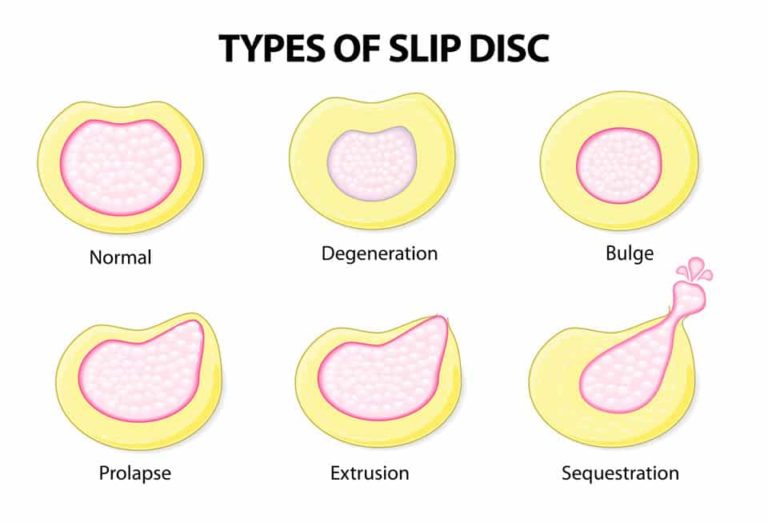
Spinal disc changes usually do not begin with a sudden rupture. In most cases, the process starts with degenerative changes inside the disc, where hydration, elasticity, and load distribution begin to change over time.
Below is the typical progression:
- Degenerated disc (disc dehydration / early degeneration): This is usually the first stage. The disc begins to lose fluid content and flexibility, which changes how it handles pressure and movement.
- Bulging disc: The outer disc fibers remain intact, but the disc extends outward beyond its normal boundary. This is generally a contained disc change.
- Prolapsed disc: The inner disc material begins migrating toward weakened outer fibers but remains largely contained.
- Protruded disc: The disc extends further outward and may remain partially contained depending on the integrity of the outer fibers.
- Herniated or ruptured disc: The inner nucleus pulposus passes through torn outer fibers, creating a non-contained disc change.
- Extruded disc: A more advanced stage where disc material extends significantly beyond the disc space.
- Fragmented / sequestrated disc: A portion of disc material separates completely and may move within the spinal canal.
Understanding these stages helps explain why early disc degeneration often precedes more advanced disc changes.
What Is a Slip Disc and Why Does It Happen?
A slip disc (also called a disc bulge or herniated disc) occurs when the soft inner gel of a spinal disc pushes outward through a weakened area of the disc’s outer layer. When this change in disc structure occurs, nearby spinal nerves may become irritated or compressed.
Spinal discs function as shock absorbers between the bones of the spine. When the disc’s outer fibers weaken over time due to mechanical stress, posture, or degeneration, the inner material may migrate outward and alter how pressure is distributed across the spine.
Summary Table: Slip Disc Care in Kuala Lumpur
| Topic | Summary |
|---|---|
| Condition | A slip disc (also called a disc bulge, protrusion, or herniation) occurs when the inner gel of a spinal disc moves outward through a weakened area of the outer disc layer. |
| Common Areas Affected | Slip discs most commonly affect the cervical spine (neck) and the lumbar spine (lower back). |
| Why Slip Discs Develop | Mechanical stress, prolonged sitting, poor posture, heavy lifting, and gradual disc degeneration can weaken the outer fibers of spinal discs. |
| Typical Symptoms | Neck or lower-back pain, radiating sensations into the arms or legs, tingling, numbness, stiffness, or weakness depending on the nerve involved. |
| Disc Progression | Disc changes may develop gradually through stages such as disc dehydration, bulging, protrusion, prolapse, herniation, extrusion, or fragmentation. |
| Conservative Care Approaches | Slip disc care in Kuala Lumpur may include chiropractic methods, physiotherapy, spinal decompression, posture education, and structured rehabilitation when appropriate. |
| Rehabilitation Focus | Disc rehabilitation may include guided exercises that improve spinal control, muscle coordination, and tolerance for daily movement. |
| Cervical Disc Concerns | Cervical disc conditions may affect the neck and can influence sensations in the shoulders, arms, or hands. |
| Lumbar Disc Concerns | Lumbar disc conditions may influence the lower back, buttock, or leg and may affect sitting, bending, or walking tolerance. |
| Long-Term Spine Health | Posture awareness, ergonomic adjustments, guided rehabilitation, and consistent strengthening of spinal support muscles help maintain spinal function. |
Common Signs Linked to a Slip Disc
A slip disc can irritate nearby spinal nerves and affect how the neck, back, arms, or legs feel and move. Because spinal nerves travel from the spine into other parts of the body, symptoms are not always felt directly in the spine.
Some people notice symptoms suddenly, while others experience gradual changes as disc degeneration progresses.
Common symptoms of a slip disc may include:
- Neck or lower-back pain that worsens with sitting, bending, or lifting
- Pain that travels into the arm, buttock, or leg along a nerve pathway
- Tingling or “pins and needles” sensations in the hands, arms, feet, or legs
- Burning sensations between the shoulders or down the leg
- Numbness affecting part of the arm, hand, leg, or foot
- Leg heaviness or weakness during walking or standing
- Reduced ability to sit, bend, or change position comfortably
- Stiffness in the neck, mid-back, or lower back
Symptoms may vary depending on the spinal level involved, such as the cervical spine in the neck or the lumbar spine in the lower back.
Recognizing these patterns early can help determine whether a spinal disc may be involved and why a structured spinal evaluation is often recommended when symptoms persist.
For a deeper explanation of how spinal discs degenerate and why bulges, protrusions, and herniations occur, watch the educational talk below.
In the video near the end of this page, Yama Zafer, D.C. (an American chiropractor with 30+ years in chiropractic and physiotherapy), explains how posture and prolonged sitting increase disc pressure, and why degeneration often precedes disc herniation.
Spinercise® for Spinal Disc Rehabilitation
Spinercise® is a machine-guided rehabilitation program used to train the deep stabilizing muscles that help control spinal movement. The exercises are performed in guided ranges, which allows movement to be introduced in a more structured way than general gym activity.
For people with spinal disc concerns, rehabilitation often focuses on coordination, control, posture awareness, and gradual strengthening of the muscles that assist the spine during daily activity. Spinercise® may be included when assessment findings show that guided strengthening is appropriate.
The purpose is not to force movement or overload the spine. The goal is to help the spinal support muscles work with better control during sitting, standing, walking, bending, and other everyday movements.
Yoga is left out of this rehabilitation altogether; with a slip disc it must be avoided, whatever the style of class.
Understanding slip disc care begins with how spinal discs change over time and how surrounding muscles help the spine manage load.
Video: Why Spinal Discs Change Over Time
Spinal discs usually change gradually rather than all at once. Everyday activities such as sitting, bending, and lifting can influence how pressure builds inside the disc over time.
This short explanation shows how small, repeated stresses may lead to disc changes, including bulging or herniation.
Key moments and an edited transcript of this video are on our Why Spinal Discs Get Damaged video page.
Key Moments of the video:
- 00:00 Structure of a healthy spinal disc
- 00:17 How daily loading affects disc pressure
- 00:28 Early changes as disc fibers weaken
- 01:19 How bulges and herniations develop
- 01:35 Visual explanation of disc progression
- 01:46 Why disc changes may continue over time
Understanding how disc changes develop step by step helps explain why everyday movement and posture play an important role in spinal health.
Why Posture Matters in Slip Disc Care
Posture plays a central role in how pressure is distributed across the spine during everyday activities. Sitting, standing, and movement patterns can all influence how spinal discs, joints, and surrounding muscles handle load over time.
When posture shifts away from natural alignment, certain areas of the spine may experience increased stress. Over time, this can influence how discs respond to daily forces and how nearby structures such as muscles and joints adapt.
Understanding posture helps connect how daily habits relate to spinal disc changes. The explanation below shows how alignment, movement, and loading patterns work together across the spine.
Posture plays a key role in how pressure is distributed across the spine during daily activity.
Video: How Posture Influences Spinal Disc Pressure and Movement
Posture affects how the spine manages load during sitting, standing, and daily movement. Even small changes in alignment can shift how force is distributed across spinal discs, joints, and surrounding muscles.
This explanation shows how posture influences spinal movement, disc pressure, and coordination across the spine over time.
Key Moments of the video:
- 00:00 Why posture matters
- 00:11 Lumbar spine, sacrum, and pelvic support
- 00:46 Muscles and ligaments in stability
- 02:20 How joints and discs respond to posture
- 02:54 Spinal motion segment explained
- 03:19 Disc structure during movement
- 05:02 Effects of poor posture on spinal structures
- 05:19 Long-term structural changes
- 06:20 Influence on nerve pathways
- 07:24 Posture during daily activities
Posture plays a continuous role in how the spine adapts to daily movement and loading patterns. These patterns are often seen in individuals with prolonged sitting or repetitive spinal loading during daily routines.
Common stages of spinal disc damage include:
- Bulging disc: the disc expands outward but remains contained
- Protruded disc: the inner disc material begins moving toward the outer fibers
- Prolapsed disc: the disc is barely contained as the outer fibers weaken
- Herniated or ruptured disc: the nucleus pulposus breaks through the outer disc wall
- Extruded disc: disc material escapes beyond the disc space
- Fragmented disc: a piece of the disc separates and moves within the spinal canal
The Hidden Mechanics Behind a Slip Disc
A slip disc often develops after earlier changes inside the spinal disc. In many cases, disc degeneration affects hydration, flexibility, and how pressure is shared across the disc before a bulge, protrusion, or herniation becomes visible on imaging.
Healthy spinal discs contain proteoglycans, which help attract and retain water inside the disc. This fluid balance allows the disc to act like a pressure-sharing cushion between the spinal bones during sitting, standing, bending, and walking.
When the spine is exposed to repeated loading from prolonged sitting, forward bending, poor posture, or repetitive strain, pressure inside the disc may increase. Over time, disc hydration and nutrient movement can be affected, which may influence how the disc handles daily movement and load.
How Posture and Sitting Influence Spinal Disc Pressure
Sitting posture can change how pressure is shared across the spinal discs. When sitting is prolonged, fixed, or slouched, pressure inside the disc may increase and affect how the disc responds to daily load.
Disc pressure is usually lower when lying down and more variable when the body is upright and moving. Sitting tends to increase disc loading, especially when leaning forward, working over a screen, or staying in one position for long periods.
Spinal discs rely on fluid movement to help maintain hydration and internal balance. This process is often called imbibition. When the disc remains under sustained compression for long periods, fluid exchange may become less efficient.
These changes help explain why movement breaks, posture awareness, and position changes are commonly discussed in slip disc care. The goal is not perfect posture all day, but better load variation throughout daily activity.
Video: How Sitting Habits Influence Spinal Discs and Breathing
Sitting habits influence how pressure is placed on spinal discs throughout the day. Prolonged or slouched positions can change how load is shared across the spine and surrounding structures.
This explanation shows how sitting patterns may affect spinal discs, breathing mechanics, and overall movement during daily activities.
The chapters and an edited transcript of this video are on the Neck and Back Self-Help Tips video page.
Key Moments of the video:
- 00:00 Why sitting habits affect the body
- 00:30 Sitting posture and breathing space
- 01:35 Slouching and pressure on the stomach and diaphragm
- 02:29 A better sitting setup for hips, knees, feet and screen
- 03:57 Sleep positions and spinal alignment
- 05:28 Standing and walking posture
- 09:37 Core exercises such as the dead bug
- 12:07 Daily habits and lifestyle changes
Daily sitting and movement habits influence how spinal discs respond to repeated loading over time.
These patterns are often seen in individuals with prolonged sitting, which may influence how spinal discs and surrounding structures adapt to daily stress.
How Disc Bulges Can Progress Toward Herniation
Disc bulges and herniations often develop after earlier disc degeneration has changed the disc’s hydration, flexibility, and load control. As the outer fibers weaken, the inner disc material may begin to move outward, first as a contained bulge and later, in some cases, as a protrusion or herniation.
The way a disc changes depends on the spinal level involved, repeated loading, posture habits, movement patterns, and whether nearby nerves or joints are affected. For some people, sensations may stay local to the neck or lower back. For others, symptoms may travel into the shoulder, arm, buttock, or leg along a nerve pathway.
The educational video below explains how spinal disc degeneration can progress, why bulges may appear before herniation, and how sitting posture can influence disc pressure over time.
How Slip Disc Care Is Structured in Kuala Lumpur
Slip disc care in Kuala Lumpur usually follows a simple idea: the spine doesn’t work on its own. The disc, joints, muscles, and nearby nerves all respond together depending on how you sit, move, and carry yourself through the day.
In the early stage, the focus is on easing how much stress the disc is exposed to. That often comes down to small but important changes in positioning and movement, especially during sitting, standing, and daily routines.
As things begin to settle, the next step is helping the spine and surrounding muscles work together more smoothly. This is where guided movement and simple, controlled exercises come in to improve stability and how the spine handles everyday load.
From there, the focus shifts to maintaining those changes. Consistent movement habits, better awareness of posture, and gradual strengthening all play a role in how the spine continues to function over time.
Video of Back Pain to Leg Symptoms: When a Spinal Disc May Be Involved
Back or leg symptoms that travel from the lower back into the buttock, thigh, or foot are often linked to spinal disc changes that affect nearby nerves. These patterns are commonly associated with sciatica and may develop as disc structure and pressure change over time.
This in-depth session explains how spinal discs influence nerve pathways, how symptoms can extend into the leg, and how to recognize when a disc may be involved.
Key Moments of the video:
- 00:00 Back and leg symptom patterns
- 06:22 Spinal disc structure explained
- 18:30 Healthy vs degenerated disc comparison
- 28:49 Stages of disc changes
- 38:00 Sitting and disc pressure
- 45:12 Disc pressure in different positions
- 57:13 Movements to avoid with disc issues
- 1:12:46 Sciatica and nerve involvement
- 1:33:12 Non-surgical vs surgical considerations
Understanding how spinal discs relate to nerve symptoms helps explain why pain may travel beyond the lower back into the leg.
This type of symptom pattern is often associated with spinal disc changes that influence nearby nerve pathways.
Slip-Disc Care in KL with Chiropractic, Physiotherapy & Rehab
Slip disc care in Kuala Lumpur often involves a combination of approaches that focus on how the disc, surrounding joints, and nearby nerves respond to movement and daily activity. Because disc-related concerns can affect multiple structures, care is usually guided by how each part of the spine is functioning rather than relying on a single method.
Common approaches may include gentle chiropractic adjustments that avoid forceful or twisting movements, along with physiotherapy techniques that focus on joint motion, muscle balance, and controlled movement.
In some cases, table-assisted decompression methods may be used as one part of the plan; research on them is limited, and they do not repair or reposition a disc. Rehabilitation often includes simple, guided exercises designed to improve stability, coordination, and how the spine handles everyday load.
Additional methods such as manual physiotherapy, myofascial work, or technology-assisted approaches may be introduced depending on how the spine responds over time.
How Posture Fits Into Slip Disc Care
Posture influences how pressure is shared across the spine during sitting, standing, bending, and daily movement. When posture is sustained for long periods, certain spinal levels may experience repeated loading, especially during prolonged sitting or forward bending.
Small daily changes such as adjusting screen height, changing position more often, improving sitting setup, and avoiding prolonged slouched posture may help reduce repeated strain on spinal discs and surrounding structures.
Posture should not be viewed as a stand-alone solution. In slip disc care, posture is one part of a broader picture that may also include disc stage, spinal level, nerve-related signs, muscle coordination, movement habits, and guided rehabilitation.
Neck Slip Disc Care in KL
A slip disc in the neck, also called a cervical disc bulge or cervical disc herniation, may affect the neck, shoulder, arm, hand, or fingers when nearby nerve pathways are involved. The pattern depends on the spinal level, disc stage, posture habits, and how the neck responds during movement.
At Chiropractic Specialty Center, neck-related disc concerns are assessed by looking at cervical movement, joint restriction, muscle tension, posture, nerve-related signs, and available imaging when relevant. Care may include physiotherapy, gentle chiropractic methods, posture education, decompression-based positioning, and guided rehabilitation when appropriate.
The aim is to choose methods according to the person’s findings rather than applying the same routine to every neck-related disc concern. Forceful twisting or high-force neck movements are avoided when the assessment suggests a more careful approach is needed.
Readers who want more detail can continue to the dedicated neck care page, while this section explains how neck slip disc care fits within the broader slip disc care guide for Kuala Lumpur.
Related Neck Chiropractic Care in Kuala Lumpur
Readers with neck stiffness, cervical disc concerns, shoulder symptoms, arm tingling, or posture-related neck issues may also find our dedicated neck chiropractic page helpful. The page explains how neck-related concerns are assessed, why forceful twisting or sudden pulling may not suit every neck, and how gentle chiropractic methods may be coordinated with registered physiotherapy when appropriate.
For more focused information, visit our Neck Chiropractor KL page to learn how cervical spine movement, disc findings, posture habits, and nerve-related symptoms are reviewed as part of non-surgical neck care in Kuala Lumpur.
The current chiropractic price list and physiotherapy price list show each fee, including the lower same-visit unit prices.
Lower Back Slip Disc Care in KL
A slip disc in the lower back, also called a lumbar disc bulge or lumbar disc herniation, may affect the lower back, buttock, thigh, leg, foot, or toes when nearby nerve pathways are involved. The pattern depends on the spinal level, disc stage, posture habits, sitting tolerance, and how the lower back responds during movement.
At Chiropractic Specialty Center, lower-back disc concerns are assessed by looking at lumbar movement, joint restriction, muscle tension, nerve-related signs, posture habits, and available imaging when relevant. Care may include physiotherapy, gentle chiropractic methods, spinal decompression, myofascial work, guided strengthening, posture education, and rehabilitation when appropriate.
The lower back care plan should match the person’s assessment findings rather than follow a standard routine. For lower-back disc concerns, the focus is often on load control, movement coordination, spinal stabilizing muscle function, and daily activity habits such as sitting, bending, lifting, walking, and sleeping posture.
This section keeps the lower-back discussion within the broader slip disc care guide for Kuala Lumpur, while more detailed lumbar disc topics can be covered on dedicated back care or lumbar spine pages.
How Is a Slip Disc Managed Without Surgery in Kuala Lumpur?
Many slip disc concerns are first approached with structured, non-surgical care. Because spinal discs respond to posture, movement, pressure, and daily loading habits, care planning often begins by looking at how the spine, joints, muscles, discs, and nearby nerves are working together.
A slip disc may involve more than the disc alone. Spinal joints, surrounding muscles, posture habits, movement control, and nerve-related signs may all influence how care is planned. For that reason, non-surgical care usually combines several approaches rather than relying on one method only.
Non-surgical care for slip discs may include:
- gentle chiropractic adjustments without twisting or forceful spinal movements
- physiotherapy techniques such as manual and trigger point therapy (hands-on physiotherapy) or technology based physiotherapy that improve joint motion and muscular balance
- flexion-distraction therapy (cox) and spinal decompression are table-assisted methods intended to reduce load on the affected disc; research on them is limited
- disc-friendly strengthening and rehabilitation exercises tailored to the individual condition
- Spinercise® rehabilitation programs that strengthen spinal support muscles through controlled movement training
- technology-assisted physiotherapy such as high-intensity laser therapy, shockwave therapy, ultrasound therapy, or electrotherapy when clinically appropriate
The combination used should depend on assessment findings, the spinal level involved, disc stage, posture habits, nerve-related signs, and how the person responds to movement.
NSD Therapy® for Slip Disc Care in Kuala Lumpur
At Chiropractic Specialty Center in Kuala Lumpur, NSD Therapy® refers to a structured non-surgical spine care program that may include chiropractic, physiotherapy, spinal decompression, and guided rehabilitation when assessment findings suggest that these methods are appropriate.
The program is planned around the spinal level involved, disc stage, posture habits, nerve-related signs, movement tolerance, and daily activity needs. The goal is to guide spinal movement, load control, muscle coordination, and rehabilitation in a structured way.
NSD Therapy® may include gentle chiropractic methods, flexion-distraction or spinal decompression-based methods, registered physiotherapy, guided exercise, posture education, and selected technology-assisted physiotherapy when appropriate.
Full NSD Therapy® programs are available at CSC Bukit Damansara and CSC Bandar Sri Damansara. For a deeper explanation, readers can visit the dedicated NSD Therapy® page for spinal disc care in Kuala Lumpur.
It often helps to read about slip disc treatment options alongside slipped discs, whether a slipped disc can be helped, what helps a slipped disc, and slip disc symptoms.
How Do Spinal Discs Work in the Spine?
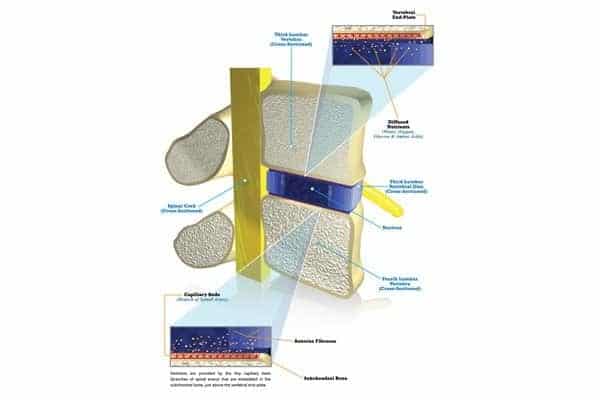
Spinal discs act as cushions and stabilizers between the vertebrae, playing a role in supporting spinal movement. Each disc consists of:
- The nucleus pulposus: A gel-like center that provides flexibility.
- The annulus fibrosus: A strong outer layer that stabilizes the spine.
A useful comparison is a jelly-filled cushion, where the center allows for flexibility, while the outer layer provides stability and support.
The spine contains 23 intervertebral discs, distributed across different regions:
- Neck (Cervical Spine): 6 discs
- Mid-Back (Thoracic Spine): 12 discs
- Lower Back (Lumbar Spine): 5 discs
Each disc is named based on its position within the spine. For example, the L4-L5 disc is located between the fourth and fifth lumbar vertebrae in the lower back.
Page Summary: Slip Disc Care in Kuala Lumpur Without Surgery
Slip disc concerns often develop gradually as spinal discs respond to repeated loading, posture habits, sustained sitting, bending, lifting, and daily movement patterns. A slip disc may also be described as a disc bulge, protrusion, prolapse, herniation, extrusion, rupture, or fragmented disc depending on the disc stage and imaging findings.
The spinal disc does not work alone. It functions with surrounding joints, muscles, ligaments, posture habits, and nearby nerve pathways. When a disc affects a nearby nerve, symptoms may travel into the arm or leg depending on whether the cervical spine or lumbar spine is involved.
Assessment is important because the name of the disc change does not always explain the full picture. The spinal level, disc stage, nerve-related signs, posture habits, sitting tolerance, walking pattern, and daily movement demands all help guide care planning.
Non-surgical care may include chiropractic, registered physiotherapy, spinal decompression-based methods, posture education, guided exercise, Spinercise® rehabilitation, and selected technology-assisted physiotherapy when appropriate. The care plan should be based on assessment findings rather than a fixed routine.
At Chiropractic Specialty Center in Kuala Lumpur, slip disc care is planned around how the spine, discs, joints, muscles, nerves, and daily movement patterns work together. The goal is to guide movement, load control, coordination, and rehabilitation through structured Slip Disc Care in Kuala Lumpur Without Surgery.
Related KL Chiropractic & Physiotherapy Pages
Slip disc concerns can involve the lower back, neck, nearby nerves, posture habits, and daily movement patterns. Readers comparing “slipped disc treatment in KL” may also want to understand how chiropractic, physiotherapy, and rehabilitation information is explained across CSC’s Kuala Lumpur pages:
- Chiropractor in Kuala Lumpur with Physiotherapy
This page explains CSC’s Bukit Damansara chiropractic and physiotherapy information for spine, joint, posture, and rehabilitation-related care. - Chiropractor in Bandar Sri Damansara With or Without Physiotherapy
This page is useful for readers near Bandar Sri Damansara, Kepong, Desa ParkCity, Sungai Buloh, and nearby areas who want chiropractic information with or without physiotherapy coordination. - Physiotherapy in KL & Malaysia: Spine & Joint Care
This page explains physiotherapy-based care for slip disc, spine, joint, posture, movement, and rehabilitation topics in Kuala Lumpur and Malaysia.
Common Questions About Slip Disc Care in Kuala Lumpur
Many people have questions about how slip disc changes develop, what they mean, and how they are approached without surgery. Below are clear answers based on how spinal discs, joints, muscles, and nerves function during daily activity.
What causes a slip disc to develop?
Can a slip disc happen suddenly?
Where do slip discs most commonly occur?
Why do slip disc symptoms travel into the arm or leg?
Is a slip disc the same as a disc bulge or herniation?
How is slip disc care planned for each individual?
Can posture affect a slip disc?
Can daily habits influence spinal disc health?
Can a slip disc heal on its own?
Often, yes. Symptoms from a disc herniation frequently improve over weeks to months, and follow-up imaging studies show that many herniations shrink or disappear, particularly larger extrusions and sequestrations. Some disc changes remain on imaging without causing symptoms. Structured care focuses on function while this happens.
When should someone consider further evaluation for a slip disc?
Why is slip disc care often approached without surgery first?
References
- Chiu CC, Chuang TY, Chang KH, Wu CH, Lin PW, Hsu WY. The probability of spontaneous regression of lumbar herniated disc: a systematic review. Clin Rehabil. 2015;29(2):184-195.
- Hancock MJ, Maher CG, Latimer J, et al. Systematic review of tests to identify the disc, SIJ or facet joint as the source of low back pain. Eur Spine J. 2007;16(10):1539-1550.
- Coulter ID, Crawford C, Hurwitz EL, et al. Manipulation and mobilization for treating chronic low back pain: a systematic review and meta-analysis. Spine J. 2018;18(5):866-879.
- Hayden JA, van Tulder MW, Malmivaara A, Koes BW. Exercise therapy for treatment of non-specific low back pain. Cochrane Database Syst Rev. 2005;(3):CD000335.
These references describe disc herniation, imaging and conservative care for back pain in general. None of them evaluates care at Chiropractic Specialty Center.
The Author of Slip Disc Treatment in Kuala Lumpur: What Helps
Slip Disc Treatment in Kuala Lumpur: What Helps was written by Yama Zafer, D.C., who has 30+ years in chiropractic and physiotherapy and founded Chiropractic Specialty Center in Kuala Lumpur in 2006.
Last Updated: Slip Disc Treatment in Kuala Lumpur: The Options
Slip Disc Treatment in Kuala Lumpur: The Options was last reviewed and updated on October 3, 2026.