


Hiatal Hernia: Gentle Care in Kuala Lumpur
Hiatal hernia, also referred to as hiatus hernia. The information on this page is for educational purposes, aiming to help readers better understand hiatal hernia and its potential management options. It is not intended as medical advice, diagnosis, or care. Always consult a qualified healthcare professional for personalized care and guidance tailored to your condition.
Some hiatal hernia sufferers have turned to chiropractors for gentle chiropractic care to help manage some of their symptoms.
Hiatal hernias are common, especially among individuals aged 60 and above, affecting approximately 60% of people in this age group. These statistics highlight the importance of addressing hiatal hernia symptoms early. Managing hiatal hernias typically involves lifestyle adjustments, natural care methods, and, in rare cases, more invasive approaches.
Gentle chiropractic methods might be a gentle natural approach to managing discomfort associated with hiatal hernias. Seeking care from a chiropractor experienced in addressing hiatal hernias ensures personalized and targeted solutions to maintain your well-being.
Hiatal hernia care through chiropractic is a safe and suitable approach to managing symptoms. Issues associated with hiatal hernias often resemble heartburn or GERD (gastroesophageal reflux disease). This article explores symptoms, causes, non-invasive remedies, and chiropractic solutions to help maintain your journey to better health. Feel free to share this article with loved ones who may benefit.
Key Takeaways for Hiatal Hernia Patients
- Integrative non‑invasive care with chiropractic, physiotherapy & rehabilitation to improve diaphragm and spinal function.
- Gentle techniques and breathing/core exercises support stomach repositioning and symptom management.
- Personalized, evidence-based approach aligned with evidence-based methods no invasive procedures or medications.
Contact Us for Non‑Invasive Hiatal Hernia Care
Are you ready to explore non-invasive options for managing hiatal hernia in Kuala Lumpur? At Chiropractic Specialty Center, our multidisciplinary team uses gentle chiropractic adjustments, physiotherapy-focused breathing and core stability, and rehabilitation guidance to help you improve stomach positioning, alleviate reflux issues, and restore functional comfort.
Our alternative and non invasive methods avoid surgery and medication whenever possible, providing a safe, natural path toward digestive and structural wellness, supported by nearly three decades of experience. Reach out via our contact page to book your assessment and begin your journey to better gastrointestinal and musculoskeletal health.
Discover the Benefits of Chiropractic Visceral Adjustments
Chiropractic visceral adjustments focus on improving the function of internal organs by addressing structural and muscular imbalances. At our Bukit Damansara center, this gentle, non-invasive technique is performed only after a thorough assessment by our experienced chiropractor. This ensures the procedure is suitable for your specific condition and needs.
While chiropractic visceral adjustments may improve symptoms, it will not cure you and not everyone is a candidate.
The recommended way to determine if this approach is right for you is to schedule a personalized assessment with our chiropractor in Damansara Heights, as it is our only center that performs this method of chiropractic care. Experience holistic care tailored to enhance your quality of life.
Click the button above to connect with our Bukit Damansara center on WhatsApp and learn more!
What Is Chiropractic Visceral Adjustment & How Does It Impact Your Symptoms?
Chiropractic visceral adjustment involves gentle techniques aimed at improving organ function by addressing misalignments in the spine or ribcage that affect the nerves linked to internal organs. For GERD, these adjustments may help alleviate symptoms by reducing tension in the diaphragm and improving esophageal function. However, this approach is non-invasive and maintains the body’s natural healing processes, making it a complementary option for managing GERD symptoms.
Symptoms of Hiatal Hernia vs. GERD
Hiatal hernia and GERD share overlapping symptoms, such as heartburn and regurgitation. However, hiatal hernia is characterized by anatomical displacement of the stomach through the diaphragm, while GERD primarily involves acid reflux due to a weakened lower esophageal sphincter. GERD often presents with a sour taste, chest discomfort, and chronic cough, whereas hiatal hernia may include difficulty swallowing or feeling full quickly.
Diagnostic Procedures
Accurate diagnosis of hiatal hernia and GERD often involves imaging and functional tests. Endoscopy allows direct visualization of the esophagus and stomach, identifying inflammation or hernias. A barium swallow test highlights structural abnormalities, while esophageal manometry measures muscle strength and coordination in the esophagus. Each test provides essential insights for suitable care planning.
Risk Factors
Factors increasing the risk of hiatal hernia and GERD include obesity, smoking, and consuming acidic or spicy foods. Sedentary lifestyles and chronic coughing also contribute. Certain medications, such as calcium channel blockers and anti-inflammatory drugs, may weaken the esophageal sphincter or exacerbate reflux symptoms, emphasizing the need for lifestyle modifications.
Impact of Pregnancy
Pregnancy increases the likelihood of hiatal hernia and GERD due to hormonal changes and pressure from the growing uterus. Expectant mothers can minimize symptoms by eating smaller meals, avoiding lying down after eating, and elevating their head while sleeping. Chiropractic visceral adjustments are not performed during pregnancy, but gentle stretches and diaphragmatic breathing may offer comfort.
Exercises and Physical Activity
Gentle, low-impact exercises like walking and yoga can help manage hiatal hernia and GERD symptoms by improving digestion and reducing abdominal pressure. Avoid activities that strain the abdomen, such as heavy lifting or intense core exercises, as they may exacerbate symptoms. Always consult a professional for personalized advice.
When to Seek Medical Attention
Seek immediate medical care if symptoms of hiatal hernia or GERD worsen or including severe chest discomfort, difficulty swallowing, vomiting blood, or unintentional weight loss. Persistent symptoms that do not improve with dietary and lifestyle changes should also be evaluated by a healthcare provider to rule out complications.
Lifestyle Changes for Individuals with Hiatal Hernia
Managing a hiatal hernia involves making lifestyle changes that can improve daily comfort and prevent symptoms from worsening. These adjustments focus on eating habits, posture, and daily activities to maintain better health and well-being.
- Modify Eating Habits: Eat smaller meals more frequently throughout the day to reduce pressure on the stomach. Avoid heavy meals, especially before bedtime, as lying down with a full stomach can worsen symptoms. Choose easy-to-digest foods, such as vegetables, lean proteins, and whole grains, while limiting acidic, spicy, and fried foods that may irritate the stomach.
- Improve Posture and Movement: Sitting upright during and after meals can help reduce discomfort. Avoid bending forward or lifting heavy objects, as these actions can put additional pressure on the abdomen. Incorporate gentle physical activities, like walking or stretching, to improve digestion and overall health. However, strenuous exercises that strain the abdominal area should be avoided.
- Adjust Sleeping Position: Elevating the head of the bed by 6-8 inches can help prevent stomach acid from flowing back into the esophagus during sleep. You can use blocks under the bedposts or a wedge pillow to achieve this. Sleeping on your left side may also reduce symptoms for some individuals.
- Maintain a Healthy Weight: Excess weight can increase abdominal pressure and aggravate a hiatal hernia. A balanced diet combined with regular, low-impact exercise can help weight management and improve overall health.
These lifestyle changes, combined with professional guidance, can help manage hiatal hernia symptoms safely. Consult a healthcare provider for personalized recommendations that align with your condition and daily routine.
What Is a Hiatal Hernia?
A hernia refers to a condition where internal organs push into areas where they typically do not belong. A hiatal hernia occurs when the upper portion of the stomach moves into the esophagus, commonly referred to as the food pipe.
Hiatal hernias develop due to a weakness in the hiatus, an opening in the diaphragm the muscular wall separating the chest from the abdomen. In healthy individuals, the esophagus connects to the stomach below the diaphragm, keeping the stomach in its proper place. However, when the stomach pushes or protrudes above the diaphragm’s opening, it is classified as a hiatal hernia.
What Is the Difference Between GERD and Hiatal Hernia?
GERD, or gastroesophageal reflux disease, commonly known as acid reflux or heartburn, occurs when stomach contents, including digestive acids, flow back into the esophagus. On the other hand, a hiatal hernia happens when the diaphragm weakens, allowing a portion of the stomach to push upward through the opening in the diaphragm.
It is important to note that individuals with chronic acid reflux, heartburn, or GERD are at a higher risk of developing a hiatal hernia over time.
Types of Hiatal Hernia:
- Sliding Hiatal Hernia
The most common type, where the stomach and lower esophagus slide into the chest through the diaphragm. - Paraesophageal Hiatal Hernia
A less common but potentially more concerning type, where part of the stomach pushes through the diaphragm and stays next to the esophagus. - Mixed Type Hiatal Hernia
A combination of both sliding and paraesophageal hernias.
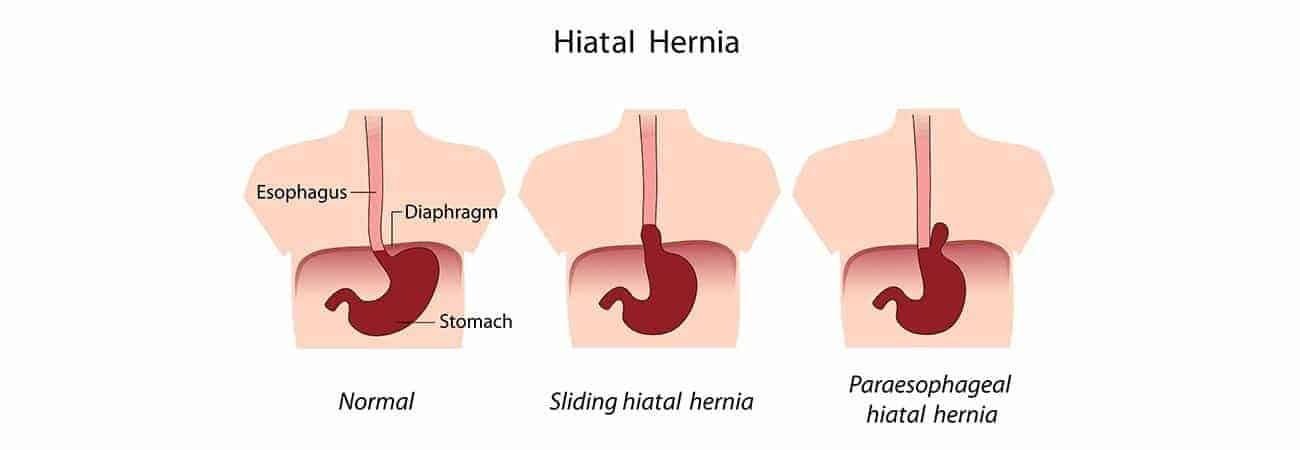
Sliding Hernia (Sliding Hiatus Hernia)
The sliding hernia is the most common type of hiatal hernia. It occurs when parts of the stomach and the esophagus move vertically above the diaphragm. This type is generally less concerning but can cause symptoms such as discomfort or acid reflux in some individuals.
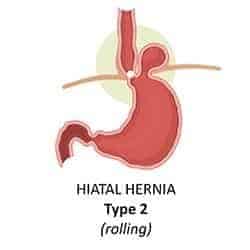
Paraesophageal or Fixed Hernia
The fixed, or paraesophageal, hernia is less common but more concerning. This type of hiatal hernia is stationary, meaning a part of the stomach remains above the diaphragm without moving back to its normal position. This condition is significant because it can lead to vascular compression, reducing blood flow to the stomach and potentially causing complications.
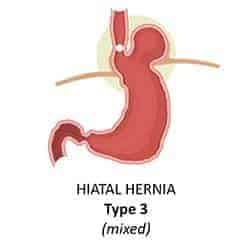
Mixed Hernia (Mixed Hiatus Hernia)
The mixed type of hiatal hernia involves characteristics of both sliding and fixed hernias. It is the rarest form and typically occurs due to significant weakening of the hiatus, the opening in the diaphragm. In most cases, a mixed hernia develops as a progression of a paraesophageal hernia, highlighting the importance of early care to manage symptoms and prevent further complications.
What Are the Causes of a Diaphragmatic Hernia?
A diaphragmatic hernia, including hiatal hernias, can develop due to several contributing factors. Common causes include:
- Smoking habits
- Increased body weight or obesity
- Persistent or frequent coughing
- Straining during bowel movements (commonly due to constipation)
- Congenital conditions present from birth
- Genetic predisposition or hereditary factors
- Poor posture habits
Addressing these factors through lifestyle changes and professional guidance can help reduce the likelihood of developing a diaphragmatic hernia.


What Are the Symptoms of a Diaphragmatic or Hiatal Hernia?
Symptoms of a diaphragmatic hernia vary but often include:
- A sensation of pressure or discomfort in the chest
- Belching or frequent burping
- Hiccups that persist
- Episodes of coughing
- Difficulty swallowing
- A burning sensation or discomfort is often associated with heartburn
If you experience these symptoms, it’s important to seek guidance from a qualified healthcare professional for a comprehensive evaluation and an appropriate care plan.
Individuals with a hiatal hernia may experience discomfort in the chest or upper abdomen. The severity and nature of the sensation often vary depending on the type and position of the hernia. If the stomach becomes trapped above the diaphragm with a narrow opening, it can result in persistent discomfort in the affected area.
In cases of fixed hiatal hernias, there is a risk of reduced blood supply to the stomach due to strangulation. This can lead to complications if not addressed promptly. In such situations, healthcare professionals may recommend further evaluation and, in some cases, surgical intervention.
Another common concern associated with hiatal hernias is regurgitation through the esophagus. This regurgitation, often linked to gastroesophageal reflux disease (GERD), occurs when the esophageal muscles weaken, allowing stomach acid to flow back upward. This can lead to further discomfort and requires appropriate care to manage symptoms safely.
Hiatal Hernia: Causes, Symptoms & When to Seek Help
A hiatal hernia happens when part of your stomach moves up into your chest through an opening in your diaphragm. This condition can cause discomfort, but it is manageable with the right care. Let’s explore its causes, symptoms, and non-surgical ways to feel better.
Symptoms to Look Out For: Hiatal hernias can vary in severity. Some people don’t notice any symptoms, but others may experience:
- Heartburn or Acid Reflux: A burning sensation in the chest or throat.
- Difficulty Swallowing: Food may feel stuck.
- Chest Discomfort: Often mistaken for other conditions.
- Shortness of Breath: When the hernia puts pressure on the lungs.
These symptoms can make eating and daily activities uncomfortable.
When Should You See a Doctor?
If you have severe chest discomfort, frequent vomiting, or difficulty swallowing, it’s time to consult a healthcare professional. These signs may indicate complications that need medical attention.
Taking steps to manage your hiatal hernia can improve your quality of life and keep symptoms under control. Always seek expert advice if you’re unsure.
What Are the Standard Diagnostic Tests for Hiatal or Diaphragmatic Hernia?
Diagnostic tests for hiatal hernia are designed to evaluate the stomach and esophagus, often using modern imaging or specialized procedures. These tests are typically conducted when symptoms such as heartburn, discomfort, or regurgitation persist. Below are some common diagnostic methods:
- Physical Examination
An initial physical assessment helps identify potential signs and symptoms of a hiatal hernia. This examination is similar to assessments conducted for persistent heartburn or GERD. - Barium Swallow X-Ray
A barium swallow X-ray is a specialized imaging test where the patient drinks a liquid containing barium. This liquid highlights the stomach and esophagus, allowing clear visualization of any abnormalities. - Endoscopy
Endoscopy is a procedure where a thin, flexible tube with a camera is inserted into the esophagus to visually inspect the stomach lining and esophagus for abnormalities. - Esophageal Manometry
Esophageal manometry involves inserting pressure-sensitive tubing into the esophagus to assess the strength and function of esophageal muscles, which play a role in symptoms related to hiatal hernias. - Esophageal pH Test
This test measures the acidity in the esophagus, helping to determine whether acid reflux or GERD is associated with the symptoms.
These tests are recommended to confirm the presence of a hiatal hernia and to evaluate its impact on the stomach and esophagus. Speak with a healthcare provider to determine which diagnostic tests are suitable for you.
What Are the Most Common Options for a Hiatal Hernia?
Lifestyle Modifications
Lifestyle adjustments are crucial for managing symptoms and preventing the progression of a hiatal hernia. These changes include:
- Quitting smoking.
- Sleeping in an elevated position (approximately 6 inches).
- Avoid foods that increase stomach acidity, such as tomato-based sauces, alcohol, and chocolate.
- Avoiding late-night meals and midnight snacks.
- Maintaining a healthy weight or working toward gradual weight loss.
Non-Surgical Management Strategies
Many hiatal hernias improve with lifestyle changes, such as:
- Eating Smaller Meals: This reduces pressure on your stomach.
- Avoiding Certain Foods: Spicy, fatty, or acidic foods can worsen heartburn.
- Elevating Your Head While Sleeping: This helps keep stomach acid down.
- Practicing Good Posture: Avoid slouching after meals.
Gentle exercises to strengthen the diaphragm and core muscles can also help.
Chiropractic care: In some instances, chiropractic care for the neck and viscera has helped patients; however, few chiropractors offer this service; get in touch with our Bukit Damansara center to see if you are a candidate for this procedure.
Adopting these habits can significantly reduce symptoms and maintain long-term well-being.
Medications
While chiropractic and lifestyle modifications are often preferred, medication may be recommended by your healthcare provider to manage symptoms. Common medications include:
- Antacids: Over-the-counter options like Tums or Mylanta provide quick improvement by neutralizing stomach acid.
- Acid Reducers: Medications such as cimetidine (Pepcid) or ranitidine (Zantac) may be prescribed to lower acidity.
- Prescription Options: In some cases, stronger medications may be recommended to address persistent symptoms. Always consult a qualified medical professional for guidance on medication use.
Surgical Intervention
In severe cases, a surgical procedure may be considered to address a hiatal hernia. Surgery typically involves reconstructing the diaphragm’s opening and addressing the hernia sac. While surgery can reduce symptoms, it is not a cure. Long-term success requires maintaining lifestyle changes even after the procedure.
If you are exploring the possibility of surgery, consult with a qualified medical professional for a detailed evaluation and thorough explanation of the risks, benefits, and expected outcomes.
Chiropractic Care for Hiatal Hernia
Chiropractic care offers a natural and non-invasive solution for addressing symptoms associated with a hiatal hernia. This approach focuses on gentle visceral chiropractic techniques aimed at improving comfort and helping the body’s overall function. Hiatal hernias can develop due to factors such as poor posture and muscle weakness, which create excessive pressure on the stomach and diaphragm. Chiropractic care helps address these contributing factors, potentially easing symptoms.
Research published in the Journal of the American Chiropractic Association has demonstrated significant improvements in symptoms through chiropractic care specifically tailored for hiatal hernia management. These findings highlight the potential benefits of focused chiropractic care for individuals dealing with this condition.
Chiropractic Visceral Adjustments Combined with Neck Care
Chiropractic visceral adjustments and neck care, especially for halal hernia patients with neck and upper back issues, is ideal. The care offered by our chiropractors involves gentle, manual techniques aimed at alleviating hiatal hernia symptoms by improving the alignment and function of the stomach and diaphragm. While some case reports and clinical experiences suggest benefits from such chiropractic interventions, comprehensive, peer-reviewed studies providing conclusive evidence are limited.
It’s important to note that while individual cases may show positive outcomes, more extensive research is needed to establish the efficacy of chiropractic visceral adjustments for hiatal hernias. Patients considering this care should consult with qualified healthcare professionals to determine the most appropriate care plan for their condition.
Hiatal Hernia Care By a Chiropractic Specialty Center® Chiropractor
When visiting Chiropractic Specialty Center® (CSC) for hiatal hernia care, you can expect a thorough and patient-centered approach to address your concerns. Before starting chiropractic care, our team conducts a detailed assessment to identify potential causes or factors contributing to your symptoms. This evaluation includes checking for spinal imbalances, pressure points, and other structural issues.
Hiatal hernia symptoms are often linked to misalignments in the cervical spine (neck), thoracic spine (upper and mid-back), or rib cage. These misalignments, referred to as subluxations in chiropractic care, can lead to nerve-related concerns and other symptoms. Our chiropractors focus on evidence-based methods to address these subluxations and help restore alignment and function.
What Does Chiropractic Care Involve?
Our chiropractic care involves gentle, controlled adjustments to the cervical and thoracic spine. These personalized corrections are designed to maintain your body’s natural healing process, reduce discomfort, and promote positive changes. Care may also include lifestyle recommendations to strengthen the diaphragm and improve overall health.
How Does Chiropractic Care Help?
The goal of chiropractic care for hiatal hernia is to:
- Address symptoms while maintaining diaphragm function.
- Reduce nerve-related disruptions (pinched nerves).
- Strengthen soft tissues and improve structural integrity.
- Provide adjustments for both the spine and abdominal area for comprehensive comfort.
Many of our patients experience significant improvements in their symptoms after receiving chiropractic care tailored to their condition.
Chiropractic Care as a Suitable Option For You
- Non-Invasive Approach: Chiropractic care is a holistic, non-invasive option for individuals dealing with hiatal hernia symptoms. Unlike medications or surgical procedures, chiropractic care avoids introducing chemicals or additional pressure on the body. Medications often come with side effects, while surgeries carry risks and a recovery time. Chiropractic care focuses on targeted, gentle adjustments designed to maintain the body’s natural ability to function better. These sessions are personalized, non-invasive, and aim to provide significant improvement over time.
- Long-Term Benefits: Addressing the root cause of a hiatal hernia is key to achieving lasting results. Chiropractic care helps manage the foundational issues that contribute to hernias, such as reducing pressure on the upper stomach and diaphragm. By focusing on long-term care, chiropractic adjustments aim to minimize recurring issues and provide consistent improvement. This proactive approach helps improve well-being while offering sustained comfort for individuals prone to hernias.
- Avoids Harsh Chemicals: Conventional care for hiatal hernias often involves medications that may have side effects or fail to address the underlying cause. Chiropractic care avoids the use of harsh chemicals or aggressive care, focusing instead on natural, manual techniques to help realign the body. This non-intrusive approach is safer and often more suitable for managing GERD and hiatal hernia symptoms.
Yama Zafer, D.C. – Hiatal Hernia: Non‑Invasive Care in KL
Yama Zafer, D.C., holds degrees in physiotherapy and chiropractic from Cleveland University–Kansas City, USA and has 30+ years of experience in physiotherapy and chiropractic. Read more about Yama Zafer D.C. on his official bio page.
Peer‑Reviewed References
- Sfara A, Dumitrașcu DL. Approaches to the diagnosis and grading of hiatal hernia. Best Pract Res Clin Gastroenterol. 2019.
- S Roman, PJ Kahrilas. The diagnosis and management of hiatus hernia. BMJ Clin Res Ed. 2014.
- Nitta T, Yoshida Y, Miyazaki M. Effectiveness of manual techniques in diaphragmatic mobilization for hiatal hernia. J Manipulative Physiol Ther. 2018.
- Upper Cervical OC. Reduction & resolution of hiatal hernia using osteopathic manipulation. J Am Chiropr Assoc. 2022.
- Bø K, Hilde G. Breathing exercises & core strengthening in diaphragmatic hernia management. J Obstet Gynaecol. 2013.
- Kalichman L, Hunter DJ. Conservative management of hiatal hernia: physiotherapy interventions. J Orthop Sports Phys Ther. 2007.
- Chapman JR, Marchetti P. Non-operative management of diaphragmatic hernias: systematic review. Spine J. 2001.
Last Updated
Last updated June 12, 2025 • Hiatal Hernia: Gentle Care in Kuala Lumpur
7 FAQs On GERD & Hiatal Hernia
Hiatal hernia and gastroesophageal reflux disease (GERD) are common conditions that many people search about online. Below are the top seven queries related to these conditions, along with in-depth answers that are easy to understand:
1. What is a hiatal hernia?
A hiatal hernia occurs when the upper part of the stomach pushes through an opening in the diaphragm into the chest cavity. The diaphragm is a muscle that separates the chest from the abdomen and helps with breathing. This condition may lead to symptoms such as heartburn, acid reflux, and a feeling of fullness after meals, although some people may not experience noticeable symptoms.
2. What are the symptoms of GERD?
Gastroesophageal reflux disease (GERD) happens when stomach acid frequently flows back into the esophagus, causing irritation. Common symptoms include a burning sensation in the chest after eating, regurgitation of food or sour liquid, difficulty swallowing, and a feeling of a lump in the throat. If these symptoms persist or disrupt daily activities, it’s important to seek professional advice.
3. How are hiatal hernia and GERD connected?
A hiatal hernia can contribute to GERD by making it easier for stomach acid to move into the esophagus. While not everyone with a hiatal hernia develops GERD, the condition can increase the likelihood of reflux-related symptoms due to the weakened sphincter at the esophageal opening.
4. What causes a hiatal hernia?
Hiatal hernias can result from factors such as increased abdominal pressure due to coughing, heavy lifting, or straining during bowel movements. Other causes include age-related weakening of the diaphragm, trauma or injury to the area, and congenital differences in diaphragm structure. Lifestyle factors like obesity and smoking can also increase the risk.
5. How is GERD diagnosed?
GERD diagnosis typically begins with a thorough assessment of symptoms and medical history. Healthcare providers may use tests like endoscopy to examine the esophagus and stomach, esophageal pH monitoring to detect acid reflux, and esophageal manometry to evaluate the muscles involved in swallowing. These diagnostic tools help determine the severity of GERD and guide appropriate management strategies.
6. What lifestyle changes can help with hiatal hernia and GERD?
Simple lifestyle adjustments can significantly reduce the frequency and intensity of symptoms. Eating smaller meals more frequently, avoiding lying down after eating, and elevating the head of the bed can minimize reflux. Limiting fatty, spicy, or acidic foods, as well as reducing caffeine and alcohol intake, can also help. Maintaining a healthy weight and quitting smoking are essential steps for long-term management.
7. Can chiropractic care help individuals with hiatal hernia or GERD?
Chiropractic care focuses on improving musculoskeletal alignment, which may indirectly benefit some symptoms of hiatal hernia or GERD. Techniques like gentle adjustments and soft tissue therapy may help reduce pressure on the diaphragm and improve posture. While chiropractic care can complement other strategies, it’s important to consult with a healthcare professional to create a holistic care plan tailored to individual needs.
Where to Be Seen in Bandar Sri Damansara
Travel across Kuala Lumpur is not always simple. You can read about the Bandar Sri Damansara center in northwest Kuala Lumpur. That center provides chiropractic together with physiotherapy.
The address, telephone number and opening hours are listed on Bandar Sri Damansara location and opening hours. Travel details for the main center are on how to reach the Bukit Damansara center.
Do you offer chiropractic care for symptoms of hiatal hernia?
Yes, that kind of care is offered, and it is worth being precise about what it consists of and what it can reasonably be expected to do, since this area attracts a good deal of overstatement.
What a session involves: assessment and treatment of the diaphragm and the tissue below the ribs, work on the mid-back and rib mechanics, which influence how the diaphragm moves, and breathing retraining, since a shallow upper-chest breathing pattern changes the pressure relationship between the chest and abdomen. Some practitioners also use a technique applying gentle downward traction below the ribs, intended to encourage the stomach downward.
What it can be expected to do: possibly ease symptoms in some people, particularly where posture and breathing pattern contribute. What it cannot do, and this should be said plainly, is correct the anatomy. A hiatal hernia exists because the opening in the diaphragm has stretched, and no manual technique narrows that opening. The evidence base here is limited, consisting largely of case reports and small uncontrolled series describing symptom change rather than imaging-confirmed correction. Any provider describing it as returning the hernia to its normal position is going beyond what the evidence supports.
Given that, the sensible arrangement is a short defined trial rather than an open-ended course: an assessment, a handful of sessions, and an honest review. If your symptoms have not shifted noticeably by then, continuing is not justified. That is a fair thing to agree in advance, and it is worth asking any provider what would make them tell you to stop.
Alongside it, the measures with the strongest support should already be in place, because they do most of the work and cost nothing: smaller meals, around three hours between the last meal and lying down, raising the head of the bed by roughly fifteen centimeters with blocks under the legs rather than extra pillows, avoiding tight waistbands, reducing abdominal weight where that applies, and identifying your own trigger foods. Where symptoms persist despite those, acid-reducing medication is effective and worth discussing with a doctor, and for significant symptoms that do not respond, surgical repair is what addresses the anatomy.
See a doctor rather than pursuing manual care if you have difficulty swallowing or food sticking, unintentional weight loss, vomiting blood or black tarry stools, persistent vomiting, or anemia on a blood test. New chest pain, particularly with breathlessness or sweating, needs emergency assessment.
Hi, is this treatment (GERD / Hernia) available in Sri Petaling?
Call the Sri Petaling center directly to confirm, since what is offered can differ between centers and the reception team can tell you what is currently available there. The direct number is on that center’s contact page.
More useful is a distinction that matters before you book anything, because the two things in your question are not the same.
A hiatal hernia is anatomical: part of the stomach sits above the diaphragm. Reflux, or GERD, is a symptom pattern caused by stomach contents coming back up the esophagus. They overlap but they are separate. Many people have a hiatal hernia and no reflux symptoms at all, and many people have significant reflux with no hernia. So treatment aimed at the hernia is not the same as treatment aimed at the reflux, and it is worth knowing which of the two is actually troubling you.
If your problem is reflux symptoms, the measures with the strongest support cost nothing and should be in place before or alongside anything else. Smaller meals rather than large ones. Around three hours between the last meal and lying down. Raising the head of the bed by roughly fifteen centimeters using blocks under the bed legs rather than stacking pillows, since pillows bend you at the waist and can make reflux worse. Avoiding tight waistbands. Reducing abdominal weight where that applies. And identifying your own trigger foods rather than following a general list, since these vary considerably between people. Where symptoms persist, acid-reducing medication is effective and worth discussing with a doctor.
On manual approaches, an honest position: work on the diaphragm, upper abdomen, breathing pattern, and mid-back may ease symptoms in some people, particularly where posture and breathing contribute. The evidence is limited, and it does not correct the anatomy of a hernia. Any provider should describe it in those terms, and a short defined trial with a review point is more sensible than an open-ended course.
Some symptoms need a doctor rather than any of this: difficulty swallowing or food sticking, unintentional weight loss, vomiting blood or black tarry stools, persistent vomiting, or anemia on a blood test. New chest pain, especially with breathlessness or sweating, needs emergency assessment, because reflux and cardiac pain cannot be told apart reliably by how they feel.
Is the chiropractic treatment for hiatal hernia available at every branch or only at certain branches? If I’m confirmed to be diagnosed with H.H., do I still need to undergo the assessment? How long would the whole treatment take?
Three questions, three answers.
On availability by center: call the center you have in mind and ask directly, since what is offered can differ between them. Direct numbers and current hours are on each center’s contact page.
On whether you still need an assessment with a confirmed diagnosis: yes, and the reason is not procedural. A confirmed hiatal hernia tells you about anatomy. It does not tell you what is producing your symptoms, and the two are not the same. Many people have a hiatal hernia with no symptoms at all, and many people have significant reflux without one. So the assessment establishes what is actually driving your symptoms, what your breathing pattern and posture contribute, what your meal timing and habits contribute, and what your baseline is, so that any change afterward can be measured rather than guessed at. It also screens for the symptoms that need a doctor rather than manual care, which is worth doing before treatment rather than after.
On how long: this should be a short defined trial rather than a course with a fixed length, and it is worth understanding why. A hiatal hernia is anatomical, and no manual technique narrows the opening in the diaphragm that has stretched. What treatment can do is ease symptoms in some people, particularly where posture and breathing pattern contribute. Given that, the sensible arrangement is an assessment followed by a handful of sessions and an honest review. If nothing has shifted by then, continuing is not justified. Ask whoever treats you, in advance, how many sessions before we review and what would make you tell me to stop. A clear answer to that is a good sign.
Alongside it, the measures with the strongest support should be in place from the start, because they do most of the work: smaller meals, roughly three hours between the last meal and lying down, raising the head of the bed by about fifteen centimeters using blocks under the legs rather than stacking pillows, avoiding tight waistbands, reducing abdominal weight where that applies, and identifying your own trigger foods. Where symptoms persist despite those, acid-reducing medication is effective and worth discussing with a doctor, and surgical repair is what addresses the anatomy in significant cases.
See a doctor rather than beginning treatment if you have difficulty swallowing or food sticking, unintentional weight loss, vomiting blood or black tarry stools, persistent vomiting, or anemia on a blood test. New chest pain, especially with breathlessness or sweating, needs emergency assessment.
My son, Abrar Jamil, is 10 years old and 6 months old. First, he was diagnosed with Hiatus Hernia sliding in 2021. Since then, his condition has gone down gradually; no medication could have improved his condition.
Presently, his main problem is severe weakness. He cannot go to school for the last 1 year. He feels pain in his leg if he walks for about 4/5 minutes. He cannot keep sitting either for a long time. He cannot breathe properly and suffers from short breath. Sometimes, he Suffers from vertigo, and at that time, his eyesight appears blurred, and it happens mainly at night when he goes to sleep.
He also feels very discomfort when he goes to sleep. Suffer from stomach spasms and cramps and feel pain in the abdomen, especially before going to the toilet. He often feels nauseous and sometimes vomits. His body weight is seriously less than standard.
He suffers from high-grade GERD. Whatever he eats, it produces gas. The food he is taking does not give his body any nutrition. It also seems that he is hearing a bit less. He is living a miserable life at present. In addition, if he eats anything, his stomach burns often. He feels pain in his bones. His stomach spasms increase at night, especially. He also suffers from vertigo, especially when he goes to sleep.
Is there any cure for my son, please? I am from Bangladesh.
This needs a pediatrician, and promptly. A child who has become severely weak and has been unable to attend school is not a situation for chiropractic or physiotherapy, and I would rather say that clearly than offer something that delays him getting the right assessment.
The central point is this: a sliding hiatal hernia does not cause severe weakness. It causes reflux and its consequences. So either something else is going on, or the hernia has produced a complication that is causing the weakness indirectly. That second possibility is worth raising specifically with his doctor, because it is common, it is easily missed, and it is treatable.
Long-standing reflux can inflame the lining of the esophagus, and inflamed tissue can bleed slowly over months. Slow blood loss that is never visible produces iron deficiency anemia, and in a child that presents exactly as you describe: progressive weakness, tiredness, poor concentration, and being unable to keep up at school. Reduced eating because swallowing is uncomfortable adds poor nutrition and slowed growth on top of it. Both are correctable once identified, and neither will improve with treatment aimed at the hernia alone.
So ask his doctor for these specifically. A full blood count and iron studies, meaning ferritin, to look for anemia and iron deficiency. A check of his weight and height plotted against growth charts over the past two years, since a falling growth curve is objective evidence of what has been happening. Vitamin and nutritional status. And a referral to a pediatric gastroenterologist, with the question of whether endoscopy is needed to see what state the esophagus is in, since two years without improvement on medication is itself a reason to look.
Alongside that, the weakness needs to be examined in its own right rather than assumed to follow from the hernia. Ask for a proper pediatric assessment including a neurological examination, and mention whether the weakness is general tiredness or genuine muscle weakness, whether it affects his arms and legs equally, whether it is worse at particular times of day, and whether he has difficulty climbing stairs or rising from the floor. Those details matter and will guide what else is looked for.
Please do not delay this while pursuing manual treatment. A child who has been declining for two years and is now out of school needs a full medical workup, and there are treatable explanations that fit his story.
Take him to the hospital rather than waiting for an appointment if he becomes breathless, unusually pale, faints or nearly faints, vomits blood, passes black or tarry stools, or becomes unable to keep fluids down.
Can you give me references of radiographic or gastro endoscopic evidence after successful chiropractic treatment of hiatus hernia?
No, and the honest reason is that such evidence does not exist as far as I am aware.
There are no controlled trials demonstrating radiographic or endoscopic reduction of a hiatal hernia following manual or chiropractic treatment. What exists in the literature is case reports and small uncontrolled series describing symptom improvement. That is a much weaker class of evidence, and importantly it is evidence about symptoms rather than about anatomy. Reported symptom change without before-and-after imaging or endoscopy does not demonstrate that a hernia has been reduced, and it is a mistake to present it as though it does.
It is worth being explicit about why symptom improvement alone cannot carry that claim. Reflux symptoms fluctuate naturally and people typically seek treatment when they are at their worst, so improvement afterward is expected regardless of what was done. Anyone starting treatment usually also changes meal size, timing, and diet at the same time, and those measures have real effects. And treatment expectation reliably produces symptom change in conditions like this. Any one of those explains an improvement without the hernia having moved.
There is also a mechanical problem with the claim. A hiatal hernia exists because the opening in the diaphragm that the esophagus passes through has stretched. Manual pressure applied below the ribs does not narrow that opening. Even where the stomach’s position shifts temporarily, the enlarged hiatus and the pressures acting on it remain, which is why any repositioning would not be expected to hold.
So the accurate position is this. Manual work on the diaphragm and upper abdomen, breathing retraining, and treatment of the mid-back may ease symptoms in some people, particularly where posture and breathing pattern contribute. It should be offered on that basis and described in those terms. It should not be described as returning the hernia to its original position, and any provider claiming imaging-confirmed correction should be asked to produce that imaging.
What does have evidence behind it: meal size and timing, elevation of the head of the bed, avoiding tight waistbands, weight reduction where relevant, acid-suppressing medication, and surgical repair for the anatomy itself in appropriate cases.
Asking for the evidence before accepting a claim is the right instinct, and it is a fair question to put to any provider.
Hi,
Can a hiatus hernia be pushed back to its original position? Are the treatments you provide for symptom relief, or do they cause the hernia to return to normal?
Symptom relief. That is the honest answer to your second question, and it should be given plainly rather than hedged.
On whether a hiatus hernia can be pushed back: the stomach can shift position, and manual techniques applied below the ribs are sometimes described as encouraging it downward. What does not change is the reason it moved in the first place. The hiatus is the opening in the diaphragm that the esophagus passes through, and in a hiatal hernia that opening has stretched. No manual technique narrows it. So even where the stomach’s position shifts temporarily, the enlarged opening remains and the pressure that pushed it up in the first place is still there. That is why any repositioning effect is not a permanent correction, and why it is misleading to describe treatment as returning the hernia to normal.
Restoring the anatomy is a surgical matter. The operation narrows the opening in the diaphragm and reconstructs the valve mechanism at the top of the stomach, and it is considered for people with significant symptoms that persist despite medication, or for particular types of hernia. That is the only route that changes the structure, and it is a decision for a surgeon after assessment.
What conservative measures do achieve is worthwhile in its own right, and for most people it is enough. Symptoms come largely from pressure and from reflux, and both are reducible. Smaller meals rather than large ones. Around three hours between the last meal and lying down. Raising the head of the bed by roughly fifteen centimeters using blocks under the legs rather than stacking pillows, since pillows bend you at the waist and can worsen reflux. Avoiding tight waistbands. Reducing abdominal weight where that applies, which directly lowers the pressure driving the hernia upward. And identifying your own trigger foods rather than following a general list. Where symptoms persist, acid-reducing medication is effective and is worth discussing with a doctor.
Manual and breathing-based work on the diaphragm and mid-back may ease symptoms in some people, particularly where posture and breathing pattern contribute. The evidence for it is limited, and it belongs alongside the measures above rather than in place of them, and certainly not in place of a surgical opinion where one is warranted.
Some symptoms need a doctor rather than any conservative approach: difficulty swallowing or food sticking, unintentional weight loss, vomiting blood or black tarry stools, persistent vomiting, or anemia on a blood test. New chest pain, especially with breathlessness or sweating, needs emergency assessment, since reflux and cardiac pain are not reliably distinguishable by how they feel.
Do you have a clinic in Penang?
No, there is no center in Penang. All six are in Kuala Lumpur and Selangor.
Since this page concerns hiatal hernia, the more useful part is what actually changes symptoms, because most of it does not require a clinic at all.
The measures with the strongest support are unglamorous and effective. Smaller meals rather than large ones, because volume is what raises pressure in the stomach. Leaving three hours between the last meal and lying down. Raising the head of the bed by around fifteen centimeters using blocks under the bed legs rather than extra pillows, since pillows bend you at the waist and can make reflux worse rather than better. Avoiding tight waistbands and belts. Reducing abdominal weight where that applies, which lowers the pressure driving the hernia. And identifying your own trigger foods rather than following a general list, since these vary considerably between people. Where symptoms persist despite those, medication that reduces acid is effective and is worth discussing with a doctor.
On manual and breathing-based approaches, an honest position. Techniques aimed at the diaphragm and the upper abdomen, together with breathing retraining and work on posture through the mid-back, may ease symptoms in some people, particularly where there is a strong postural or breathing-pattern component. The evidence supporting them is limited, and they should be described as worth trying alongside the measures above rather than as a treatment that corrects the hernia. A hernia is an anatomical situation, and no manual technique reliably restores the anatomy.
Some symptoms need medical assessment rather than any of this, and these matter. Difficulty swallowing or food sticking. Unintentional weight loss. Vomiting blood, or stools that are black and tarry. Persistent vomiting. Anemia found on a blood test. Chest pain that is new or different, particularly with breathlessness or sweating, which needs emergency assessment because reflux and cardiac pain are not reliably distinguishable by how they feel. Any of those warrants seeing a doctor, and several would prompt an endoscopy.
For anything ongoing, a gastroenterology assessment in Penang will serve you better than traveling.
Hi, how long is the course of treatment, and what would be the estimated price?
An honest answer on both, because hiatal hernia does not work like a course of treatment for a joint or a disc.
A hiatal hernia is an anatomical situation: part of the stomach sits above the diaphragm rather than below it. No manual technique reliably restores that anatomy, and anyone describing a course of treatment that corrects the hernia is overstating what is possible. What conservative care can aim at is the symptoms, and in some people, particularly where there is a strong postural or breathing-pattern component, work on the diaphragm, the upper abdomen, and the mid-back does ease them.
Because of that, the sensible structure is not a long course but an assessment followed by a short defined trial, on the order of a handful of sessions, with an honest review at the end. If your symptoms have not shifted noticeably by that point, continuing is not justified and you should be told so rather than sold more sessions. That is the question worth asking any provider before you start: how many sessions before we review, and what will make you tell me to stop.
On price, the assessment is priced separately from treatment and takes longer, and follow-up visits are priced separately again. The reception team gives current figures on request and fees are explained before care begins. With a short defined trial you can know the likely total in advance, which is not true of an open-ended course.
Worth saying plainly: the measures that do most of the work here cost nothing. Smaller meals rather than large ones, leaving around three hours between the last meal and lying down, raising the head of the bed by about fifteen centimeters with blocks under the bed legs rather than adding pillows, avoiding tight waistbands, reducing abdominal weight where that applies, and identifying your own trigger foods rather than following a general list. Where symptoms persist despite those, acid-reducing medication is effective and worth discussing with a doctor. Those should be in place before or alongside any treatment, not after it has been tried.
Some symptoms need a doctor rather than any of this: difficulty swallowing or food sticking, unintentional weight loss, vomiting blood or black tarry stools, persistent vomiting, or anemia on a blood test. New chest pain, particularly with breathlessness or sweating, needs emergency assessment, since reflux and cardiac pain cannot be reliably told apart by how they feel.