

Neck Chiropractor KL: Assessment and Low-Force Care
Neck chiropractor KL searches often come from people with neck stiffness, shoulder-blade pain, headaches, arm tingling or an MRI report that is difficult to interpret. A neck assessment should first decide whether the main issue appears to involve joints, muscles, spinal discs or nerve roots. No single adjustment technique is appropriate for every neck complaint.
At CSC, cervical care can use low-force and non-twisting chiropractic methods when the findings support them, with registered physiotherapy and rehabilitation added for strength, movement control and functional recovery. Existing imaging is reviewed when relevant, but scan findings are interpreted alongside the examination rather than treated as the diagnosis by themselves.
This guide to seeing a neck chiropractor in KL, from assessment to low-force care, is published by Chiropractic Specialty Center, Bukit Damansara (KL) main center: WhatsApp+60 17 269 1873 Call+603 2093 1000
Neck Chiropractor KL care should begin with one clear question: what does your neck actually need?
Neck stiffness, headaches, arm symptoms, posture strain, disc degeneration, cervical spondylosis, whiplash-related concerns, and nerve-related symptoms can look similar at first, but each person may need a different care pathway.
At Chiropractic Specialty Center in Kuala Lumpur, neck care is planned through an integrated chiropractic and physiotherapy model. The goal is not to chase a cracking sound. The goal is to understand the person, the spine, the joints, the discs, the muscles, the nerves, and any health factors that may change the care plan.
For some people, especially those with spinal disc degeneration, cervical spondylosis, nerve-related symptoms, vascular risk factors, trauma history, or age-related joint findings, forceful neck twisting may not be the right starting point.
Our neck care may include gentle chiropractic methods, physiotherapy, soft tissue work, posture correction, ergonomic guidance, and guided rehabilitation.
Key Takeaways About Neck Chiropractor KL
- Neck Chiropractor KL care should begin with assessment, not a cracking sound. Neck stiffness, headaches, posture strain, disc degeneration, cervical spondylosis, whiplash-related concerns, and symptoms traveling into the arm can look similar at first.
- A click or pop during a neck adjustment does not confirm that the correct joint was addressed or that the method was suitable for the person’s age, health history, spinal structure, or symptoms.
- Forceful rotary neck adjustments may not be suitable for everyone, especially when vascular risk factors, spinal disc degeneration, cervical spondylosis, nerve symptoms, trauma history, dizziness, or age-related joint findings are present.
- Imaging is not needed for every neck concern, but an X-ray or MRI may matter when symptoms suggest disc involvement, nerve irritation, spinal canal narrowing, trauma, worsening function, post-surgical changes, or complex structural findings.
- Posture-related neck strain often involves more than the neck. The upper back, shoulder blades, trapezius, rhomboids, jaw position, breathing pattern, screen height, and daily work habits can all influence neck function.
- CSC’s Neck Chiropractor KL approach combines gentle chiropractic methods, physiotherapy, soft tissue work, posture correction, ergonomic guidance, and rehabilitation without forceful twisting, injections, or surgery.
- The two videos on this page explain common questions about chiropractic safety, neck cracking, MRI, physiotherapy, trigger points, rhomboids, posture, and gentle neck exercises for reader education.
Table of Contents: Neck Chiropractor KL Guide
Arranging a Neck Assessment in Kuala Lumpur
To arrange a neck assessment, see the Bukit Damansara contact page and the Bandar Sri Damansara contact page, or call either center directly:
- Bukit Damansara (KL, main center): Call +603 2093 1000 or WhatsApp +60 17 269 1873 to see the Bukit Damansara / KL center.
- Bandar Sri Damansara (KL): Call +603 6262 5777 or WhatsApp +60 12 455 6939 to see the Bandar Sri Damansara center.
Is Neck Cracking Safe or Useful for Neck Care?
Many people believe a neck adjustment worked because they heard a cracking sound. The sound can feel satisfying, but the sound itself is not the clinical goal.
A neck crack is usually related to gas movement inside a joint space. The sound does not tell the clinician whether the correct area was addressed, whether the method matched the person’s condition, or whether the neck was suitable for forceful rotation.
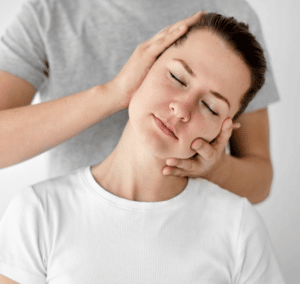
Some people may feel temporary ease after a strong neck twist. Temporary ease, however, should not be the only measure of value. A method can feel good in the moment and still place unnecessary strain on joints, discs, ligaments, or vascular structures in the wrong person.
That is why CSC does not use cracking sounds as the main measure of care. The focus is clinical reasoning, movement quality, joint tolerance, disc health, nerve signs, posture, muscle control, and daily neck function.
Are Rotary Neck Adjustments Safe for Everyone?
Manual rotary neck methods are commonly associated with cervical adjustments that may involve fast movement, rotation, side bending, or end-range positioning of the cervical spine.
For some people, that type of movement may not be suitable. The neck contains small joints, spinal discs, ligaments, nerve pathways, and important blood vessels. When a person has vascular risk factors, disc degeneration, cervical spondylosis, joint narrowing, nerve symptoms, or age-related structural findings, extra caution is needed.
Cervical artery dissection and vertebrobasilar insufficiency are rare but serious concerns discussed in the literature on cervical manual care. Research does not show that cervical manipulation causes artery dissection in every case, and causation remains difficult to establish. However, vascular screening and careful clinical reasoning remain important because some vascular concerns can first appear as neck symptoms.
A responsible neck care approach should avoid the idea that one technique fits everyone. Neck care should be selected based on the person, not the habit of the practitioner.
Watch: Is Chiropractic Safe? Neck Cracking, MRI and Physio Explained
This video explains common questions people ask before seeing a chiropractor, including whether chiropractic care is considered safe, what the cracking sound means, when X-rays or MRI may be discussed, and how chiropractic and physiotherapy may work together. The video is educational and should be viewed as general information, not personal health advice.
Key Moments in This Video
- 00:33 Is chiropractic considered safe?
- 01:35 Standard methods, and methods that do not twist the spine
- 02:44 Why safety depends on the chiropractor and the technique
- 03:02 Why chiropractic methods should be performed by registered chiropractors
- 04:01 What the cracking sound means during an adjustment
- 04:22 Gonstead and Diversified: techniques that make the sound
- 07:27 Why chiropractic sessions should not feel overly forceful
- 11:16 When X-rays or MRIs may be discussed
- 11:50 Are full-spine X-rays always needed?
- 12:46 MRI vs X-ray for spine and soft-tissue information
- 14:56 Chiropractic or physiotherapy: how they may work together
Key moments and an edited transcript of this video are on our Is Chiropractic Safe video page.
For more educational videos on spine, joint, posture, chiropractic, physiotherapy, and rehabilitation topics, visit our Video Education Hub.
Who Should Be Careful Before Neck Adjustments?
Some people may need a gentler or physiotherapy-led approach before any cervical joint procedure is considered.
Extra caution may be needed for people with age over 50, high blood pressure, high cholesterol, diabetes, smoking history, known plaque buildup, dizziness, visual disturbance, drop attacks, fainting, unusual headache, unexplained neurological symptoms, cervical spondylosis, reduced disc height, disc bulge, herniated disc, annular tear, spinal disc degeneration, numbness, tingling, weakness, trauma history, whiplash, post-surgical neck history, known spinal instability, or symptoms traveling into the shoulder, arm, hand, or fingers.
Children and teenagers also need age-appropriate care because their spinal structures are still developing.
Vertebrobasilar insufficiency is more often discussed in relation to vascular risk factors such as high blood pressure, diabetes, high cholesterol, smoking history, obesity, and arterial plaque buildup. Cervical spondylosis also becomes more common with age and may involve disc height reduction, disc dehydration, joint degeneration, alignment changes, and facet or uncovertebral joint involvement.
Neck Chiropractor KL for Disc Degeneration and Cervical Spondylosis
Spinal disc degeneration can reduce disc height and change how force travels through the cervical spine. When the disc loses height, nearby joints may carry more load. Facet joints and uncovertebral joints may become more stressed, especially with rotation, extension, and repeated end-range movement.
Cervical spondylosis can involve disc dehydration, disc height loss, facet joint changes, uncovertebral joint changes, bony changes, and altered spine mechanics. Some people describe stiffness, grinding, restricted turning, or symptoms that increase when looking upward or rotating the head.
That matters because forceful twisting may add compression, shear, or joint stress in a neck that already has reduced structural tolerance.
Disc-related and spondylosis-related neck care should not be based on force. The plan should focus on control, movement tolerance, posture correction, joint tolerance, muscle coordination, and careful progression.
When Should You Get an X-Ray or MRI Before Neck Chiropractic Care?
Not every person with neck stiffness needs an X-ray or MRI. Many mild posture-related concerns can begin with a clinical assessment, movement testing, and conservative care.
However, imaging may become important when symptoms suggest more than simple muscular strain. Imaging may be considered when there is trauma, worsening function, arm symptoms, numbness, weakness, suspected disc involvement, signs of spinal cord irritation, unexplained dizziness, history of cancer, infection concern, post-surgical history, or long-standing symptoms that have not improved with appropriate care.
When cervical spine rotation or forceful procedures are being considered, the decision should be more cautious. Imaging can help identify spinal disc degeneration, reduced disc height, cervical spondylosis, alignment concerns, canal narrowing, instability patterns, or other structural findings that may change the care plan.
The goal of imaging is not to scare the patient. The goal is to avoid guessing.
Neck Disc Bulge, Herniated Disc and Annular Tear Care in KL
A cervical disc bulge or herniation can irritate nearby nerves or narrow the space around nerve pathways. Some people feel local neck stiffness. Others may notice symptoms traveling into the shoulder, arm, hand, or fingers.
An annular tear can involve irritation in the outer ring of the disc. Depending on the location and severity, neck movement may become more sensitive. In these cases, sudden twisting or end-range loading may not be suitable.
A gentle plan may include focused chiropractic methods, physiotherapy for neck and shoulder control, soft tissue work for muscle guarding, posture correction, nerve-related movement guidance when appropriate, spinal decompression when clinically suitable, and progressive rehabilitation for long-term function.
The goal is to reduce unnecessary load, improve movement tolerance, and help the neck function with better control.
Cervical Spondylosis and Facet Joint Hypertrophy Neck Care
Cervical spondylosis can involve disc degeneration, bony changes, joint narrowing, facet joint changes, and stiffness. Some people describe neck grinding, restricted movement, or symptoms that increase when looking upward or turning the head.
Facet joint hypertrophy means the small joints at the back of the spine have become enlarged or thickened. When these joints are already irritated or narrowed, repeated forceful rotation may place more stress on the joint surfaces and surrounding soft tissue.
Care should be gentle, specific, and measured. The approach may include controlled mobilization, instrument-assisted chiropractic methods, physiotherapy, postural retraining, soft tissue work, and exercise. Strong twisting is usually not the first method considered for a structurally older or more degenerative neck.
Vertebrobasilar Insufficiency and Neck Adjustment Risk Factors
The cervical spine is close to important blood vessels that supply the brain. Vertebrobasilar insufficiency refers to reduced blood flow in the back part of the brain circulation. Some risk factors include age over 50, high blood pressure, diabetes, high cholesterol, smoking history, coronary artery disease, peripheral artery disease, and plaque buildup.
Symptoms that deserve caution include dizziness, double vision, difficulty speaking, fainting, drop attacks, unusual headache, visual disturbance, imbalance, or sudden neurological symptoms.
These signs are not normal neck stiffness. They require proper medical attention and should not be ignored.
For people with vascular risk factors, neck care should avoid unnecessary end-range rotation and force. A measured approach may include physiotherapy-led movement, soft tissue work, posture strategies, gentle chiropractic methods, and referral for medical evaluation when symptoms suggest vascular or neurological concern.
Neck Chiropractor KL for Children and Teenagers
Children and teenagers are not small adults. Their bones, growth plates, joints, muscles, and nervous system are still developing. That means the care approach should be different from adult care.
High-force spinal manipulation in children remains a debated topic. Reviews have noted uncertainty around pediatric spinal manipulation safety, especially because serious events are rare and difficult to measure accurately.
For younger patients, neck care should be gentle, conservative, and focused on posture, movement habits, muscle balance, ergonomics, sports load, and age-appropriate rehabilitation. If chiropractic care is used, low-force or non-rotatory methods may be considered instead of forceful twisting.
For children under 12, extra caution is especially important.
Neck Chiropractor KL During Pregnancy and After Delivery
Pregnancy and postnatal life can change posture, sleep position, ligament behavior, muscle tone, and daily loading. Neck and upper back stiffness may increase because of feeding posture, carrying the baby, reduced sleep, and changes in body mechanics.
Care during pregnancy and after delivery should be gentle and adapted to the person’s stage, comfort, and health history. Forceful neck twisting is not the first method considered.
A measured plan may include soft tissue work, posture guidance, gentle chiropractic methods, breathing mechanics, upper back mobility, and physiotherapy-led strengthening.
The care goal is simple: improve comfort, movement, and daily function without unnecessary force.
Whiplash Neck Care in Kuala Lumpur
Whiplash-related neck concerns can involve joints, discs, ligaments, muscles, and the nervous system. Symptoms may appear immediately or develop over time. Some people experience neck stiffness, headaches, dizziness, upper back tension, or symptoms traveling into the arm.
Whiplash-associated disorders can become persistent when movement, fear, muscle guarding, and tissue sensitivity are not addressed properly. Clinical literature discusses movement-based, non-invasive care and individualized rehabilitation for whiplash-related presentations.
At CSC, whiplash-related care may include clinical assessment, imaging review when needed, physiotherapy, soft tissue work, controlled movement, gentle chiropractic methods, and progressive rehabilitation. Care is adapted to severity, stage of healing, and neurological findings.
Neck Chiropractor KL for Posture and Desk Strain
Many neck concerns in Kuala Lumpur are linked with desk work, device use, driving, and long hours in fixed positions. Forward head posture, rounded shoulders, poor screen height, weak upper back muscles, and jaw tension can all influence the neck.
Posture-related neck care should not begin with forceful twisting. Many cases need a combination of movement retraining, upper back mobility, neck endurance, shoulder blade control, breathing mechanics, and workspace changes.
CSC’s chiropractic and physiotherapy team looks at the entire upper quarter, not only the neck. The shoulder blades, upper back, ribs, jaw, and breathing pattern can all change how the neck feels and functions.
Watch: Neck Trigger Points, Rhomboids and Posture Exercises
This video explains how neck and upper back concerns can begin with muscle tension, posture strain, trapezius tightness, and rhomboid weakness. It also shows gentle trigger-point work and simple posture exercises that may help some people understand their neck and shoulder blade mechanics. Exercises should be checked with a qualified healthcare provider before use, especially if symptoms are severe, spreading, or unusual.
Key Moments in This Video
Use these timestamps to jump to the main sections of the video.
- 00:00 What causes neck problems: muscle, joint, or disc involvement
- 01:15 Neck anatomy: trapezius and rhomboid muscles
- 02:32 Is neck restriction from muscle tightness or joint involvement?
- 04:04 Why neck symptoms can feel muscular when other tissues are involved
- 05:06 Gentle trigger-point work for the trapezius
- 06:19 Safety warning: areas to avoid during manual work
- 07:12 Gentle work along the shoulder blade and rhomboids
- 08:47 Why trigger-point work should never be uncomfortable
- 10:02 Gentle exercises, checked with your healthcare provider first
- 10:31 W-T-L posture exercises: the W position for the rhomboids
- 12:22 T exercise for chest opening and upper back control
- 12:58 L exercise for the lower rhomboids
- 13:29 Isometric neck strengthening with your own hand
- 14:09 Isometric holds for the back and sides of the neck
- 15:24 Closing advice: supervised exercises
The chapters and an edited transcript of this video are on the Neck Trigger Points and Exercises video guide.
Which Signs Need Checking Before Neck Chiropractic Care?
Seek proper assessment if you have symptoms traveling into the shoulder, arm, hand, or fingers, numbness, tingling, burning, weakness, loss of grip strength, balance issues, walking difficulty, symptoms after a fall, accident, or sports impact, symptoms that worsen with coughing, sneezing, or straining, unexplained dizziness, visual changes, fainting, difficulty speaking, new severe headache with neck symptoms, or progressive symptoms despite rest or basic care.
These signs do not mean surgery is needed. They mean the neck should be assessed carefully before any manual method is chosen. Sudden dizziness with difficulty speaking, visual changes, fainting, or a new severe headache with neck symptoms are emergency signs and need emergency care straight away. Progressive arm weakness or loss of grip strength should not be ignored and should be assessed promptly by a competent provider; conservative care may still be a reasonable route once that assessment is done.
What Happens During Your First Neck Chiropractor Visit?
A proper neck care visit should include a clear history, symptom review, posture assessment, range of motion testing, orthopedic screening, neurological screening when needed, and discussion of imaging if relevant.
The clinician should ask about vascular risk factors, trauma history, dizziness, headaches, medications, prior surgery, and arm symptoms. These questions help determine what may be suitable and what should be avoided.
After assessment, the care plan may include chiropractic, physiotherapy, rehabilitation, decompression-based care, or referral for imaging or medical review when needed.
Why CSC Uses Gentle Neck Care Without Forceful Twisting
CSC does not use the same adjustment for everyone. CSC does not rely on cracking as a sign of success. CSC does not force the neck into rotation when a gentler option may be considered.
Care may include gentle and focused chiropractic adjustments, instrument-assisted chiropractic methods where suitable, upper cervical methods without forceful twisting, physiotherapy for movement control, myofascial and trigger point work, posture and ergonomic retraining, spinal decompression for selected disc-related cases, high intensity laser, ultrasound, electrotherapy, or other device-based physiotherapy when clinically appropriate, and exercise and rehabilitation for long-term function.
The purpose is to improve how the neck moves, reduce unnecessary strain, and build better daily function through a structured plan.
Neck Chiropractor KL at Chiropractic Specialty Center
If you are searching for Neck Chiropractor KL, choose a care pathway that starts with assessment, not assumptions.
Chiropractic Specialty Center in KL provides non-invasive neck care in Kuala Lumpur through an integrated chiropractic, physiotherapy, and rehabilitation model. Methods are gentle, focused, and selected based on age, condition, imaging findings when needed, and overall health profile.
For neck stiffness, posture-related strain, disc degeneration, cervical spondylosis, whiplash-related concerns, or symptoms traveling into the arm, CSC can guide you through a careful plan without forceful twisting, injections, or surgery.
For a child, neck care follows the age guidance set out in the guide to neck manipulation in children, and the guide to neck cracking in children explains what a neck crack shows.
Related Chiropractic and Neck Care Pages in Kuala Lumpur
Neck pain and related issues often overlap with posture strain, spinal disc degeneration, cervical spondylosis, stiffness, upper back strain, and general spine function. The pages below provide related information for readers who want to understand how neck care connects with chiropractic, physiotherapy, location-based care, and specific neck conditions.
- For broader chiropractic and physiotherapy information in KL, visit Chiropractor in Kuala Lumpur with Physiotherapy.
- Readers near Bandar Sri Damansara, Kepong, Desa ParkCity, Sungai Buloh, Valencia, or nearby areas can visit Chiropractor in Bandar Sri Damansara with or without physiotherapy for center-specific information.
- For a wider explanation of neck-related causes, signs, and non-surgical care options, read Neck Care in Kuala Lumpur: Causes, Signs & Non-Surgical Options.
- For readers mainly dealing with restricted neck movement, turning difficulty, or posture-related stiffness, visit Neck Stiffness Care in Kuala Lumpur.
- For age-related neck findings, spinal disc degeneration, facet joint changes, joint narrowing, and imaging-related explanations, read Cervical Spondylosis: Safe Non-Invasive Care.
Alongside seeing a neck chiropractor in KL, you may also want to read about what a neck assessment covers and neck and upper back problems.
For planning, the chiropractic price list in Kuala Lumpur and physiotherapy fees in Kuala Lumpur pages set out what each visit costs.