


TMJ Treatment in Malaysia: How Options Are Decided
TMJ treatment divides according to what is limiting the jaw: pain, restriction, or both. One useful distinction in TMJ treatment is whether the jaw opens fully but aches after chewing or stress; that pattern often involves the closing muscles. A jaw that catches or cannot open past about two fingers usually involves the disc inside the joint. The two call for different approaches.
Order matters more than technique. A 2023 international clinical practice guideline published in the BMJ examined chronic temporomandibular pain and made strong recommendations against irreversible treatments, including irreversible oral splints and surgical removal of the joint disc (discectomy). Reversible measures therefore come first: jaw and neck movement, the muscles that clench, sleep position, and habits such as chewing gum or resting the chin on a hand. A changed bite or a painful tooth belongs with a dentist first.
In Malaysia, how TMJ treatment options are decided follows that same order. The assessment at Chiropractic Specialty Center in Kuala Lumpur looks at jaw opening, the chewing muscles, neck posture and daily habits, and conservative options such as jaw exercise, low-force chiropractic methods including the Activator Method, and physiotherapy come first. The findings, rather than a fixed protocol, decide which of these is used.
For more information about TMJ treatment, contact the Bukit Damansara (KL) main center: WhatsApp+60 17 269 1873 Call+603 2093 1000
Key Takeaways on TMJ Pain
- TMJ Pain Is Not Only a Jaw Problem
Jaw pain is often linked to neck alignment, spinal posture, and muscle tension, so the assessment usually covers all of these rather than the joint alone. - Non-Invasive Methods Are Considered First
Conservative methods, such as jaw exercise and the low-force Activator Method, are directed at jaw movement and muscle coordination, and they come before any referral for an invasive procedure. - Identifying the Source Shapes the Plan
Jaw joint misalignment, disc displacement, and muscle imbalance each call for a different plan, which is why the examination comes before any care decision.
Table of Contents: TMJ Pain
TMJ Care Through Chiropractic & Physiotherapy
At Chiropractic Specialty Center (CSC), TMJ treatment is non-invasive and uses gentle methods for the jaw joint and the structures around it. The examination comes first, the methods are conservative, and the plan is matched to what the findings show.
Understanding TMD and How the Jaw Joint Works

TMJ, or the temporomandibular joint, is responsible for jaw movement. Temporomandibular Joint Disorder (TMD) refers to a variety of conditions affecting the jaw joints, ligaments, and muscles, often leading to dysfunction. TMD can cause pain when chewing, jaw clicking, headaches, and neck tension. TMD is also commonly associated with ear symptoms such as fullness, ringing or ear pain, even when the ear itself is healthy.
Chiropractic and physiotherapy-based TMJ treatment is directed at these symptoms through non-invasive methods, combining hands-on care with jaw and neck exercise. Our chiropractors and physiotherapists apply these methods together, so jaw movement and the muscles that control it are addressed within the same plan.
Care is directed at the sources identified during the examination rather than at symptoms alone, and it combines physiotherapy, chiropractic methods, and prescribed exercises. What is included, and for how long, depends on the findings and on how the jaw responds at each follow-up.
Where to Have a TMJ Assessment in KL
Jaw pain, clicking or limited opening that has lasted more than a few weeks is worth having assessed. TMJ assessments are available at both Kuala Lumpur centers, with opening hours listed on the contact page.
- Bukit Damansara (KL, main center): Call +603 2093 1000 or WhatsApp +60 17 269 1873 to see the Bukit Damansara / KL center.
- Bandar Sri Damansara (KL): Call +603 6262 5777 or WhatsApp +60 12 455 6939 to see the Bandar Sri Damansara center.
How the Jaw and Spine Assessment Works

At the first visit, our chiropractors assess the jaw, neck, chest, and upper back. Targeted physical assessments and diagnostic tests are used to identify what is producing the jaw pain, since the course of care depends on the cause. A comprehensive examination shows how the jaw, spine, and surrounding muscles work together.
TMJ is assessed as part of the whole body rather than the jaw alone. Our team looks for contributing factors such as posture, spinal misalignment, and muscular imbalance that may be adding to TMJ symptoms, and the care plan is built around what those findings show.
Care at CSC includes physiotherapy and chiropractic methods, along with prescribed exercise programs and home care instructions. The exercises are directed at the jaw muscles, posture, and jaw mobility. Lifestyle points are also covered, including stress and habits such as teeth grinding or jaw clenching that can aggravate symptoms.
In some cases our Doctor of Chiropractic works with an orthodontist or dentist, so dental factors are reviewed alongside the musculoskeletal ones and the findings are kept within one plan.
Common Risk Factors for Jaw Pain
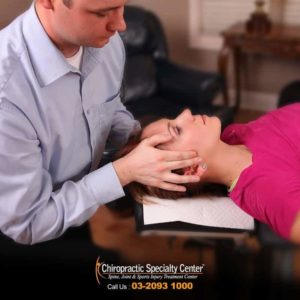
Several factors increase the likelihood of developing jaw pain. Poor posture, stress, and inflammatory conditions can all contribute to TMJ issues. Women between the ages of 18 and 40 are at higher risk for TMJ disorders, and people with neck pain or other cervical spine problems are more likely to report jaw pain as well. Poor posture, particularly forward head posture, can place undue strain on the muscles of the jaw, neck, and shoulders, making it difficult for the jaw to function properly.
Stress plays a significant role in the development of TMD, as it can lead to increased muscle tension in the jaw and neck areas. This tension can cause jaw clenching or teeth grinding, which can aggravate the symptoms of TMD. Other contributing factors include past trauma, such as whiplash or jaw injury, and habits such as chewing gum excessively or biting on hard objects. Additionally, dental issues such as misaligned teeth or an improper bite can place stress on the TMJ, leading to pain and dysfunction.
Because these factors differ from person to person, the evaluation covers both jaw and spinal health. Whether the cause is postural, stress-related, or the result of an injury, identifying it is what determines the care that follows.
Non-Invasive Care for TMJ Disorders
Jaw pain with clicking, tension, or buzzing sounds in the ears is assessed before any care begins, so the source can be identified. The chiropractic techniques used are low-force, and the approach is non-invasive: it is directed at jaw movement and at the neck structures that share load with the joint, without medication, injections, or surgical procedures.
When the disc inside the jaw joint is displaced, sometimes described as a slipped disc of the jaw, care at CSC may combine therapeutic ultrasound, laser, electrotherapy, manual therapy, gentle jaw alignment by a chiropractor, and jaw exercises, chosen after assessment.
Our chiropractic care for TMJ uses gentle adjustments of the jaw and neck, aimed at how the temporomandibular joint moves. The Activator Method, a low-force instrument technique, is often chosen for the jaw because the adjustments are precise and non-invasive, and it is applied to muscle tension and restricted jaw movement.
Our Clinical Approach to Jaw Care
Jaw pain is the primary symptom of TMJ disorders, but it can extend to the ears, neck, and shoulders. Symptoms may include jaw clicking, a sensation of fullness or crackling in the ears, headaches, and tightness in the neck and jaw muscles. These symptoms are reviewed together, since the jaw rarely accounts for all of them on its own.
Non-invasive TMJ treatment at CSC combines physiotherapy, chiropractic methods, and prescribed exercises. The plan is built around jaw function and the postural and muscular factors identified during the examination, and it is reviewed as those findings change.
What We Can Do for a Jaw, and What Belongs With a Dentist
Jaw problems sit across two professions, and being clear about the split saves people time and money.
- Ours: the muscles of chewing, the neck contribution, movement and load management, and the exercise program. Manual trigger point work, jaw mobilization within comfort, postural and neck work.
- A dentist’s: the bite, the teeth, splint therapy, and anything involving decay, infection or dental work. If your jaw problem began after dental treatment or is centered on a tooth, start there.
- A doctor’s: suspected infection, an inflammatory joint condition, and any of the symptoms listed below.
We work alongside a dentist rather than instead of one, and a plan that involves a splint is better made together than in parallel. Our fuller discussion of the guideline evidence sits on the temporomandibular joint dysfunction page.
Two Weeks of Load Reduction, Tried Properly
Before any course of care, it is worth testing whether the jaw simply needs less to do. Give these two weeks in full rather than in part:
- Soft food, cut small. No gum, no ice, no hard crusts, nothing that needs a wide bite.
- Teeth apart, tongue on the palate, whenever you are not eating. Set a reminder; most people clench far more than they realize.
- Support the jaw when you yawn, with a hand under the chin.
- Warn your dentist before a long appointment and ask for breaks.
- Sleep off the affected side, and keep hands and arms away from under the jaw.
Measure your mouth opening between the front teeth with a ruler at the start and twice a week after. Around 40 mm is typical, and whether your number is rising is the signal that matters.
Readers comparing costs can find the chiropractic fees in Kuala Lumpur and the physiotherapy price in Kuala Lumpur on their own pages.
Jaw Symptoms That Need Medical or Dental Review
- A jaw that locks closed and will not open, or locks open and will not close.
- Facial swelling, fever, or pain centered on a tooth.
- Jaw pain brought on by exertion, or with chest discomfort, breathlessness or sweating. Treat that as a cardiac emergency.
- Scalp tenderness with jaw pain on chewing in an older adult, which needs same-day medical review.
- Numbness of the lip or chin, or a bite that has changed suddenly.
Peer-Reviewed Medical References
- Schiffman E, Ohrbach R, Truelove EL, et al. Diagnostic Criteria for Temporomandibular Disorders (DC/TMD) for clinical and research applications. J Oral Facial Pain Headache. 2014;28(1):6-27.
- Manfredini D, Guarda-Nardini L, Winocur E, Piccotti F, Ahlberg J, Lobbezoo F. Research diagnostic criteria for temporomandibular disorders: a systematic review of axis I epidemiologic findings. Oral Surg Oral Med Oral Pathol Oral Radiol Endod. 2011;112(4):453-462.
- Greene CS, Laskin DM. Temporomandibular disorders: moving from a dentally based to a medically based model. J Dent Res. 2000;79(10):1736-1739.
- Al-Moraissi EA, Conti PCR, Alyahya A, Alkebsi K, Elsharkawy A, Christidis N. The hierarchy of different treatments for myogenous temporomandibular disorders: a systematic review and network meta-analysis of randomized clinical trials. Oral Maxillofac Surg. 2022;26(4):519-533.
- Okeson JP. Management of Temporomandibular Disorders and Occlusion. 7th ed. St. Louis: Mosby/Elsevier; 2013.
- Busse JW, Casassus R, Carrasco-Labra A, et al. Management of chronic pain associated with temporomandibular disorders: a clinical practice guideline. BMJ. 2023;383:e076227.
These references describe temporomandibular disorders (TMD) and their assessment and conservative management in general. None of them evaluates a care program at Chiropractic Specialty Center. Every reference above can be checked by its DOI or its publisher record.
The Author of TMJ Treatment: Non-Invasive Jaw Care in Malaysia
TMJ Treatment: Non-Invasive Jaw Care in Malaysia was reviewed by Yama Zafer, D.C., who has worked in chiropractic and physiotherapy since 1996 and is a graduate of Cleveland University - Kansas City.
Last Updated: TMJ Treatment in Malaysia: How Options Are Decided
TMJ Treatment in Malaysia: How Options Are Decided was last reviewed and updated on September 25, 2026.