Sciatica Pain Treatment For Lasting Relief From Painful Sciatic Nerve
Sciatica pain and a painful sciatic nerve are leading causes of disability and lost productivity. To recover from sciatica pain or painful sciatic nerve pains, you need an accurate diagnosis that identifies all causative factors, including muscular, ligamentous, spinal joints, and spinal disc-related disorders that compress and impinge irritate the sciatic nerve.
Chiropractic Specialty Center® (CSC) has successfully treated thousands of sciatica pain patients through advanced evidence-based methods and breakthrough sciatica-specific therapy devices and methodologies. Sciatica treatment you get from us relieves pressure on the sciatic nerve, allowing it to recover and heal without injections or spine surgery.
Eliminate sciatic pain through integrative sciatica treatment in Kuala Lumpur from CSC's winning team of chiropractors and physiotherapists today.
CSC offers personalized sciatica chiropractic treatments combined with clinical physiotherapy for sciatic nerve pain. Get treated by Malaysia's trusted and award-winning chiropractors and physiotherapists today; contact one of our centers to learn more about our sciatica treatment program.
What Is Sciatica?
Sciatica describes pain that runs from the buttocks to the hip, thigh, or leg. Often, sciatica involves one side, but in some, it can lead to sciatic nerve pain down both legs. Also, in some, sciatica pain can alternate between the legs.
What Is The Most Common Cause Of Sciatica Pain Or An Aching Sciatic Nerve?
Over 95% of sciatic pain patients have underlying spinal disc issues. Bulging and herniated spinal discs at L4-L5 and L5-S1 are the top leading causes of sciatic nerve pain. Sciatica, sciatica pain, or an irritated sciatic nerve are serious health issues. In the old days, most believed piriformis muscle spasms were the leading cause of sciatica. However, since the advent of MRI (\Magnetic Resonance Imaging) and clinical trials, researchers are now sure the main culprit is a slipped disc. A slipped disc or slip-disc is a general term given to various forms of spinal disc issues, including:
- Bulging disc
- Protruded disc
- Proposed disc
- Ruptured or herniated disc
- Extruded disc
- Fragmented disc
What makes sciatica pain challenging is its affinity to present with multiple co-condition. The most common co-conditions present in sciatica pain patients include degenerative changes in the spine, piriformis syndrome (piriformis muscle spasms), and hamstring muscle spasms. Get in touch with us today and learn more about sciatica pain & painful sciatic nerve causes and treatment options that give you lasting relief from aches and pains.
Get the best treatment for sciatica pain and painful sciatic nerve at A Chiropractic Specialty Center® near you today; contact us today!
Deadlifts load the spine in compression, and the spine tolerates compression well while it stays close to a neutral position. The research on lifting posture is less absolute than gym lore suggests. A rounded back is not automatically an injury and a straight one is not automatic protection.
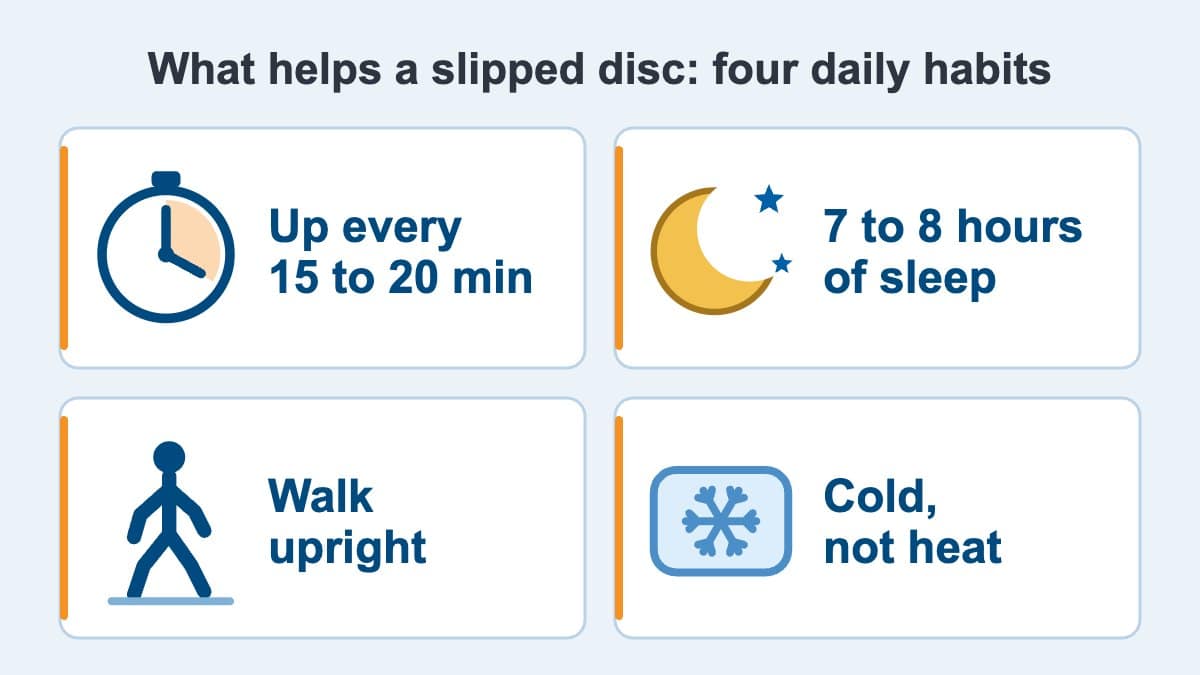
What helps a slipped disc is mostly ordinary: finding the position that reduces the leg or arm symptoms and using it often, walking within what the back tolerates, and changing position before the back demands it, through the 22 hours a day spent away from any treatment.
Chiropractic care for neck and back pain works on how the spinal segments share load through a day. When one segment loses movement, the segments next to it take more, and the ache usually appears in the compensating area rather than the restricted one. That is the reason the painful spot and the source are frequently in different places.
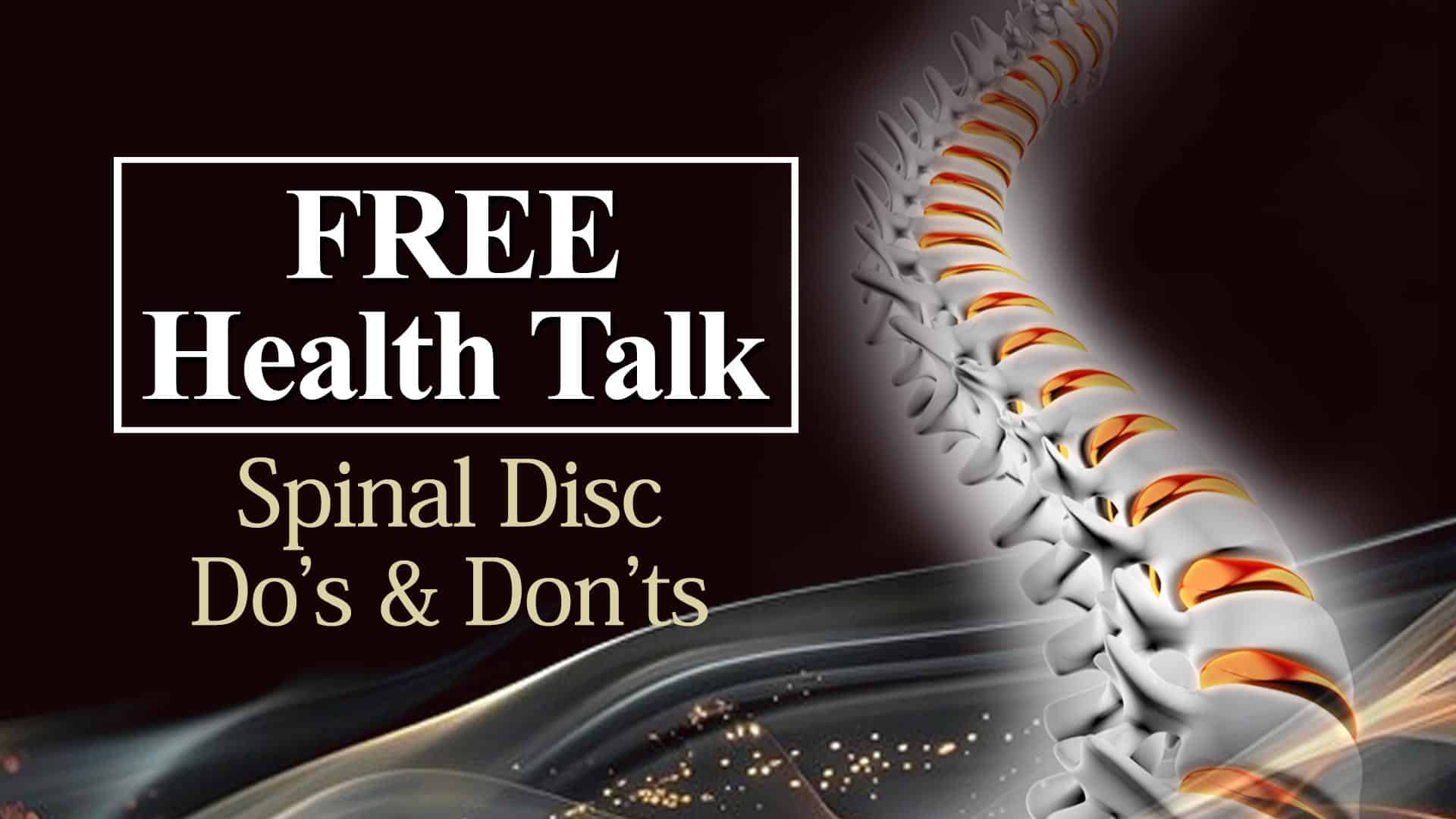
The spinal disc health talk is a public education session about how spinal discs handle load, why disc changes may produce neck, back or leg symptoms, and why an MRI finding does not always explain how a person feels. It covers terms such as disc bulge, protrusion, herniation and sciatica without turning an educational event into a diagnosis.
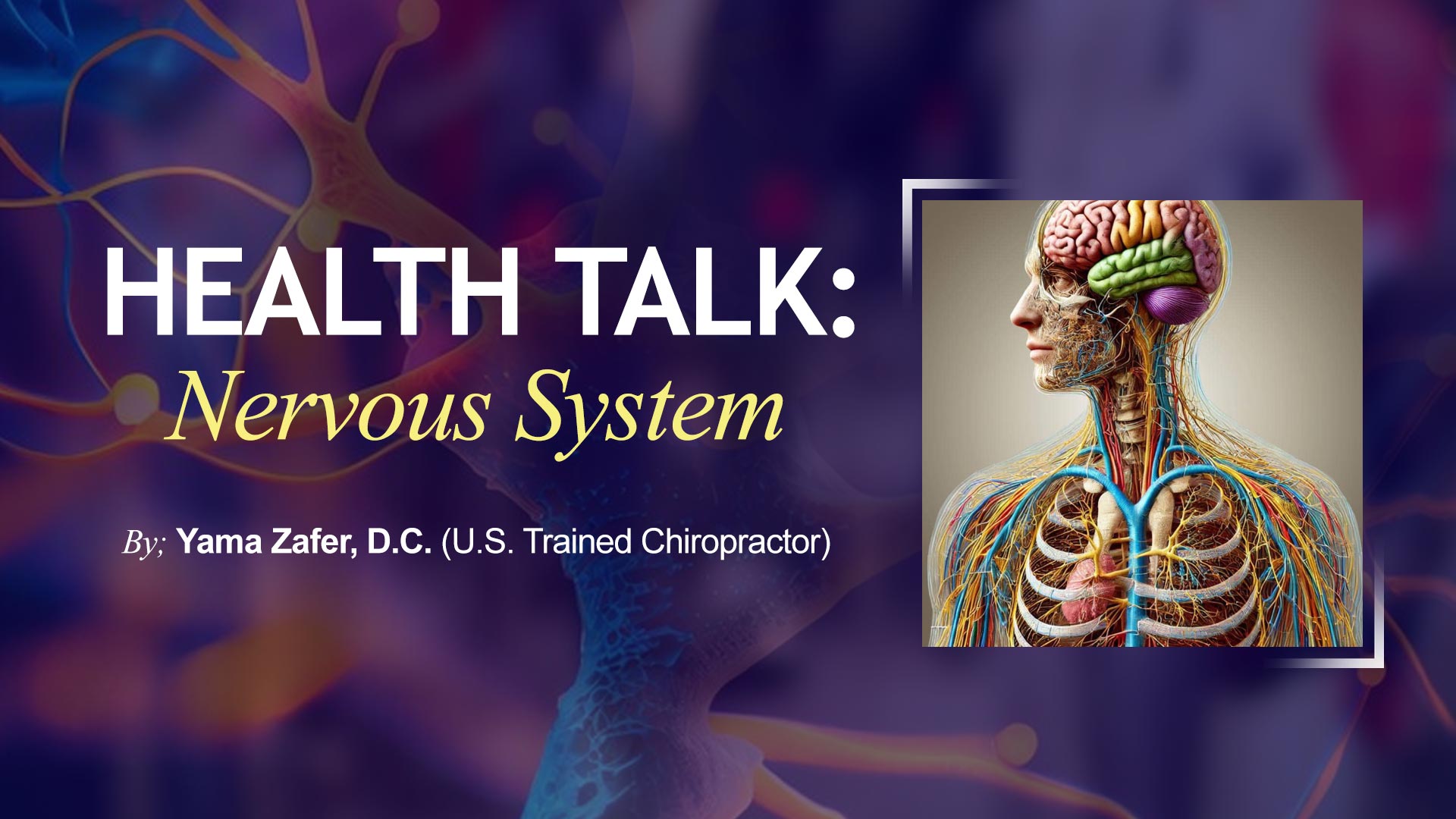
This nervous system health talk explains what the nervous system does and where the spine fits into it. The aim is to separate what is well established from what is routinely overstated, because this is a subject on which claims are made freely and the accurate version is more useful than the dramatic one.
This posture health talk is built around a finding that surprises most audiences: how often position is changed matters more than which chair is used. A well-designed chair occupied for three uninterrupted hours still loads the spine steadily, while an ordinary chair with a break every half hour does not.
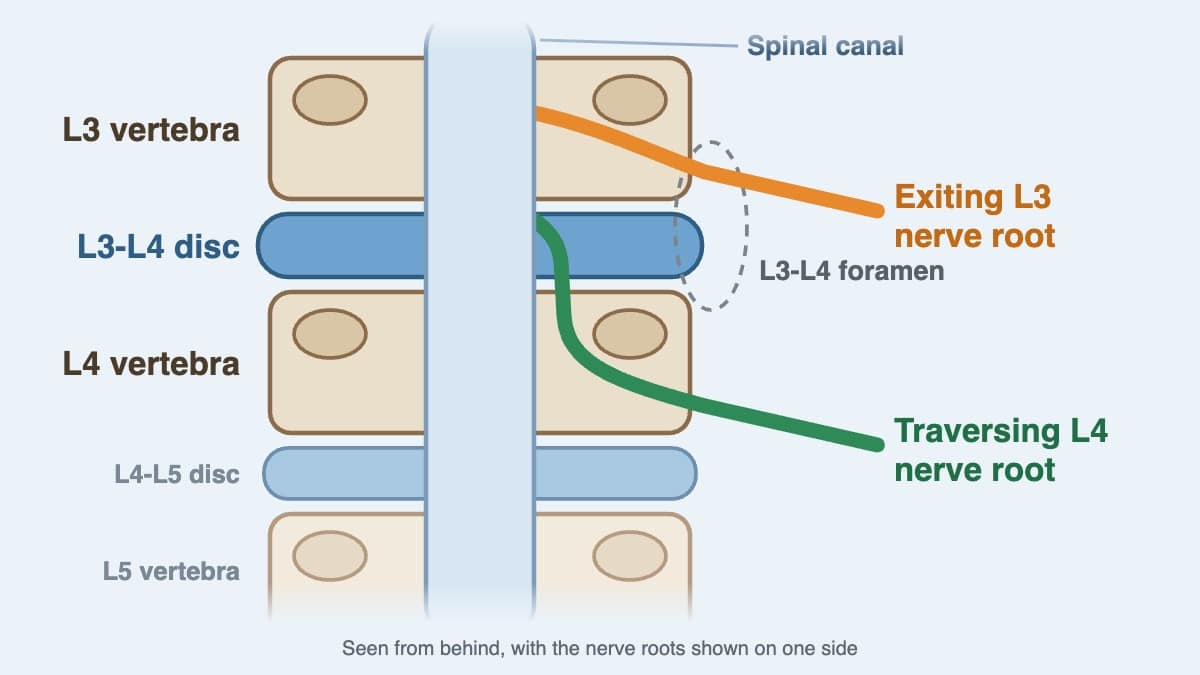
L3-L4 is the spine level in the middle of the lower back, where the third and fourth lumbar vertebrae meet over one disc. Scan reports may write it as L3/4 or L3-4.