

Shoulder Impingement Chiropractic & Laser Care
Shoulder impingement describes compression of the rotator cuff tendons and the bursa in the narrow space beneath the bony roof of the shoulder. Its signature is a painful arc: comfortable at the start of raising the arm, sore through the middle range, then easier again near the top, which reflects the tendon passing under that roof.
The space is not fixed. How the shoulder blade rotates on the ribcage alters it substantially, which is why much of the rehabilitation happens there rather than at the painful point itself. Repeatedly pushing through the painful arc while an area is irritable tends to prolong it. An arm that cannot be lifted at all after an injury is a different problem.
A Shoulder impingement occurs when tendons in your shoulder become pinched or irritated, leading to aching, restricted movement, and pain, especially when lifting your arm.
This article explores non-invasive care options for shoulder impingement syndrome at Chiropractic Specialty Center (CSC) in Malaysia. Shoulder impingement occurs when tendons or ligaments in the shoulder joint are compressed, causing irritation and limiting movement. The article discusses how this condition commonly affects the rotator cuff tendons and the bursa, which can lead to inflammation and pain during arm movements, particularly overhead activities.
The article emphasizes the importance of early intervention and non-surgical therapies such as high-intensity laser therapy, shockwave therapy, ultrasound, and targeted rehabilitation exercises. These methods, combined with specialized physiotherapy and shoulder-specific chiropractic adjustments, offer effective solutions for relieving pain and improving shoulder mobility. The approach is presented as a superior alternative to injections and surgery, because a conservative program works on the load and movement around the shoulder rather than on the symptom alone.
The article further highlights that shoulder impingement can result in significant limitations in daily activities, from lifting objects to simple motions like dressing, and stresses that neglecting the condition can result in permanent damage such as rotator cuff tears. By combining clinical technology and evidence-based care, CSC provides comprehensive, non-surgical care plans tailored to individual needs, ultimately aiming to restore shoulder function and enhance mobility without resorting to invasive procedures.
At Chiropractic Specialty Center, we focus on gentle, non-invasive chiropractic, physiotherapy, and rehabilitation to help reduce this irritation quickly using targeted laser and hands-on care to improve movement, ease pain, and support healing without injections or surgery. Our integrative approach is guided by evidence-based methods and decades of hands-on clinical experience, so you can return to your daily activities with better shoulder mobility as soon as possible.
Key Takeaways
Here are the most important things you need to know right away:
- Your shoulder pain can improve with non-invasive chiropractic, physiotherapy, and laser care.
- Early, hands-on intervention can prevent further irritation and restore movement faster.
- Our experienced team provides focused care so you can regain mobility and return to your daily routine safely.
This guide to shoulder impingement, its symptoms, causes and care options, is published by Chiropractic Specialty Center, Bukit Damansara (KL) main center: WhatsApp+60 17 269 1873 Call+603 2093 1000
Contact Us to Begin Your Care Journey
If you’re experiencing signs of shoulder impingement, contact us today to explore our non-invasive laser-enhanced chiropractic, physiotherapy, and rehabilitation options.
Discover How Posture Affects Shoulder Movement
Shoulder impingement often develops from repetitive motion and posture imbalance. CSC also holds shoulder health talks in Kuala Lumpur from time to time; they are paused at the moment, so for the next date, send a WhatsApp message to the Bukit Damansara main center at +60 17 269 1873.
Shoulder Impingement Care in Malaysia
At CSC, shoulder impingement care is given without surgery or injections. Let our clinical team work with you on restoring your shoulder movement. Contact us today.
Shoulder Impingement, Symptoms, Causes & Care Options
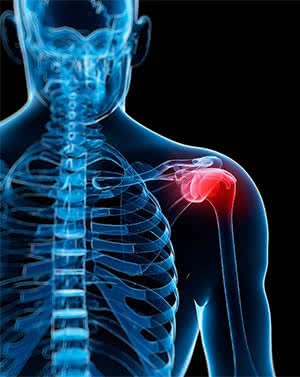
Shoulder impingement syndrome occurs when tendons or ligaments are compressed, irritated, or pinched between the bones of the shoulder joint.
The most commonly affected structures in shoulder compression or impingement are the tendons of the rotator cuff muscles. Tendons are cords or bands of connective tissues that attach muscles to bones. The rotator cuff consists of four muscles that stabilize and move the shoulders.
Shoulder impingement is often described as pain in the shoulder when lifting the arm. Compression of the soft tissues (mostly tendons) can lead to persistent irritation, limited movement, and loss of stability in the affected shoulder joint.
With prolonged compression, pain occurs when the rotator cuff tendons or a bursa rub against the acromion process during arm movement. Ongoing irritation may lead to inflammation. Over time, affected tendons can develop rotator cuff tendinopathy, while an inflamed bursa can result in shoulder bursitis.
Neglecting rotator cuff issues can lead to degenerative changes or even tears. Therefore, timely assessments and targeted methods of care are essential to avoid prolonged pain or the need for invasive procedures.
What Form of Shoulder Therapy Works Better?
Care for shoulder impingement through high-intensity laser therapy, shockwave therapy, ultrasound therapy, targeted shoulder exercises, electrotherapy, specialized physiotherapy methods, and shoulder-specific chiropractic adjustments is more beneficial than injections or surgical interventions.
Symptoms of an Impingement Syndrome
The symptoms of shoulder compression or impingement vary among individuals. Pain can occur at the front, top, or back of the shoulder joint. The location and severity depend on the nature of compression and the exact site of irritation.
In some cases, the pain may radiate to the arm or elbow. Some individuals may find it difficult to perform daily tasks such as removing their shirts or lifting their arms. Severe cases may even disrupt sleep, especially when lying on the affected shoulder. Whereas some individuals only experience pain when lifting heavy objects.
Effective Non-Surgical Clinical Care for Shoulder Issues & Impingements
Shoulder impingement or compression can occur at any age. However, it is more common among individuals who perform repetitive overhead activities such as swimming, weightlifting, or badminton. Occupations that require frequent overhead lifting also present a higher risk for developing rotator cuff compression.
The rotator cuff tendons naturally change with age, becoming less flexible and elastic. Prolonged rubbing against these tendons can lead to tears, making simple daily activities challenging.
If left unaddressed, shoulder impingement can become a persistent issue. As mentioned, severe cases may make even the simplest tasks difficult, impacting daily life. Our centers provide effective non-invasive therapeutic methods for addressing shoulder disorders, including impingement syndromes.
Comprehensive Shoulder Care at Chiropractic Specialty Center
The care provided at Chiropractic Specialty Center is administered by experienced chiropractors and physiotherapists in Malaysia. Our expert team specializes in the management of shoulder conditions, including impingements, through targeted rehabilitative programs.
Let our spine and joint specialists support your recovery from shoulder pain or injuries, as neglect can lead to further complications. Contact us today to book an appointment with Malaysia’s leading corrective chiropractor and find out what a conservative shoulder program would involve in your case.
Our shoulder impingement care is designed to be targeted, precise, and holistic, incorporating chiropractic, physiotherapy, rehabilitation, and modern shoulder-specific technology. Contact us now to schedule an assessment for your shoulder.
The Word Impingement Is on Its Way Out, and That Matters
For decades shoulder pain under the acromion was explained as a bone pinching a tendon, and the logical treatment was to shave the bone. That model has not held up, and much of the field now prefers the plainer label subacromial pain syndrome, because it describes what the person has without asserting a mechanism that may not be the cause.
The trial that changed most minds is CSAW, a multicentre randomised surgical trial run across 32 UK hospitals. It randomised 313 people into three groups: decompression surgery, an investigational arthroscopy that served as a placebo operation, and monitoring with no treatment. All three groups improved somewhat, the two surgical groups looked much the same as each other, and no option proved more effective than the others (Beard DJ, Rees JL, Cook JA, et al. Arthroscopic subacromial decompression for subacromial shoulder pain (CSAW): a multicentre, pragmatic, parallel group, placebo-controlled, three-group, randomised surgical trial. Lancet. 2018).
Read alongside the Cochrane review, where manual therapy and exercise produced outcomes similar to decompression surgery (Page MJ, Green S, McBain B, et al. Cochrane Database Syst Rev. 2016;(6):CD012224), the practical conclusion is not that shoulders cannot be helped. It is that what helps them is loading, time and changing what provokes them, rather than removing bone.
What Provokes a Subacromial Shoulder, and What to Change
- Repeated reaching above shoulder height, particularly with a load in the hand or at the end of a long day.
- Sleeping on that shoulder, which compresses the area for hours. A pillow hugged in front changes the position enough to matter.
- Carrying on that side. Bags, laptop cases and children all load the same structures.
- A sudden jump in volume. A new gym program, a painting job, a weekend of racket sport. Tendons object to change more than to work.
- Doing nothing at all. A shoulder rested completely for weeks loses the capacity that would have let it cope.
When a Shoulder Needs an Orthopedic Opinion
- A sudden loss of power after an injury, particularly an inability to lift the arm at all.
- Obvious deformity, or a shoulder that keeps dislocating.
- Night pain that is severe and unrelenting rather than position related.
- No measurable change after a properly delivered three-month loading program.
- A hot, swollen shoulder with fever, which needs same-day medical assessment.
Every fee, from the first examination to package options, is listed on the chiropractic fees in Kuala Lumpur and physiotherapy price in Kuala Lumpur pages.
If you would like to keep reading, shoulder pain, rotator cuff injuries, frozen shoulder, thoracic outlet syndrome, and the rotator cuff are closely related topics. Also, our neck pain guide brings our neck, upper back and arm topics together in one place.
Peer-Reviewed Medical References:
Neer CS 2nd. Anterior acromioplasty for the chronic impingement syndrome in the shoulder: a preliminary report. J Bone Joint Surg Am. 1972;54(1):41-50.
Ellenbecker TS, et al. Rehabilitation of the overhead athlete’s shoulder. Sports Health. 2011;3(6):536-540.
Cagnie B, et al. Efficacy of low-level laser therapy in shoulder impingement syndrome: a double-blind randomized clinical trial. Phys Ther. 2015;95(5):645-655.
Speed C. A systematic review of shockwave therapies in soft tissue conditions: focusing on shoulder impingement. Lasers Med Sci. 2003;19(4):214-228.
Hayes K, et al. Clinical guidelines for shoulder impingement: physiotherapy vs surgery. Br J Sports Med. 2008;42(2):116-123.
Kuhn JE. Exercise in the treatment of rotator cuff impingement: a systematic review. J Shoulder Elbow Surg. 2009;18(1):138-146.
Hsu YH, et al. Ultrasound therapy for shoulder impingement syndrome: a randomized controlled trial. Phys Med Rehabil. 2012;21(11):897-903.
The Author of Shoulder Impingement Chiropractic & Laser Care
Shoulder Impingement Chiropractic & Laser Care was written by Yama Zafer, D.C., who has 30+ years in chiropractic and physiotherapy and founded Chiropractic Specialty Center in Kuala Lumpur in 2006.
Last Updated: Shoulder Impingement Chiropractic & Laser Care
Shoulder Impingement Chiropractic & Laser Care was last reviewed and updated on September 20, 2026.
Share with others: