

Neck exercises are a central part of regaining strength and control when pain makes simple movements difficult. At Chiropractic Specialty Center, they are combined with chiropractic care, physiotherapy and focused rehabilitation, and each routine is matched to what is behind the neck pain, whether poor posture, muscle imbalance or a spinal disc problem.
Each movement is chosen to protect the spine while gradually strengthening the deep stabilizing muscles and improving joint motion. The aim is to ease the load on the neck's joints and discs while building the strength to sit, turn and move with less strain.
Care at CSC is directed at what is loading the neck rather than at the sore area alone, so the exercise plan follows what the examination actually found.
Neck pain can come from muscle strain, ligament weakness or a spinal disc problem. Whatever the cause, recovery depends on increasing what helps the neck, such as movement, strength and better posture, while decreasing what keeps straining it, such as long hours with the head bent forward.
Key Takeaways You Can Use Right Now
Start with Controlled Movements
Begin with simple, non-rotational neck movements that are slow and controlled. Avoid fast or twisting motions, especially if you feel tightness, pain, or locking.Focus on Posture Every Day
Poor posture is one of the leading contributors to recurring neck problems. Keep your ears aligned with your shoulders and avoid looking down at phones or screens for long periods.Use an Ice Pack After Exercise (If Needed)
If you experience stiffness after performing your exercises, applying ice to the neck for 10-15 minutes can help calm irritated muscles or tissues.
For more information about neck exercises, contact the Bukit Damansara (KL) main center: WhatsApp+60 17 269 1873 Call+603 2093 1000
The Role of Neck Exercises in Recovery

Neck pain often comes from slipped discs, muscle imbalances or stiff joints. In these cases, targeted neck exercises are a central part of care, used to improve mobility and strength. A thorough evaluation before starting an exercise program shows whether the exercises suit the condition.
At CSC, rehabilitation plans are built around what the examination identifies as driving the neck symptoms, whether that is muscle strain, a stiff joint or a slipped disc, and the exercises change as the findings change.
The Prevalence of Neck Pain
Neck pain is common. Among working adults, a review by an international task force found that between about one in four and one in two had neck pain in a given year, with the figure varying by country (Côté P, et al. Spine. 2008;33(4 Suppl):S60-S74). Neck pain that keeps returning is worth having assessed, so the exercises can be matched to what is actually loading the neck.
At CSC, our team of chiropractors and physiotherapists works together to provide targeted care for neck conditions. We offer a combination of manual techniques, exercise rehabilitation and modern therapies, chosen from the examination findings.
In the Neck Trigger Points and Exercises video, Yama Zafer, D.C., shows the W-T-L shoulder positions and isometric neck holds, and explains that numbness or tingling during an exercise means it is not suitable yet.
Personalized Neck Pain Care at CSC
The care for neck pain depends on the cause and severity of the condition. Our clinical team will assess your condition and develop a customized care plan that includes exercise and spinal rehabilitation. As you progress, the difficulty of exercises will increase to support recovery.
Neck pain can stem from a variety of conditions, including slipped discs, muscle imbalances and ligament injuries. At CSC, targeted, non-invasive care comes first for these problems, together with changes to posture and daily habits, and it continues for as long as it keeps producing results.
Costs are explained before any care begins, and the current chiropractic prices and physiotherapy prices are published on our website.
Sample Exercises for Neck Stiffness & Pain
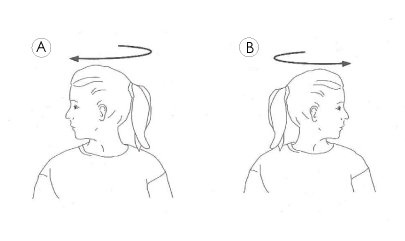
Neck Exercise 1: Gentle Rotation
Starting Position: Sit or stand with good posture.
Exercise: Slowly turn your head to the right, attempting to look over your right shoulder. Then, slowly turn your head to the left, trying to look over your left shoulder. Return to the starting position.
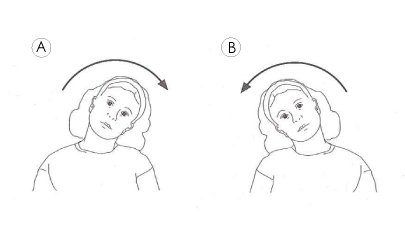
Neck Exercise 2: Side Bending
Starting Position: Sit or stand with good posture.
Exercise: Slowly tilt your head to the right, bringing your right ear toward your right shoulder. Return to the starting position and repeat on the left side.
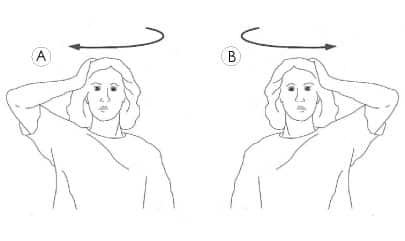
Neck Exercise 3: Isometric Rotation
Starting Position: Place your right palm on your right temple.
Exercise: Gently turn your head to the right into your right hand. Your hand should resist the movement of your head. Start with light pressure, gradually build to maximum force, then return to light pressure.
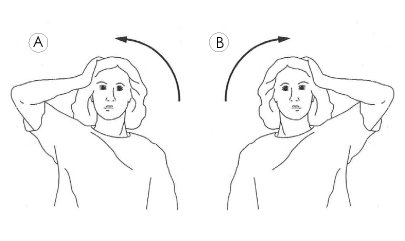
Neck Exercise 4: Isometric Side Bending
Starting Position: Place your right palm over your right ear.
Exercise: Gently tilt your head to the right into your right hand. Your hand should resist the movement of your head. Start with light pressure, gradually build to maximum force, then return to light pressure.
These four exercises are a starting point, and the starting level and progression are best checked at a visit.
Which Neck Exercises the Evidence Actually Supports
Neck exercise is not one thing, and the research is unusually clear about which kind carries the weight. Knowing the difference saves you months of doing the wrong one diligently.
A Cochrane review of exercises for mechanical neck disorders found that for chronic neck pain, cervico-scapulothoracic and upper extremity strength training produced moderate to large improvements in pain, and that combined cervical, shoulder and scapulothoracic strengthening with stretching showed beneficial effects on pain and function. For cervicogenic headache, moderate-quality evidence supported static-dynamic cervico-scapulothoracic strengthening and endurance work. Notably, stretching alone showed no beneficial effect. The reviewers also state plainly that no high-quality evidence was found, so none of this is settled (Gross A, et al. Cochrane Database of Systematic Reviews. 2015;(1):CD004250).
The practical translation: stretching a stiff neck feels good and, on its own, changes little. What shifts chronic neck pain is strengthening the neck, the shoulder blade and the upper limb together, because the neck does not work in isolation from the shoulder girdle that hangs off it.
How Much, and For How Long
Strengthening needs weeks, not days. Expect to work at it for eight to twelve weeks before judging whether it is helping, several sessions a week, at a load that is genuinely challenging by the last repetitions. The most common reason a neck program fails is that it was done gently, occasionally, and abandoned at the three-week mark. The review itself flags that the optimal dose is still an open research question, so a program should be adjusted by how you respond rather than run to a fixed recipe.
When Neck Pain Needs Assessment Before Exercise
Some neck symptoms should not be met with a home program. Pain following a significant accident, progressive weakness or numbness in an arm or hand, clumsiness in the hands, unsteadiness when walking, unexplained weight loss, fever, or severe headache of sudden onset all need medical assessment first. So does neck pain accompanied by dizziness, visual disturbance or slurred speech.
The point of an examination before exercise is not caution for its own sake. It is to find the small number of necks where loading is the wrong answer.