

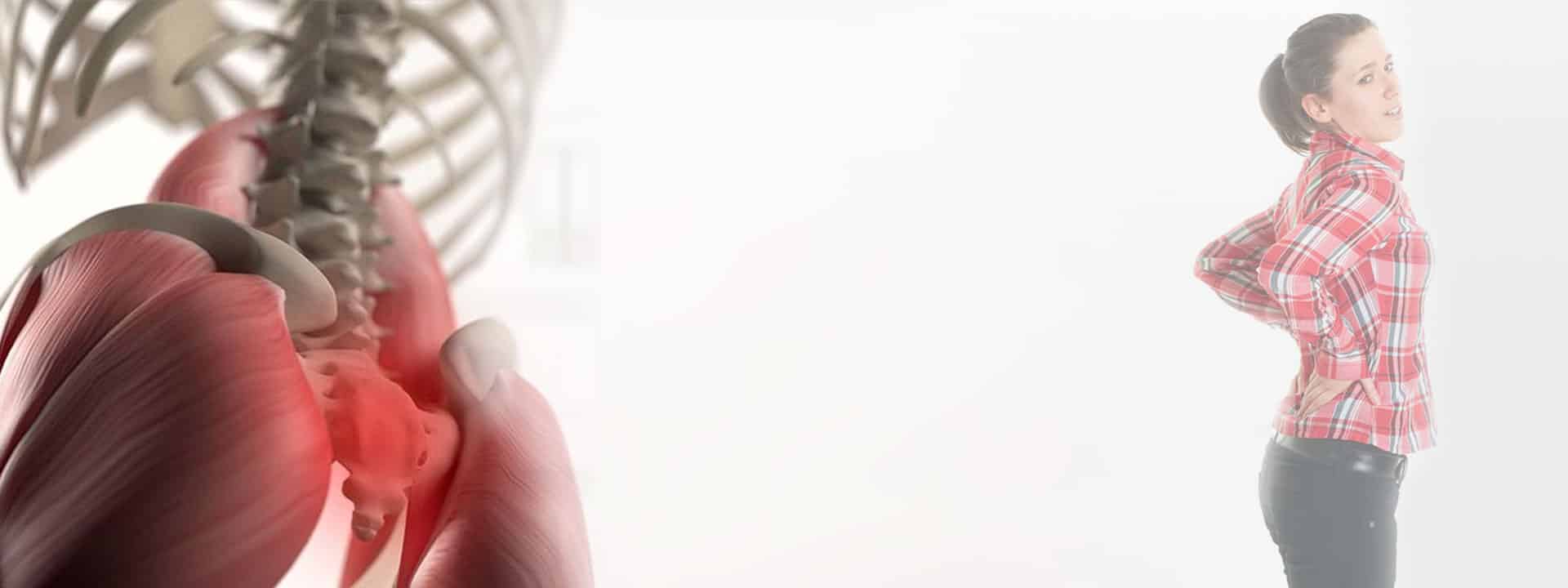
Tarlov Cyst Overview: Causes and Care Options
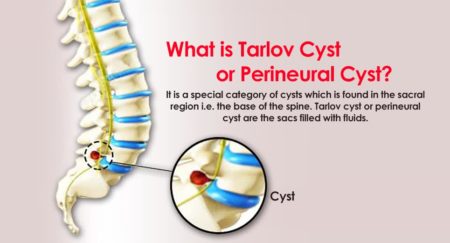
The Tarlov cysts, also known as perineural cysts, are cerebrospinal fluid-filled sacs that form around the nerve roots, commonly in the sacral area of the spine. These cysts may remain unnoticed for years but can cause symptoms when they expand and press on surrounding nerves. Understanding the nature of Tarlov cysts is vital to making informed decisions about care.
Chiropractic Specialty Center® offers integrative non-invasive care for individuals experiencing spinal discomfort or diagnosed with cystic conditions of the spine. Our approach combines chiropractic, physiotherapy, and spinal rehabilitation using gentle, non-rotatory techniques that prioritize safety and function.
In addition to Tarlov cysts, this article also explains other spinal cysts such as synovial cysts and meningeal cysts. By learning about these differences, readers can better understand their spinal condition and consider appropriate non-invasive options that align with clinical guidance.
Synovial cysts, on the other hand, are more likely to influence spinal health by affecting joint function and nerve pathways. Understanding the differences between these cysts and their impact on spinal movement and stability is essential for individuals experiencing neck discomfort, upper back discomfort, lower back, upper extremity, lower extremity, or pelvic symptoms.Key Takeaways on Tarlov Cyst Care
Top 3 Points Readers Should Know
- Tarlov cysts often cause no symptoms but may lead to nerve-related problems if they enlarge.
- Differentiating Tarlov, synovial, and meningeal cysts is essential for proper evaluation.
- Chiropractic, physiotherapy, and rehabilitation offer safe non-invasive options to manage spine-related concerns.
Understanding spinal cysts is essential when considering non-invasive care. Tarlov cysts, while commonly asymptomatic, may require evaluation if neurological signs emerge. This article emphasizes how Chiropractic Specialty Center® addresses such spinal conditions using safe, integrative methods. We explain the differences between Tarlov, synovial, and meningeal cysts and why these distinctions matter. By exploring care that includes chiropractic adjustments, clinical physiotherapy, and targeted rehabilitation, readers are guided toward informed care decisions. These approaches are aligned with KKM-compliant standards and do not involve invasive procedures or surgery.
Contact Our Spine Care Team Today
If you are seeking non-invasive care for a spinal cyst or related issue, reach out to us at Chiropractic Specialty Center®. Our multidisciplinary approach ensures that your spinal health is managed safely and effectively. To speak with a team member or schedule a consultation, contact us today.We understand that spinal conditions can be concerning, especially when unfamiliar terms like Tarlov cysts are involved. Our team is ready to guide you through every step, offering a personalized and integrative care approach. With chiropractic, physiotherapy, and spinal rehabilitation services under one roof, you receive comprehensive care that focuses on long-term spinal health. Use the link above to get in touch with us and start your care journey.
Recognizing Common Spinal and Neural Cysts
- Numbness or tingling in the lower body
- Discomfort that worsens with prolonged sitting or standing
- Weakness in the legs or pelvic region
- Lower back stiffness
- Changes in posture and weight distribution
- Limited spinal mobility
Characteristics of Tarlov Cysts
Tarlov cysts are distinct in their formation and structure:- They typically do not communicate freely with the spinal subarachnoid space.
- They are commonly positioned near the dorsal root ganglion, particularly in the sacral region.
- In cases where one cyst is present, multiple cysts are often detected upon further examination.
Recognizing the Differences Between Spinal Cysts
Meningeal cysts, meningeal diverticula, and arachnoid diverticula are similar in nature to Tarlov cysts but have distinguishing features:- Meningeal cysts are typically positioned closer to the spinal cord and may communicate with the cerebrospinal fluid (CSF).
- Unlike Tarlov cysts, meningeal cysts do not contain nerve fibers and are often lined by the arachnoid membrane.
- Tarlov cysts can form multiple sacs around a nerve root, while meningeal cysts are usually isolated.
Considerations for Non-Surgical Approach
For individuals experiencing spinal movement challenges, a structured approach to spinal alignment and mobility may help maintain long-term function. Non-invasive management strategies may include:- Postural Awareness: Ensuring proper spinal alignment during daily activities.
- Chiropractic and Physiotherapy-Based Care: Targeted methods to maintain joint mobility and movement efficiency.
- Ergonomic Adjustments: Modifications to posture and movement patterns to enhance spinal stability.
Understanding Tarlov Cysts, Perineural Cysts & Synovial Cysts
Tarlov cysts, also known as perineural cysts, are fluid-filled sacs that develop along nerve root sheaths in the spinal column. While these cysts are often asymptomatic, they can sometimes contribute to neurological symptoms if they expand significantly. Synovial cysts, which arise from spinal joints, are more commonly associated with movement-related concerns and nerve involvement. Understanding the differences between these cysts is important when evaluating their impact on spinal mobility and function.Identifying Key Characteristics of Tarlov Cysts
Tarlov cysts have distinct features that differentiate them from other spinal cysts:- Communication with the Subarachnoid Space: These cysts may interact with cerebrospinal fluid flow.
- Location: Tarlov cysts are typically positioned beyond the posterior nerve root and dorsal root ganglion, most often in the sacral region.
- Neural Components: Unlike other spinal cysts, Tarlov cysts contain nerve fibers within their walls.
- Multiple Occurrences: When one cyst is present, additional cysts may often be found nearby.
Differentiating Tarlov Cysts from Other Spinal Cysts
Several types of cysts can form along the spinal column, each with unique characteristics: Meningeal Cysts- Meningeal cysts are communicating cysts, meaning they directly interact with cerebrospinal fluid.
- These cysts are typically located near the dorsal root ganglion, whereas Tarlov cysts develop beyond this area.
- Unlike Tarlov cysts, meningeal cysts do not contain neural components within their walls.
- Originate from Spinal Joints: Synovial cysts form within the facet joints and contain synovial fluid, which helps lubricate spinal movements.
- More Likely to Cause Symptoms: While Tarlov cysts are often asymptomatic, synovial cysts can directly contribute to movement restrictions or nerve compression.
- Common in Degenerative Changes: These cysts are associated with spinal joint adaptations, posture variations, and changes in spinal mobility.
Recognizing the Role of Synovial Cysts in Spinal Mobility
Synovial cysts are often associated with:- Postural Adjustments: Variations in movement mechanics can influence joint function.
- Repetitive Stress on Spinal Joints: Increased demand on weight-bearing structures may contribute to cyst formation.
- Changes in Spinal Alignment: Structural variations may develop in response to mobility adaptations.
Diagnostic Considerations for Spinal Cysts
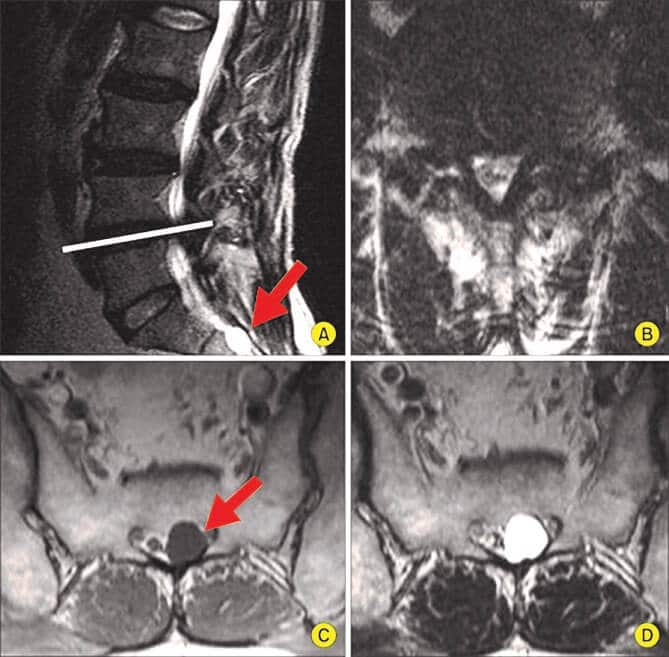 MRI (Magnetic Resonance Imaging) is the preferred method for evaluating spinal cysts, including:
- Tarlov Cysts: These appear as fluid-filled structures along the nerve root sheaths, often best visualized on T2-weighted MRI scans.
- Synovial Cysts: MRI can detect cyst size, positioning, and potential effects on nearby nerves or spinal mobility.
Non-Surgical Approaches to Spinal Cyst Considerations
At Chiropractic Specialty Center® (CSC), we provide structured, non-surgical care programs designed to maintain spinal function and movement balance. Our approach integrates:- Chiropractic Techniques: Targeted methods designed to maintain joint mobility and movement efficiency.
- Physiotherapy-Based Interventions: Focused strategies that promote postural balance and flexibility.
- Postural Awareness Recommendations: Movement strategies that enhance spinal positioning.
Understanding Tarlov Cysts, Perineural Cysts & Synovial Cysts
Tarlov cysts, also known as perineural cysts, are fluid-filled sacs that develop along nerve root sheaths in the spinal column. While these cysts are often asymptomatic, they can sometimes contribute to neurological symptoms if they expand significantly. Synovial cysts, which arise from spinal joints, are more commonly associated with movement-related concerns and nerve involvement. Understanding the differences between these cysts is important when evaluating their impact on spinal mobility and function.Recognizing Signs & Structural Considerations of Tarlov Cysts
Tarlov cysts may remain asymptomatic for extended periods; however, structural influences may contribute to movement-related concerns over time. Changes in cerebrospinal fluid pressure, spinal alignment, or movement mechanics may influence the cyst’s impact on spinal function. Structural Influences of Tarlov Cysts:- Cerebrospinal Fluid Pressure Changes: Increased spinal fluid flow may contribute to cyst variations.
- Postural Influences: Variations in movement patterns may affect the surrounding structures.
- Neural Considerations: Larger cysts may contribute to nerve-related influences on spinal function.
- Movement Adjustments: Spinal positioning or movement variations may influence symptoms.
Recognizing Structural Factors Influencing Tarlov Cyst Variations
Tarlov cysts may develop due to postural adaptations, structural influences, or movement-based adjustments. Some of the most common contributing factors include:- Spinal Movement Adjustments: Changes in spinal positioning may influence nerve root structures.
- Repetitive Stress on the Spine: Variations in spinal loading may affect cyst size.
- Weight Distribution Adjustments: Structural influences may contribute to postural balance concerns.
- Trauma or Injury Considerations: Spinal movement variations following physical stress may influence cyst development.
Evaluating the Relationship Between Epidural Injections & Tarlov Cysts
Epidural injections are known to alter cerebrospinal fluid pressure, which may influence cyst variations. Changes in fluid dynamics, spinal alignment, or nerve root involvement may contribute to movement-based adaptations following an injection. Structural Influences of Epidural Injections on Spinal Function:- Postural Adjustments: Variations in spinal positioning may impact cyst-related movement mechanics.
- Spinal Fluid Flow Considerations: Cerebrospinal fluid pressure changes may influence cyst structure.
- Movement Variations: Altered movement mechanics following an injection may affect spinal balance.
Non-Invasive Approaches to Spinal Cyst Considerations
At Chiropractic Specialty Center® (CSC), we provide structured, non-surgical care programs designed to maintain spinal function and movement balance. Our approach integrates:- Chiropractic Techniques: Targeted methods designed to maintain joint mobility and movement efficiency.
- Physiotherapy-Based Interventions: Focused strategies that promote postural balance and flexibility.
- Postural Awareness Recommendations: Movement strategies that enhance spinal positioning.
Non-Surgical Approach for Spinal Cyst Considerations
Spinal cysts, including Tarlov cysts, perineural cysts, and synovial cysts, may contribute to variations in movement patterns, postural stability, and spinal mobility. These cysts develop in different spinal regions and may influence surrounding structures depending on their size and positioning. Addressing structural influences through a targeted, non-invasive approach may help maintain long-term spinal function. At Chiropractic Specialty Center® (CSC), we provide structured, non-surgical care programs designed to maintain spinal movement and postural efficiency. By integrating chiropractic techniques and physiotherapy-based interventions, CSC offers personalized solutions tailored to spinal stability and function.Recognizing Structural Influences on Spinal Cyst Variations
Tarlov cysts, perineural cysts, and synovial cysts may remain asymptomatic for extended periods. However, structural adaptations over time may contribute to variations in spinal movement and function. Some of the most common contributing factors include:- Spinal Fluid Pressure Adjustments: Increased cerebrospinal fluid (CSF) pressure may influence cyst development.
- Postural Influences: Variations in movement patterns and spinal alignment may contribute to structural changes.
- Nerve Considerations: Larger cysts may influence neural function, affecting mobility and spinal positioning.
- Movement Adjustments: Structural adaptations in spinal mechanics may develop in response to sustained postural variations.
Recognizing Differences Between Tarlov, Perineural, and Synovial Cysts
Each type of spinal cyst has unique characteristics that influence its impact on spinal function and movement efficiency: Tarlov Cysts (Perineural Cysts):- Typically located in the sacral region near nerve root sheaths.
- May communicate with cerebrospinal fluid flow in the spinal canal.
- Often detected as multiple cysts rather than isolated occurrences.
- Generally asymptomatic, but larger cysts may influence nerve structures.
- Develop in spinal facet joints, often due to degenerative joint changes.
- More likely to contribute to movement restrictions or nerve compression.
- Commonly linked to joint instability and postural adaptations over time.
- Positioned near the dorsal root ganglion and may communicate with CSF flow.
- Do not contain neural components, unlike Tarlov cysts.
- Typically occur as isolated cysts rather than in multiple formations.
Non-Surgical Care for Spinal Stability & Cyst Considerations
At Chiropractic Specialty Center® (CSC), we offer structured, non-invasive care programs designed to maintain spinal alignment, postural balance, and movement efficiency. Our approach integrates:- Chiropractic Techniques: Gentle, targeted methods designed to maintain spinal joint function.
- Physiotherapy-Based Interventions: Focused strategies that promote flexibility and mobility.
- Postural Awareness Strategies: Recommendations to enhance spinal positioning and movement efficiency.
Postural Considerations for Spinal Function & Cyst-Related Adaptations
- Postural Awareness: Maintaining spinal positioning while sitting, standing, and lifting.
- Ergonomic Adjustments: Modifications to workstation setups and daily activities to enhance movement efficiency.
- Controlled Movements: Engaging in targeted movement-based strategies to promote flexibility.
Comprehensive Spinal & Movement Care at Chiropractic Specialty Center®
CSC provides structured spinal and postural care programs for individuals seeking non-surgical solutions for movement stability and alignment. By integrating chiropractic techniques, physiotherapy-based methods, and targeted movement strategies, CSC offers customized solutions for long-term spinal function and postural care. For personalized spinal care solutions, contact Chiropractic Specialty Center® (CSC) today.Yama Zafer, D.C. – Tarlov Cyst: Causes, Types & Non-Invasive Care
Yama Zafer, D.C., with an educational background in physiotherapy and chiropractic from Cleveland University–Kansas City, USA, has spent nearly three decades in physiotherapy and chiropractic; read more about Yama Zafer D.C. on his official bio page.Peer-Reviewed Medical Citations (5 – 7, for footnote/reference section)
- Paulsen RD, Call GA, Murtagh FR. Prevalence and percutaneous drainage of Tarlov cysts. AJNR Am J Neuroradiol. 1994.
- Voyadzis JM, Bhargava P, Henderson FC. Tarlov cysts: a study of 10 cases. J Neurosurg Spine. 2001.
- Langdown AJ, Grundy JR, Birch NC. The clinical relevance of Tarlov cysts. J Spinal Disord Tech. 2005.
- Acosta FL, Quinones-Hinojosa A, Schmidt MH, et al. Diagnosis and management of sacral Tarlov cysts. Neurosurg Focus. 2003.
- Kumar N, Sharma R, Tandon V, et al. Symptomatic sacral perineural cysts: fibrin glue therapy. Indian J Radiol Imaging. 2014.
- Schreiber JJ, Hughes AP, Cammisa FP, et al. Symptomatic Tarlov cysts: pathogenesis and treatment. Neurosurg Focus. 2011.
- Nabors MW, et al. Updated assessment and classification of spinal meningeal cysts. J Neurosurg. 1988.
Last Updated
Last updated on May 22, 2025: Tarlov Cyst Overview: Causes and Care Options
Care in Bandar Sri Damansara
Not everyone in the city can reach Bukit Damansara easily. You can read about CSC Bandar Sri Damansara. That center provides chiropractic together with physiotherapy.
The address, telephone number and opening hours are listed on directions and hours for Bandar Sri Damansara. Travel details for the main center are on directions and hours for Bukit Damansara.
SIR, I HAVE A TARLOV CYST. HOW CAN I GET BETTER? HOW CAN I SEND MY MRI?
Please do not send imaging or post personal medical details in a public comment. An opinion on a scan without an examination is also of limited value here, because the question with these cysts is almost never what the image shows but whether the cyst explains the symptoms.
On getting better, the practical management divides into two parts, and which applies depends on that attribution question.
Most perineural cysts are incidental. If your symptoms are ordinary mechanical back pain, or leg pain following a defined nerve pattern from a disc, then the cyst is a bystander and you should be treated for the actual problem, which is generally straightforward.
If the cyst genuinely is the source, the pattern is distinctive: symptoms clearly worse when upright and particularly when sitting, easing noticeably within minutes of lying flat, and sometimes with symptoms in the perineal area or unexplained bladder symptoms. Where that fits, the practical measures are these, and they follow from the mechanism.
Manage position deliberately. Since upright posture raises the pressure in the sacral sac, break up sitting rather than enduring it, and lie flat for short periods through the day rather than only at night. Many people find a reclined position more tolerable than upright sitting, and a wedge or a seat that reduces direct pressure on the sacrum and tailbone helps.
Avoid straining, which raises spinal fluid pressure directly. That means treating constipation properly rather than tolerating it, and avoiding heavy breath-holding effort during lifting. It is a small thing that people are rarely told.
Keep moving within what position allows. Walking is usually better tolerated than sitting, and maintaining trunk and hip strength matters as much here as anywhere, provided the loading avoids repeated straining.
If bladder, bowel, or sexual symptoms are part of your picture, ask for referral to a specialist in those areas rather than treating them as spinal symptoms to be waited out. They are treatable in their own right.
And if the attribution is genuinely uncertain, ask for a diagnostic block: an image-guided injection of local anesthetic aimed at the cyst or the involved root, which temporarily removing your symptoms is the most reliable way to establish whether the cyst is responsible. That is the investigation to request, and it should come before any procedure aimed at the cyst itself, since those carry real risks and a significant recurrence rate.
Seek prompt medical attention if you develop numbness in the saddle area, a change in bladder or bowel control, or weakness in a leg.
Hello,
what sources are you citing for your findings that a Tarlov cyst may increase in size due to an increase in pressure?
I have degenerative changes in my back and would normally try the injection; however, I have a 1.2 mm Tarlov cyst at my s2/3 and 2 smaller ones at s2. Is the increase in pressure and size causing my pain?
On the sources, an honest answer rather than a list. The valve mechanism, in which spinal fluid enters a perineural cyst more readily than it leaves, is a hypothesis. It appears in the neurosurgical literature in case series and in reviews describing these cysts, and it is supported by physiological reasoning and by observed associations between symptom flares and activities that raise spinal fluid pressure. It is not supported by controlled studies, and there is no trial establishing that raised pressure causes cyst enlargement. It should be read as a plausible proposed mechanism rather than an established one, and anywhere it is stated without that qualification, including on a website, it is being stated too strongly. If you want to review it yourself, the indexed literature searches under perineural cyst, Tarlov cyst, and sacral meningeal cyst, and the useful material is in neurosurgical case series rather than in trials, because these are uncommon enough that trials do not exist.
On your actual question, which is whether an injection is a concern with your cysts, several things are worth separating.
An epidural steroid injection places fluid in the epidural space, outside the dura, whereas a perineural cyst communicates with the fluid space inside it. The two are not the same compartment, and the transient pressure change from a standard epidural injection is not established as a cause of cyst enlargement. There is no good evidence that having sacral cysts rules out an epidural injection.
What is worth doing is practical. Tell the proceduralist about the cysts and their levels before the procedure, and make sure they have seen the actual imaging rather than only the referral. Ask that the approach avoid the levels where the cysts sit, and confirm the injection is image-guided, which is standard practice and lets the needle position be seen relative to the cysts. Those steps address the real concern, which is a needle placed into or through a cyst rather than pressure as such.
Two further points. A cyst of that size is at the smaller end of those held responsible for symptoms, so your degenerative changes are the more likely source of your pain and the appropriate target for the injection. And the injection will also give you diagnostic information: if it relieves your pain, that supports the degenerative changes as the source and makes the cysts less relevant to your case, which is worth knowing either way.
Seek prompt medical assessment if you develop numbness in the saddle area, any change in bladder or bowel control, or new weakness in a leg, particularly following any procedure.
May I know who shall I see for Tarlov’s cyst in my sacrum S2?
The answer depends on a question that comes before the referral: is the cyst actually causing your symptoms. Most perineural cysts are found incidentally and never cause anything, so the first task is attribution rather than treatment.
Work through it in this order.
Establish the facts about the cyst. Ask the reporting radiologist for the size in millimeters, which sacral roots are involved, and whether there is bony scalloping around it. Size matters, and small cysts are rarely held responsible for symptoms.
Match your symptoms against the S2 root. That root supplies the back of the thigh, part of the calf and sole, and importantly the perineal region and part of the nerve supply to bladder and bowel function. Symptoms in the perineal area, or bladder symptoms without another explanation, together with pain markedly worse when upright and relieved within minutes of lying flat, are the pattern that points toward a sacral cyst rather than a disc. Ordinary low back pain and leg pain that behave like any mechanical problem usually point elsewhere.
Then, for who to see. A spinal surgeon or neurosurgeon is the right specialty, but with these it is worth asking directly whether they have experience specifically with symptomatic perineural cysts, because they are uncommon enough that familiarity varies considerably and opinions differ sharply between clinicians who see them regularly and those who do not. Alongside that, an interventional radiologist or a pain specialist for a diagnostic block, which is the investigation that settles attribution: local anesthetic placed under image guidance at the cyst or the involved root, temporarily removing your symptoms.
Expect to be told the cyst is incidental. In most cases that is correct. It becomes worth pursuing further when your symptom pattern genuinely fits the involved root, when the cyst is large, and when a block supports the attribution. Those three together are what justify considering any procedure aimed at the cyst, and procedures carry their own risks with a real recurrence rate, which is why the threshold is set high.
Take the images themselves on a disc rather than the report, and take a written note of what your symptoms do in different positions, particularly how long you can sit and whether lying flat changes them.
Seek prompt medical attention rather than an appointment if you develop numbness in the saddle area, a change in bladder or bowel control, or weakness in a leg.
Hi, thanks for your reply. Seen another spine specialist, and he said it’s not my disc bulges causing my pain! I have foraminal stenosis caused by spurs and was given 3 options; physiotherapy (not effective), steroid injection, or Transforaminal Interbody Lumbar Fusion surgery. I am mobile and have control of bowel movements, just severe sciatic pain. I don’t understand why I need such a major surgery. Will your treatment help my condition? Thanks, and I hope to hear from you soon.
Your instinct is reasonable, and it is worth saying why. You are mobile, your bladder and bowel control is intact, and you have no reported weakness. That combination means there is no urgent surgical indication. What you are being offered is an elective operation for pain, and elective decisions deserve the time you are taking over them.
Here is the logic behind the offer, because it does make sense on its own terms. Foraminal stenosis from bone spurs narrows the tunnel the nerve root exits through. Unlike a disc fragment, a spur cannot be pushed back or reabsorbed, so the only way to enlarge that tunnel is to remove bone. Removing enough of it can leave the segment unstable, which is why fusion is often proposed in the same operation rather than a decompression alone. That is the reasoning. It is not the only possible path, and there are questions that should be answered before you accept it.
Four to put to the surgeon directly.
Can a foraminotomy alone be done, without fusion, and if not, what specifically about my anatomy rules it out. Some foraminal decompressions are performed without fusion, and the answer to why yours cannot be is informative.
Has the responsible level been confirmed by a diagnostic block. This matters unusually much in your case. You have been given three different explanations across three consultations: cysts, then disc bulges, now spurs. A transforaminal injection of local anesthetic at the suspected level that temporarily abolishes your leg pain confirms the source and predicts who benefits from decompressing it. Doing that before a fusion is decided is sound practice, and it is also one of the three options you were already offered, so it costs you nothing extra to sequence it first.
What is the operation expected to do for leg pain as against back pain. Decompression is generally more reliable for leg symptoms than for back symptoms, and knowing which of yours is being targeted sets a realistic expectation.
What is the plan for the segments above and below over the coming years, since fusion transfers load to them.
On being told physiotherapy is not effective, an honest answer rather than a defensive one. No conservative treatment removes a bone spur, and anyone claiming otherwise is misleading you. What conservative care can address is everything around the spur: the inflammation and swelling at the root, the loss of disc height that reduces the foraminal opening further, and the positions and movements that close the foramen during your day. Extension of the lower back and side-bending toward the painful side both narrow that tunnel, and forward bending opens it, which is usually why sitting forward or leaning on a trolley eases this pattern. Building that into how you move, alongside restoring hip mobility and strengthening the muscles that support the segment, is a legitimate attempt and it is different from the passive treatment usually meant by the word physiotherapy. Some people gain enough relief from that to defer or avoid surgery. Some do not, and where the narrowing is severe the structural limit is real.
Whether that would help you specifically is not something anyone can answer from a comment. What can be said is how it should be set up: an examination that confirms which root is involved, a defined trial with a review date rather than an open-ended course, and an honest assessment at that review of whether the trajectory justifies continuing. Some have found spinal decompression therapy by devices like the RxDecom or similar to be helpful for spinal disc related issues, including those that at times cause nerve issues, though a bony foraminal narrowing is a different situation from a disc and should not be presented as the same one.
Seek prompt medical attention rather than waiting if weakness develops in the leg, if your foot begins to drag, or if bladder or bowel control changes.
What happens if you leave these untreated? I have them in several thoracic areas. What causes them to enlarge? Can cortisone make them smaller?
Three separate questions, so three separate answers.
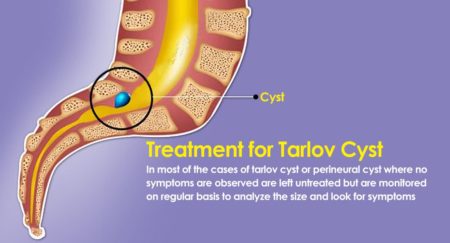
What happens if they are left untreated. In most people, nothing. Perineural cysts are fluid-filled dilations of the sheath around a nerve root, they are found incidentally on a meaningful percentage of spine scans, and the large majority never produce symptoms and never change. The usual approach to a cyst that is not causing symptoms is observation rather than treatment, because intervention carries risks that an untreated silent cyst does not. Where symptoms are present, or where a cyst is large, repeat imaging at intervals is the standard way of establishing whether it is stable, and most prove to be. A cyst is treated because it is causing a problem, not because it exists.
Worth noting on your own situation: these cysts are found overwhelmingly in the sacrum, at the S2 and S3 levels. Cysts at several thoracic levels are considerably less common, and it is reasonable to ask the reporting radiologist to confirm they are perineural cysts rather than another fluid-filled lesion, and to state the size of each. That confirmation is worth having before anything else is decided.
What causes them to enlarge. The mechanism generally proposed is a valve effect: spinal fluid enters the cyst more easily than it leaves, so pressure builds gradually. That is why enlargement and symptom flares are associated with anything that raises spinal fluid pressure, including heavy straining, prolonged coughing, and sustained upright posture. Trauma has also been implicated. It should be said plainly that the evidence here is limited and largely observational, and that most cysts do not enlarge at all.
Can cortisone make them smaller. No. Steroid injection does not shrink a perineural cyst. It is sometimes used to settle inflammation around an irritated nerve root and may reduce symptoms temporarily, but it does not alter the cyst itself, and any relief tends to be short-lived. Procedures aimed at the cyst directly, such as image-guided aspiration with or without fibrin sealant, exist and are performed in selected cases, but they carry their own risks and recurrence is common. Those are questions for a spinal specialist who has reviewed your actual images.
Seek prompt medical assessment rather than waiting if you develop numbness in the saddle area, a change in bladder or bowel control, weakness in a leg, or a band of numbness around the trunk that is spreading.
Hi, I have 6 Tarlov cysts in my sacrum, and disc bulges with L5-S1 with nerve root impingements. How would I know if the cysts are the cause of my pain instead of the disc bulges? I have sharp tingling pain in my left butt and down my left leg, mainly behind my knee area, foot, and sometimes in my calf. I have done 8 sessions of acupuncture and haven’t helped at all. I have also done 4 sessions of physiotherapy and stretches to provide little pain relief. Only lying down helps to relieve most of my pain. How much are your services, including consultation, adjustments, decompression, and is it safe to decompression with Tarlov cysts?
Your symptom distribution, running into the buttock, behind the knee, the calf, and the foot, fits the S1 nerve root. That is the difficulty in your case: a sacral perineural cyst and an L5-S1 disc affecting the S1 root can both produce exactly that pattern, so the location of the pain alone will not separate them. Several other things can.
Position is the most useful clue you can gather yourself. Symptoms driven by a sacral cyst are characteristically worse when upright, particularly sitting, and ease noticeably when lying flat, because upright posture raises the fluid pressure inside the sac. Disc-related S1 symptoms are also often worse sitting, so that overlaps, but pronounced relief within minutes of lying flat, and sitting intolerance that is out of proportion to the leg pain, lean toward the cyst. Symptoms provoked by coughing, sneezing, or straining occur with both and do not distinguish them.
Two features point strongly toward the cyst rather than the disc: symptoms in the perineal or genital area, and bladder symptoms without an obvious cause. Neither is typical of a straightforward S1 disc problem.
The examination findings point the other way. A reduced ankle reflex, weakness pushing off on the toes, and numbness along the outer border of the foot are S1 signs, and they are more commonly produced by disc compression at L5-S1 than by a cyst.
What actually settles it is a diagnostic block. An image-guided injection of local anesthetic aimed at one target, either the S1 nerve root or the cyst, temporarily removing your pain, attributes it far more reliably than any amount of reasoning from the report. That is a reasonable request to put to a spinal specialist, and given that you have two plausible sources it is the logical next investigation rather than another course of treatment.
While you are asking, request that the radiologist state the size of each cyst and which nerve roots they involve, and whether the L5-S1 bulge actually contacts the left S1 root or only approaches it. Six cysts reported without sizes is not enough information to reason from, and cysts below a certain size are rarely held responsible for symptoms.
One practical caution. Where sizeable sacral cysts are present, it is worth having your specialist’s view before strong traction or forceful sacral technique is used, because that combination is not well studied. That does not rule out conservative care; it means the plan should be set with the cysts known rather than discovered later.
Seek prompt medical attention if you develop numbness in the saddle area, a change in bladder or bowel control, or weakness in the leg that is worsening.