


Carpal Tunnel Test & Non-Invasive Care at CSC
A carpal tunnel test is part of a clinical examination for possible compression of the median nerve at the wrist. Common bedside tests include Phalen’s maneuver, which holds the wrist in flexion, and Tinel’s sign, which taps over the nerve. A positive carpal tunnel test can increase suspicion of carpal tunnel syndrome, but neither test is accurate enough to establish the diagnosis by itself.
The symptom pattern matters. Median-nerve symptoms typically involve the thumb, index, middle and part of the ring finger; symptoms centered on the little finger point toward a different nerve pathway. Neck, elbow and other wrist conditions can also mimic hand tingling or weakness. Constant numbness, progressive weakness or visible muscle wasting deserves timely assessment rather than repeated self-testing.
For more information about a carpal tunnel test, contact the Bukit Damansara (KL) main center: WhatsApp+60 17 269 1873 Call+603 2093 1000
Top 3 Insights on Carpal Tunnel Tests & Care
Three points shape how a carpal tunnel test is read:
- No single test decides it: Tinel’s sign, Phalen’s test and nerve conduction studies each add information, and the results are read together with the symptom pattern and the examination.
- Other sources are checked first: The neck, elbow and forearm can produce similar hand symptoms, so they are examined before the wrist is blamed.
- Conservative care usually comes first: For mild to moderate symptoms, splinting, exercise and manual care are commonly tried before surgery is considered.
Why You Need A Carpal Tunnel Test

A carpal tunnel test helps show whether numbness, tingling or pain in the hand fits compression of the median nerve at the wrist, or whether another source is more likely. That distinction decides what the care plan works on.
Why Do the Wrist & Fingers Feel Different or Experience Numbness?
Carpal tunnel syndrome (CTS) is marked by numbness, tingling, burning, pain or weakness in the hand and wrist. Symptoms often build with repetitive or forceful hand use and with positions that keep the wrist bent for long periods, both of which raise pressure around the median nerve.
In more severe cases, symptoms can spread into the wrist and forearm. Shaking the hand often brings temporary relief. Diabetes, rheumatoid arthritis, an underactive thyroid and pregnancy are all linked with a higher likelihood of CTS. During pregnancy, fluid retention can narrow the tunnel, and hand symptoms are a common complaint alongside back pain during pregnancy; they often ease after delivery.
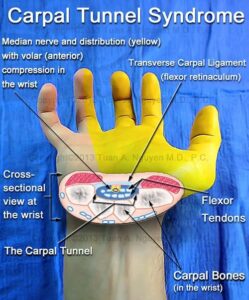
CTS develops when the median nerve is compressed or irritated as it passes through the carpal tunnel, a narrow passage on the palm side of the wrist. The tunnel is formed by the small wrist bones and roofed by the flexor retinaculum, a band of fibrous tissue. Pressure on these sensitive nerves is what produces the typical tingling and numbness.
Carpal Tunnel Testing at Two KL Centers
A hand examination that includes the bedside tests on this page, together with a check of the neck and elbow, is available at both Kuala Lumpur centers of Chiropractic Specialty Center. Opening hours and directions are listed on the Bukit Damansara contact page and the Bandar Sri Damansara contact page.
- Bukit Damansara (KL, main center): Call +603 2093 1000 or WhatsApp +60 17 269 1873 to see the Bukit Damansara / KL center.
- Bandar Sri Damansara (KL): Call +603 6262 5777 or WhatsApp +60 12 455 6939 to see the Bandar Sri Damansara center.
Flexor Retinaculum, Wrist Sensations & CTS Assessment
The flexor retinaculum (also called the transverse carpal ligament) arches over the wrist bones and forms the roof of the carpal tunnel. Nine flexor tendons, including those of the flexor digitorum profundus, pass through the tunnel together with the median nerve.
Repetitive hand use, wrist injury, prolonged bent-wrist positions and conditions that cause swelling can all reduce the space inside the tunnel. Thickening of the connective tissue around the tendons is a frequent finding in carpal tunnel syndrome, and it adds pressure on the nerve, which can lead to numbness, tingling, burning or pain in the fingers.
What Is the Wrist Exam You Can Do at Home?
Some simple checks can help you understand your symptoms, but they cannot diagnose carpal tunnel syndrome. If you suspect CTS, a full examination by a clinician is needed. Common tests used to check for median nerve entrapment include:
- Tinel’s Test or Tinel’s Sign
- Phalen’s Test
- Reverse Phalen’s Test
- Pinch Test
These home checks are a way to describe your symptoms more clearly when you are assessed.
Tinel’s Test or Tinel’s Sign: A Simple Test for Wrist Symptoms
Tinel’s test involves gently tapping over the palm side of the wrist, where the median nerve passes through the carpal tunnel. Tapping over an irritated nerve can provoke tingling. The test is positive when tingling or pins and needles spread into the thumb, index, middle or ring finger. A positive result suggests median nerve irritation at the wrist, but the test misses many people who have CTS and is positive in some people who do not.
Phalen’s Test: A Simple and Efficient Wrist Assessment
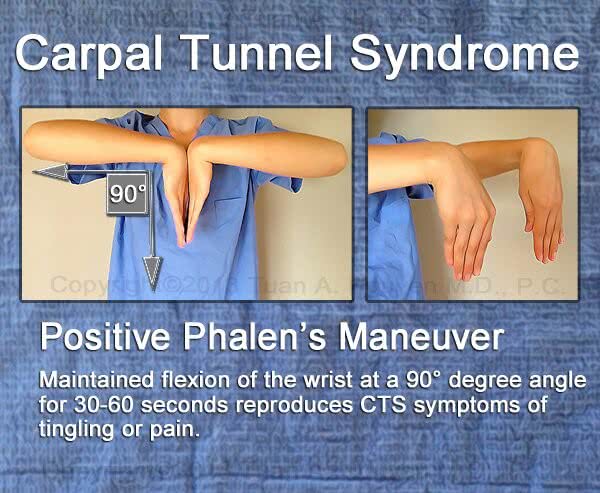
Phalen’s test is performed by letting the wrists drop into full flexion, usually with the backs of the hands pressed together, and holding the position for up to one minute. Flexing the wrist raises the pressure inside the carpal tunnel. Numbness or tingling in the median-nerve fingers within that minute is a positive Phalen’s test and suggests carpal tunnel involvement.
Reverse Phalen’s Test: A Useful Test for Wrist and Hand Conditions
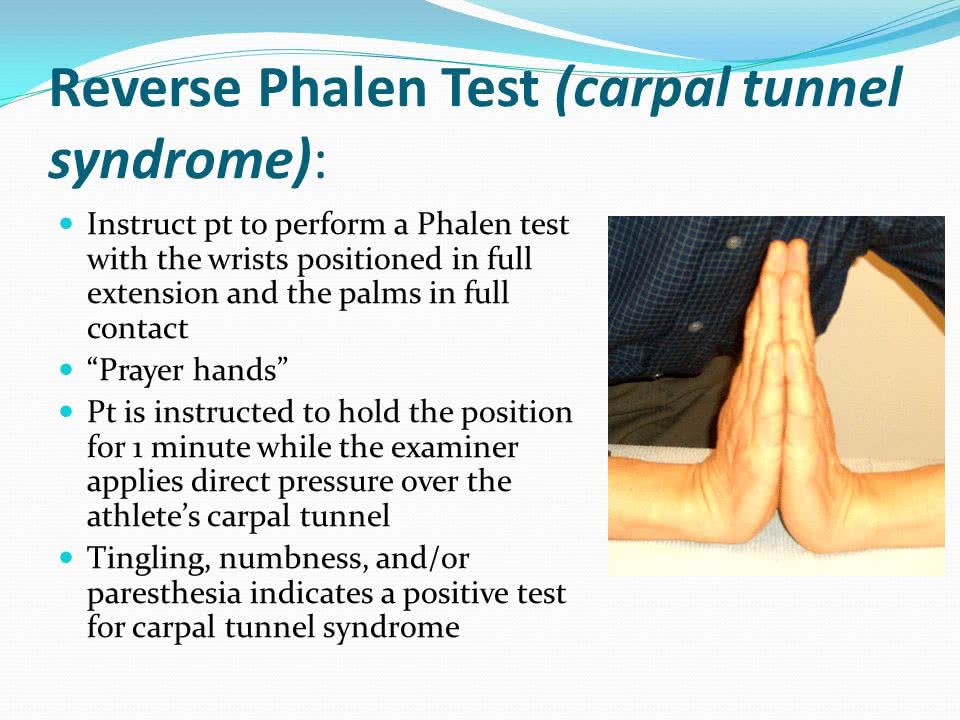
In the reverse Phalen’s test, the wrists are held in full extension with the palms pressed together for up to one minute. The test is positive when numbness, tingling or burning appears in the median-nerve fingers. Extension also raises the pressure in the tunnel, and the test usually causes no symptoms in people without CTS.
Pinch Test: A Quick Way to Assess for Carpal Tunnel Syndrome
The pinch test involves holding an object, such as a sheet of paper, between the tips of the thumb and index finger. Difficulty pinching or holding the object may point to weakness of the thumb muscles supplied by the median nerve. Weak pinch has other causes too, including thumb base arthritis, so the finding is read alongside the rest of the examination.
Clinical Tests to Identify the Actual Cause of Your Wrist or Hand Symptoms
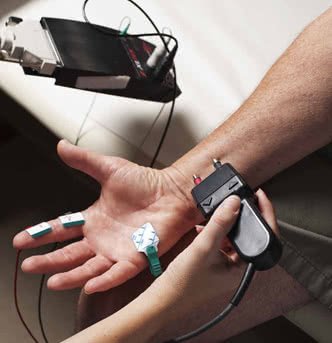
When the history and examination leave doubt, or when symptoms are severe, the function of the nerve can be measured directly with electrodiagnostic testing.
Nerve conduction studies are commonly used to evaluate carpal tunnel syndrome. They are carried out by physicians trained in electrodiagnosis, often neurologists. The results help grade how severe the compression is, which guides whether conservative care is reasonable or a surgical opinion is needed.
Nerve Conduction Testing for CTS
In a nerve conduction study, electrodes are placed on the skin over the hand and forearm, and a brief, mild electrical pulse is applied to the median nerve. The equipment measures how quickly and how strongly the signal travels across the wrist. Slowed conduction across the carpal tunnel supports a diagnosis of CTS. Nerve conduction studies are often performed together with electromyography (EMG), a separate test that uses a fine needle to record muscle activity. A normal result does not completely rule out mild CTS.
Can You Get CTS-Like Symptoms from a Slipped Disc?
Yes. A slipped disc in the neck can produce symptoms that resemble carpal tunnel syndrome. The median nerve arises from the brachial plexus, a network of nerves formed by the C5 to T1 nerve roots, and its fibers come mainly from C6 to T1. A disc herniation or bony narrowing at levels such as C5-C6 can irritate these nerve roots and cause tingling or numbness in the hand and fingers.
A pinched nerve in the neck can spread pain through the neck, upper back, shoulder, arm and hand. Tingling, numbness and burning are common and can closely resemble carpal tunnel syndrome, so neck-related causes are checked before a wrist diagnosis is settled.
What Are Other Structures Assessed in a CTS Examination?
A carpal tunnel examination covers the wrist and hand as well as the elbow, shoulder and neck, because problems in these areas can mimic or add to carpal tunnel symptoms.
Neck and upper back issues are common in people with hand symptoms. Compression of the nerves and blood vessels between the neck and the chest, known as Thoracic Outlet Syndrome, can produce arm and hand symptoms that overlap with CTS.
Why Should Your Shoulders, Arms & Elbows Be Thoroughly Assessed If You Experience Sensations of Numbness or Tingling?
Shoulder, arm and elbow conditions can be associated with numbness or tingling in the hand. The median nerve can be compressed before it reaches the wrist, for example between the two heads of the pronator teres muscle in the forearm, close to the tendons involved in golfer’s elbow. The ulnar nerve, which runs behind the inner elbow, causes tingling in the little finger instead.
How the Assessment Is Carried Out at CSC
At Chiropractic Specialty Center, the clinical team examines the neck, shoulder, elbow, forearm and wrist, and uses the findings to decide which non-invasive methods suit your case.
The integrated approach brings chiropractors and physiotherapists together, so joint movement and muscle control can be addressed in the same visit instead of one after the other.
What Should You Do with a Carpal Tunnel Syndrome Concern?
For mild to moderate carpal tunnel syndrome, conservative care is usually tried before surgery is considered. Carpal tunnel release surgery is an established option for severe or persistent cases, and like any operation it carries risks, such as scar tenderness and pain at the base of the palm. It is best reserved for the situations described further down this page.
At CSC, physiotherapy is combined with clinical chiropractic methods, so the chiropractic care of the neck, elbow and wrist joints and the exercise program are planned together.
Two devices used at the centers for hand and wrist conditions are High-Intensity Laser Therapy (HILT) and shockwave therapy. At our Kuala Lumpur chiropractic center, they may be used alongside the loading and positioning work. Wrist splints, especially at night, and short periods of icing may also be recommended, and the clinical team will explain how to use a splint and what to do at home.
Wrist exercises, including tendon and nerve gliding exercises, are often part of rehabilitation, although the research on them is mixed. They are most useful when they are specific to your findings and progressed carefully.
How Accurate Are Phalen’s, Tinel’s and Durkan’s Tests?
Each wrist test gets it right some of the time, and each misses some cases. Two numbers describe this. Sensitivity is how often a test is positive in people who really have carpal tunnel syndrome. Specificity is how often it is negative in people who do not.
A review that pooled many studies gave these rough figures:
- Phalen’s test: positive in about 68% of people with carpal tunnel syndrome, and correctly negative in about 73% of people without it.
- Tinel’s sign: about 50% and 77%.
- Carpal compression (Durkan’s) test: about 64% and 83%.
In plain words, a positive Phalen’s test makes carpal tunnel syndrome more likely but does not prove it, and a negative Tinel’s sign does not rule it out. That is why the tests are read together with the pattern of symptoms, such as numb fingers that wake a person at night. When the answer is still unclear, or when surgery is being considered, a nerve conduction study measures how well the median nerve carries signals.
How Durkan’s Carpal Compression Test Is Done
Durkan’s test, also called the carpal compression test, was first described in 1991. The examiner presses both thumbs firmly over the carpal tunnel, in the middle of the front of the wrist, for up to 30 seconds. The test is positive if numbness, tingling or pain appears in the thumb, index, middle or ring finger during that time.
Durkan’s first study compared it with Tinel’s and Phalen’s tests in 46 hands with carpal tunnel syndrome proven by nerve testing, and in 50 people without it. The pressure test picked up the problem more often and gave fewer false alarms than the other two. Later studies found smaller differences, as the review above shows, but it remains a useful part of the exam.
One advantage is that it presses right over the nerve without bending the wrist, so it can be used when wrist bending is painful. Like the other tests, it is a clue, not a final answer.
What the Bedside Tests Can and Cannot Tell You
What carries more weight than any one test is the pattern: numbness in the thumb, index, middle and half of the ring finger; symptoms that wake you at night; relief from shaking the hand; and difficulty with fine tasks such as buttons or turning a key. That history, together with the examination, is what the care plan is built on.
The Conditions That Get Mistaken for Carpal Tunnel
This is where a test read in isolation is most likely to mislead, because each of these conditions needs a different plan:
- Cervical radiculopathy. A nerve irritated at the neck refers symptoms into the hand. Neck movement changes the symptoms, and the numbness usually does not follow the median nerve territory.
- Ulnar nerve irritation at the elbow. The little finger and the other half of the ring finger are affected, often worse with a bent elbow and at night.
- Peripheral neuropathy. Symptoms appear in both hands and often the feet, in a glove pattern rather than a single-nerve pattern. Diabetes and thyroid disease belong in this conversation.
- Thoracic outlet involvement. Whole-arm heaviness, worse with the arm overhead or when carrying.
- Thumb base arthritis or tendon problems. Pain rather than numbness, provoked by grip and pinch.
A double crush picture, where the neck and the wrist both contribute, is common enough that the neck is examined in every hand case. When the neck is part of the problem, treating the wrist alone is a common reason a course of care disappoints.
What Night Splinting Does, and When Testing Should Lead to Surgery
On splinting, the overall evidence is limited and of low certainty, but a splint, most often worn at night, may bring some short-term improvement in symptoms, and it is inexpensive with little risk of harm (Karjalainen TV, Lusa V, Page MJ, et al. Splinting for carpal tunnel syndrome. Cochrane Database Syst Rev. 2023;2(2):CD010003). That combination makes it a reasonable first step.
Testing should lead to a surgical opinion rather than more conservative care when the numbness has become constant rather than intermittent, when there is visible wasting at the base of the thumb, or when nerve conduction studies show severe compression. Prolonged severe compression can leave nerve damage that does not recover, and continuing conservative care through those findings would not be in your interest.
Planning a visit? You can review the current chiropractic price in Kuala Lumpur and physiotherapy fees in Kuala Lumpur before you come in.
Peer-Reviewed Medical References
- Genova A, Dix O, Saefan A, Thakur M, Hassan A. Carpal tunnel syndrome: a review of literature. Cureus. 2020;12(3):e7333.
- Ünver S, Akyolcu N. The effect of hand exercise on reducing the symptoms in hemodialysis patients with carpal tunnel syndrome. Asian J Neurosurg. 2018;13(1):31-36.
- Kim SD. Efficacy of tendon and nerve gliding exercises for carpal tunnel syndrome: a systematic review of randomized controlled trials. J Phys Ther Sci. 2015;27(8):2645-2648.
- Talebi GA, Saadat P, Javadian Y, Taghipour M. Comparison of two manual therapy techniques in patients with carpal tunnel syndrome: a randomized clinical trial. Caspian J Intern Med. 2020;11(2):163-170.
- Park YD, Park YJ, Park SS, Lee HL, Moon HH, Kim MK. Effects of taping therapy for carpal space expansion on electrophysiological change in patients with carpal tunnel syndrome. J Exerc Rehabil. 2017;13(3):359-362.
- Palmer KT. Carpal tunnel syndrome: the role of occupational factors. Best Pract Res Clin Rheumatol. 2011;25(1):15-29.
- Shem K, Wong J, Dirlikov B. Effective self-stretching of carpal ligament for the treatment of carpal tunnel syndrome: a double-blinded randomized controlled study. J Hand Ther. 2020;33(3):272-280.
- Karjalainen TV, Lusa V, Page MJ, et al. Splinting for carpal tunnel syndrome. Cochrane Database Syst Rev. 2023;2(2):CD010003.
- MacDermid JC, Wessel J. Clinical diagnosis of carpal tunnel syndrome: a systematic review. J Hand Ther. 2004;17(2):309-319.
- Durkan JA. A new diagnostic test for carpal tunnel syndrome. J Bone Joint Surg Am. 1991;73(4):535-538.
These references describe carpal tunnel syndrome, its occupational factors and several conservative methods, including hand exercise, nerve and tendon gliding, manual therapy, taping, self-stretching and splinting. None of them evaluates a care program at Chiropractic Specialty Center. Each one can be checked through its free PubMed record.
The Author of Carpal Tunnel Test: What the Clinical Checks Show
Carpal Tunnel Test: What the Clinical Checks Show was written by Yama Zafer, D.C., a graduate of Cleveland University - Kansas City with 30+ years in chiropractic and physiotherapy.
Last Updated: Carpal Tunnel Test & Non-Invasive Care at CSC
Carpal Tunnel Test & Non-Invasive Care at CSC was last reviewed and updated on September 25, 2026.