

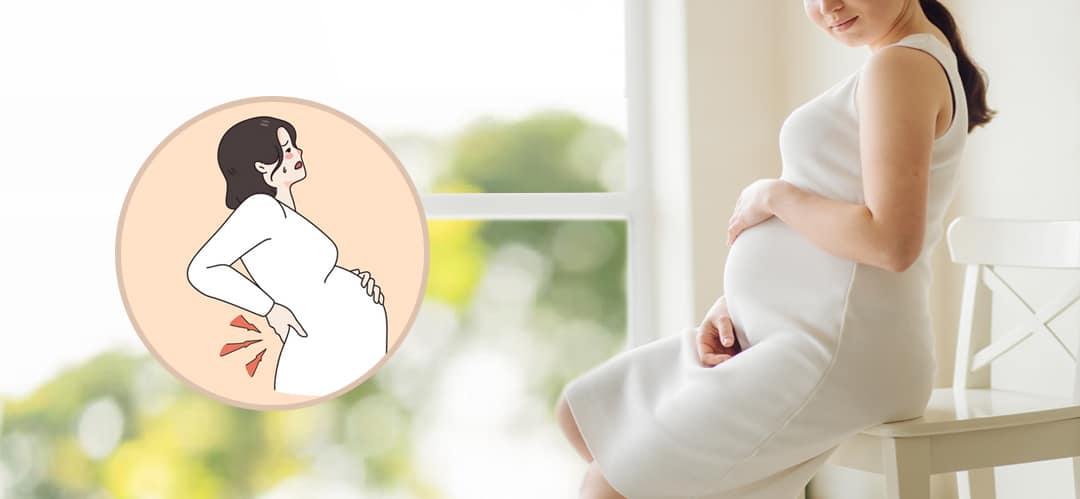
Pregnancy Hip Care in KL
Pregnancy hip care starts with locating the pain, because three different problems are commonly described as hip pain. Outer hip pain that is worst when lying on that side is tendon-related. Groin or pubic pain provoked by stairs and dressing is pelvic. Buttock pain running down the leg usually originates in the lower back or a nerve root.
Each responds to something different, so the sorting is worth the minute it takes. For the outer hip, staying off that side with a pillow between the knees removes the compression. For pelvic pain, keeping the knees together through stairs, dressing and getting out of a car is the equivalent.
This Prenatal and Postnatal Guide explains pregnancy hip care in KL, including how lateral hip, buttock, groin, pelvic, and nerve-related symptoms are distinguished before any care is considered.
Hip-region symptoms during pregnancy may arise from the hip itself, the pelvic girdle, lower back, surrounding muscles, referred nerve symptoms or a non-musculoskeletal condition.
This guide to pregnancy hip care, and how hip, pelvic and lower back symptoms are distinguished, is published by Chiropractic Specialty Center, Bukit Damansara (KL) main center: WhatsApp+60 17 269 1873 Call+603 2093 1000
What can the location of pregnancy hip symptoms suggest?
Symptom location helps organize the assessment, but it does not prove which tissue is responsible. A useful history asks the patient to point with one finger to the main area, describe whether the symptom is superficial or deep, and identify the movement or position that changes it.
| Main location | Possible musculoskeletal sources to assess | Important overlap or alternative |
| Outer side of the hip | Gluteal tendons, surrounding muscles, compression from side lying, altered walking or hip-joint loading. | Referred symptoms from the lower back; swelling, redness or systemic illness need medical review. |
| Upper buttock near the back of the pelvis | Sacroiliac region, gluteal muscles, lumbar referral or load-transfer difficulty. | Often belongs to the pelvic-girdle or back pathway rather than the hip joint alone. |
| Deep front-of-hip or groin | Hip joint, hip flexor or adductor region, pubic symphysis, abdominal wall or pelvic girdle. | Obstetric, urinary, abdominal or hernia-related causes may require medical assessment. |
| Pain down the leg with tingling or numbness | Lumbar nerve-root or peripheral nerve irritation, deep gluteal region or combined back/hip loading. | Progressive weakness, widespread numbness or vascular signs need urgent assessment. |
| Tailbone or central pelvic pain | Coccyx, pelvic floor, pubic or sacroiliac region depending on the pattern. | The dedicated pelvic or postpartum guide usually covers it in detail. |
How are hip, pelvic and lower-back symptoms distinguished?
The hip is the ball-and-socket joint where the thigh meets the pelvis. Pregnancy-related pelvic girdle pain generally refers to symptoms around the sacroiliac joints, pubic symphysis or related load-transfer tasks. Lower-back symptoms may remain central or refer toward the buttock or leg. Because these regions work together, a person can have more than one contributing pattern.
Activity triggers are informative. Pain mainly during rolling in bed, stairs, getting into a car or standing on one leg often raises a pelvic-girdle question. Pain at the outer hip during side lying may raise a local compression or tendon question. Groin pain with hip rotation may raise a hip-joint or adductor question. Back-dominant symptoms with cough, sneeze or neurologic change require a spinal and neurologic assessment. None of these patterns is diagnostic on its own.
RCOG describes walking, stairs and turning in bed as common aggravating activities in pregnancy-related pelvic girdle pain. Read the pelvic pain during pregnancy guide when the pubic or sacroiliac region is primary, and the back pain in pregnancy guide when spinal or radiating symptoms dominate.
Why can pregnancy change hip loading?
Pregnancy can change stride length, stance width, trunk position, sleep posture and the way a person rises, carries or climbs stairs. These changes may increase compressive or repetitive load through the lateral hip, buttock and pelvic muscles. Hormonal changes are part of pregnancy physiology, but they should not be used as a simple explanation for every symptom or as proof that a joint is unstable or misaligned.
Previous hip, back or pelvic symptoms may recur, but recurrence is not inevitable. Other influences include rapid changes in activity, prolonged side lying, reduced strength or conditioning, repetitive standing, unsuitable footwear, lifting demands, fatigue and fear-driven movement avoidance. The assessment should look for modifiable tasks rather than attributing everything to one hormone or posture.
How are pregnancy hip symptoms assessed?
Assessment should determine whether the symptom behaves like a local hip concern, pelvic-girdle concern, spinal referral, neurologic pattern or non-musculoskeletal condition. It begins with the medical and obstetric screen described above. Examination is then limited to movements and tests that are relevant, comfortable and unlikely to provoke unnecessary strain.
- Map the main location and any spread into the groin, buttock, thigh, knee, back or abdomen.
- Identify task-specific triggers such as side lying, walking distance, stairs, car transfers, dressing, standing on one leg, carrying or rising from a low seat.
- Observe gait, sit-to-stand, supported single-leg tasks and hip movement only within comfort.
- Screen the lower back and neurologic function when symptoms radiate, include numbness or do not fit a local hip pattern.
- Assess relevant muscle function and tenderness without using a painful test merely to “prove” a diagnosis.
When may imaging or medical referral be appropriate?
Imaging is not routine for every pregnancy-related hip symptom, and pregnancy does not automatically prevent appropriate imaging when clinically necessary. The decision belongs with the relevant medical practitioner and should consider the suspected condition, urgency, modality and pregnancy stage. A chiropractor should not delay referral because a symptom is assumed to be “just pregnancy.”
- Trauma, inability to bear weight, suspected fracture or severe focal bone pain.
- Fever, systemic illness, redness, marked swelling or suspected infection.
- Persistent deep groin pain, significant restriction, locking or a pattern that does not improve as expected.
- Progressive neurologic loss or symptoms that suggest a spinal emergency.
- Abdominal, urinary, obstetric or vascular features that do not fit a musculoskeletal explanation.
What care options may be considered?
Care depends on the assessment and may involve education, changing aggravating tasks, graded movement, exercise, sleep-position changes, soft-tissue approaches, hip or pelvic joint mobilization, or chiropractic methods directed at relevant musculoskeletal findings. A method should not be selected only because it is marketed as prenatal.
NICE guidance for pregnancy-related pelvic girdle pain supports referral for physiotherapy exercise advice and/or consideration of a non-rigid lumbopelvic belt, while its evidence review did not find enough evidence for manual therapy alone. Manual-therapy reviews for pregnancy-related back and pelvic symptoms also describe a limited and varied evidence base. This supports using manual care, when appropriate, as one part of a broader plan with measurable function goals.
In practice at CSC, that broader plan pairs highly specific, gentle Activator adjustments of the pubic bone, sacrum and pelvis with gentle manual and fascial work on the round ligament and the hip adductor muscles near the groin, rather than relying on manual therapy alone. It is the combination Yama Zafer, D.C. has used for more than three decades.
| Possible component | What it may address | Important limit |
| Education and pacing | Identifying tasks, positions and activity doses that repeatedly aggravate symptoms. | Pacing should not become prolonged avoidance of all movement. |
| Exercise or movement retraining | Hip and trunk capacity, balance, confidence and gradual return to activity. | Exercises require modification for symptoms, pregnancy status and obstetric advice. |
| Supportive positioning | Reducing prolonged outer-hip compression or helping transfers and sleep. | No pillow position guarantees relief or corrects pelvic alignment. |
| Manual or chiropractic care | Selected joint or soft-tissue findings and short-term movement goals. | Evidence is limited; no universal safety, alignment or outcome claim is appropriate. |
| Lumbopelvic support belt | May be considered for some pelvic-girdle presentations. | Fit, comfort and indication should be reviewed; it is not suitable for every hip symptom. |
| Medical or obstetric pathway | Internal, vascular, traumatic, infectious or pregnancy-specific causes. | Must not be delayed by a musculoskeletal appointment. |
How can daily movement be modified?
The aim is to reduce avoidable spikes in load while preserving useful movement. Choose one or two changes that address the actual trigger rather than following a long generic restriction list.
- For side lying, try a pillow between the knees and enough support under the abdomen or waist to avoid twisting. Change sides when comfortable rather than forcing one “correct” side.
- For stairs, use the handrail, take a slower pace and reduce unnecessary repeated trips during a flare. Persistent or severe stair pain deserves assessment.
- For car transfers, keep the knees closer together if that is more comfortable, turn the whole body and avoid forcing a wide step when the pubic region is sensitive.
- For standing tasks, alternate positions, use a footrest briefly and divide long cooking or work periods into shorter blocks.
- For lifting, bring the load close, use a stable stance and reduce combined twisting and lifting. Postpartum carrying demands should be built gradually.
- For walking, adjust distance, pace and terrain rather than stopping all activity. A sudden loss of walking ability is not a self-management issue.
Can chiropractic care “realign” the hips or pelvis?
“Realignment” is too certain for the findings usually available in a routine musculoskeletal visit. Posture and pelvic landmarks vary, and a visible asymmetry does not prove that a joint is out of place or causing the symptom. A more accurate goal is to assess movement, reduce an aggravating load when possible, improve tolerance for a specific task and review the response.
Chiropractic care should not be described as preventing hip problems, stabilizing the uterus, creating space for the baby or preparing the pelvis for delivery. Those claims are not established by the musculoskeletal examination and can mislead the reader about obstetric scope.
What changes after childbirth?
Postpartum hip and pelvic symptoms can be influenced by birth recovery, feeding positions, side lying, carrying, stairs, deconditioning, altered sleep and a rapid increase in repetitive tasks. A new parent may also spend long periods sitting or standing in one position while caring for the baby. The assessment should include these tasks rather than treating the hip in isolation.
Severe or worsening headache, breathing difficulty, chest symptoms, one-sided leg swelling, fever, heavy or increasing bleeding, severe abdominal pain, fainting or rapidly worsening symptoms require medical assessment. For non-urgent musculoskeletal concerns, the plan may combine task modification, graded activity, registered physiotherapy and selected chiropractic care.
Pelvic-floor symptoms, continence concerns, pelvic heaviness or suspected prolapse should be assessed by an appropriate medical practitioner or registered pelvic-health physiotherapist. Chiropractic care does not repair pelvic-floor injury or close abdominal separation.
What should you record before an assessment?
- The exact location, depth and spread of the symptom.
- The first activity that reliably brings it on and how long it lasts afterward.
- Whether side lying, walking, stairs, car transfers, dressing or standing on one leg changes it.
- Any numbness, weakness, swelling, fever, urinary symptom, abdominal symptom, bleeding or pregnancy-specific change.
- Previous hip, back, pelvic or childbirth history and current obstetric advice.
- A practical goal, such as walking to the car, rolling in bed or carrying for a short period with less interruption.
Visiting Us in Kuala Lumpur
Assessment and care are available at both of our Kuala Lumpur centers. The main one is described on the page for chiropractor in Kuala Lumpur at CSC Bukit Damansara.
A second center serves the northwest of the city. You can read about chiropractor in Bandar Sri Damansara with physiotherapy.
For travel, parking and opening hours, see Bukit Damansara address, hours and phone or Bandar Sri Damansara address, hours and phone.
Contact Chiropractic Specialty Center
For a pregnancy-sensitive musculoskeletal assessment, use the verified center and contact routes below. Urgent obstetric, medical or emergency symptoms should be directed to the appropriate medical service rather than an appointment request.
| Center | Address / location route | Telephone | Hours | |
| Bukit Damansara: Kuala Lumpur | No. 71, Jalan Medan Setia 1, Plaza Damansara, Bukit Damansara, 50490 Kuala Lumpur | +603 2093 1000 | +60 17 269 1873 | Monday-Friday 8:00 AM-8:00 PM; Saturday-Sunday 8:00 AM-6:00 PM |
| Bandar Sri Damansara | See the verified branch contact page for the current address and map pin | +603 6262 5777 | +60 12 455 6939 | Monday-Friday 8:00 AM-8:00 PM; Saturday-Sunday 8:00 AM-6:00 PM |
Bukit Damansara headquarters contact details | Bandar Sri Damansara contact details | CSC services
Planning a visit? You can review the current chiropractic price in Kuala Lumpur and physiotherapy fees in Kuala Lumpur before you come in.
Questions About Hip Symptoms During Pregnancy and After Birth
Hip-region symptoms overlap with the pelvis, back and abdomen. These answers explain patterns and next steps without diagnosing a cause online.
Why does my outer hip hurt when I sleep on my side?
Prolonged side lying can compress the tissues on the outside of the hip, and pregnancy may change sleep positions and load tolerance. A pillow may help some people, but persistent pain, swelling, redness, fever or inability to bear weight should be assessed rather than self-diagnosed.
Is groin pain during pregnancy a hip problem?
It may be related to the hip, pubic symphysis, adductor region, abdominal wall or pelvic girdle, but urinary, obstetric, abdominal and other causes can also be felt in the groin.
Can hip pain come from the lower back?
Yes. The lower back can refer symptoms into the buttock, hip or leg. Numbness, tingling, weakness or symptoms affected by spinal movement make a back and neurologic screen important.
Can a support belt help hip pain?
A non-rigid lumbopelvic belt may be considered for some pelvic-girdle presentations, but it is not a universal solution for outer-hip or joint symptoms. Fit, comfort and the actual symptom pattern should be assessed.
Should I stop walking if my hip hurts?
Not automatically. Adjusting distance, pace, terrain and rest may be reasonable when the pattern is mild and stable. Sudden severe pain, inability to bear weight, trauma, swelling, systemic illness or worsening symptoms require assessment.
Can chiropractic adjustment put my hip or pelvis back into place?
Routine pregnancy-related hip and pelvic symptoms should not be described as a bone being out of place. Chiropractic care may address selected joint and movement findings, but the goal should be function and symptom response rather than a structural guarantee.
Why might hip symptoms continue postpartum?
Side lying, feeding, carrying, stairs, sleep disruption, birth recovery and a rapid change in activity can continue to load the region. Persistent or worsening symptoms deserve reassessment, especially when accompanied by pelvic-floor, neurologic or medical concerns.
Which MyChiro page should I read next?
Choose the pelvic pain guide for pubic or sacroiliac symptoms, the back pain guide for spinal or radiating patterns, and the postpartum guide when recovery after childbirth is the main question.
References
References support the specific educational statements cited in this page. They do not establish that every intervention is appropriate for every pregnant or postpartum patient.
- Centers for Disease Control and Prevention. Urgent Maternal Warning Signs. Hear Her Campaign. Accessed July 29, 2026.
- Ministry of Health Malaysia, Medical Development Division. Handbook of Obstetrics Guideline. Putrajaya: Ministry of Health Malaysia; 2024. MOH/P/PAK/535.24(GU)-e.
- Royal College of Obstetricians and Gynaecologists. Pelvic girdle pain and pregnancy. Patient information. Accessed July 29, 2026.
- National Institute for Health and Care Excellence. Antenatal care. NICE guideline NG201. Published August 19, 2021; current online guidance accessed July 29, 2026.
- National Institute for Health and Care Excellence. Antenatal care: rationale and impact for management of pelvic girdle pain in pregnancy. NICE guideline NG201. Accessed July 29, 2026.
- Hall H, Cramer H, Sundberg T, Ward L, Adams J, Moore C, et al. The effectiveness of complementary manual therapies for pregnancy-related back and pelvic pain: a systematic review with meta-analysis. Medicine (Baltimore). 2016;95(38):e4723.
- Weis CA, Pohlman KA, Draper C, daSilva-Oolup S, Stuber K, Hawk C. Chiropractic care for adults with pregnancy-related low back, pelvic girdle pain, or combination pain: a systematic review. J Manipulative Physiol Ther. 2020;43(7):714-731.
- World Health Organization. WHO recommendations on maternal and newborn care for a positive postnatal experience. Geneva: World Health Organization; 2022.
The Author of Pregnancy Hip Care in KL | Prenatal and Postnatal Guide
Pregnancy Hip Care in KL | Prenatal and Postnatal Guide was written by Yama Zafer, D.C., who has 30+ years in chiropractic and physiotherapy and founded Chiropractic Specialty Center in Kuala Lumpur in 2006.
Last Updated: Pregnancy Hip Care in KL
Pregnancy Hip Care in KL was last reviewed and updated on October 3, 2026.