
Our Chiropractic and Physiotherapy Center in Malaysia: How It Began
Our chiropractic and physiotherapy center in Malaysia began with one question: what can be done for a damaged spinal disc without surgery? That question took our director, Dr. Yama Zafer, from practice in the United States to Kuala Lumpur, where Chiropractic Specialty Center (CSC) opened in 2006. This page tells that story, and explains how the center works today.
At CSC, chiropractic, physiotherapy and spinal decompression are used side by side, in one plan that starts from a careful examination. New patients can usually be seen the same day at either Kuala Lumpur center, but call or send a WhatsApp message first.
This page, Our Chiropractic and Physiotherapy Center in Malaysia: 6 Clear Milestones, is published by Chiropractic Specialty Center, Bukit Damansara (KL) main center: WhatsApp +60 17 269 1873 Call +603 2093 1000
Our Chiropractic and Physiotherapy Center in Malaysia: 6 Milestones
- 1997 to 2001: Dr. Yama Zafer practiced in the United States and used DTS traction units in his practices.
- From early 2002: he studied spinal disc damage and the non-operative options for it in depth.
- After that research: he moved from DTS traction to a spinal decompression device, the RxDecom.
- 2006: he moved to Malaysia and opened Chiropractic Specialty Center® in Kuala Lumpur.
- 2008: clinical physiotherapy became an integral part of care for neck pain, back pain and sports injuries.
- 2009: the RxDecom® came into use in Malaysia, and the NSD Therapy® protocols followed soon after.
Each step came from the same aim: to give a person with a spine or joint problem a fair, thorough trial of conservative care before anything more invasive is considered. That aim still shapes our chiropractic and physiotherapy center in Malaysia.
Where Our Story Started: Research Into Disc Damage
How we began our chiropractic and physiotherapy center in Malaysia is an interesting story. It started early, while Dr. Yama Zafer, Doctor of Chiropractic, was practicing in the United States. From the beginning of 2002, he studied spinal disc damage and the options for treating it without an operation. He was surprised to find how few of those options had promising results.
Some case studies offered hope. The most hopeful were those that used a genuine spinal decompression device, rather than a standard traction table. That finding shaped the next step, and later the way our chiropractic and physiotherapy center in Malaysia would be equipped.
Traction and Spinal Decompression Are Not the Same
We are not talking here about DTS traction machines. Back in those days, the DTS was called a traction unit. Calling it spinal decompression came later, and the name has stuck, but in our view it remains a traction device. We know DTS units well: our director used them in his practices in the United States from 1997 to 2001.
The DTS is a good traction unit. In his experience, though, it lacked several features found in dedicated spinal decompression devices, and it did not do as well for larger slipped discs. In the video below, the difference between traction and decompression is explained:
Soon after his research, Dr. Yama moved from the DTS to the RxDecom. Even with a true decompression device, there were shortcomings, especially for people with a larger, more severe slipped disc. So it was back to research. That work led him to issues that had largely been ignored, and to changes in how care plans were put together.
The First Years of Our Chiropractic and Physiotherapy Center in Malaysia
In 2006, our director moved to Malaysia hoping to continue his research and development work, and Chiropractic Specialty Center® opened that year. From the start, the aim was to bring chiropractic and physiotherapy together under one roof, so that a person did not have to split care between providers who might never speak to each other.
In 2008, clinical physiotherapy services became an integral part of the care given to people with neck pain, back pain and sports injuries. In 2009, the RxDecom® came into use at our chiropractic and physiotherapy center in Malaysia, and soon after that, the NSD Therapy® protocols began. Since 2009, NSD Therapy® has been used for many people with a slipped disc.
With a slipped disc, progress is judged case by case against what was found at the first visit. Where an earlier course of care has not helped, we begin by asking what was tried, at what dose, and for how long. Disc problems vary widely in how they respond, and that is why every plan at our chiropractic and physiotherapy center in Malaysia starts from the examination rather than a fixed package.
What Our Chiropractic and Physiotherapy Center in Malaysia Offers Today
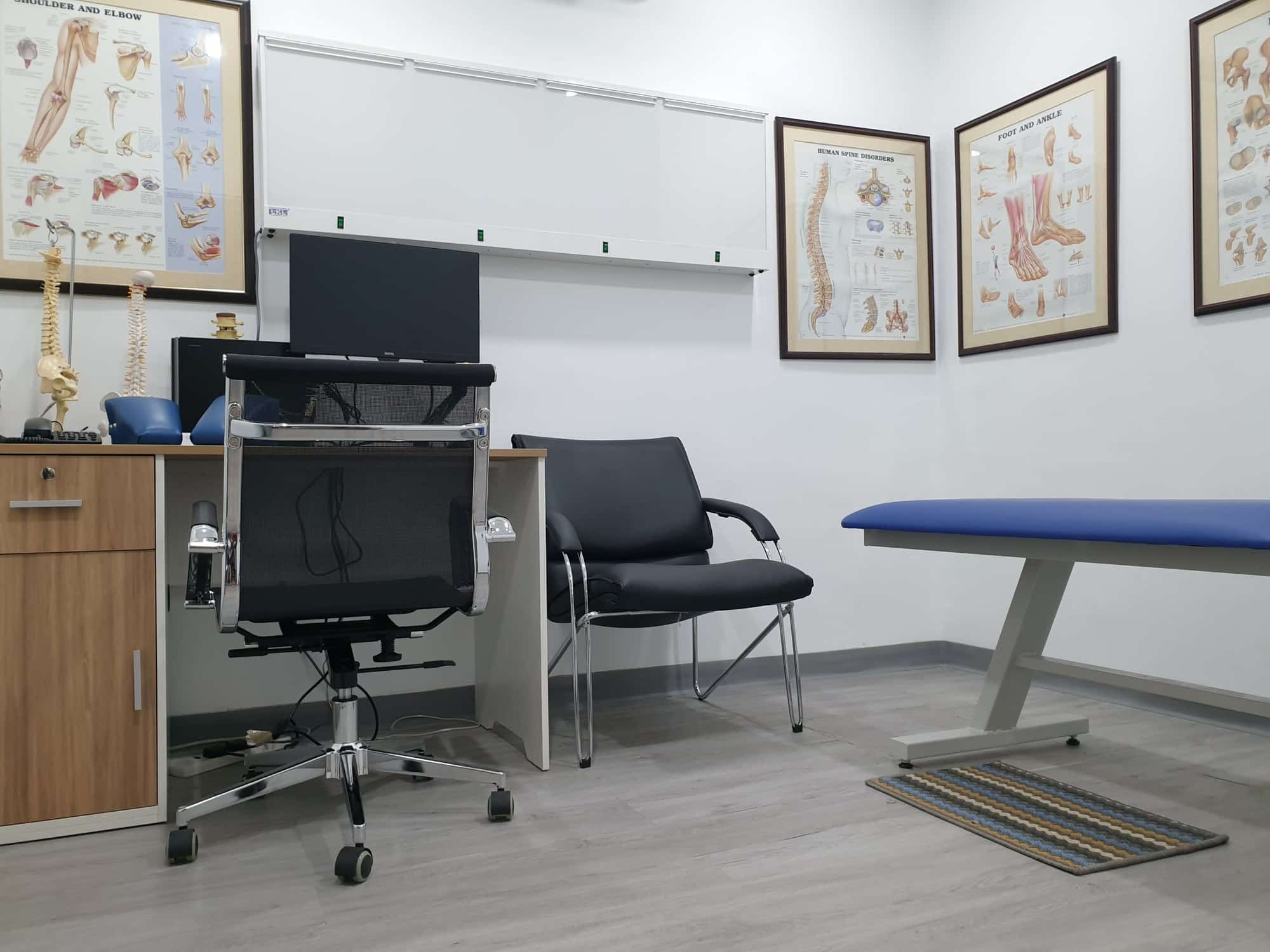
Today, our chiropractic and physiotherapy center in Malaysia works from two centers in Kuala Lumpur: the main center in Bukit Damansara and a second center in Bandar Sri Damansara. Chiropractors and physiotherapists assess and care for the same person side by side.
- Chiropractic: non-rotatory methods, so no twisting of the neck and no sudden jerk. Tools include the Activator, sustained-pressure adjusting, a drop table and flexion-distraction.
- Physiotherapy: hands-on soft-tissue work, stretching and exercise, with posture and movement training.
- Spinal decompression: for selected disc problems, as part of NSD Therapy®.
- Rehabilitation: supervised strength and conditioning in the gym, so the gains made on the table hold up in daily life.
- Advice: sitting, sleep, lifting and work habits, with a short home routine checked at each visit.
Equipment is chosen from the findings, not the other way round. Our chiropractic and physiotherapy center in Malaysia uses a device only when the examination calls for it.
Problems We See Most Often
The people who come to our chiropractic and physiotherapy center in Malaysia most often have a slipped or bulging disc in the neck or lower back, sciatica, neck and shoulder pain from desk work, back pain after lifting, sports injuries, and knee, hip and shoulder problems. More on disc care is on the slipped disc treatment in Kuala Lumpur page.
We also assess people who still have pain after back surgery, including those who have had more than one operation. Whether conservative care is a sensible next step for them is decided after the examination, and the reasoning is explained before anything is started.
How One Plan Works Across Two Professions
A combined center only means something if the two professions share the work. At our chiropractic and physiotherapy center in Malaysia, the chiropractor and the physiotherapist work from the same examination and the same notes. The plan says what each will do, in what order, and what should change by the next review.
When a patient at our chiropractic and physiotherapy center in Malaysia improves, both adjust the plan together; when a patient does not, both look again. That shared review is the difference between two treatments in one building and one plan carried out by two people. It also means a patient explains the problem once, not twice.
Neck and Back Care at Our Center
Neck pain often begins with stiff joints in the upper back and neck, made worse by long hours at a screen. Where turning the head is blocked, gentle chiropractic comes first; where the neck moves well but aches by late afternoon, strength work for the neck, shoulder blades and upper back usually comes first. Most people need some of each.
Low back pain is the most common reason people visit our chiropractic and physiotherapy center in Malaysia. A locked lower back after bending or lifting usually responds first to joint work. A back that aches after a day of sitting usually needs loading first. Pain, tingling or weakness down a leg is examined with nerve tests before any care is chosen, as explained on the chiropractor for back pain and sciatica page.
Sports Injuries and Joint Problems
Not every visit to our chiropractic and physiotherapy center in Malaysia is about the spine. Shoulders, knees, hips, ankles and the jaw are examined the same way: which joint is not moving as it should, which muscles have stopped protecting it, and what in the day or the sport keeps irritating it.
For a sports injury, the plan usually starts by calming the injured area and restoring movement, then moves to graded loading and sport-specific training in the gym. Return to sport is staged, not rushed. The same review points apply, so a plan that is not working is changed early rather than repeated. That staged approach is how our chiropractic and physiotherapy center in Malaysia handles joint and sports problems.
Why We Combine Chiropractic and Physiotherapy
Chiropractic restores movement to a joint that is stiff or locked. Physiotherapy builds the strength and control that keep that joint working. A plan with only the first tends to need repeating; a plan with only the second is often too uncomfortable to start. That is the reason our chiropractic and physiotherapy center in Malaysia was built around both.
Research supports each part on its own. A Cochrane review found that exercise therapy probably reduces pain and improves function in chronic low back pain. The combined approach is explained in more detail on the chiropractic combined with physiotherapy page and in chiropractic or physiotherapy.
In that short video I explain how chiropractic, physiotherapy and rehabilitation are coordinated at our centers, starting with a thorough assessment.
How We Think About Surgery
Surgery should be the last option, after the conservative route has been given a fair trial. Cutting out or removing part of the spine should be done only when nothing else can save it. At the same time, there are cases conservative care cannot help, and we say so.
Research on sciatica shows why the order matters. In a randomized trial, early surgery and prolonged conservative care led to similar results at one year, although surgery gave faster relief of leg pain. A 2024 review described conservative treatment as the first line for lumbar disc herniation in the absence of cauda equina syndrome or serious neurological deficits.
Do not ignore progressive weakness; seek care from a competent provider, conservative or surgical. Conservative care can continue only while the weakness itself is improving. Loss of bowel or bladder control needs urgent medical care. CSC is equipped to assess, and where an intervention is needed that CSC is not equipped for, a referral to an appropriate healthcare provider is made.
A second opinion before surgery is reasonable, and our chiropractic and physiotherapy center in Malaysia is glad to give one. Bring any scans and reports, and the findings are explained in plain words.
Choosing a Chiropractic and Physiotherapy Center
Whether you choose our chiropractic and physiotherapy center in Malaysia or another, a few questions help. Chiropractic is a recognized practice area under the Ministry of Health traditional and complementary medicine framework, and practitioners should be registered. Ask who will examine you, and what their training is.
- Is there an examination before any treatment? Care should follow findings, not a fixed package.
- Are the findings explained? You should know what is wrong, what will be done and why.
- Which methods are used on the neck? Ask whether forceful twisting is used, and whether there is a gentler option.
- When is progress reviewed? A plan should have set points where it is checked and changed.
- What happens if care does not help? A good center says when it is time for a different approach or a referral.
Those are the same questions our chiropractic and physiotherapy center in Malaysia expects patients to ask us.
What Happens at Your First Visit
- History: when the problem started, what makes it better or worse, earlier care and your general health.
- Examination: posture, joint movement, muscle strength, and nerve tests where needed.
- Scans: existing X-rays or MRI are read; new imaging is ordered only if the findings call for it.
- Explanation: what the findings mean and which care comes first, and why.
- Plan: how many sessions, what each includes, and what you do at home between them.
If there is no improvement by about the fifth session the plan is reassessed; if there is none by the tenth, we discuss whether to continue. That review is part of how our chiropractic and physiotherapy center in Malaysia keeps care honest.
Your Part in Recovery
For any care to help, the problem first has to be accurately diagnosed, then properly planned, then carried out with as few flaws as possible, and finally topped with changes to posture, habits and daily activities. Recovery comes from increasing what helps the problem and decreasing what harms it, at the same time. That principle runs through every plan at our chiropractic and physiotherapy center in Malaysia.
- Walk on level ground, short and often; walking depressurizes the joints.
- Break up sitting: with acute pain, move for 30 seconds to a minute every 15 to 20 minutes.
- Use cold, not heat, on a disc or an inflamed area, cloth-wrapped, for 10 to 15 minutes at a time.
- Do the home exercises as they were shown, and bring questions to the next visit.
I see a patient for 30 minutes or two hours. What about the other 22 hours? The care given at our chiropractic and physiotherapy center in Malaysia works best when the hours between visits support it.
To visit our chiropractic and physiotherapy center in Malaysia, contact either Kuala Lumpur center. Directions and hours are on the Bukit Damansara contact page and the Bandar Sri Damansara contact page:
- Bukit Damansara (KL, main center): Call +603 2093 1000 or WhatsApp +60 17 269 1873 to see the Bukit Damansara / KL center
- Bandar Sri Damansara (KL): Call +603 6262 5777 or WhatsApp +60 12 455 6939 to see the Bandar Sri Damansara center
Fees are the same at every CSC center: RM100 for the examination and RM150 for an adjustment, or from RM110 when the visit also includes physiotherapy, as listed on the chiropractic price in Kuala Lumpur page, with physiotherapy fees listed separately.
Our Chiropractic and Physiotherapy Center in Malaysia: Frequently Asked Questions
When did Chiropractic Specialty Center open?
Our chiropractic and physiotherapy center in Malaysia opened in 2006, in Kuala Lumpur, after our director moved from practice in the United States.
Where is your chiropractic and physiotherapy center?
Our chiropractic and physiotherapy center in Malaysia has two centers in Kuala Lumpur: the main center in Bukit Damansara and a center in Bandar Sri Damansara.
Is spinal decompression the same as traction?
No. A traction table pulls on the spine; a dedicated decompression device is built differently. Which, if either, suits a disc problem is decided after the examination.
Can you help after back surgery?
Our chiropractic and physiotherapy center in Malaysia assesses people who still have pain after surgery. Whether conservative care is a sensible next step is decided after the examination.
Do I need an appointment?
New patients can usually be seen the same day, but call or send a WhatsApp message first.
Related Reading
- Yama Zafer, D.C.: our director and founder.
- NSD Therapy®: decompression, chiropractic and physiotherapy in one program.
- Chiropractic in Kuala Lumpur: the main center.
- Chiropractic in Bandar Sri Damansara: the second center.
Peer-Reviewed References
- Peul WC, van Houwelingen HC, van den Hout WB, et al. Surgery versus prolonged conservative treatment for sciatica. N Engl J Med. 2007;356(22):2245-2256.
- Yaman O, Guchkha A, Vaishya S, Zileli M, et al. The role of conservative treatment in lumbar disc herniations: WFNS spine committee recommendations. World Neurosurg X. 2024;22:100277.
- Hayden JA, Ellis J, Ogilvie R, et al. Exercise therapy for chronic low back pain. Cochrane Database Syst Rev. 2021;9(9):CD009790.
These references describe research on sciatica, disc herniation and back pain care in general. None of them evaluates care at Chiropractic Specialty Center.
The Author of Our Chiropractic and Physiotherapy Center in Malaysia: 6 Clear Milestones
Our Chiropractic and Physiotherapy Center in Malaysia: 6 Clear Milestones was written by Yama Zafer, D.C., Chiropractor in Kuala Lumpur Since 1996, who founded Chiropractic Specialty Center in Kuala Lumpur in 2006.
Last Updated: Our Chiropractic and Physiotherapy Center in Malaysia: How It Began
Our Chiropractic and Physiotherapy Center in Malaysia: How It Began was last reviewed and updated on October 28, 2026.