
Thoracic Outlet Syndrome Non-Surgical Recovery
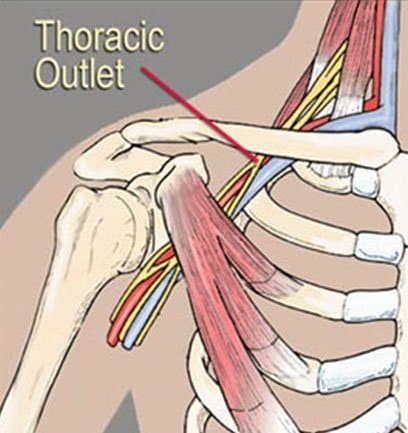
Thoracic outlet syndrome is compression of nerves or blood vessels in the narrow corridor between the collarbone and the first rib. The nerve form is much the more common of the two, and it produces aching, numbness and pins and needles running into the arm and hand, sometimes with weakness or a heavy feeling after the arm has been held up for a while.
It is frequently mistaken for a neck disc problem or carpal tunnel syndrome, and it sometimes coexists with them. Position is the distinguishing clue: symptoms appearing on reaching overhead, carrying a bag on that shoulder, or sleeping with the arm above the head point toward the outlet rather than the neck or wrist.
The Thoracic Outlet Syndrome is a condition caused by compression of the nerves or blood vessels between the collarbone and the first rib. It often leads to pain, numbness, or weakness in the arms, shoulders, and neck.
Thoracic Outlet Syndrome (TOS) occurs when nerves or blood vessels are compressed between the collarbone and the first rib, leading to numbness, tingling, weakness, or pain in the upper limbs. Research supports non-invasive approaches as effective solutions for TOS, addressing postural imbalances, muscular adaptations, and joint mechanics without requiring surgical interventions.
Common causes of TOS include poor posture, repetitive overhead movements, and past injuries. Early intervention is essential to prevent long-term nerve or vascular complications. Structured rehabilitation techniques including postural correction, neuromuscular re-education, and soft tissue mobilization have been shown to relieve compression and restore function.
For more information about thoracic outlet syndrome, contact the Bukit Damansara (KL) main center: WhatsApp+60 17 269 1873 Call+603 2093 1000
Key Takeaways for Thoracic Outlet Syndrome Care
Top 3 Patient-Centered Takeaways (focused on clarity & usability):
Non-surgical options are available and effective: Thoracic Outlet Syndrome can be managed safely with chiropractic, physiotherapy, and rehabilitation. Our center avoids invasive techniques, focusing instead on methods designed to ease nerve or vascular compression gently.
Posture and ergonomics matter: Many TOS symptoms stem from daily posture habits and work setup. Our care focuses on correcting these to reduce strain and improve function guidance you’ll use every day.
Personalized plans make the difference: Every case of TOS is different. That’s why our care starts with a detailed assessment and creates a plan specific to your body, habits, and lifestyle giving you practical tools from day one.
Contact Us for Thoracic Outlet Syndrome Care
Ready to begin a non-invasive recovery plan tailored for you? Contact us to schedule a consultation at Chiropractic Specialty Center.
Non-Invasive Support for Thoracic Outlet Syndrome (TOS)
Targeted non-invasive care approaches may provide effective strategies for managing Thoracic Outlet Syndrome (TOS) while maintaining joint mobility and nerve function. Structured recovery programs focus on addressing contributing factors without the need for invasive procedures.
Understanding Thoracic Outlet Syndrome (TOS)
TOS occurs when blood vessels or nerves in the space between the collarbone and the first rib experience mechanical pressure or irritation. This may result in changes in nerve function, circulation, or structural adaptations affecting the upper limb.
While anyone may experience TOS-related symptoms, certain postural variations, structural considerations, or repetitive movement patterns may increase susceptibility to the condition.
Factors Contributing to TOS
Some key influences that may contribute to variations in thoracic outlet function include:
- Postural Adjustments: Shoulder positioning and forward head posture may influence mechanical function in the thoracic region.
- Repetitive Movement Strain: Engaging in repetitive arm movements or maintaining prolonged shoulder elevation may contribute to variations in nerve mobility.
- Structural Adaptations Following Injury: Both direct trauma (e.g., falls or accidents) and repetitive motion stress may influence soft tissue mechanics in the thoracic region.
Recognizing Common Indicators of TOS
Individuals experiencing TOS-related changes may report:
- Altered sensation in the upper limb, including tingling or numbness.
- Structural pain in the neck, shoulder, or hand.
- Variations in grip strength or reduced arm endurance during repetitive activities.
- Radiating sensations extending from the shoulder down the arm.
Since TOS-related symptoms may progress over time, early assessment is essential for maintaining function and reducing unnecessary adaptations in surrounding structures.
Why Early Assessment Is Essential
Addressing TOS-related structural adaptations early may help reduce mechanical stress on nerve and vascular structures. Without proper intervention, nerve mobility variations or circulatory adaptations may contribute to long-term functional changes.
A structured evaluation can identify contributing postural or movement-based influences, allowing for a targeted recovery strategy.
Addressing Thoracic Outlet Syndrome Through Structured Care
TOS-related structural variations may be reversible when supported by a targeted and integrative approach. A comprehensive assessment can help determine contributing influences, allowing for customized, non-invasive strategies that emphasize:
- Structural mechanics optimization to reduce unnecessary nerve stress.
- Soft tissue mobility support to encourage functional movement patterns.
- Postural and ergonomic adjustments to maintain shoulder and neck positioning.
Factors That Contribute to Effective Recovery
A comprehensive approach to TOS support should focus on:
- Identifying postural adaptations that may influence nerve or circulatory function.
- Assessing associated structures, such as the jaw, shoulder, and upper back mechanics.
- Addressing movement variations that may contribute to thoracic region stress.
By considering all contributing influences, structured non-invasive care programs may encourage long-term functional improvements while maintaining spinal and shoulder mobility.
Challenges in Identifying TOS-Related Structural Changes
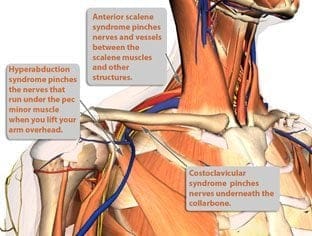
Since TOS shares symptom similarities with shoulder mechanics variations, neck-related conditions, or wrist function adaptations, an accurate assessment is what decides which approach fits.
Misidentification of TOS-related influences may result in delays in recovery or unnecessary interventions. A structured assessment can help differentiate TOS-related functional variations from other upper limb mobility considerations.
Non-Invasive Strategies for Thoracic Outlet Syndrome Support
A comprehensive, structured recovery approach for TOS should focus on:
- Encouraging joint mobility and flexibility while minimizing unnecessary mechanical stress.
- Optimizing movement patterns to reduce compensatory stress on surrounding structures.
- Supporting soft tissue flexibility to encourage functional stability and coordination.
Seeking Structured Guidance for TOS Recovery
If TOS-related symptoms are affecting daily function, a structured movement-based recovery program may provide an alternative to surgical interventions. Early intervention and targeted spinal and shoulder assessments can help maintain long-term function and reduce unnecessary mechanical stress.
Costs are set out on the chiropractic fees in Kuala Lumpur and physiotherapy price in Kuala Lumpur pages, and they are the same at every CSC center.
Many people who read about thoracic outlet syndrome also want to know about the C7-T1 junction, carpal tunnel syndrome, and frozen shoulder. Also, our neck pain guide brings our neck, upper back and arm topics together in one place.
Author:
“Thoracic Outlet Syndrome Non-Surgical Recovery” is written by Yama Zafer, D.C., who holds degrees in physiotherapy and chiropractic from Cleveland University - Kansas City, USA, and has worked in chiropractic and physiotherapy since 1996, focusing on integrative non-invasive spine and joint care; read more about Yama Zafer D.C..
- Urschel HC Jr, Razzuk MA. Neurovascular compression in the thoracic outlet: changing management over 50 years. Ann Surg. 1998;228(4):609-617.
- Povlsen B, Hansson T, Povlsen SD. Treatment for thoracic outlet syndrome. Cochrane Database Syst Rev. 2014;(11):CD007218.
- Sanders RJ, Hammond SL, Rao NM. Thoracic outlet syndrome: a review. Neurologist. 2008;14(6):365-373.
These references describe thoracic outlet syndrome: diagnosis and conservative and surgical management in general. None of them evaluates a care program at Chiropractic Specialty Center. Every reference above can be checked by its DOI or its publisher record.
Last Updated:
Last updated September 24, 2026: Thoracic Outlet Syndrome Non-Surgical Recovery.
Share with others: