

Chiropractic Adjustment for All Ages and Joints
A chiropractic adjustment is a controlled movement applied to a joint that is not moving as it should, and at Chiropractic Specialty Center it is given without twisting. The click that sometimes accompanies a chiropractic adjustment is not a bone returning to position; it is gas coming out of solution in the joint fluid, like cracking a knuckle, and it is not a measure of whether anything was achieved.
A chiropractic adjustment at CSC is given by hand or with an instrument, to people of all ages, for the spine and for the joints of the arms, legs and jaw. Most people feel pressure and a stretch rather than pain. New patients can usually be seen the same day at either Kuala Lumpur center, but call or send a WhatsApp message first.
This page, Chiropractic Adjustment: 5 Clear Facts for Every Age, is published by Chiropractic Specialty Center, Bukit Damansara (KL) main center: WhatsApp +60 17 269 1873 Call +603 2093 1000
The sections below cover what a chiropractic adjustment is, how it differs at each age and for each part of the spine, why forceful pulls are never used, the research, risks, how long care takes and common questions.
Chiropractic Adjustment at CSC: Five Facts to Know First
- Non-rotatory methods for all ages: low-force techniques such as the Activator Method, with no aggressive twisting or forceful neck manipulation.
- Chiropractic and physiotherapy in one plan: a joint that moves more freely still needs strength and control around it.
- Assessment first: history, movement and nerve tests, and imaging only when the examination shows a reason; the method is chosen for that spine or joint.
- No forceful pulls: Y-strap pulls, Ring Dinger® jerks and towel neck pulls are never used.
- Gentler alternatives: targeted mobilization, controlled traction when it is indicated, and physiotherapy-led stabilization exercise.
What Is a Chiropractic Adjustment?
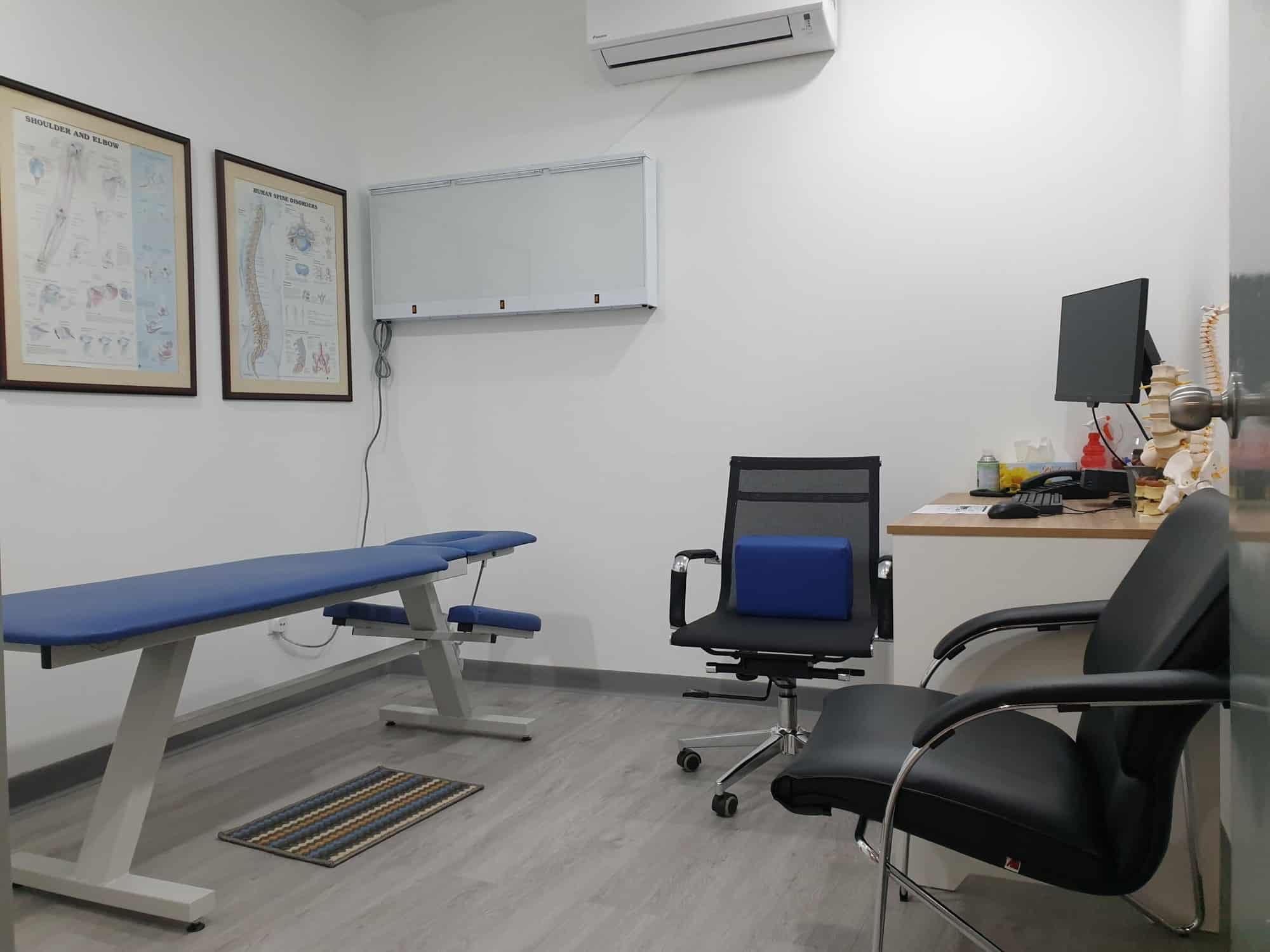
A chiropractic adjustment can be delivered by hand or with an instrument, and the technique is chosen for the person's condition, age and the segment involved. Before any adjustment, the chiropractor examines the area to decide which joint needs care and which method suits it.
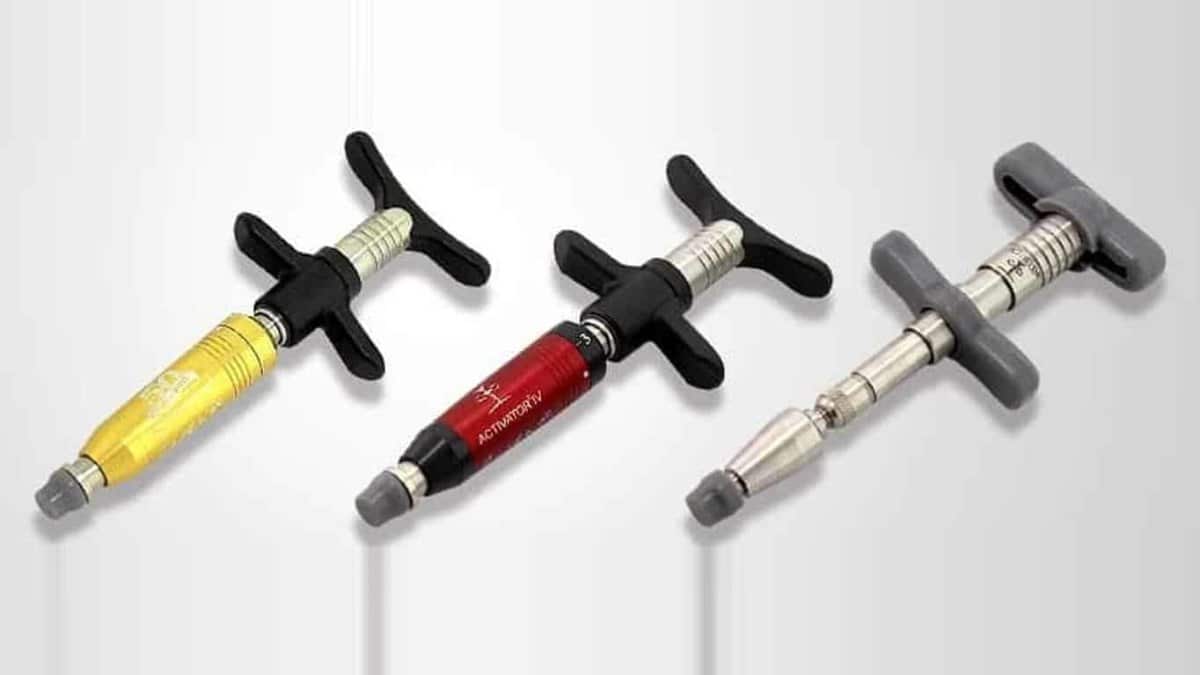
- Instrument-assisted adjustment (the Activator Method): a small, set force delivered to one segment, so the movement stays specific and no twisting is needed. More on the Activator technique page.
- Gentle hands-on adjustment: controlled manual pressure or mobilization, including drop-table and flexion-distraction methods, without rotation.
At CSC the Activator Method is the usual choice for people with a slipped disc, after spine surgery once medically cleared, and for complex orthopedic problems. People sometimes search for a "bone adjustment" or a "back bone adjustment": the bone itself is not being pushed back into place; a chiropractic adjustment restores movement at the joint between two bones.
Chiropractic Adjustment at Every Age
- Very young children: non-force methods only, with no twisting, cracking or popping; a child's neck joints are still developing.
- Teenagers: care moves closer to adult care, and a low-force method such as the Activator may be used.
- Adults without degeneration: manual methods such as Gonstead or Diversified can be appropriate for mobilizing joints in a young spine with no disc damage, though I still prefer low-force methods.
- Adults in their 40s and older: with degenerative changes, bone spurs or nerve impingement I would not recommend a method that produces an audible crack; the Activator is better.
- Older adults and reduced bone density: low-force methods such as the Activator and S.O.T. blocks, and no rotational techniques.
- Pregnancy: rotatory methods are stopped, because relaxin loosens the ligaments; the Activator can be given seated, on the side or face down.
Age alone does not decide how well someone heals. I have seen young patients heal slowly and patients in their golden years respond well; general health, how long the problem has been there and how closely the advice is followed matter more. More on children is in the guide to chiropractic care for children.
Chiropractic Adjustment for Each Part of the Spine
The type of chiropractic adjustment you receive should match the underlying condition and the segment being treated. The upper cervical spine, the joints between the occiput (C0) and C1, C1-C2 and C2-C3, should always be adjusted gently, whatever the age, gender or health of the person. These small joints and their supporting tissues can be injured by aggressive manipulation, which is why I use a non-force method there.
The mid-cervical (C3-C4) and lower cervical (C4-C5, C5-C6, C6-C7, C7-T1) segments are treated with the same precision. The aim of a neck adjustment is controlled movement at one segment, never excessive or uncontrolled force. In the mid back, ribs, lower back, pelvis, sacrum and tailbone, the same rule applies: one segment at a time, chosen by the examination.
Joints of the limbs are adjusted too: the shoulder, elbow, wrist and thumb, the hip, knee, ankle and foot, and the jaw. For the knee I use my own alignment method, developed with the Activator instrument, with no twisting, yanking or pulling of the knee.
Why I Never Use Y-Strap Pulls, Ring Dinger® Jerks or Neck Lifts
Forceful, high-velocity neck traction, whether with a strap, a towel or a "magic hug", places uncontrolled stress along the spine. These maneuvers are not supported by clinical guidelines and may damage discs, ligaments and nerves, especially with an existing disc problem or spinal instability. Cervical lifts and occipital lifts are also non-specific and can raise the risk of joint, ligament or disc injury.
At CSC these techniques are never used. A low-force chiropractic adjustment with the Activator Method, graded mobilization and parameter-controlled traction are used instead when appropriate, with physiotherapy-led stabilization exercise to build muscle support around the neck. Ring Dinger® is a registered trademark of its owner; CSC has no affiliation.
In that two-minute video I show a non-rotatory Activator adjustment next to the side-posture twist I do not use for joint or disc problems. The transcript is on the Rotatory vs Non-Rotatory Adjustment video page.
What to Expect During a Chiropractic Adjustment
Every chiropractic adjustment at CSC begins with an assessment: your medical history, a targeted physical examination and, only if needed, imaging such as an X-ray or MRI. Bring any films, CDs and reports you already have, but please do not have a scan taken just for the visit. The chiropractor then explains the findings and the options, usually two or three, with what each offers and where each falls short; you decide.
During the adjustment you are positioned comfortably, and a controlled, precise movement is given to the affected area. Mild soreness the following day is common, much like after unfamiliar exercise, and settles within a day or two. Sharp pain during a technique, or symptoms traveling further down an arm or leg afterward, should be reported at once. Physiotherapy-guided exercises usually follow to build strength and control around the joint.
A chiropractic adjustment assessment in Kuala Lumpur follows the same examination and the same methods at both CSC centers, and fees are the same at every center. Directions and hours are on the Bukit Damansara contact page and the Bandar Sri Damansara contact page, or call or message either center:
- Bukit Damansara (KL, main center): Call +603 2093 1000 or WhatsApp +60 17 269 1873 to see the Bukit Damansara / KL center
- Bandar Sri Damansara (KL): Call +603 6262 5777 or WhatsApp +60 12 455 6939 to see the Bandar Sri Damansara center
Conditions Where an Adjustment May Be Part of Care
Spinal disc problems: herniated, bulging, protruded or extruded discs, degenerative disc disease, and disc-related sciatica or arm pain.
Nerve compression: sciatica, brachial plexus compression, and carpal tunnel-like symptoms from an irritated nerve in the neck.
Joint and soft-tissue problems: shoulder, hip, knee and ankle problems, tendinitis, bursitis and ligament strain, and stiffness after surgery once medically cleared.
Posture and structure: forward head posture, scoliosis-related pain, and pelvic and sacroiliac joint pain.
Whether a chiropractic adjustment is part of care is decided from your diagnosis, and the plan looks at what is loading the painful structure rather than at the painful structure alone.

Why I Choose the Gentler Technique When Both Work
People often assume that a more forceful chiropractic adjustment is a more effective one. The comparison has been done, and it does not support the assumption. A Cochrane review of manipulation and mobilization for neck pain concluded that the two produce similar results at immediate, short and intermediate-term follow-up, notes that a risk of rare but serious adverse events exists for manipulation, and calls for more research on mobilization.
Set those findings side by side and the reasoning is hard to argue with: if the gentler technique and the forceful one give the same result, and only one carries a rare but serious risk, the gentler one is the sensible default. The American Heart Association and American Stroke Association advise that patients be told of the statistical association between cervical artery dissection and neck manipulation before the neck is manipulated, while stating that the evidence does not establish that manipulation causes dissection. You should have that information rather than trust anyone to weigh it for you.
In Is Chiropractic Safe? 13 Questions Answered I explain when a manual technique is appropriate and when a method that does not twist the spine is the better choice.
Risks and Contraindications
Some conditions call for a modified chiropractic adjustment, and some rule out high-velocity manipulation altogether.
- Not advised: severe osteoporosis or bone fragility; spinal instability from fracture, tumor or advanced degeneration; vascular disorders such as a risk of vertebral artery dissection; active spinal infection or cancer in the area.
- Modified approach needed: severe spinal stenosis; spinal fusion; advanced inflammatory arthritis such as rheumatoid arthritis or ankylosing spondylitis; an acute disc extrusion with severe neurological deficits.
Chiropractic is safe when it is performed by a competent chiropractor who is registered; it is the chiropractor, not chiropractic, who makes mistakes. That is why the examination, not a routine, decides whether and how a joint is adjusted.
Chiropractic Alignment and Misalignment: What Matters
Many people search for chiropractic alignment, and many chiropractors overemphasize spinal misalignments and pelvic unleveling as the main cause of pain. Small misalignments are common in people without any pain, and they are rarely the whole cause of a longstanding problem. More often the underlying causes are soft-tissue imbalance, joint dysfunction from repetitive strain or poor posture, disc problems, nerve compression or postural changes such as scoliosis or forward head posture.
Take sciatica, pain that runs from the lower back down the leg. A pelvic imbalance may be present, but the real problem usually lies deeper, in facet joint changes or a slipped disc, so a plan built on alignment alone may miss what is irritating the nerve. The goal of a chiropractic adjustment is better movement at a restricted joint, as one part of a plan built on an accurate diagnosis.
Pinched Nerves and the Brachial Plexus
A nerve can be pinched where it leaves the spine or further along its path, through muscles and over bone. The brachial plexus, a group of five spinal nerves from the lower neck that supplies the shoulders, arms, elbows, wrists and hands, can be compressed by poor posture, muscle tightness or inflammation, and disc bulges or joint changes in the lower neck. The result can be numbness, tingling, weakness or pain in the arm and hand.
The examination checks each place the pressure can arise: the neck, the muscles at the base of the neck and the space over the first rib. Where a stiff joint or tight muscle adds to the pressure, a chiropractic adjustment may be one part of the plan, alongside exercise and posture changes.
How Long Chiropractic Adjustment Care Takes
It depends on the severity of the problem, how long it has been there, how badly a nerve is pinched, your general health, how closely the advice is followed and how well your body repairs itself. If there is no improvement by about the fifth session the plan is reassessed; if there is none by the tenth, we discuss whether to continue. Once the active phase is over, a maintenance visit now and then makes sense for someone who has had episodes of neck, back or joint trouble before.
For any care to help, the problem first has to be accurately diagnosed, then properly planned, then carried out with as few flaws as possible, and finally topped with changes to posture, habits and daily activities. Fees are the same at every CSC center: RM100 for the examination and RM150 for an adjustment, or from RM110 when the visit also includes physiotherapy, as listed on the chiropractic price in Kuala Lumpur page.
Chiropractic Adjustment: Common Questions
Can people with a disc problem or past spine surgery have a chiropractic adjustment?
Often yes, with the method chosen for the disc or the operated spine. At CSC that means low-force, non-rotatory methods such as the Activator Method, with no twisting or forceful traction, combined with physiotherapy. After spine surgery, care starts once the person has been medically cleared.
Does a chiropractic adjustment hurt?
Most people feel pressure and a stretch rather than pain, and mild soreness the next day settles within a day or two. Care should never be uncomfortable; tell your chiropractor if it is.
Is a chiropractic adjustment the same as spinal manipulation?
Not always. A chiropractic adjustment is a specific, targeted movement at one joint chosen by the examination. Spinal manipulation is a broader term that can include non-specific, high-velocity thrusts, some of which carry greater risk.
Is a chiropractic adjustment suitable for children?
Very young children receive non-force care only, with no twisting or cracking. For teenagers, a low-force method such as the Activator may be used.
Do I need to hear a crack for the adjustment to work?
No. The crack is gas released from the joint fluid. Non-rotatory methods such as the Activator make no sound at all.
Related Reading
- Chiropractic treatment: how the method is chosen: six methods compared.
- Upper cervical chiropractor: the non-force method for the top of the neck.
- Slipped disc chiropractor: the methods used instead of twisting a damaged disc.
- Chiropractic care: what it involves: the seven steps from examination to review.
Peer-Reviewed References
- Biller J, Sacco RL, Albuquerque FC, et al. Cervical arterial dissections and association with cervical manipulative therapy. Stroke. 2014;45(10):3155-3174.
- Gross A, Langevin P, Burnie SJ, et al. Manipulation and mobilisation for neck pain contrasted against an inactive control or another active treatment. Cochrane Database Syst Rev. 2015;(9):CD004249.
- Haynes MJ, Vincent K, Fischhoff C, et al. Assessing the risk of stroke from neck manipulation: a systematic review. Int J Clin Pract. 2012;66(10):940-947.
- Huggins T, Boras AL, Gleberzon BJ, et al. Clinical effectiveness of the activator adjusting instrument in the management of musculoskeletal disorders: a systematic review of the literature. J Can Chiropr Assoc. 2012;56(1):49-57.
- Paige NM, Miake-Lye IM, Booth MS, et al. Association of spinal manipulative therapy with clinical benefit and harm for acute low back pain: systematic review and meta-analysis. JAMA. 2017;317(14):1451-1460.
- Polkinghorn BS, Colloca CJ. Treatment of symptomatic lumbar disc herniation using activator methods chiropractic technique. J Manipulative Physiol Ther. 1998;21(3):187-196.
These references describe chiropractic adjustment, spinal manipulation and their safety in general. None of them evaluates care at Chiropractic Specialty Center.
The Author of Chiropractic Adjustment: 5 Clear Facts for Every Age
Chiropractic Adjustment: 5 Clear Facts for Every Age was written by Yama Zafer, D.C., Chiropractor in Kuala Lumpur Since 1996, who founded Chiropractic Specialty Center in Kuala Lumpur in 2006.
Last Updated: Chiropractic Adjustment for All Ages and Joints
Chiropractic Adjustment for All Ages and Joints was last reviewed and updated on October 28, 2026.
Share with others: