
Carpal Tunnel Syndrome: The Night-Time Pattern

Carpal tunnel syndrome is compression of the median nerve where it passes through a narrow tunnel at the wrist, roofed by a thick ligament. Its pattern is distinctive: numbness and tingling in the thumb, index and middle fingers and half the ring finger, waking people at night, and easing when the hand is shaken out.

The little finger is supplied by a different nerve, so numbness including it points elsewhere, usually to the elbow or the neck. The night-time timing is not coincidental, since most people sleep with the wrist curled and a bent wrist raises pressure inside the tunnel, which is why a night splint holding it straight is the simplest first measure.

This guide to carpal tunnel syndrome, its night-time pattern and how it is assessed, is published by Chiropractic Specialty Center, Bukit Damansara (KL) main center: WhatsApp+60 17 269 1873 Call+603 2093 1000

Key Takeaways

  • Carpal tunnel syndrome is the most common nerve entrapment in the arm.
  • Typical symptoms are numbness and tingling in the thumb, index, middle and half of the ring finger, often worse at night.
  • A night splint that keeps the wrist straight is a simple first step, and nerve gliding exercises and manual therapy may help some people.
  • It is common in pregnancy and often settles after delivery.
  • Constant numbness, wasting of the thumb muscles or weakness needs prompt assessment, and surgery has a clear role when symptoms are severe or not improving.

What Carpal Tunnel Syndrome Is

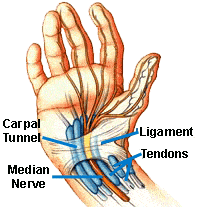
The carpal tunnel is formed by the small wrist bones on three sides and the transverse carpal ligament (flexor retinaculum) on top. Through it pass the median nerve and nine flexor tendons. When the space becomes crowded, for example from swollen tendon linings or fluid retention, pressure on the nerve rises and its blood supply is reduced, producing the familiar tingling and numbness.

Carpal Tunnel Assessment at Two KL Centers

If numbness or tingling in your hand is waking you at night or making fine tasks difficult, an assessment can confirm whether the median nerve at the wrist is the likely source and rule out the neck and elbow. You can reach either center through the Bukit Damansara contact page and the Bandar Sri Damansara contact page, or call directly:

Risk Factors

  • Repetitive or forceful gripping, awkward wrist positions and vibrating tools.
  • Pregnancy and the months after delivery.
  • Diabetes, thyroid disease, rheumatoid arthritis and higher body weight.
  • Previous wrist fracture.
  • Age from middle age onward, and being female.

Symptoms

  • Numbness, tingling or burning in the thumb, index, middle and half of the ring finger.
  • Symptoms that wake you at night and ease when you shake the hand.
  • Clumsiness or dropping objects.
  • Weakness of the thumb and, in long-standing cases, visible wasting at the base of the thumb.
  • Aching that can spread into the forearm.

Carpal Tunnel Syndrome in Pregnancy

Carpal tunnel symptoms are common in pregnancy, especially in the second and third trimesters, because of fluid retention. They often improve after delivery, although some women continue to have symptoms while caring for a baby. Night splints, positioning advice and gentle exercise are usually the first measures, and medicines or injections are a decision for your doctor. See also pain during pregnancy and prenatal and postpartum care.

anatomy of carpal tunnel shown

How It Is Assessed

Assessment includes the history, sensation and strength testing in the hand, and tests such as Tinel’s and Phalen’s signs. The neck, shoulder and elbow are also examined, because a pinched nerve in the neck or ulnar nerve compression at the elbow can cause similar symptoms. Nerve conduction studies confirm the diagnosis and show severity, and are usually arranged when surgery is being considered or the picture is unclear.

Care Options

Night Splint and Activity Changes

A splint that holds the wrist straight at night reduces pressure in the tunnel and is a first-line measure. Adjusting keyboard and mouse position, taking breaks from sustained gripping and avoiding prolonged wrist bending help during the day.

Exercise and Manual Therapy

Tendon and nerve gliding exercises, and manual therapy to the wrist and soft tissues, may help some people, although the research is of limited quality. Physiotherapy and gentle chiropractic care focus on wrist and hand mobility, the forearm, and any contribution from the neck. See also physiotherapy near you.

Injection and Surgery

A corticosteroid injection given by a doctor can relieve symptoms, often for several months. Carpal tunnel release surgery is effective for moderate to severe or persistent cases, and in one trial it gave better results at one year than splinting. It is considered when conservative care has not helped or when there is constant numbness, weakness or muscle wasting.

When to See a Doctor Promptly

  • Constant numbness rather than symptoms that come and go.
  • Weakness of the thumb or visible wasting of the thumb muscles.
  • Symptoms after a wrist injury, or a hot, swollen wrist.
  • Symptoms in both hands with neck pain, clumsiness or unsteady walking.

Related Hand Conditions

Tendon conditions such as trigger finger, trigger thumb and De Quervain’s tenosynovitis also affect hand function but cause catching, locking or thumb-side wrist pain rather than numbness. See our trigger finger and trigger thumb page and our overview of chiropractic and physiotherapy in Malaysia.

Carpal Tunnel Syndrome: Common Questions

The chiropractic price list in Kuala Lumpur and physiotherapy fees in Kuala Lumpur pages list every fee before care begins.

What are the first signs of carpal tunnel syndrome?

Tingling, numbness or pins and needles in the thumb, index and middle fingers, often at night or during tasks with a bent wrist. Some people notice a weaker grip or drop things.

Does a wrist splint help?

A splint that keeps the wrist straight at night is a common first step and helps many people with mild to moderate symptoms, particularly in the short term.

Can carpal tunnel syndrome in pregnancy be managed without medicine?

Often, yes. Night splints, positioning advice and gentle exercise are the usual first measures, and symptoms frequently improve after delivery. Decisions about medicines or injections belong with your doctor.

How long does improvement take?

It varies with severity. Mild cases may improve within weeks of splinting and activity changes; constant numbness or weakness needs medical assessment and may need surgery.

When is surgery considered?

When there is constant numbness, weakness or wasting of the thumb muscles, when nerve tests show severe compression, or when symptoms persist despite a good trial of conservative care.

References

  1. Genova A, Dix O, Saefan A, Thakur M, Hassan A. Carpal tunnel syndrome: a review of literature. Cureus. 2020;12(3):e7333.
  2. Karjalainen TV, Lusa V, Page MJ, et al. Splinting for carpal tunnel syndrome. Cochrane Database Syst Rev. 2023;2:CD010003.
  3. O’Connor D, Marshall S, Massy-Westropp N. Non-surgical treatment (other than steroid injection) for carpal tunnel syndrome. Cochrane Database Syst Rev. 2003;(1):CD003219.
  4. Kim SD. Efficacy of tendon and nerve gliding exercises for carpal tunnel syndrome: a systematic review of randomized controlled trials. J Phys Ther Sci. 2015;27(8):2645-2648.
  5. Talebi GA, Saadat P, Javadian Y, Taghipour M. Comparison of two manual therapy techniques in patients with carpal tunnel syndrome: a randomized clinical trial. Caspian J Intern Med. 2020;11(2):163-170.
  6. Gerritsen AA, de Vet HC, Scholten RJ, et al. Splinting vs surgery in the treatment of carpal tunnel syndrome: a randomized controlled trial. JAMA. 2002;288(10):1245-1251.
  7. Padua L, Di Pasquale A, Pazzaglia C, et al. Systematic review of pregnancy-related carpal tunnel syndrome. Muscle Nerve. 2010;42(5):697-702.

These references describe carpal tunnel syndrome and its non-surgical and surgical management in general. None of them evaluates care at Chiropractic Specialty Center.

The Author of Carpal Tunnel Syndrome: The Night-Time Pattern

Carpal Tunnel Syndrome: The Night-Time Pattern was written by Yama Zafer, D.C., who has 30+ years in chiropractic and physiotherapy and founded Chiropractic Specialty Center in Kuala Lumpur in 2006.

Last Updated: Carpal Tunnel Syndrome: The Night-Time Pattern

Carpal Tunnel Syndrome: The Night-Time Pattern was last reviewed and updated on September 25, 2026.

Share with others: