


RxDecom Spinal Decompression: How the Device Works
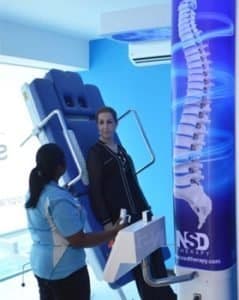
RxDecom spinal decompression uses a motorized system to apply controlled traction to selected parts of the spine. The aim is to alter mechanical loading across the disc and surrounding structures without sudden force or rotational manipulation. Like other decompression methods, it is not suitable for every neck or lower-back problem, so the examination and any relevant imaging should come before the device is selected.
A session is performed while the person is supported on the table, with force and positioning adjusted according to the planned region. Decompression is generally used as one component of a broader program rather than as a standalone promise of disc repair. Registered physiotherapy, movement, strengthening and other care may be added according to the findings.
For more information about RxDecom spinal decompression, contact the Bukit Damansara (KL) main center: WhatsApp+60 17 269 1873 Call+603 2093 1000
Key Takeaways
- RxDecom® is a motorized decompression table that applies a controlled, adjustable pull to the neck or lower back.
- It is used as one part of a plan for selected disc-related problems, alongside physiotherapy, chiropractic care and exercise.
- The research on motorized decompression is limited and mostly of low quality, so its use is decided case by case after an examination.
How the Device Works
RxDecom combines a servo motor, sensors and computer control to apply and hold a set load and angle through a session. The load can be ramped up and down gradually and adjusted to the region being treated, so the same settings can be repeated from one visit to the next. The person lies supported on the table throughout, and the session can be stopped at any time.
Arranging a Decompression Assessment at CSC
To find out whether decompression is appropriate for you, see the Bukit Damansara contact page and the Bandar Sri Damansara contact page, or call either center directly:
- Bukit Damansara (KL, main center): Call +603 2093 1000 or WhatsApp +60 17 269 1873 to see the Bukit Damansara / KL center.
- Bandar Sri Damansara (KL): Call +603 6262 5777 or WhatsApp +60 12 455 6939 to see the Bandar Sri Damansara center.
Who It May Be Considered For
Decompression may be considered for selected problems involving the discs of the neck or lower back, such as slipped discs, sciatica from a disc, or spondylosis, and occasionally for people with ongoing pain after spine surgery. It is not suitable for everyone; fractures, significant osteoporosis, tumors, infection, some implants and pregnancy are among the reasons it may not be used.
What the Evidence Shows
Motorized decompression is a form of traction. In a randomized trial of 60 adults with nerve pain from the lower back, adding four weeks of non-surgical decompression to routine physical therapy gave greater gains in pain, back movement, muscle endurance and disability scores than physical therapy alone (Amjad et al., 2022). In 30 patients with a lumbar disc herniation, six weeks of decompression went together with less low back pain and a measurable gain in disc height on CT scans (Apfel et al., 2010). A small randomized trial found that decompression and general traction both lowered pain and disability in people with a disc herniation (Choi et al., 2015), and an earlier outcome study of 778 people with herniated or degenerated discs or facet problems reported less pain and better mobility after vertebral axial decompression (Gose et al., 1998).
Even with this research, at CSC decompression is never offered as a stand-alone solution. It is used, where the examination supports it, alongside physiotherapy, low-force chiropractic care and an exercise program, and progress is reviewed at set points.
Why Time and Conservative Care Matter With a Disc Herniation
Many people believe a herniated disc is permanent and that surgery is the only way out. A systematic review of 31 studies of lumbar disc herniation managed conservatively found that herniated material regressed at different rates by type: about 96% for sequestration, 70% for extrusion, 41% for protrusion and 13% for bulging. Complete resolution was recorded in 43% of sequestrated and 15% of extruded discs (Chiu et al., 2015).
The larger herniations, the ones most likely to be described as surgical, were the ones most likely to regress. That is not a promise about any individual disc, but it is a reason to understand the type of herniation and its likely course before deciding on surgery. If you are considering or receiving nonsurgical spinal decompression for back or leg pain, get urgent medical attention, a thorough assessment by a competent clinician the same day, if numbness develops or worsens around your genitals, between your genitals and anus, or around your anus. New difficulty passing urine needs the same urgent assessment, even while bladder and bowel control remain intact, and so does any loss of that control. These symptoms have several possible causes. Some may call for an invasive procedure, but assessment helps determine suitable care and does not automatically mean surgery is necessary. Progressive leg weakness should not be ignored; it should be assessed promptly by a competent provider, and conservative care may still be a reasonable route depending on what that assessment finds.
Decompression and Traditional Traction
Traditional traction applies a steady pull, often to the whole spine. Motorized decompression tables such as RxDecom vary the pull gradually and allow the angle and load to be set for a region. Whether these differences produce better outcomes than traditional traction has not been shown in good-quality trials, so the choice of method depends on the examination findings and how the person responds.
Getting Assessed in Kuala Lumpur
Readers in the northwest of the city are often nearer to chiropractic and physiotherapy in Bandar Sri Damansara. That center provides chiropractic together with physiotherapy under one roof.
The main center sits in Bukit Damansara. You can read about chiropractic and physiotherapy in Kuala Lumpur.
Addresses, telephone numbers and opening hours are listed on how to reach the Bandar Sri Damansara center and Bukit Damansara location and opening hours.
Before booking, the chiropractic prices in Kuala Lumpur and physiotherapy prices in Kuala Lumpur pages show each fee and the package options.
Peer-Reviewed References
- Amjad F, Mohseni-Bandpei MA, Gilani SA, et al. Effects of non-surgical decompression therapy in addition to routine physical therapy on pain, range of motion, endurance, functional disability and quality of life versus routine physical therapy alone in patients with lumbar radiculopathy; a randomized controlled trial. BMC Musculoskelet Disord. 2022;23(1):255.
- Chiu CC, Chuang TY, Chang KH, et al. The probability of spontaneous regression of lumbar herniated disc: a systematic review. Clin Rehabil. 2015;29(2):184-195.
- Apfel CC, Cakmakkaya OS, Martin W, et al. Restoration of disk height through non-surgical spinal decompression is associated with decreased discogenic low back pain: a retrospective cohort study. BMC Musculoskelet Disord. 2010;11:155.
- Choi J, Lee S, Hwangbo G. Influences of spinal decompression therapy and general traction therapy on the pain, disability, and straight leg raising of patients with intervertebral disc herniation. J Phys Ther Sci. 2015;27(2):481-483.
- Gose EE, Naguszewski WK, Naguszewski RK. Vertebral axial decompression therapy for pain associated with herniated or degenerated discs or facet syndrome: an outcome study. Neurol Res. 1998;20(3):186-190.
These studies describe spinal decompression, traction and disc research in general; none of them evaluates care at Chiropractic Specialty Center.
The Author of RxDecom Spinal Decompression: How the Device Works
RxDecom Spinal Decompression: How the Device Works was written by Yama Zafer, D.C., who has 30+ years in chiropractic and physiotherapy and founded Chiropractic Specialty Center in Kuala Lumpur in 2006.
Last Updated: RxDecom Spinal Decompression: How the Device Works
RxDecom Spinal Decompression: How the Device Works was last reviewed and updated on October 3, 2026.