

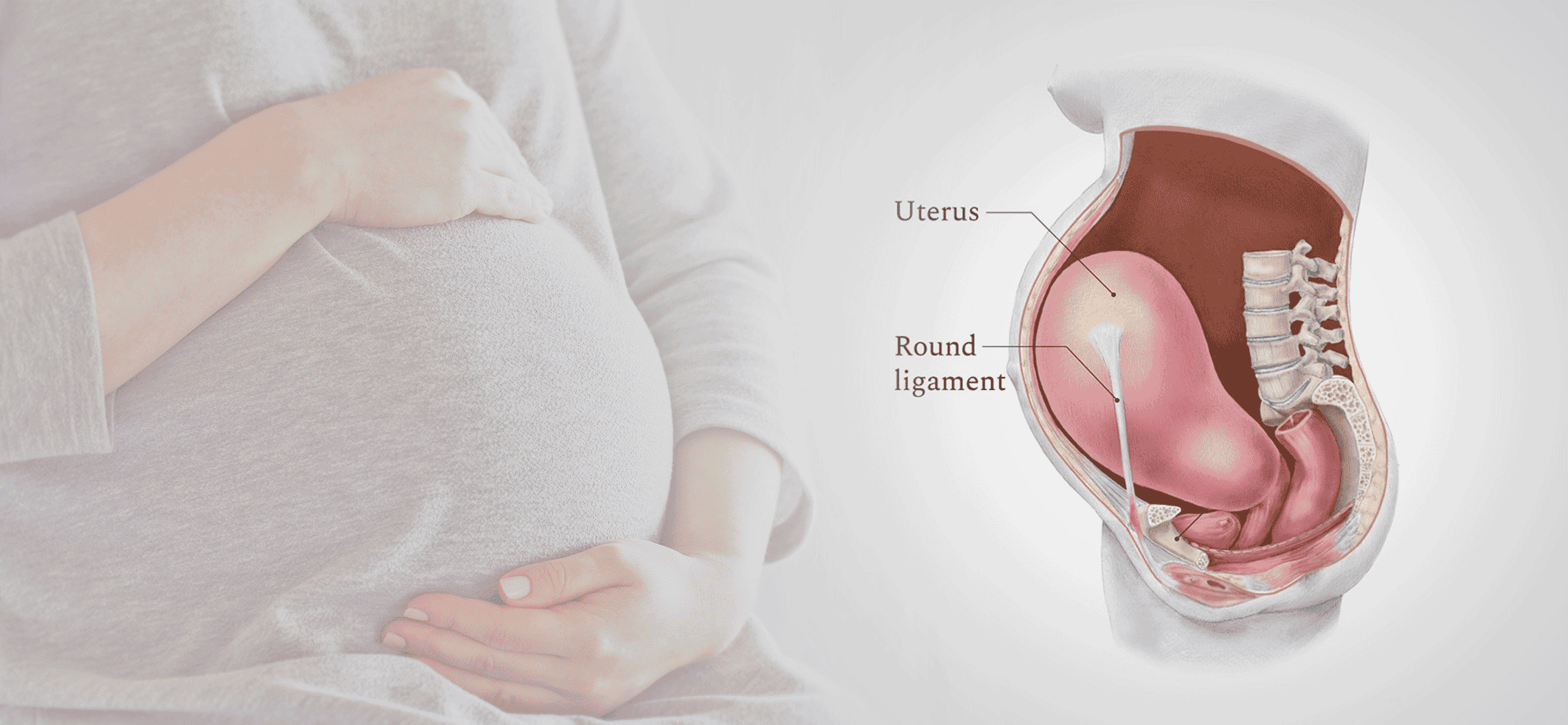
Round Ligament Pain in Pregnancy
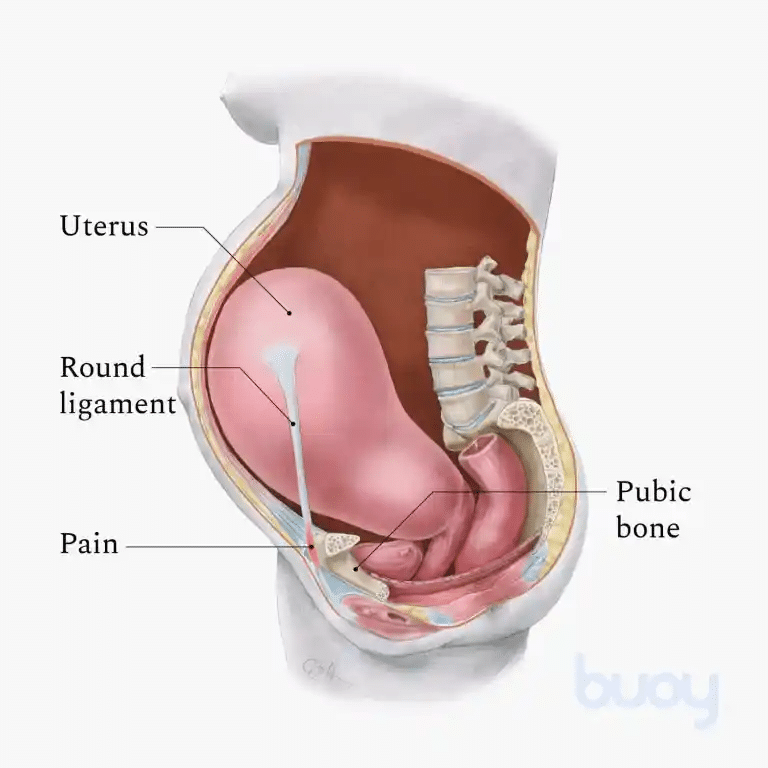
Round ligament pain is a common pregnancy-related pain linked to stretching of the round ligaments that support the uterus. It is often felt as a brief, sharp or pulling sensation low in the abdomen or groin, particularly during the second trimester and during quick changes of position such as standing, rolling in bed, coughing or sneezing.
Because abdominal and groin pain in pregnancy has many possible causes, the pattern matters. Short-lived pain triggered by movement may fit round-ligament pain. When the presentation is uncomplicated, gentle activity and position changes may make daily movement more comfortable while the pregnancy progresses.
Round ligament pain is a label commonly used for brief lower-abdominal or groin pain linked to movement as the uterus enlarges. The same region can also hurt for other reasons. Severe, persistent, worsening or unusual symptoms, and symptoms with bleeding, fluid leakage, fever, urinary changes, reduced fetal movement or illness, need obstetric or medical assessment.
This guide to round ligament pain in pregnancy, what can mimic it and when to contact the maternity team, is published by Chiropractic Specialty Center, Bukit Damansara (KL) main center: WhatsApp+60 17 269 1873 Call+603 2093 1000
Do not assume abdominal or groin pain is musculoskeletal
[1-4]A chiropractic visit cannot rule out pregnancy complications, urinary infection, appendicitis, ovarian or gastrointestinal causes, labor-related concerns or another internal condition. Contact the maternity team or appropriate medical service when the cause is uncertain.
What is the round ligament?
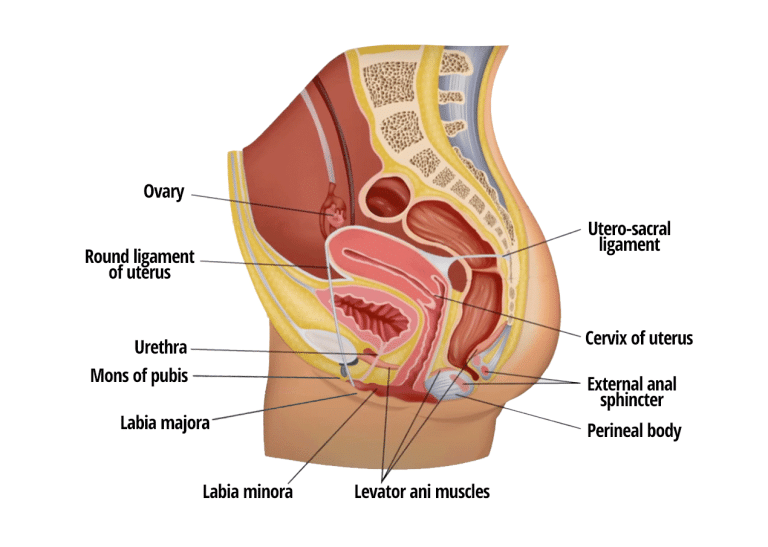
The round ligaments are paired connective-tissue structures associated with the uterus and the groin region. As pregnancy progresses, the uterus and surrounding tissues change, and some people describe brief pulling, sharp, aching or stretching sensations low in the abdomen or groin. Government patient information commonly uses the term “round ligament pain” for this pattern.
The name describes a possible explanation; it is not a diagnosis that a webpage can safely confirm. The lower abdomen and groin contain several structures, and symptoms may overlap with pelvic-girdle pain, hip problems, abdominal-wall strain, urinary conditions, gastrointestinal conditions or obstetric concerns.
What does round ligament pain commonly feel like?
| Feature | Commonly described pattern | Why it is not diagnostic |
| Location | One or both sides of the lower abdomen, front of the pelvis or groin | Pelvic, hip, urinary, gastrointestinal and obstetric conditions may affect the same region. |
| Sensation | Pulling, stretching, sharp, cramp-like or aching | The quality of pain alone cannot identify the tissue or exclude an internal cause. |
| Trigger | Standing quickly, rolling, coughing, sneezing, laughing or changing direction | Movement can also aggravate abdominal wall, hip, back or pelvic-girdle symptoms. |
| Duration | Often brief or intermittent | Persistent or escalating symptoms need assessment rather than being relabeled as “normal.” |
| Timing | Often discussed during the middle months of pregnancy | Symptoms can occur at other stages, and gestational timing does not prove the cause. |
A pattern that is brief, linked to a quick movement and settles when the movement stops may be consistent with a benign ligament-related explanation, but the person should still tell the obstetric clinician when the symptom is new, recurrent, difficult to interpret or accompanied by another change.
What can mimic round ligament pain?
Several concerns can produce pain in the lower abdomen, groin or front of the pelvis. The goal is not to make the reader anxious; it is to avoid turning a broad symptom into a definite ligament diagnosis.
| Possible source | Clues that may be reported | Appropriate next step |
| Pregnancy-related pelvic girdle pain | Pubic, groin, buttock or sacroiliac symptoms with walking, stairs, single-leg tasks or turning in bed | Musculoskeletal and obstetric context should be assessed; see the pelvic-girdle guide for depth. |
| Hip or lower-back referral | Groin, buttock or thigh symptoms linked to hip or spinal movement | Assessment may be appropriate after urgent and internal causes are considered. |
| Urinary concern | Burning, urgency, fever, flank pain, feeling unwell or blood in urine | Prompt medical assessment. |
| Gastrointestinal or abdominal condition | Persistent focal pain, fever, repeated vomiting, inability to eat or drink, or progressive tenderness | Medical assessment; urgent when severe or worsening. |
| Obstetric concern | Bleeding, fluid leakage, reduced fetal movement, severe pain, pressure, contractions or another pregnancy change | Contact the maternity team or emergency service as advised. |
| Abdominal-wall or soft-tissue strain | Symptoms linked to movement or load without internal warning signs | Clinical assessment may clarify the pattern; avoid self-diagnosis. |
The pregnancy-related pelvic girdle pain guide explains pubic and sacroiliac patterns, while the pregnancy hip guide and back pain in pregnancy guide address neighboring regions.
When should you contact the maternity team?
Contact the maternity team promptly when pain is new and difficult to interpret, does not settle, repeatedly returns, interferes with walking or sleep, or feels different from a previously assessed pattern. Earlier assessment is appropriate when the person has a high-risk pregnancy, a recent fall or injury, a history of pregnancy complications, or instructions from the obstetric team to report specific symptoms.
The absence of bleeding does not by itself prove that abdominal pain is harmless. Malaysian obstetric pathways and the person’s own maternity instructions take priority.
What self-care may be considered after medical reassurance?
When an obstetric or medical clinician has considered other causes and the symptom fits a benign movement-related pattern, simple modifications may be reasonable. These are options, not prescriptions, and they should stop if they increase symptoms or make the person feel unwell.
- Change position gradually rather than standing, turning or rolling suddenly.
- Use the arms and a stable surface for support during transfers when needed.
- Before coughing or sneezing, pause and choose a supported position rather than forcefully bracing or pressing the abdomen.
- Break long standing or walking tasks into manageable intervals and vary position.
- Discuss heat, medication, support garments and exercise with the obstetric or medical clinician rather than assuming they are appropriate.
- Maintain comfortable activity when medically appropriate; exercise advice should account for pregnancy status, symptoms and prior activity.
A support garment may help selected people, but it should not be described as preventing ligament pain, supporting the baby in a required position or correcting the uterus. Fit, comfort and skin response matter.
Can chiropractic care treat the round ligament?
Chiropractic care should not be presented as treating the uterus or an internal round ligament, releasing a trapped ligament, repositioning the uterus, creating fetal space or preventing obstetric complications. Those claims exceed what a musculoskeletal visit can establish.
After appropriate medical or obstetric consideration, a chiropractor may assess coexisting back, pelvic-joint, hip, movement or soft-tissue findings that influence how the person stands, walks, rolls or transfers. The goal is to address the maternal musculoskeletal presentation and function, not to prove that the symptom came from a uterine ligament.
At CSC, gentle manual and fascial work on the round ligament area and the hip adductors near the groin is not offered on its own. It is combined with highly specific, gentle Activator adjustments of the pubic bone, sacrum and pelvis, since the evidence does not support manual therapy alone for pregnancy-related pelvic girdle pain, and Yama Zafer, D.C. has used this combination for more than 30 years.
Systematic reviews of chiropractic and manual therapies concern broader pregnancy-related low-back and pelvic-girdle symptoms. They do not validate a claim that chiropractic care corrects round-ligament pathology. Evidence is limited, and published adverse-event reporting is too sparse for a universal safety statement.
How should an assessment be structured?
- Clarify the exact location, onset, duration, movement triggers and associated symptoms.
- Decide whether medical or obstetric assessment should occur before any musculoskeletal examination.
- When appropriate, assess walking, transfers, hip and spinal movement, pelvic loading, abdominal-wall response and neurologic features without strongly provoking symptoms.
- Explain the findings as possibilities and functional patterns, not as proof that a ligament or pelvis is out of place.
- Agree on a conservative plan, measurable task goal, review point and referral boundary.
Is round ligament pain the same as Braxton Hicks tightening?
No single description online can reliably separate every lower-abdominal sensation. Ligament-related pain is often described as brief and linked to movement, while uterine tightening may feel different. However, timing, regularity, pressure, fluid leakage, bleeding, back symptoms or concern about labor should be discussed with the maternity team rather than self-classified.
This page intentionally avoids a home test for distinguishing labor from musculoskeletal symptoms. The safer next step is to follow the maternity service’s instructions, especially when the pregnancy is preterm, symptoms are rhythmic or increasing, or the person is uncertain.
What changes after childbirth?
A symptom previously labeled round-ligament pain often changes as the uterus and abdominal tissues recover, but persistent postpartum abdominal or groin pain deserves reassessment. Postpartum symptoms can involve the abdominal wall, hip, pelvis, back, urinary system, wound or other structures.
Fever, heavy or increasing bleeding, wound concerns, severe or worsening abdominal or pelvic pain, fainting, chest symptoms, breathing difficulty, severe headache, one-sided leg swelling or new neurologic symptoms require medical assessment. The postpartum care guide covers recovery, activity and referral pathways in more detail.
What should you ask before accepting care?
- Has an obstetric or medical cause been considered, and what would trigger referral?
- Is the practitioner treating a maternal musculoskeletal finding or claiming to treat the uterus or ligament itself?
- What movement or daily task is the plan intended to improve?
- How will response be measured, and when will the plan be changed or stopped?
- Does any proposed abdominal contact have a clear purpose, explicit consent and an option to decline?
- Are pregnancy and postpartum physiotherapy services delivered by registered physiotherapists within their own scope?
Choosing the Nearer KL Center
A second location shortens the trip for many readers. You can read about the Bandar Sri Damansara center. That center provides chiropractic together with physiotherapy.
The address, telephone number and opening hours are listed on the Bandar Sri Damansara contact page. Travel details for the main center are on the Bukit Damansara contact page.
After the baby arrives, the guide to chiropractic care for children explains which concerns in babies belong with the doctor first and how care is adapted as a child grows.
Contact Chiropractic Specialty Center
For a pregnancy-sensitive musculoskeletal assessment, use the verified center and contact routes below. Urgent obstetric, medical or emergency symptoms should be directed to the appropriate medical service rather than an appointment request.
| Center | Address / location route | Telephone | Hours | |
| Bukit Damansara: Kuala Lumpur | No. 71, Jalan Medan Setia 1, Plaza Damansara, Bukit Damansara, 50490 Kuala Lumpur | +603 2093 1000 | +60 17 269 1873 | Monday-Friday 8:00 AM-8:00 PM; Saturday-Sunday 8:00 AM-6:00 PM |
| Bandar Sri Damansara | See the verified branch contact page for the current address and map pin | +603 6262 5777 | +60 12 455 6939 | Monday-Friday 8:00 AM-8:00 PM; Saturday-Sunday 8:00 AM-6:00 PM |
Bukit Damansara headquarters contact details | Bandar Sri Damansara contact details | CSC services
Planning a visit? You can review the current chiropractic price in Kuala Lumpur and physiotherapy fees in Kuala Lumpur before you come in.
Questions About Round Ligament Pain and Groin Symptoms
They cannot confirm that an individual abdominal or groin symptom comes from the round ligament.
Can round ligament pain be diagnosed from the location alone?
No. Lower-abdominal and groin symptoms overlap with pelvic, hip, urinary, gastrointestinal and obstetric concerns. Location is useful information but not a diagnosis.
Can round ligament pain occur on both sides?
It is commonly described on one or both sides.
Why does it hurt when I cough or sneeze?
A sudden movement or increase in abdominal pressure can reproduce several movement-related patterns, including ligament, abdominal-wall, hip, pelvic or back symptoms. That trigger does not identify the structure with certainty.
Is round ligament pain dangerous?
A clinician-confirmed benign pattern is generally managed conservatively, but a webpage cannot confirm that diagnosis. Severe, persistent or associated symptoms require obstetric or medical review.
Should I stretch the groin when it hurts?
Not automatically. Gentle movement may help some people, but stretching may aggravate another condition. Discuss persistent symptoms and obtain individualized advice.
Can a pregnancy support belt help?
It may help selected people with certain movement-related symptoms, but fit and response vary. It does not diagnose the cause or prevent an obstetric problem.
Does round ligament pain mean labor is starting?
Not necessarily, but online descriptions cannot reliably rule labor in or out. Contact the maternity team for rhythmic, increasing or concerning symptoms, fluid leakage, bleeding, pressure or uncertainty.
Can symptoms continue after birth?
Persistent postpartum lower-abdominal or groin pain should be reassessed rather than assumed to be the same pregnancy symptom. Healing, abdominal-wall, pelvic, hip, urinary and other causes may need consideration
References
References support the specific educational statements cited in this page. They do not establish that every intervention is appropriate for every pregnant or postpartum patient.
- Centers for Disease Control and Prevention. Urgent Maternal Warning Signs. Hear Her Campaign. Accessed July 29, 2026.
- Ministry of Health Malaysia, Medical Development Division. Handbook of Obstetrics Guideline. Putrajaya: Ministry of Health Malaysia; 2024. MOH/P/PAK/535.24(GU)-e.
- Pregnancy, Birth and Baby. Round ligament pain. Australian Government health information service. Accessed July 29, 2026.
- National Health Service. Stomach pain in pregnancy. NHS Pregnancy. Accessed July 29, 2026.
- Royal College of Obstetricians and Gynaecologists. Pelvic girdle pain and pregnancy. Patient information. Accessed July 29, 2026.
- National Institute for Health and Care Excellence. Antenatal care. NICE guideline NG201. Published August 19, 2021; current online guidance accessed July 29, 2026.
- American College of Obstetricians and Gynecologists. Physical Activity and Exercise During Pregnancy and the Postpartum Period. Committee Opinion No. 804. Obstet Gynecol. 2020;135(4):e178-e188.
- Weis CA, Pohlman KA, Draper C, daSilva-Oolup S, Stuber K, Hawk C. Chiropractic care for adults with pregnancy-related low back, pelvic girdle pain, or combination pain: a systematic review. J Manipulative Physiol Ther. 2020;43(7):714-731.
- Weis CA, Stuber K, Murnaghan K, Wynd S. Adverse events from spinal manipulations in the pregnant and postpartum periods: a systematic review and update. J Can Chiropr Assoc. 2021;65(1):32-49.
The Author of Round Ligament Pain in Pregnancy: A Clear Guide
Round Ligament Pain in Pregnancy: A Clear Guide was written by Yama Zafer, D.C., who has 30+ years in chiropractic and physiotherapy and founded Chiropractic Specialty Center in Kuala Lumpur in 2006.
Last Updated: Round Ligament Pain in Pregnancy
Round Ligament Pain in Pregnancy was last reviewed and updated on October 3, 2026.