NSD Therapy®: Components, Suitability and the Care Framework
NSD Therapy® is a non-surgical protocol for disc-related spine problems, and it is a combination rather than a single machine or technique. Its components are mechanized spinal decompression, flexion-distraction, targeted soft-tissue work, non-twisting chiropractic and specific rehabilitation exercise. Which of those apply in a given case is decided by examination findings rather than by a fixed package.
Suitability turns on which structure is involved, how the nerve is behaving, and whether any finding calls for a medical opinion first. Where the protocol does apply, it runs as a course over several weeks with re-measurement built into it.
How the protocol is put together
- It is a combination. The devices do part of the work; hands-on therapy and rehabilitation do the rest.
- Components follow indication. Not every patient receives every modality, and which ones you get follows from your examination.
- Manipulation is non-rotatory. That choice is deliberate where a disc is involved.
- Rehabilitation is included. Exercise specific to your condition runs alongside the in-clinic work, not after it.
- Progress is measured. Movement, neurological findings and the activities that were limited are re-checked at set review points.
What each component is for
The protocol has several parts. Each addresses a different aspect of a disc problem, which is why they are used together rather than alone.
| Component | What it addresses | When it is added |
|---|---|---|
| RxDecom mechanized decompression | Pressure across the disc and the nerve root space | Core component for disc-related presentations |
| FD-3000 flexion-distraction | Segmental movement and gentle opening of the posterior joints | Core component, paired with decompression |
| Shockwave therapy | Tendon and enthesis tissue that has stopped remodeling | When a tendon or attachment is part of the picture |
| High-intensity laser | Deeper soft-tissue inflammation and pain | When inflammation limits progress with other work |
| Therapeutic ultrasound | More superficial soft-tissue tension and healing | Where the target tissue is within reach |
| Electrotherapy | Pain modulation and muscle activation | For symptom control or to help a muscle switch on |
| Manual, myofascial and trigger-point therapy | Muscle tone, tender points and restricted fascia | Nearly always; the tissue around the disc is rarely quiet |
| Non-rotatory chiropractic manipulation | Joint movement at and around the involved level | When joint restriction is limiting the segment |
| Condition-specific rehabilitation | Strength, control and load tolerance | Throughout, and it continues after clinic work ends |
Which components apply to you is decided at assessment and reviewed as the case progresses.
This Clear Guide to NSD Therapy® Components and Suitability explains the Care Framework created by Yama Zafer, D.C., and distinguishes evidence for individual services from evidence for the branded framework as a whole.
Information on this page is general and cannot determine whether NSD Therapy® or any individual component is suitable for a particular person.
If you would like to see costs before a visit, CSC publishes its chiropractic fees and physiotherapy fees in full.
NSD Therapy® Assessment at Two KL Centers
If you have disc-related neck or back pain and would like to know whether any part of the framework suits you, an assessment is the starting point. You can reach either center through the Bukit Damansara contact page and the Bandar Sri Damansara contact page, or call directly:
- Bukit Damansara (KL, main center): Call +603 2093 1000 or WhatsApp +60 17 269 1873 to see the Bukit Damansara / KL center.
- Bandar Sri Damansara (KL): Call +603 6262 5777 or WhatsApp +60 12 455 6939 to see the Bandar Sri Damansara center.
What NSD Therapy® Is
NSD Therapy® is a branded spine-care framework rather than one procedure, one device, or one fixed sequence. It may coordinate chiropractic services, physiotherapy, guided rehabilitation, movement education, and selected equipment-based options when those elements are appropriate after assessment.
The framework is intended to organize separate professional services around a shared plan. Each component keeps its own purpose, evidence base, limitations, and professional scope. A person may receive one component, several coordinated components, or a referral to another healthcare professional. The NSD Therapy® name does not make every component necessary for every person.
Designed and Invented by Yama Zafer, D.C.
NSD Therapy® was designed and invented by Yama Zafer, D.C. Related inventive work is documented in published international patent application WO2010120165A1, where he is named as the inventor. The publication records inventive activity connected with spine-care apparatus and methods; it does not, by itself, establish that the complete NSD Therapy® framework is suitable for every person or predict a clinical outcome.
The framework has continued to develop through Yama Zafer, D.C.’s work in chiropractic, patient education, equipment design, and coordinated rehabilitation planning. His documented professional background, Malaysian registration, innovation record, and editorial role are available on his official MyChiro profile.
How the Care Framework Is Organized
The framework begins with the person rather than with a device. Relevant history, current symptoms, daily demands, movement tolerance, previous care, and available imaging are considered before any component is discussed. The purpose is to identify reasonable options, limitations, referral needs, and the order in which services may be considered.
NSD Therapy® does not require chiropractic, physiotherapy, rehabilitation, or spinal decompression to be used together in every case. The plan may change as findings, tolerance, goals, or referral information change. Consent, expected responsibilities, fees, and practical limitations should be explained before a service begins.
Professional Roles Within NSD Therapy®
Chiropractic services are provided by registered chiropractic practitioners. Physiotherapy services are provided by registered physiotherapists. Guided rehabilitation and exercise are delivered within the professional role of the person providing them. When services are coordinated, each practitioner remains responsible for decisions within that practitioner’s scope.
NSD Therapy® should not be described as one profession replacing another. The framework is a way to organize distinct services when coordination is appropriate. Medical, surgical, pharmaceutical, dental, obstetric, and emergency decisions remain outside the framework and may require referral.
Components That May Be Considered
Possible component | How it may fit within the framework |
Chiropractic services | Assessment-informed manual or instrument-assisted methods, movement guidance, and advice within chiropractic scope. |
Physiotherapy | Movement assessment, exercise, education, manual methods, and selected modalities within physiotherapy scope. |
Guided rehabilitation | Activity tolerance, movement control, capacity, and self-management. |
Movement education | Practical guidance related to daily activity, posture, pacing, and return to usual tasks. |
Equipment-based spinal decompression | A selected option when relevant, available, and appropriate; it is not automatic. |
Imaging review | Considered when existing scans are relevant; imaging alone does not identify the source of every symptom. |
Evidence Applies to Each Component
The available guidance reviewed for this page supports person-centered assessment, education, exercise, selected manual approaches, and coordinated care for many lower-back concerns. Evidence for mechanical traction or decompression varies by population, method, dosage, and outcome, and it should not be generalized into a guarantee for NSD Therapy® as a complete branded framework.
The World Health Organization 2023 guideline emphasizes integrated, person-centered care. NICE guideline NG59 emphasizes alternative diagnoses, self-management, activity, and imaging only when results are likely to change management. The 2021 JOSPT clinical practice guideline supports matching nonpharmacologic options to the individual presentation. A 2023 systematic review of mechanical traction reported low-certainty findings and no clear short-term difference between traction types.
What NSD Therapy® May Mean — and What It Does Not Mean
What it may mean | What it does not automatically mean |
A framework may coordinate several services | Every person needs every component |
A component may have a reasonable purpose after assessment | The brand name proves that component will work |
Imaging may add useful context | A scan finding explains every symptom |
A plan may change as findings or goals change | A fixed visit count predicts an outcome |
Referral may be part of responsible care | NSD Therapy® replaces medical or surgical assessment |
A patent publication records inventive work | A patent publication proves clinical effectiveness |
Suitability Depends on Individual Assessment
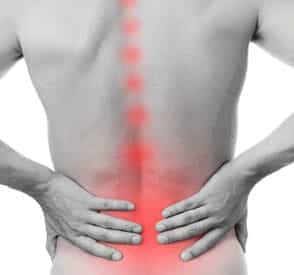
Suitability may depend on age, health history, current neurological findings, bone health, recent trauma, previous procedures, implanted hardware, pregnancy, vascular concerns, medication use, and the specific service being considered. These factors do not automatically exclude every part of the framework, but they may change, postpone, or rule out particular components.
A loss of bladder or bowel control needs same-day medical attention. New or progressive weakness should not be ignored; have it assessed promptly by a competent provider, and depending on the findings, conservative care may still be a reasonable route. Major trauma, fever with spinal symptoms, unexplained weight loss, or suspected fracture, infection or cancer need medical assessment. Online information cannot determine whether NSD Therapy® is appropriate for an individual reader.
Imaging, Clinical Correlation, and Referral
An MRI or X-ray report can describe anatomy, but the report does not establish the cause of every symptom. Imaging should be considered with the person’s history, examination, neurological findings, and functional changes. Read the MyChiro MRI examination guide and the spinal-disc structure guide for background information.
A CSC practitioner may recommend medical, surgical, radiology, obstetric, dental, or emergency assessment when the presentation falls outside the available professional scope, when warning signs are present, or when another opinion is needed before a component can be considered.
Official NSD Therapy® Resources
The official NSD Therapy® website provides broader program information. Readers may also review the official NSD Therapy® indications guide and NSD Therapy® contraindications guide. Those resources are educational and do not determine suitability for an individual.
For a practical explanation of how the framework is organized during an appointment at CSC, read the NSD Therapy® assessment and first-visit guide. Related MyChiro guides explain disc bulges and sciatica-related symptom patterns.
Frequently Asked Questions
Is NSD Therapy® one procedure?
Does everyone receive spinal decompression?
Does NSD Therapy® have one evidence base as a complete program?
Is an MRI required?
Can NSD Therapy® replace medical or surgical assessment?
Who created NSD Therapy®?
References
- World Health Organization. WHO guideline for non-surgical management of chronic primary low back pain in adults in primary and community care settings. Geneva: WHO; 2023. WHO publication
- National Guideline Centre (UK). Low back pain and sciatica in over 16s: assessment and management. NICE guideline NG59. London: NICE; 2016, updated 2020. PubMed Bookshelf record.
- George SZ, Fritz JM, Silfies SP, et al. Interventions for the management of acute and chronic low back pain: revision 2021. J Orthop Sports Phys Ther. 2021;51(11):CPG1-CPG60.
- Vanti C, Saccardo K, Panizzolo A, et al. The effects of the addition of mechanical traction to physical therapy on low back pain? A systematic review with meta-analysis. Acta Orthop Traumatol Turc. 2023;57(1):3-16.
- Zafer Y. Published international patent application WO2010120165A1. Patent record
These references describe guideline-based care for low back pain and the evidence on mechanical traction in general. None of them evaluates NSD Therapy® as a complete framework or care at Chiropractic Specialty Center. Journal links open the study record on PubMed; the WHO guideline and the patent record open on the publisher sites.
The Author of NSD Therapy®: Clear Guide to Components and Suitability
NSD Therapy®: Clear Guide to Components and Suitability was written by Yama Zafer, D.C., a graduate of Cleveland University - Kansas City with 30+ years in chiropractic and physiotherapy.
Last Updated: NSD Therapy®: Components, Suitability and the Care Framework
NSD Therapy®: Components, Suitability and the Care Framework was last reviewed and updated on September 25, 2026.
Share with others: